
Fire: The Most Important Invention of Ancient Society
How the Discovery of Fire Ignited Human Evolution, Culture, and Civilization


Throughout human history, few discoveries have been as transformative as fire. It is easy to take fire for granted today—it flickers in our stoves, warms our homes, and powers our industries. But there was a time when fire was a mystery, a force of nature both feared and admired. When early humans first harnessed fire, it marked a turning point unlike any before. In that single moment, humanity took a bold step into the future. It was the beginning of transformation—from survival to society, from darkness to light.
Fire, in essence, was not just a discovery; it was the foundation of civilization.
The Dawn of Fire: A Step Toward Progress
The earliest evidence of controlled fire use by humans dates back nearly a million years. Though natural fires caused by lightning or volcanic eruptions had always existed, the moment humans learned to control and create fire was revolutionary. Archaeological evidence from sites like the Wonderwerk Cave in South Africa suggests that early hominins began using fire for cooking and protection as far back as 1.5 million years ago.
Imagine a time when raw meat was the only option, when nightfall brought total darkness, and when wild animals roamed freely. In such an uncertain world, fire became a tool of survival. It provided warmth in freezing temperatures, light in the darkest of nights, and protection from predators. But more than anything else, it gave early humans the power to cook food—and that was a game-changer.
Cooking Food: A Biological and Cultural Revolution
Before the discovery of fire, humans, like other animals, ate raw food. Raw meat and plants are harder to digest and often contain harmful bacteria. Fire changed all of that. By cooking food, humans made it safer, more digestible, and tastier. This had profound effects not only on health but also on evolution.
Scientists believe that the ability to cook led to significant changes in human biology. Cooked food requires less energy to chew and digest, which may have contributed to the shrinking of human jaws and teeth over time. More importantly, the increased energy availability from cooked food could have supported the development of larger brains—setting the stage for higher thinking, language, and complex social structures.
In this sense, fire did not just change how we ate; it changed who we became.
The Foundation of Culture and Society
Once early humans could rely on fire for warmth and safety, they began to settle in groups. People gathered around the fire. Families and tribes would gather around the fire, sharing food, stories, and knowledge. This act of gathering marked the beginning of community life. The fire became the first "hearth"—the heart of the home, the center of social life.
There was more to this than just physical relief. People began to communicate more deeply around the fire. Language developed, myths were shared, and oral traditions took root. These early exchanges are what we now call the birth of culture. Fire, quite literally, lit the path to civilization.
Technological Advancements Sparked by Fire
Fire didn’t only transform food and society—it also paved the way for early technology. It allowed humans to create tools, harden wooden spears, and later, smelt metal. The use of fire in pottery, brick-making, and metallurgy marked the start of advanced human craftsmanship and industry.
Without fire, the Bronze Age and Iron Age would never have happened. These periods brought tools, weapons, and architectural progress that changed the way humans lived, worked, and fought. Fire was the engine of these innovations.
Moreover, fire led to the development of timekeeping and rituals. Watching the fire burn, early humans learned to observe patterns, cycles, and seasons. Fire ceremonies and religious offerings became part of ancient spiritual practices. In nearly every ancient culture, fire held sacred value—it was seen as a gift from the gods, a divine element connecting the earthly and the spiritual.
Fire and the Development of Agriculture
The use of fire also had a significant impact on the growth of agriculture. Early humans used controlled burns to clear forests and grasslands, making way for farming. This practice, known as slash-and-burn agriculture, allowed societies to grow food in a more organized and sustained manner.
With agriculture came permanent settlements, food surplus, and population growth. These were the fundamental components of intricate societies. Fire was central not only to cooking but to clearing land, managing ecosystems, and protecting crops from pests.
In this way, fire continued to shape civilization long after its discovery.
A Legacy That Burns On
Even today, the legacy of fire is all around us. From the internal combustion engines that power our vehicles to the electricity that lights up our homes (much of which is generated by burning fuel), fire remains at the core of human progress. The fire that once flickered in ancient caves now fuels rockets and powers entire cities.
However, the double-edged nature of fire must also be acknowledged. While it has brought warmth, food, and innovation, it has also been a tool of destruction. Wildfires, arson, and warfare have shown the devastating side of fire’s power. Still, this only underscores its importance—few other discoveries have had such wide-ranging impacts on human life.
Conclusion: Fire as the First Spark of Civilization
It is not an exaggeration to assert that fire was the most significant invention of ancient society; rather, this is a historical fact. It altered how humans interacted with one another, what they ate, lived, and thought. It was the first tool that allowed early humans to shape the world around them, rather than be shaped by it.
When man discovered fire, it was more than a practical development; it was a symbolic leap into the future. From cooking food to forming communities, from crafting tools to kindling imagination, fire was—and remains—the flame at the heart of human civilization.
About the Creator
MD BILLAL HOSSAIN
I am a dedicated content writer with a passion for creating clear, engaging, and impactful content. With experience across multiple industries, including technology, health, lifestyle, and business, I specialize in writing SEO-optimized.
Keep reading
More stories from MD BILLAL HOSSAIN and writers in History and other communities.
Claudette Colvin: The Forgotten Teenager Who Sparked a Movement
History often remembers Rosa Parks as the woman whose defiance on a Montgomery bus sparked the Civil Rights Movement. However, Claudette Colvin, an adolescent, made the same move nearly nine months before Parks made her sit or stand. At just 15 years old, Colvin refused to give up her seat to a white passenger on a segregated bus in Montgomery, Alabama. However, in the majority of the movement's retellings, her story was largely omitted, rewritten, or omitted entirely. Understanding why reveals much about how history is shaped—not only by events, but by the choices of those who record them.
By MD BILLAL HOSSAIN10 months ago in History
Argentina Unearths the Remains of a Giant Prehistoric Titan
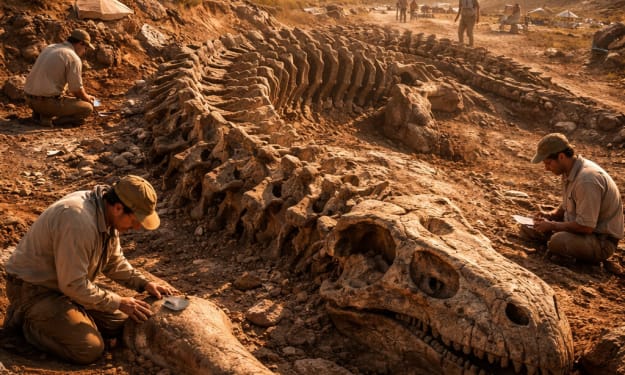
In a remarkable scientific discovery, paleontologists working in Argentina have uncovered the fossilized remains of what is believed to be one of the earliest giant dinosaurs to walk the Earth. The discovery was made in the windswept region of Patagonia, an area long known for its rich fossil deposits. The newly discovered dinosaur is thought to have been a massive plant-eating species that roamed the planet nearly 200 million years ago.
By Irshad Abbasi about 20 hours ago in History
Author’s Advice
If you would’ve asked me 20 years ago did I know I’d become a writer and an author, I would’ve said “nope, ain’t happening”. As fate would have it I did become an author and I can honestly say I’m loving it so far. It really does feel good to be a writer. I’ve learned a lot on this journey and I feel like with even me being as new to this world as I am, there’s some wisdom I need to share with every other aspiring author.
By Joe Patterson4 days ago in Journal



Comments
There are no comments for this story
Be the first to respond and start the conversation.