
Eastern Europe at a Tipping Point: Drone Incursions, Military Drills, and Growing NATO Tensions
As Russia’s drone attacks penetrate NATO airspace and joint drills with Belarus go live, European leaders push for stronger defenses amid fears of escalation.

Eastern Europe at a Tipping Point: Drone Incursions, Military Drills, and Growing NATO Tensions
Eastern Europe is entering one of its most precarious moments since the Cold War. In recent weeks, Russian drone incursions into Polish airspace, NATO warplanes being forced to intercept hostile drones, and large-scale Russian-Belarusian military exercises have fueled a surge of alarm across the continent. The events have raised questions about the durability of Europe’s defenses, the unity of NATO, and the potential for a direct clash between Russia and the alliance.
The latest developments highlight how Russia’s war in Ukraine is no longer contained to Ukrainian territory. Instead, it is spilling into NATO borders, testing the political resolve and military preparedness of Europe as a whole.
Poland’s Airspace Violations Spark Alarm
Poland, already one of Ukraine’s staunchest allies, is now finding itself on the front line of possible escalation. According to reports from Reuters and AP News, over 19 Russian drones violated Polish airspace in just a few nights, some apparently launched from Belarus. While the drones caused minor property damage in several regions, no casualties were reported.
Nevertheless, the political implications are severe. Prime Minister Donald Tusk issued one of the starkest warnings yet, declaring that Poland is now closer to open conflict than at any time since World War II. His government has formally invoked NATO’s Article 4, which requires member states to consult when a nation feels its security is under threat.
The decision signals that Warsaw sees these drone intrusions not as isolated incidents, but as deliberate provocations designed to test NATO’s willingness to respond.
NATO Takes Direct Action
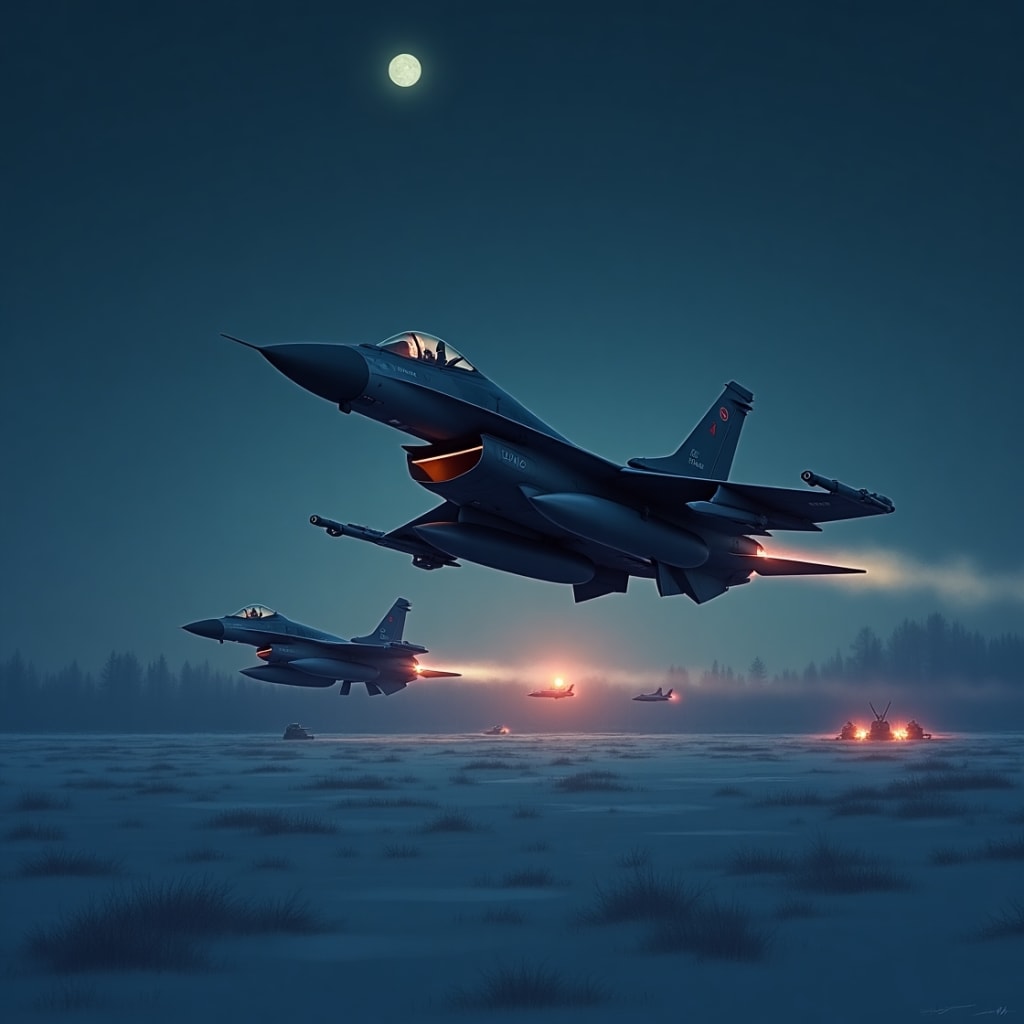
For the first time in the current crisis, NATO military forces have taken direct, coordinated action inside alliance territory. Reports from The Wall Street Journal and The Guardian confirm that Dutch F-35s, Polish F-16s, and other NATO aircraft successfully shot down multiple Russian drones over Polish airspace.
Missile defense systems were also activated, and civilian airports—including in Warsaw—were temporarily closed, underscoring the seriousness of the threat. The intercepts mark a significant shift: NATO is no longer simply providing support to Ukraine, but actively defending its own skies from Russian aggression.
Diplomatic fallout was immediate. Western governments issued strong condemnations, and Russian officials, in turn, accused NATO of “escalating tensions.” Still, for NATO, the incursions highlight vulnerabilities that can no longer be ignored.
Zapad 2025 Military Exercises Raise Fear of Escalation
At the same time, Russia and Belarus launched Zapad 2025, one of their largest joint military exercises in years. Taking place near Barysaw, Belarus, the drills simulate scenarios ranging from airstrikes and sabotage to the use of tactical nuclear weapons.
For NATO, the timing is particularly alarming. These drills are unfolding just as drone incursions into Poland are making headlines. Western intelligence agencies view the exercises not only as preparation for potential combat but also as psychological warfare—designed to intimidate neighboring states and project strength.
AP News reports that Zapad 2025 has already been met with heightened readiness among NATO countries in the region. The exercises serve as a reminder that Europe is facing not just sporadic incidents but a calculated Russian strategy to stretch and test alliance defenses.
Calls for a Unified European Air Defense
Ukrainian President Volodymyr Zelenskiy has used the moment to renew calls for a consolidated European air defense system. In his latest remarks, cited by Reuters, he argued that recent drone incidents prove Europe lacks a fully integrated shield against aerial threats.
Zelenskiy urged NATO and EU leaders to accelerate cooperation on air defense, expand military readiness, and close gaps in surveillance. His warning reflects what many military analysts have said for months: Europe’s skies remain vulnerable, and Russia is exploiting that weakness.
For countries like Poland, Lithuania, and Latvia—nations on NATO’s eastern flank—the pressure to act is mounting. Public opinion in these regions increasingly demands stronger protections, even at the risk of direct confrontation.
What This Means & What to Watch
The latest developments underline four key takeaways that will shape the trajectory of Europe’s security environment in the months ahead:
Escalation Risk: Russian drones in NATO territory and massive war games in Belarus are deliberate moves to probe NATO’s red lines. The risk of a miscalculation or accidental clash is higher than ever.
Allied Response: How NATO members coordinate—militarily and diplomatically—will determine whether these provocations are contained or spiral further. Article 4 consultations could lead to stronger collective measures.
Defense Readiness: Europe is now under pressure to fast-track investments in advanced air defense, radar systems, and integrated command structures. Proposals for a “European Iron Dome” may gain momentum.
Political Stability: Leaders in border countries face rising public pressure. They must walk a fine line between demonstrating strength and avoiding escalation into full-scale war.
Conclusion
Eastern Europe stands at a tipping point. Russia’s drone intrusions into NATO airspace, combined with provocative military drills alongside Belarus, are not just isolated incidents—they are part of a larger strategy to unsettle Europe and weaken NATO unity.
Poland’s decision to invoke NATO consultations, NATO’s direct interceptions of hostile drones, and Zelenskiy’s push for unified air defenses all point to a continent preparing for the possibility that the war in Ukraine could expand.
For now, leaders hope to deter Moscow without triggering a wider conflict. But with tensions this high, Europe’s security is no longer a distant question—it is being tested, night after night, in the skies over Poland.
About the Creator
Wings of Time
I'm Wings of Time—a storyteller from Swat, Pakistan. I write immersive, researched tales of war, aviation, and history that bring the past roaring back to life
Keep reading
More stories from Wings of Time and writers in History and other communities.
If World War 3 Started Tomorrow: The First 24 Hours Explained
Introduction: The Question We Fear Most For decades, experts and ordinary people alike have asked a haunting question: *what if World War 3 began tomorrow?* Most discussions focus on the weapons or alliances involved, but few stop to imagine how the first **24 hours** would feel for ordinary citizens. Those first moments would define not just the war itself, but the survival of billions.
By Wings of Time 4 months ago in History
Rajendra Chola I and the Conquest of the Ganga: A Monumental Feat in Indian History
Known as the “Gangaikonda Chola” (the Chola who conquered the Ganga), Rajendra transformed a South Indian maritime empire into a pan-Indian power whose influence stretched from the Indian Ocean to the heart of the subcontinent. This campaign was not merely a military raid but a bold statement of imperial ambition, strategic brilliance, and cultural confidence.
By Say the truth 6 days ago in History




Comments
There are no comments for this story
Be the first to respond and start the conversation.