
Cults of Gods: Why King of Gods Is Immoral?
Why Ancient Greeks Worshipped Zeus Even If He Is Bad?

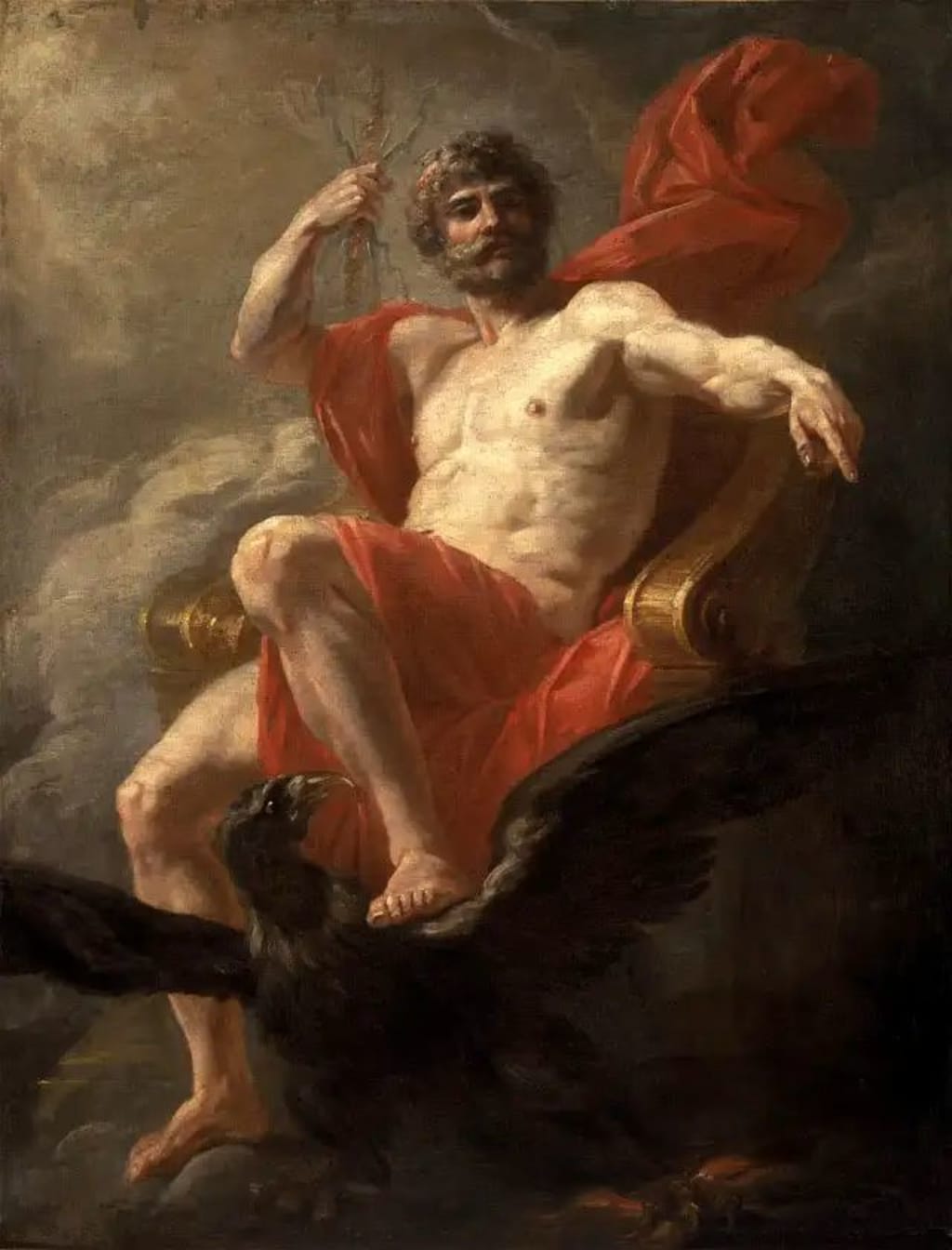
Those who study Zeus’ mythology deeply know that calling him a role model would be like calling a rotten apple delicious. From the start of his reign over Earth, Zeus became infamous for a series of morally questionable acts: he swallowed his first wife, Metis — the Titaness of Wisdom and Cunning; he was endlessly unfaithful after marrying Hera, the goddess of marriage; and he abducted Ganymedes, a Trojan prince, into Olympus for his beauty. And these are only the tip of the iceberg.
This raises a natural question: why did the ancient Greeks worship a god whose personal behavior often seems reprehensible?
The answer lies in the Greek understanding of myth. Myths were not intended as literal histories but as symbolic narratives revealing truths about the world, human nature, and divine order.
Within this symbolic framework, Zeus was revered not for his personal virtue but for his cosmic and social roles. He was the protector and sustainer of Greece (Zeus Soter), the guardian of law and justice (Zeus Nomios), and the patron of hospitality (Zeus Xenios). His mythic deeds—however morally dubious—illustrated the power and authority necessary to maintain balance in both the natural and human worlds.
Etymologically, his name goes back to the Proto-Indo-European root Dyēus, meaning “sky” or “daylight sky.” This shows that Zeus was not merely a sky god but the embodiment of the sky itself, the living order of heaven. Consequently, his primary divine office was overseeing weather, storms, and the fertility of the land (Zeus Hyes). Under this title, he had an altar at Argos and a statue in the grove of Trophonius near Lebadeia.
Zeus’s relationship with Themis, the Titaness of Divine Law and Order, also reflects his cosmic role. Their union produced several deities representing order, justice, and fate — symbolizing Zeus’s authority over these forces.
Among his law-related offices, hospitality and oaths held a special place in Greek life. The importance of hospitality was deeply emphasized in myth, such as in the story of Baucis and Philemon. Disguised as poor travelers, Zeus and his son Hermes went from house to house seeking shelter. All citizens turned them away except for one humble elderly couple, who welcomed the strangers warmly. When the gods revealed themselves, they rewarded the couple’s kindness by turning their small hut into a golden temple and allowing them to die together at the same moment. The rest of the city was punished with a flood.
This story captures a key moral: to mistreat a guest was to offend Zeus himself. All strangers and wanderers were believed to be under his protection.
Regarding oaths, they were far more than personal promises — they were sacred declarations before the gods. Zeus, as Zeus Horkios, was one of the main divine guarantors of honesty and oath-keeping. Breaking an oath was among the gravest offenses, alongside hubris (arrogance toward the gods). Such an act could bring Zeus’s wrath in the form of illness, crop failure, or financial ruin. At Olympia, Zeus Horkios had a statue before which athletes swore to compete honorably.
Beyond these regal and moral offices, Zeus also governed aspects of everyday life. He was the protector of the household (Zeus Herkeios), the guardian of property (Zeus Ktesios), and the patron of friendship and alliances (Zeus Philios). Because of these roles, he was sometimes associated with the Agathos Daimon, the “good spirit” of the home.
Taking everything together, we can form a clear picture of Zeus’s religious function in Greek life. He was the god who sustained Greece through rain and fertility, and also upheld the moral and social order through law, justice, and sacred relationships. His myths—though often scandalous—symbolize the idea that Zeus’s power reached all realms of existence. He governed both nature and society, enforcing the harmony that made life possible.
Hope you enjoyed my article! Share your thoughts, share this article.
About the Creator
Keep reading
More stories from Alex Smith and writers in History and other communities.
How Different Cultures Understood the World?
Our world is truly big. Even thousand years of search I think, wouldn’t be enough to fully grasp the knowledge about it. But despite physical and sometimes, psychological limits of ours, we never stopped trying to understand it.
By Alex Smith3 months ago in History
Power's Sake
When it comes to gaining power, bad people use it to gain more They never gain power to do something with it, they gain power to have it, relish in it, double it down on itself so it grows exponentially and never goes anywhere. Even if you see the people in power commit an atrocity, that is never the true goal. It is a deplorable action for sure but the action itself usually doesn't matter it's the outcome.
By Donny Foley5 days ago in History
How Case Documents Are Maintained in Philadelphia County
Case documentation forms the backbone of judicial accountability in Philadelphia County. Every filing, order, transcript, and judgment plays a defined role in preserving procedural accuracy and historical reference. The methods used to preserve these materials reflect long-standing legal standards combined with structured administrative practice. This article explains how case documents are created, organized, stored, reviewed, and preserved within Philadelphia County, with a clear focus on factual processes rather than commentary or promotion.
By Owen Perryabout 6 hours ago in History




Comments
There are no comments for this story
Be the first to respond and start the conversation.