
Cleopatra: Queen of the Nile, Mistress of Empires
The untold story of Egypt’s last pharaoh — a brilliant ruler, fearless lover, and enduring legend who defied Rome and shaped the course of history.

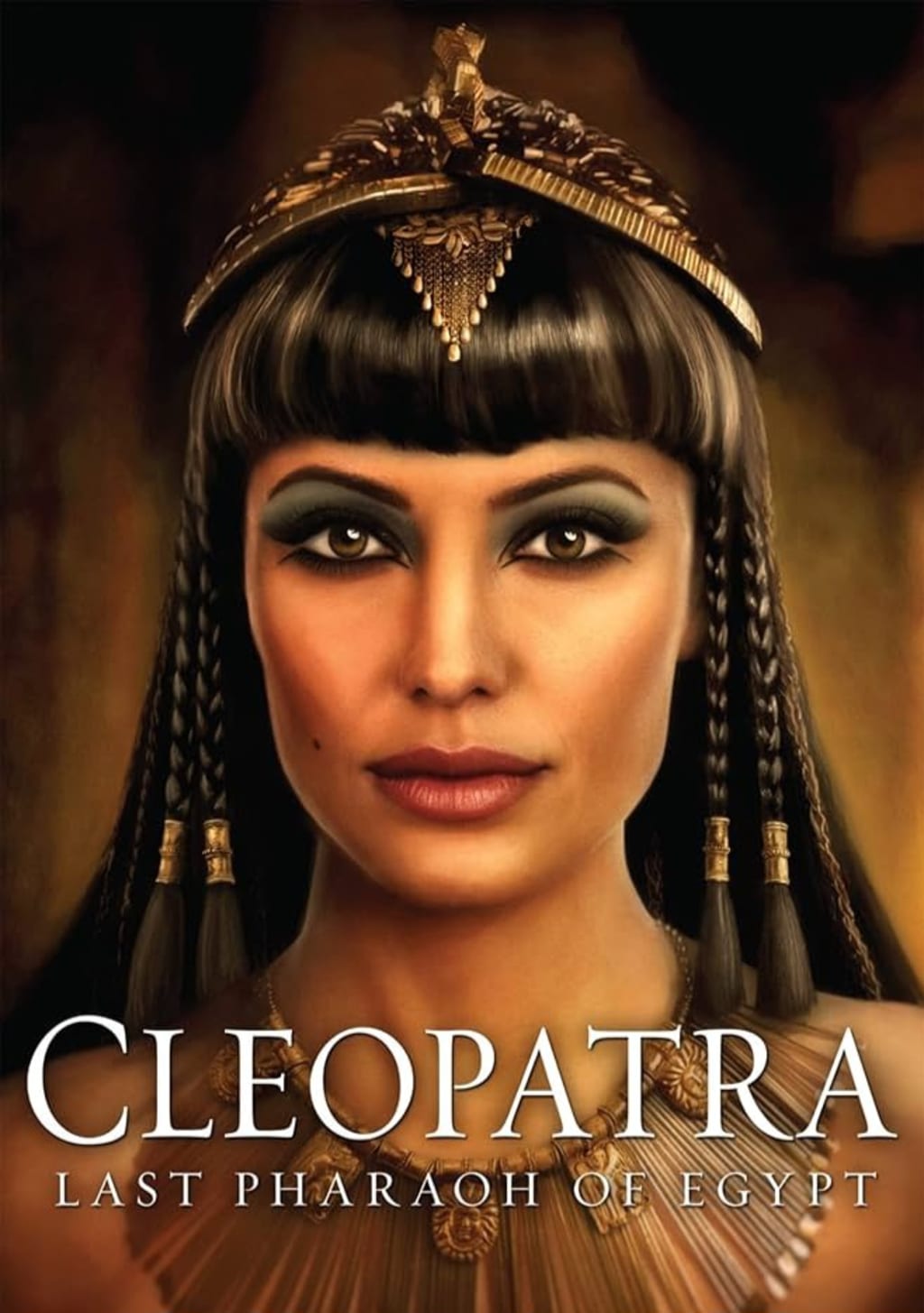
Cleopatra: The Last Pharaoh of Egypt and the Woman Who Defied an Empire
Long before the fall of Rome or the rise of modern empires, there was a woman who defied the expectations of her world. Her name was Cleopatra VII Philopator — the last pharaoh of Egypt, the seductress of two of Rome’s most powerful men, and a queen whose life has become legend.
Born in 69 BCE into the Ptolemaic dynasty, Cleopatra wasn’t fully Egyptian by blood. Her family descended from Ptolemy I Soter, one of Alexander the Great’s generals, who took control of Egypt after Alexander’s death. The Ptolemies were Greek by heritage, yet Cleopatra did something revolutionary: she embraced the culture of the Egyptian people, even learning their language — something none of her predecessors had done in over 250 years of Ptolemaic rule.
From the beginning, Cleopatra's life was shaped by politics, betrayal, and ambition. After the death of her father, Ptolemy XII, Cleopatra ascended to the throne at just 18 years old. But she wasn’t alone. In accordance with Egyptian tradition, she co-ruled with her younger brother, Ptolemy XIII, who was only 10 at the time — and who would soon become her enemy.
The royal court was a place of conspiracy and tension. Cleopatra was quickly pushed out of power by her brother's advisors. Forced into exile, she regrouped in Syria, raising an army to reclaim her throne. But fate, as history often reminds us, would bring an even more powerful ally into her story.
In 48 BCE, Julius Caesar arrived in Egypt, pursuing his rival, Pompey. Cleopatra saw an opportunity. According to legend, she had herself smuggled into Caesar’s quarters rolled up in a carpet (or perhaps a linen sack). When unwrapped, she appeared before him — radiant, confident, and politically astute. Caesar was captivated.
Their alliance wasn’t just romantic; it was strategic. With Caesar’s backing, Cleopatra defeated her brother’s forces in a brutal civil war. Ptolemy XIII drowned in the Nile while trying to escape. Cleopatra returned to power, now co-ruling with another younger brother, Ptolemy XIV, though the true power rested with her alone.
In 47 BCE, Cleopatra gave birth to Caesar’s son, Caesarion. She traveled to Rome to visit Caesar — and was there when he was assassinated in 44 BCE. With her protector gone and Rome thrown into chaos, Cleopatra returned to Egypt, navigating the deadly ripples of Roman politics from afar.
Her next great love — and political alliance — came with Mark Antony, a general and member of the Second Triumvirate that ruled Rome after Caesar’s death. Their story would ignite both passions and wars.
Mark Antony summoned Cleopatra to Tarsus (modern-day Turkey), ostensibly to question her loyalty. But Cleopatra arrived in a spectacle: dressed as the goddess Isis, sailing up the Cydnus River in a golden barge, surrounded by incense, music, and dancers. Antony, a man of action and appetite, was enthralled.
They became lovers and allies. Cleopatra bore him three children. Together, they envisioned a new world — one where East and West could coexist, where Rome and Egypt could rule in harmony. But this dream made them dangerous in the eyes of Rome.
Octavian, Caesar’s adopted heir (and later Augustus), saw Antony and Cleopatra as threats to his rising power. He launched a campaign of propaganda, painting Cleopatra as a temptress who had bewitched Antony and stolen him from Roman virtue. In truth, Antony had his own ambitions — but Cleopatra’s presence made him vulnerable to Rome’s suspicion and fury.
In 31 BCE, the conflict came to a head at the naval Battle of Actium. Cleopatra and Antony’s forces were defeated by Octavian’s fleet. They fled back to Egypt, where their last stand would unfold.
As Octavian approached Alexandria, Cleopatra prepared for the end. Antony, wrongly informed that Cleopatra had died, fell on his own sword. Mortally wounded, he was brought to Cleopatra, dying in her arms — a scene Shakespeare would later immortalize.
Cleopatra, left alone, attempted to negotiate with Octavian. But realizing she would be paraded through Rome in chains, she chose death. According to tradition, she arranged to be bitten by a poisonous asp — though some historians believe she used a toxic ointment instead. She died at age 39, a queen to the end.
With her death, the Ptolemaic dynasty — and pharaonic Egypt — came to an end. Egypt became a province of the Roman Empire, ruled not by its own blood, but by foreign governors.
Yet Cleopatra’s story didn’t fade. She became legend — vilified by some, romanticized by others. Roman historians called her manipulative and dangerous. Renaissance painters portrayed her as a tragic beauty. Modern scholars have sought to understand the real woman behind the myths: a brilliant linguist, a skilled diplomat, a woman who wielded power in a man’s world.
Cleopatra was more than just the lover of Caesar or Antony. She was a monarch who fought for her nation’s independence, a strategist who understood the tides of empire, and a woman who dared to define her own destiny.
Her story is not just history — it is a reminder of how powerful women have always shaped the world, even when history tries to silence them.
About the Creator
Soul Drafts
Storyteller of quiet moments and deep emotions. I write to explore love, loss, memory, and the magic hidden in everyday lives. ✉️
Reader insights
Outstanding
Excellent work. Looking forward to reading more!
Top insights
Excellent storytelling
Original narrative & well developed characters
Eye opening
Niche topic & fresh perspectives
Keep reading
More stories from Soul Drafts and writers in History and other communities.
The Eternal Smile: A Story of the Mona Lisa
In the echoing halls of the Louvre Museum in Paris, behind a thick pane of bulletproof glass, hangs the most famous smile the world has ever known. The Mona Lisa—silent, mysterious, and immortal—is more than just a portrait. She is a story, a riddle wrapped in oil and wood, whose journey from the hands of a Renaissance genius to global icon status is nothing short of extraordinary.
By Soul Drafts7 months ago in History
World War I
The morning fog lay thick over the trenches of northern France, clinging to the earth as if it too feared what was about to happen. Private Thomas Hale pulled his coat tighter around himself, though it did little to stop the cold from seeping into his bones. He had been in the trenches for six months, yet the damp smell of mud, smoke, and fear still felt unfamiliar, like a nightmare he could not wake from.
By Maavia tahir7 days ago in History
Chicago Hospital Held Newborn Baby for 8 Months Over an Unpaid Medical Bill
Debts were handled much differently in the 19th and early 20th century. Back then, people who accrued debt had more to fear than letters and calls from collection agencies the same way we do today, especially if they owed a hospital or doctor money.
By Criminal Matters7 days ago in History



Comments
There are no comments for this story
Be the first to respond and start the conversation.