
The Eternal Smile: A Story of the Mona Lisa
From a Florentine merchant’s wife to a global icon behind glass—unraveling the mystery, theft, and timeless allure of Leonardo da Vinci’s masterpiece.

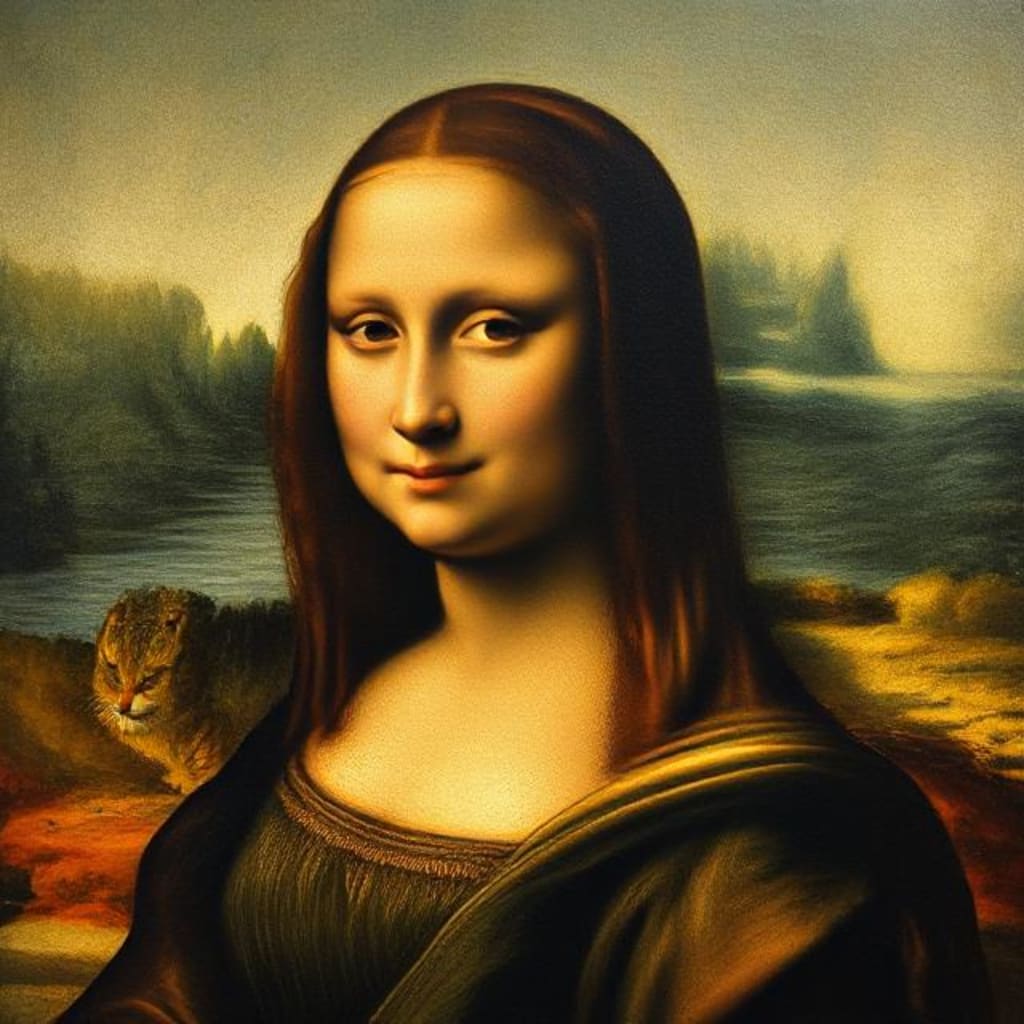
In the echoing halls of the Louvre Museum in Paris, behind a thick pane of bulletproof glass, hangs the most famous smile the world has ever known. The Mona Lisa—silent, mysterious, and immortal—is more than just a portrait. She is a story, a riddle wrapped in oil and wood, whose journey from the hands of a Renaissance genius to global icon status is nothing short of extraordinary.
It all began in Florence, Italy, in the early 1500s. Leonardo da Vinci, the quintessential Renaissance man, had returned to his homeland after years spent in Milan. Amidst commissions for churches, scientific sketches, and engineering blueprints, he accepted a humble portrait commission—one that would defy time.
The woman was Lisa Gherardini, the wife of a wealthy Florentine silk merchant, Francesco del Giocondo. By all accounts, Lisa was not famous, royal, or extraordinary. Yet Leonardo, known for infusing soul into his art, saw something in her that others might have missed. He began the portrait around 1503. But, unlike other commissions, Leonardo didn’t let this one go. He carried it with him for years—through cities, countries, even as he crossed the Alps into France.
This begs the question: why?
Some say Leonardo saw it as more than a portrait. It became a lifelong project, a personal obsession. The Mona Lisa was his laboratory—a place where he experimented with techniques like sfumato, the delicate blending of tones that gives her face its lifelike softness. Her smile—subtle, elusive—was a marvel of optical illusion. Depending on the viewer’s angle, it seemed to change: now amused, now distant, now knowing. The painting was alive.
Leonardo never delivered the portrait to Francesco del Giocondo. Instead, he took it with him to France in 1516 when he accepted an invitation from King Francis I. After Leonardo’s death in 1519, the painting became part of the French royal collection, admired behind palace walls but not yet the cultural titan she would become.
For centuries, the Mona Lisa was respected but relatively obscure. That all changed in 1911.
On a quiet August morning, the Louvre’s guards discovered an empty space on the wall where the Mona Lisa had hung. Panic spread. Paris was stunned. The police interrogated everyone—even Pablo Picasso. But the real thief was Vincenzo Peruggia, an Italian handyman who believed the painting belonged in Italy and had simply walked out with it hidden under his smock.
For over two years, the Mona Lisa was missing. Newspapers around the world printed her image, and the public obsession began. When she was finally recovered in 1913, in a hotel room in Florence, the Mona Lisa returned to France not just as a masterpiece—but as a legend.
From then on, her fame soared. Tourists flocked to see her. Writers and poets wrote about her. Scholars debated her secrets. Was she smiling or sad? Was she truly Lisa Gherardini—or someone else entirely? Some claimed she was a vision of femininity; others suspected hidden messages and codes.
Through it all, she never said a word.
In World War II, the Mona Lisa was hidden in various secret locations to protect her from the Nazis. She traveled in padded crates, watched over like royalty, always returning to the Louvre once peace was restored. In the modern age, she has traveled less—but her image has gone everywhere.
She has been parodied by Dali, adored by Warhol, and replicated on mugs, t-shirts, and memes. She has starred in Hollywood films, inspired novels like The Da Vinci Code, and graced textbooks in classrooms across continents.
Yet despite the fame, the real Mona Lisa remains as she always has: quiet, serene, unknowable. She watches the world through her glass, never aging, never changing. Her fame may be modern, but her soul is timeless.
Perhaps that is the secret to her power.
Leonardo, with all his genius, painted not just a woman, but a moment suspended in eternity. He captured not only the softness of skin and the glint in the eye, but something deeper—the quiet grace of human presence. A feeling that even five centuries later, draws millions to stand in silence before her.
In a world driven by noise and speed, the Mona Lisa reminds us that mystery has its own magnetism. That some stories are more powerful for being incomplete. That a single, subtle smile can captivate the world—forever.
About the Creator
Soul Drafts
Storyteller of quiet moments and deep emotions. I write to explore love, loss, memory, and the magic hidden in everyday lives. ✉️
Reader insights
Outstanding
Excellent work. Looking forward to reading more!
Top insights
Compelling and original writing
Creative use of language & vocab
Easy to read and follow
Well-structured & engaging content
Excellent storytelling
Original narrative & well developed characters
Expert insights and opinions
Arguments were carefully researched and presented
Eye opening
Niche topic & fresh perspectives
Heartfelt and relatable
The story invoked strong personal emotions
Masterful proofreading
Zero grammar & spelling mistakes
On-point and relevant
Writing reflected the title & theme
Keep reading
More stories from Soul Drafts and writers in History and other communities.
Spartacus: Born in Chains, Died a Legend
Spartacus: The Slave Who Defied an Empire In the heart of ancient Rome, where emperors ruled and gladiators bled for applause, there rose a man who would shake the foundations of the Republic. His name was Spartacus, and though he was born a slave, he died a symbol—of defiance, freedom, and the unyielding will of the oppressed.
By Soul Drafts7 months ago in History
Where the Pulse Ends
© 2026 Sai Marie Johnson The humidity in the city didn’t just hang; it leaned. It was a thick, stagnant soup of diesel exhaust, ozone, and the metallic tang of blood that drifted from the "Compliance Zones." Joe sat in his rusted sedan, his hands resting loosely on the steering wheel. He wasn't gripping it. He wasn't angry. Anger was a chemical spike, a biological inefficiency. Joe was simply... focused.
By Sai Marie Johnson2 days ago in History
Wild Card Weekend Recap: What Happens Now?
I think I figured out why I love Wild Card Weekend so much. It's because it's the first playoff anything of the calendar year. The NFL season starts in the fall, and once upon a time, the champion was crowned either on or slightly before New Year's. The evolution of the NFL schedule has resulted in the playoffs starting just into the New Year, and currently, the final week of the season falls on the first weekend of the New Year, with Wild Card Weekend coming a week after that. So yes, chronologically, the NFL's Wild Card Weekend serves as the first playoff anything of the calendar year.
By Clyde E. Dawkins5 days ago in Unbalanced



Comments
There are no comments for this story
Be the first to respond and start the conversation.