
Classification and Types of Sewing Machines and Their Role in the Development of the Textile Industry.
Since its invention in the 19th century, the sewing machine has played a key role in transforming the textile industry from a slow, home-based industry to a high-volume, mass-produced industry. Thanks to technological advancements and the integration of information technology, these machines have undergone tremendous changes in recent decades, significantly impacting the global fashion and clothing industry.

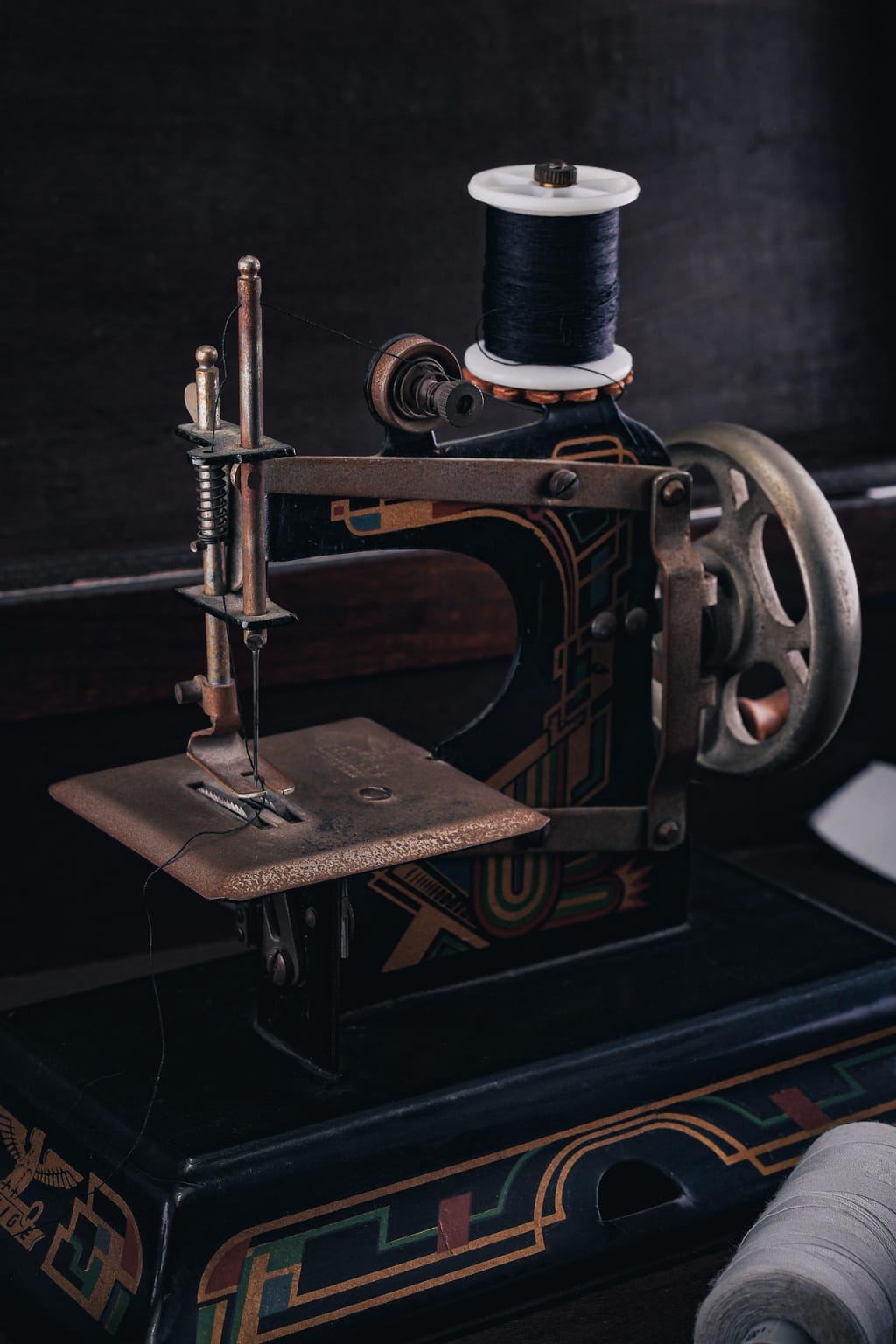
Classification and Types of Sewing Machines and Their Role in the Development of the Textile Industry
Introduction
Since its invention in the 19th century, the sewing machine has played a key role in transforming the textile industry from a slow, home-based industry to a high-volume, mass-produced industry. Thanks to technological advancements and the integration of information technology, these machines have undergone tremendous changes in recent decades, significantly impacting the global fashion and clothing industry.
Who Invented the Sewing Machine?
The history of the sewing machine begins in 1790 with English inventor Thomas Saint, who filed the first patent for a sewing machine, but it was never produced. The real development came in 1846 with American inventor Elias Howe, who designed a machine that could sew fabrics using a needle that moved up and down with two threads, creating a tight stitch.
Later, in 1851, Isaac Singer invented an improved, easier-to-use machine by adding a foot pedal. This helped market it and make it an indispensable household and industrial appliance worldwide.
Classification of Sewing Machines
Sewing machines are classified according to their use and purpose and are divided into the following types:
1. Domestic Sewing Machines
Used for simple household tasks, they are small in size and easy to use. They include features such as straight stitch, zigzag stitch, buttonholes, and buttons.
2. Industrial Sewing Machines
Used in factories and designed for heavy-duty work and high productivity. They vary by specialization, for example:
Trouser and shirt sewing machine
Button sewing machine
Industrial embroidery machine
Overlock for hemming edges
3. Electronic Embroidery Machines
The computer is used to draw and create complex embroidery designs with high precision. It can be connected to a computer to download finished designs in formats such as .DST or .PES.
4. Digital (Smart) Sewing Machines
Equipped with LCD touchscreens that allow you to control stitch length, stitch type, and various settings for different fabrics. They can store hundreds of stitches and patterns.
The Influence of Machines on the Development of the Textile Industry
Before the advent of machines, clothing was sewn by hand, and each garment took several days to make. Today, thanks to sewing machines:
The factory can produce more than 1,000 items per day using automatic machines.
Production costs were reduced by more than 60%.
Precise and professional designs were created, contributing to the spread and diversity of fashion.
Today, digital embroidery machines are an integral part of production lines, especially at brands like Zara and H&M, where 3D design software is used even before the sewing process begins.
The Evolution of Sewing Machines in the Modern Age
With the introduction of computers in the textile industry, machines have made significant advancements, including:
- Numerical Control:
Some machines are now equipped with CNC (computer numerical control) systems to create very complex stitch patterns without direct human intervention.
- Artificial Intelligence and Software
Some machines can now automatically detect the type of fabric and adjust settings accordingly. Software like Embird and Wilcom also allows you to design professional embroidery designs and transfer them directly to your embroidery machine.
- 3D Printing and Automated Sewing
Companies like Amazon and Sewbo have begun developing machines that can sew clothing fully automatically using a robotic arm, revolutionizing manufacturing.
The Future: Where is the Sewing Machine Industry Headed?
These machines are expected to continue improving with the introduction of technologies such as:
Augmented reality (AR) in education.
Cloud integration for storing and sharing designs between design teams located in different locations.
Printing on fabrics directly from the machine, eliminating the traditional printing step. Market reports show that the global sewing machine market reached US$4.1 billion in 2023 and is expected to reach US$6.3 billion by 2030 at a compound annual growth rate (CAGR) of 6.4%.
Global Examples
Brother, Janome, and Singer are some of the most popular brands developing home and professional sewing machines.
The Japanese company Juki produces industrial machines used in Nike and Adidas factories.
Tajima is a leading manufacturer of large-scale automated embroidery machines.
About each part of the article:
1. Introduction
The transformation that the sewing machine brought to the garment industry is highlighted, from manual labor to mass industrial production, emphasizing the important role of modern technology in this development.
2. Who invented the sewing machine?
This section reviews the history of the invention of the sewing machine, beginning with Thomas Saint in 1790, then its actual development by Elias Howe in 1846, and the modernization and commercialization of the machine by Isaac Singer in 1851.
3. Classification of Sewing Machines
Explains the types of sewing machines according to their use:
Home: For simple indoor use.
Industrial: For factories and mass production.
Electronic embroidery machines: For creating complex designs using a computer.
Smart digital machines: Equipped with displays and advanced technological features.
4. The Impact of Machines on the Development of the Garment Industry
Illustrates how these machines have reduced time and costs and increased productivity, making the textile industry faster, more diverse, and more global.
5. The Development of Machines in the Modern Era
The integration of CNC systems, the use of artificial intelligence, modern software, and experiments with robotics and automated sewing are discussed.
About the Creator
Sayed Zewayed
writer with a background in engineering. I specialize in creating insightful, practical content on tools. With over 15 years of hands-on experience in construction and a growing passion for online, I blend technical accuracy with a smooth.
Keep reading
More stories from Sayed Zewayed and writers in History and other communities.
vintage clothing stores Retro DS Jazz Dance Party
Dancing Through Time: How One Glance Recreated the Magic of the Jazz Age In a small, quiet vintage clothing store, nestled between trendy cafes and bustling city streets, Laila discovered something exceptional. She hadn't planned to buy anything that day; she was simply browsing the shop windows, enjoying the hum of a record playing in the background. But as she moved through the rows of clothing, her eyes fell on a display case that seemed to sparkle with stories from another era.
By Sayed Zewayed10 months ago in History
Understanding the Relationship Between France and Francophone Africa
The relationship between France and francophone Africa is one of the most complex and debated relationships in international affairs. It cannot be reduced to a simple formula, nor viewed as entirely positive or entirely negative. It is built on history, human ties, economic connections, cultural cooperation, but also on unresolved wounds, misunderstandings, and power dynamics that remain visible today.
By Bubble Chill Media 7 days ago in History
Golden Boy of Ancient Egypt: Inside Tutankhamun’s Tomb and the Priceless Treasures That Shocked the World
When people think about ancient Egypt, one name immediately comes to mind: Tutankhamun. Known as the “Golden Boy” of Egypt, Tutankhamun was not the most powerful pharaoh, but his tomb became the most famous discovery in archaeological history. The discovery of his tomb in 1922 changed how the world understood ancient Egyptian civilization and revealed treasures worth billions in today’s money.
By Antonuos Zarey5 days ago in History
The Devil's Triangle
The sails ruffled in the breeze as we cruised along. The Sea Breeze was a mid-size catamaran that sailed out of Royal Naval Dockyard in Bermuda. We had booked this trip weeks in advance and were now looking at our Captain, Spike and two boat hands. Paddy and Wilson seemed like nice guys, joking around with the passengers and telling us some stories about Bermuda that only locals would know. Their island accents sounded almost British but they were pleasant to listen to.
By Barbara Gode Wilesabout 20 hours ago in Fiction




Comments
There are no comments for this story
Be the first to respond and start the conversation.