
Golden Boy of Ancient Egypt: Inside Tutankhamun’s Tomb and the Priceless Treasures That Shocked the World
From hidden tomb to global legend: The story behind the world’s most famous pharaoh discovery.

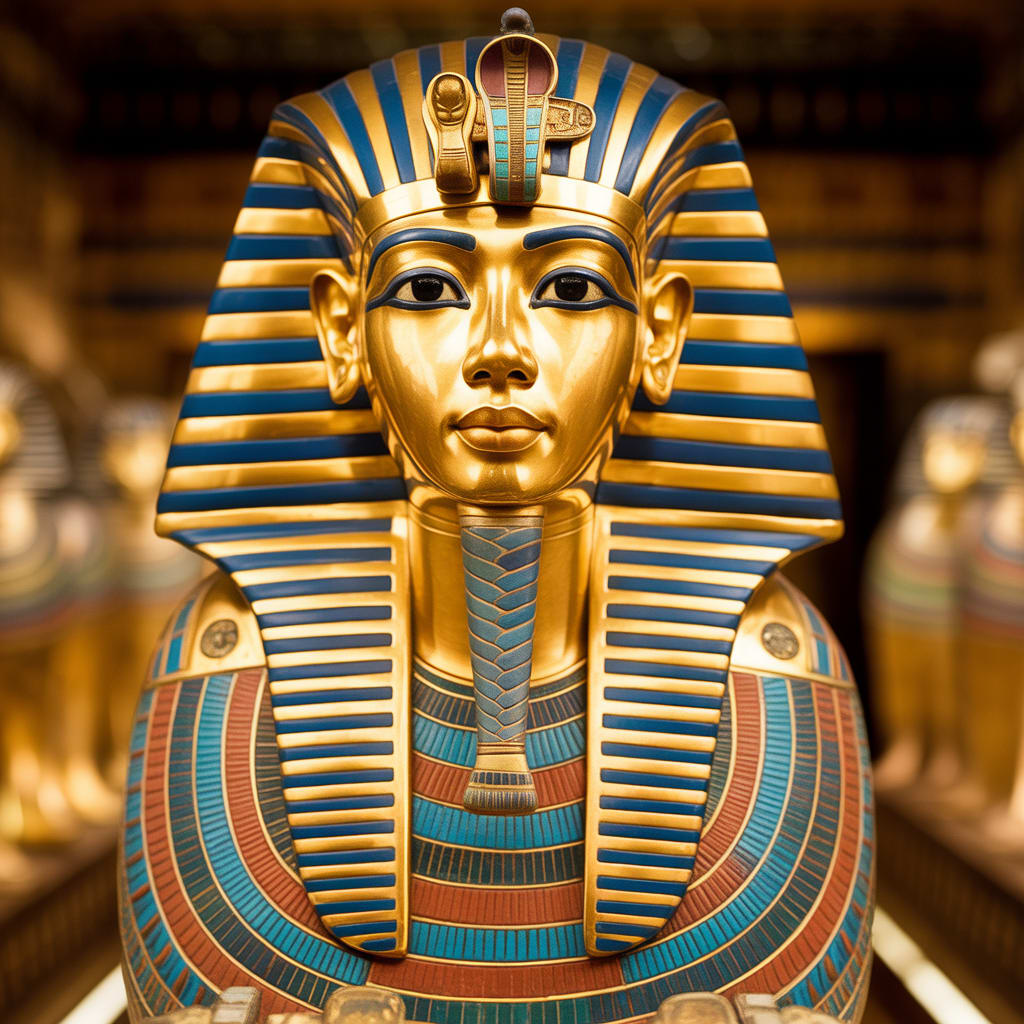
When people think about ancient Egypt, one name immediately comes to mind: Tutankhamun. Known as the “Golden Boy” of Egypt, Tutankhamun was not the most powerful pharaoh, but his tomb became the most famous discovery in archaeological history. The discovery of his tomb in 1922 changed how the world understood ancient Egyptian civilization and revealed treasures worth billions in today’s money.
Tutankhamun became king around 1332 BCE when he was only a child, probably around nine years old. His reign lasted about ten years. Unlike great warrior kings such as Ramses II, Tutankhamun did not rule long enough to leave major political or military achievements. However, what made him world-famous was not his life — it was his death and burial.
His tomb was discovered by British archaeologist Howard Carter in the Valley of the Kings near Luxor, Egypt. After years of searching, Carter finally found hidden steps leading to a sealed door. When he opened it, he saw something no archaeologist had ever seen before — a royal tomb almost completely untouched by thieves for over 3,000 years. Inside were thousands of objects, perfectly preserved.
The tomb, known as KV62, was smaller than other royal tombs, but it was packed with treasures. More than 5,000 artifacts were found inside. These included jewelry, furniture, chariots, weapons, clothing, food containers, and religious statues. Ancient Egyptians believed the king would need these items in the afterlife, so they buried him with everything he might need.
The most famous object found in the tomb was Tutankhamun’s golden funeral mask. The mask is made of solid gold and weighs more than 10 kilograms. It is decorated with colored glass and semi-precious stones. The mask shows the king with the traditional royal beard and the cobra and vulture symbols of protection. Today, this mask is considered one of the greatest artistic masterpieces in human history.
Experts estimate that if the mask alone were sold today, its gold value would be millions of dollars. But because of its historical importance, its real value is considered priceless. Some historians estimate that the total value of all treasures found in Tutankhamun’s tomb could equal several billion dollars in modern value. However, these treasures are not for sale because they belong to Egyptian heritage and human history.
Inside the burial chamber, archaeologists found three coffins placed inside each other like Russian dolls. The outer two were made of wood covered with gold sheets, while the inner coffin was made of solid gold. Inside the final coffin was Tutankhamun’s mummy, wrapped carefully in linen and covered with amulets and jewelry meant to protect him in the afterlife.
Another interesting discovery was a dagger made from meteorite iron. Scientists later confirmed that the metal came from space. This shows that ancient Egyptians used rare materials and had advanced knowledge of metalwork thousands of years ago.
The tomb also had different rooms, including an antechamber filled with furniture and daily life objects, a treasury with religious items, and a storage annex. The treasury held canopic jars that stored the king’s internal organs. These jars were protected by statues of gods to ensure the king’s safe journey into the afterlife.
After the tomb was opened, rumors started spreading about a “pharaoh’s curse.” When Lord Carnarvon, the sponsor of the excavation, died shortly after the tomb opening, many believed it was a curse. However, scientists believe these deaths were coincidences or caused by natural illnesses, not supernatural forces.
Today, Tutankhamun’s treasures are displayed in Egyptian museums, especially the Grand Egyptian Museum near the pyramids. Millions of tourists come every year to see these objects. The tomb discovery helped Egypt become one of the most important tourist destinations in the world.
The discovery also helped historians understand ancient Egyptian daily life, religion, and burial traditions. Before Tutankhamun’s tomb, many royal tombs had been robbed, so historians had limited information. This tomb gave a complete picture of how ancient Egyptians prepared their kings for eternity.
More than 100 years after its discovery, Tutankhamun’s tomb is still one of the greatest archaeological discoveries ever made. It reminds the world of Egypt’s incredible ancient civilization and its advanced art, science, and religious beliefs.
Tutankhamun may have been a young king with a short life, but his legacy became eternal. Through gold, history, and mystery, the boy king continues to tell the story of ancient Egypt to the entire world.
About the Creator
Keep reading
More stories from Antonuos Zarey and writers in History and other communities.
How the Pyramids Changed the World’s Understanding of Engineering
Few structures in human history have inspired as much wonder, debate, and admiration as the pyramids of ancient Egypt. Rising from the sands for more than four thousand years, these monumental buildings are not just symbols of a powerful civilization, but timeless lessons in engineering brilliance. Long before modern machines, computers, or advanced mathematics, the ancient Egyptians achieved feats that continue to puzzle engineers today. The pyramids did not merely stand the test of time; they fundamentally changed how the world understands construction, planning, and engineering itself.
By Antonuos Zarey4 days ago in History
Stanislav Kondrashov Oligarch Series: Echoes of Oligarchy in Ancient History
The concept of oligarchy — a system where a small, often privileged group holds significant influence — is not a modern invention. Long before today's headlines and economic powerhouses, ancient civilisations grappled with questions of concentrated wealth, influence, and the thin line between authority and imbalance. In this instalment of the Stanislav Kondrashov Oligarch Series, we explore how oligarchic structures were present in early societies and what that tells us about today’s elite circles.
By Stanislav Kondrashov 7 days ago in History



Comments (1)
What a well-researched piece of writing. If I remember right, there was a popular humorous piece of popular music entitled 'King Tut' that was written in the 1980's sometime when this boy king was all the rage and all about his curse.