Antonuos Zarey
Bio
Stories (5)
Filter by community
Golden Boy of Ancient Egypt: Inside Tutankhamun’s Tomb and the Priceless Treasures That Shocked the World. AI-Generated.
When people think about ancient Egypt, one name immediately comes to mind: Tutankhamun. Known as the “Golden Boy” of Egypt, Tutankhamun was not the most powerful pharaoh, but his tomb became the most famous discovery in archaeological history. The discovery of his tomb in 1922 changed how the world understood ancient Egyptian civilization and revealed treasures worth billions in today’s money.
By Antonuos Zareyabout 6 hours ago in History
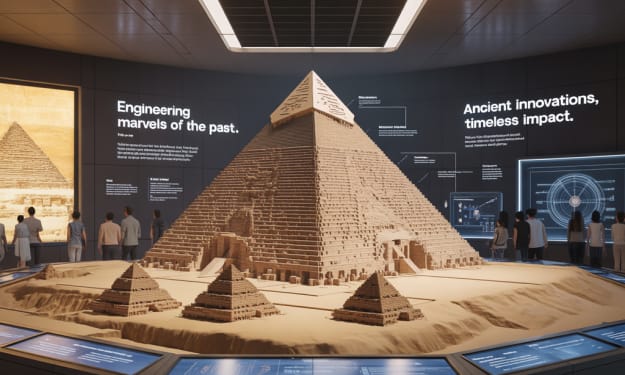
How the Pyramids Changed the World’s Understanding of Engineering. AI-Generated.
Few structures in human history have inspired as much wonder, debate, and admiration as the pyramids of ancient Egypt. Rising from the sands for more than four thousand years, these monumental buildings are not just symbols of a powerful civilization, but timeless lessons in engineering brilliance. Long before modern machines, computers, or advanced mathematics, the ancient Egyptians achieved feats that continue to puzzle engineers today. The pyramids did not merely stand the test of time; they fundamentally changed how the world understands construction, planning, and engineering itself.
By Antonuos Zarey4 days ago in History
Easter Island: When Stone Giants Tell a Human Story. AI-Generated.
In the heart of the vast Pacific Ocean, far away from crowded cities and modern noise, lies one of the most mysterious places on Earth: Easter Island. Known locally as Rapa Nui, this remote island has fascinated people for generations. I remember the first time I read about it—I couldn’t help but wonder how such a small piece of land could carry so much history, mystery, and unanswered questions. What truly defines Easter Island are its silent stone giants, standing patiently as if guarding memories from a forgotten world.
By Antonuos Zarey10 days ago in History
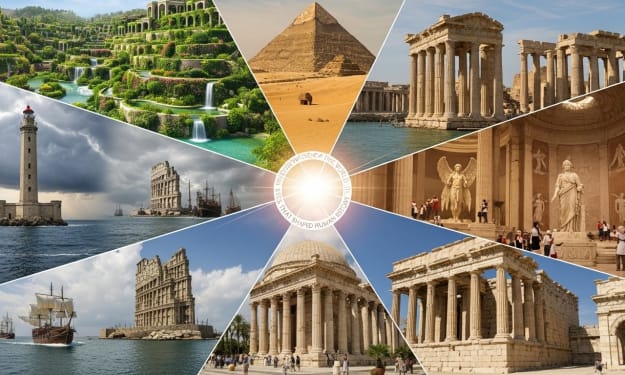
The Seven Wonders of the World: Amazing Human Creations. AI-Generated.
People have always been fascinated by things that are grand and unusual. From the very beginning of civilization, humans wanted to build structures that were not just useful, but also showed their skill, creativity, and ambition. The Seven Wonders of the World are the most famous examples of this desire. They are impressive not only because of their size or beauty, but also because of the stories they tell about our past, different cultures, and human innovation. The idea of the Seven Wonders comes from ancient travelers and historians who listed the most remarkable human creations. Even though some of these wonders no longer exist, their legacy continues to inspire people around the world. Let’s explore each one, looking at their history, significance, and why they remain unforgettable. 1. The Great Pyramid of Giza (Egypt) The Great Pyramid of Giza is the only surviving wonder of the original Seven Wonders. Built around 2560 BCE as the tomb of Pharaoh Khufu, it is an extraordinary engineering achievement. Made from more than two million limestone blocks, some weighing over 15 tons, the precision of its construction is still astonishing today. The pyramid shows the power and beliefs of ancient Egypt and continues to attract visitors from all over the world. It is a true symbol of human skill and vision. 2. The Hanging Gardens of Babylon (Iraq) The Hanging Gardens of Babylon are famous for their beauty and clever design, though historians still debate whether they really existed. Ancient stories say King Nebuchadnezzar II built these stepped gardens for his wife, Amytis, who missed the green hills of her homeland. The gardens, described as terraces full of trees, flowers, and shrubs, appeared to float above the city. Whether real or partly mythical, they show how ancient people combined nature and architecture in extraordinary ways. 3. The Statue of Zeus at Olympia (Greece) Around 435 BCE, the sculptor Phidias created the Statue of Zeus at Olympia. This huge statue of the Greek god Zeus, seated on a throne, was over 12 meters tall and made of ivory and gold-plated bronze. It represented both artistic skill and religious devotion. Even though it was destroyed long ago, records and artistic depictions keep its memory alive, showing the Greeks’ dedication to beauty, religion, and craftsmanship. 4. The Temple of Artemis at Ephesus (Turkey) The Temple of Artemis, built around 550 BCE, was dedicated to the Greek goddess of the hunt and wilderness. Known for its enormous size, detailed sculptures, and beautiful design, it was rebuilt several times after destruction, reflecting its cultural importance. People traveled from across the Mediterranean to see it, making the temple a center of religion, art, and commerce. Today, its ruins still tell the story of a civilization that valued beauty and spiritual devotion. 5. The Mausoleum at Halicarnassus (Turkey) Built between 353 and 350 BCE, the Mausoleum at Halicarnassus was the tomb of Mausolus and his wife Artemisia. Combining Greek, Egyptian, and Lycian styles, it stood around 45 meters tall and was decorated with intricate sculptures. Its design influenced monumental tombs for centuries. Even after earthquakes destroyed it, the Mausoleum remains a symbol of human creativity and architectural achievement. 6. The Colossus of Rhodes (Greece) The Colossus of Rhodes, built between 292 and 280 BCE, was a massive bronze statue of the sun god Helios, celebrating Rhodes’ victory over an invading army. Over 30 meters tall, it was one of the tallest statues of the ancient world. Although it only stood for 54 years before an earthquake toppled it, the Colossus became a symbol of triumph, resilience, and artistic achievement, inspiring large statues throughout history. 7. The Lighthouse of Alexandria (Egypt) The Lighthouse of Alexandria, or Pharos, was built around 280 BCE on the small island of Pharos. Standing over 100 meters tall, it served as both a landmark and a guide for sailors entering Alexandria’s busy harbor. Its elegant design combined functionality and beauty. Though earthquakes destroyed it long ago, it remains a symbol of human ingenuity and innovation in maritime engineering. The Legacy of the Seven Wonders The Seven Wonders are more than just buildings; they are symbols of human creativity, ambition, and achievement. Each wonder tells a story about the people who built it, the culture it came from, and the new ideas of its time. Even though some no longer exist, their stories continue to live through historical records, art, and the fascination of people worldwide. These wonders still inspire architects, artists, engineers, and travelers today. From the pyramids of Egypt to the Hanging Gardens of Babylon, they remind us that imagination and effort can create something that lasts for thousands of years. They are examples of determination, vision, and the pursuit of excellence. Conclusion The Seven Wonders of the World are timeless creations that celebrate human creativity and determination. They are more than stones, metals, or ruins—they represent entire civilizations and the marks they left on history. Even after centuries, their stories continue to inspire people to dream, create, and achieve greatness. These wonders remind us that with vision, passion, and effort, humans can build creations that
By Antonuos Zarey12 days ago in History
The Timeless Pyramids of Egypt: Stories from the Ancient World. AI-Generated.
Egypt is home to some of the most remarkable monuments ever built by humans: the pyramids. Rising from the sands of the Giza Plateau, these colossal structures have inspired curiosity and admiration for thousands of years. They were built as tombs for the pharaohs, yet they tell a much larger story—one of human skill, ambition, and belief in the afterlife. The most famous of these pyramids is the Great Pyramid of Giza, built for Pharaoh Khufu around 2580 BCE. Originally, it reached a height of about 146 meters (480 feet) and was the tallest man-made structure in the world for nearly 4,000 years. Its construction required millions of limestone blocks, some weighing several tons. Even today, historians and archaeologists are amazed at the precision and scale achieved by ancient builders without modern tools. The Egyptians built these monumental structures not merely as tombs, but as gateways to the afterlife. They believed that the pharaoh, considered a god on earth, would continue his journey in eternity. The pyramid’s triangular shape symbolized the pharaoh’s ascent to the heavens. Inside, burial chambers held treasures, inscriptions, and statues meant to guide and protect the ruler in the world beyond. How the pyramids were built remains a topic of debate. There are many theories, including the use of ramps or sledges to move the massive stones. Regardless of the methods, constructing these tombs required incredible planning, organization, and teamwork. Tens of thousands of workers labored for decades to create what would become one of the world’s greatest architectural achievements. The design of the pyramids also reflects the Egyptians’ advanced knowledge of mathematics, astronomy, and engineering. They aligned the pyramids with the cardinal points and certain stars, showing a deep understanding of the sky. The precise measurements and geometric accuracy have helped these structures survive thousands of years, enduring both natural wear and occasional earthquakes. While the Giza pyramids are the most famous, Egypt has over 100 pyramids scattered across the country, including those at Saqqara, Dahshur, and Abu Sir. Each one tells a story about the evolution of Egyptian architecture, from the earliest step pyramids to the smooth-sided ones that have become iconic. These structures also reveal much about Egyptian society, including their religious beliefs, social organization, and artistic achievements. The pyramids were not built in isolation. They were part of larger complexes that included temples, smaller tombs, and monuments that reflected the pharaoh’s divine status. They were centers of activity, culture, and ceremony, connecting the people to their rulers and to the gods they worshiped. Today, the pyramids continue to inspire awe. Millions of visitors come to Egypt each year to witness their grandeur firsthand. Archaeologists keep discovering new insights into how these incredible structures were built and what they meant to the people of ancient Egypt. Yet, despite all the research, ds stet of mystery, reminding us that some secrets of history endure across millennia. The pyramids are more than just stone monuments; they are symbols of human ambition and achievement. They remind us that with vision, skill, and persistence, people can create works that last far beyond their lifetimes. Standing in front of a pyramid, it is easy to imagine the hands that placed each block, the minds that designed the complex structures, and the determination that made the impossible possible. In the end, the Egyptian pyramids are timeless. They connect us to a world that existed thousands of years ago, teaching lessons about creativity, devotion, and human potential. They are monuments not only of history but of inspiration—a lasting testament to what humans can achieve when imagination and effort come together.
By Antonuos Zarey16 days ago in History