
"China's Lost Fortune: The Rise, Fall, and Legacy of the Empire’s Greatest Treasures"
For centuries, the emperors of China amassed one of the richest and most breathtaking collections of treasures the world has ever seen — spanning gold, jade, porcelain, silk, and rare manuscripts. This article dives into the dazzling history of the Ming and Qing dynasties' imperial wealth, explores the tragic looting of palaces during the Opium Wars and the Qing dynasty's collapse, and examines the lasting impact of China's lost treasures on global culture and national identity. Discover how modern China strives to preserve what remains of its ancient fortune, a legacy that once held the awe of the world.

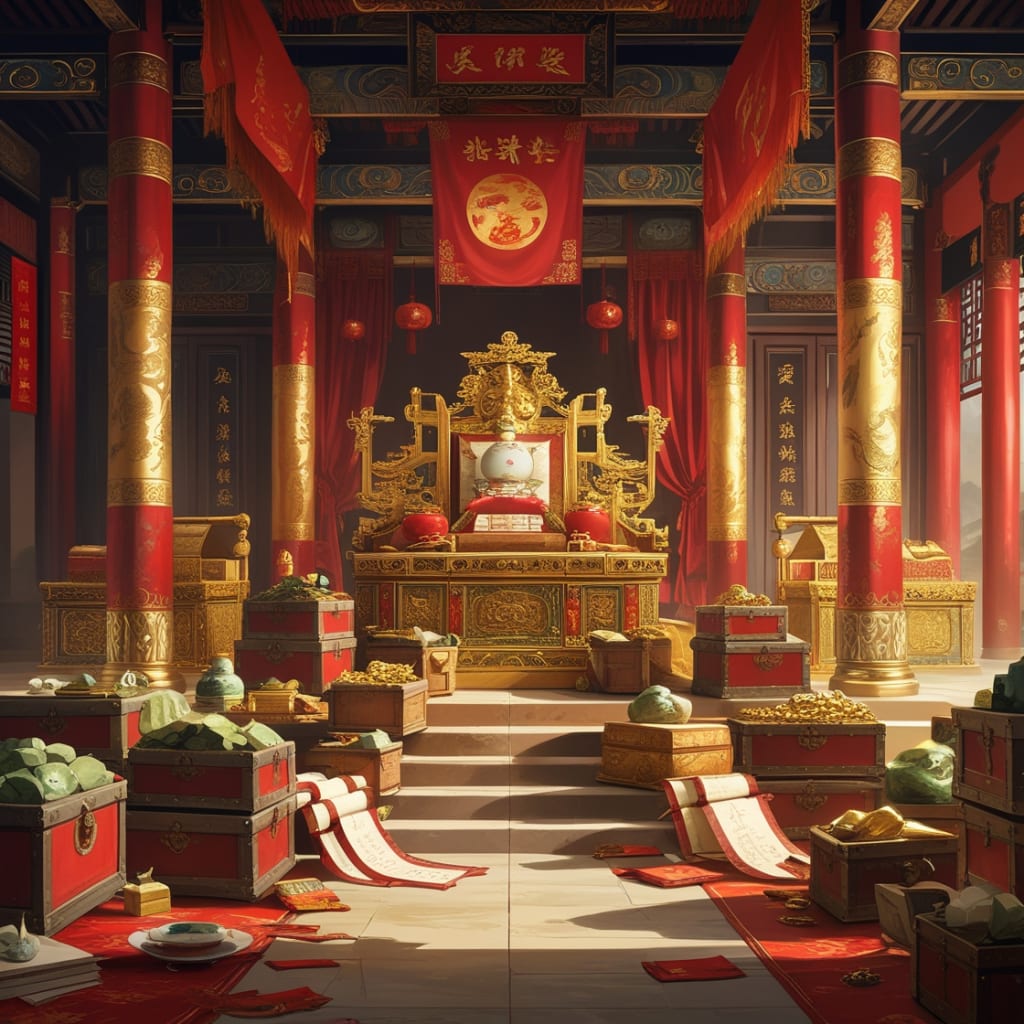
The Concealed Wealth of an Ancient Power: The Tale of China's Preeminent Imperial Treasure
For millennia, China emerged as one of the most affluent and formidable civilizations on the planet. Its emperors commanded extensive armies, constructed magnificent marvels, and amassed treasures that defied imagination. Among these, certain collections of gold, jade, porcelain, silk, and invaluable artifacts epitomized not merely opulence, but also imperial sovereignty itself.
This article delves into the illustrious imperial treasures of China, placing particular emphasis on the wealth accumulated during the Ming and Qing Dynasties, as well as the eventual fate of these riches.
Ancient China's Custom of Wealth
Chinese sovereigns historically regarded wealth as an indication of divine favor.
From the earliest dynasties, such as the Shang and Zhou (1600–256 BCE), emperors commissioned grandiose tombs, adorned with intricate bronze vessels, jade sculptures, and ceremonial items intended to accompany them into the afterlife.
One of the earliest and most renowned treasures was the collection interred with Emperor Qin Shi Huang, China's inaugural emperor, which included the Terracotta Army thousands of life-sized warriors designed to safeguard him in the afterlife.
Nevertheless, the pinnacle of Chinese imperial treasure accumulation occurred much later, during the Ming (1368–1644) and Qing (1644–1912) dynasties.
The Ming Dynasty: Cornerstone of Imperial Wealth
The Ming emperors established the groundwork for China's most extraordinary treasure hoards.
They commissioned:
Vast quantities of gold and silver through tribute missions and domestic mining operations.
Porcelain masterpieces, including the celebrated blue-and-white Ming vases.
Jade sculptures, regarded as the purest material symbolizing virtue and eternality.
Silk and embroidery, crafted by the finest artisans in Suzhou and Hangzhou.
The wealth of the Ming court gained legendary status throughout Asia and beyond.
Tributary states such as Korea, Vietnam, and early European visitors, including the Portuguese, were astonished by the riches of the Forbidden City.
During this period, the imperial court maintained treasure registries, meticulously documenting rare artifacts, ceremonial items, and precious metals.
The Qing Dynasty: Expansion and Consolidation of Wealth
Under the Qing Dynasty, the imperial treasure expanded to unprecedented proportions.
Emperors Kangxi, Yongzheng, and Qianlong (17th–18th centuries) fervently collected art, calligraphy, and rare books.
Military campaigns throughout Central Asia and Tibet yielded immense spoils of war.
Extensive tribute missions from the Ryukyu Islands, Vietnam, and Mongol khans enriched the Qing court significantly.
The Forbidden City itself evolved into not only a palace but also a vast museum housing millions of artifacts.
Perhaps the most significant symbol of Qing wealth was Emperor Qianlong's private art collection, which some historians estimate to have consisted of over a million pieces, including jade seals, paintings, bronzes, and rare manuscripts.
By the late 18th century, the Chinese empire may have controlled one-third to half of the world’s monetary silver, predominantly imported through trade with Spain, Mexico, and Europe.
In contemporary terms, some historians estimate that the imperial hoard at its zenith would equate to over $1 trillion USD today if not more.
Decline and Dispossession: The Plundering of the Imperial Treasure.
The calamity of China's imperial artifacts commenced in the 19th century, a period marked by internal insurrections and external incursions.
1. The Opium Wars and the Plunder of the Old Summer Palace
In 1860, amidst the Second Opium War, British and French forces invaded Yuanmingyuan, the Old Summer Palace located near Beijing.
Yuanmingyuan was reputed to be even more splendid than the Forbidden City, adorned with invaluable art pieces, jewelry, and rare manuscripts.
Soldiers pillaged thousands of treasures: jade sculptures, gold figures, ancient porcelain, and historical scrolls.
What could not be removed was set ablaze.
Numerous items seized during this event still exist in museums and private collections in Britain and France.
This plundering ravaged China's imperial riches and persists as a profound injury in the cultural consciousness of the Chinese people.
2. The Decline of the Qing Dynasty (1912)
As the Qing Empire disintegrated in the early 20th century:
Numerous court eunuchs, soldiers, and opportunists purloined treasures from the Forbidden City.
Invaluable items inundated illicit markets in Beijing, Shanghai, and Hong Kong.
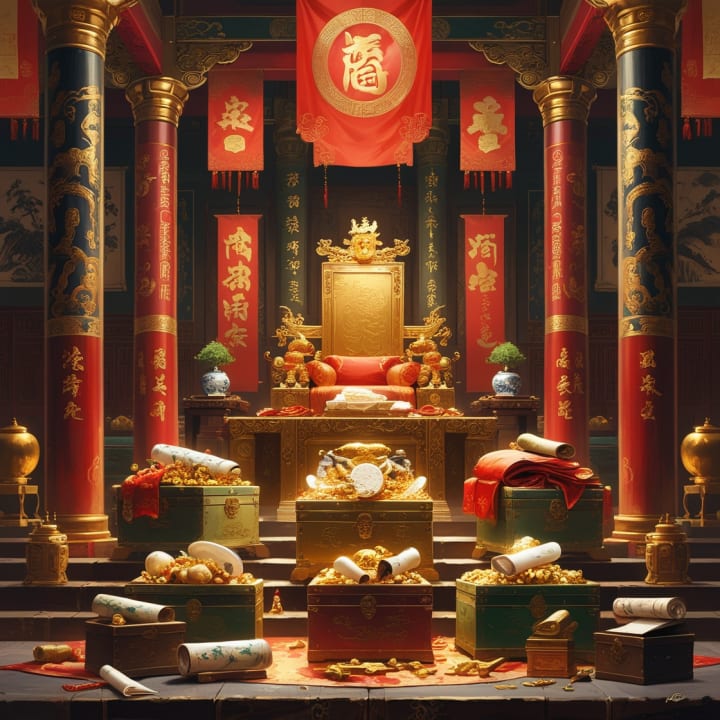
Warlords, thieves, and corrupt officials sold off national treasures for individual benefit.
Although the Republic of China (established in 1912) endeavored to catalog and safeguard what remained, much was irretrievably lost.
Preservation Initiatives: Safeguarding What Persists
Following the Second Sino-Japanese War and the Chinese Civil War, the surviving imperial artifacts confronted yet another threat.
Fearing loss to communist forces, the Nationalist government led by Chiang Kai-shek relocated over 600,000 invaluable artifacts to Taiwan in 1949.
These treasures constituted the foundation of the renowned National Palace Museum in Taipei, housing some of China's most treasured historical artifacts.
Simultaneously, mainland China implemented its own preservation initiatives in the Forbidden City, now referred to as the Palace Museum in Beijing.
Despite centuries of looting and conflict, millions of artifacts ranging from bronze ritual vessels to Ming ceramics still endure today.
Conclusion
The imperial treasures of China signify not only material wealth but also the artistic brilliance, spiritual ambitions, and political might of one of history's most illustrious civilizations.
While warfare and colonialism dispersed many of these treasures worldwide, they persist in narrating the tale of China's magnificence and its unwavering longing to recover its cultural heritage.
Currently, discussions regarding the rightful ownership of looted Chinese treasures continue in international courts and diplomatic negotiations.
The treasures of the Chinese Empire, once lost amidst chaos and violence, still influence China’s interactions with the world and its self-perception.Start writing...
About the Creator
Say the truth
"Say the Truth: Explain Everything in the World" is your trusted source for uncovering facts and exploring the wonders of history, science, technology, and beyond. We simplify complex ideas and reveal truths to inspire curiosity .
Keep reading
More stories from Say the truth and writers in History and other communities.
"Dead Hand: The Secret History of Russia’s Automatic Nuclear Retaliation System"
The Shadow of the Dead Hand: The History of Russia’s Automatic Nuclear Launch Program Throughout the Cold War era, the specter of nuclear annihilation loomed over the globe. The United States and the Soviet Union amassed thousands of nuclear weapons, bracing for the worst potential scenario: a surprise offensive that could obliterate their nations within moments. In response, the Soviet Union devised one of the most formidable and clandestine systems ever conceived the Automatic Nuclear Launch Program, referred to in the West as the Dead Hand. This system assured a retaliatory response even in the event that the entire Soviet leadership was eradicated, encapsulating the doctrine of “Mutual Assured Destruction” in its most harrowing manifestation.
By Say the truth 9 months ago in History
3 True Stories That Sound Like Urban Legends but Aren’t
Urban legends usually follow a familiar pattern. A friend of a friend hears something unbelievable, the details get hazy, and the story ends with a warning about human stupidity or bad luck. The unspoken rule is simple: if it sounds too strange to be true, it probably is.
By Enoch Sagini4 days ago in History
The Crown of Ash and Gold
In the final era of the ancient kingdom of Aurelion, the world seemed to change its tone. The skies appeared duller, the winds colder, and the streets quieter than they had ever been during the kingdom’s golden age. Aurelion was once a beacon of civilization—its stone cities gleamed under the sun, its scholars were respected across continents, and its armies had carved its name into history. Yet no empire, no matter how mighty, can escape the slow test of time.
By The best writer 7 days ago in History


Comments
There are no comments for this story
Be the first to respond and start the conversation.