
Body of Missing Man Found Intact After 28 Years in Kohistan Glacier, Pakistan
Naseeruddin’s Remains Discovered Amid Rapid Glacier Melting in Lady Valley — A Chilling Tale of Family Feud, Disappearance, and Climate Change

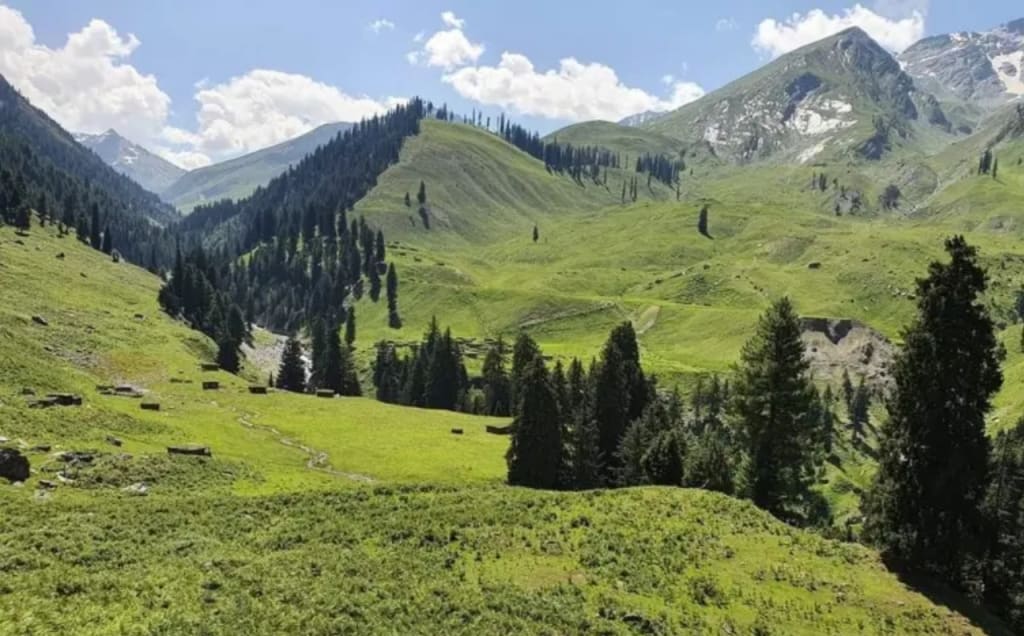
Mystery of a Missing Man’s Body Found After 28 Years in a Glacier in Kohistan, Pakistan: “The Body Was Intact, Even the Clothes Weren’t Torn”
When Umar Khan went to Lady Valley with a few friends, they unexpectedly discovered a human body while exploring the glaciers and mountains.
Umar Khan, a resident of Palas in Kohistan and a livestock trader, often visits Lady Valley during the summer. This is a region where snow remains on mountain peaks year-round, making the sudden sighting of a human body shocking to everyone.
Umar Khan explained, “The body was completely intact. Even the clothes weren’t torn.” Upon searching the body, they found a national ID card with the name “Naseeruddin” on it.
District Police Officer Amjad Hussain of Kohai Palas confirmed that this is a 28-year-old incident in which it appears the man fell into a glacier.
He added that at the time, police had completed the inquiry and closed the case, as no missing person report was ever filed by Naseeruddin’s family.
However, Umar Khan, who found the body, said, “As soon as we found the ID card, the people with me instantly remembered Naseeruddin and his family. They had once left Palas due to a family feud and disappeared into this glacier.”
Naseeruddin left behind two children and a widow.
Who Was Naseeruddin?
At the time of his disappearance, Naseeruddin was accompanied by his younger brother, Kasiruddin. The two, residents of Palas, Kohistan, had been forced to leave their hometown due to a family feud.
According to retired Kohistan police officer Abdul Aziz and other locals, one of Naseeruddin’s brothers, Gardezi, was allegedly killed in the name of “honor,” which led the family to leave the area.
Abdul Aziz said, “That was a time when access to Palas was very difficult. There were no communication networks, and such incidents usually didn’t reach the police. People also didn’t report them.”
“Police would get information through their own sources, but if the victim’s family didn’t report the matter, it was impossible for police to intervene.”
He added that when Gardezi and a girl were allegedly murdered in the name of honor, Gardezi’s father, Bahram, declared he would take revenge instead of filing a case. In response, the opposing party filed a case against Bahram and his sons, Naseeruddin and Kasiruddin.
According to the retired officer, “The father surrendered himself to authorities, but the two brothers went into hiding fearing arrest. Years later, Bahram was acquitted, but the family couldn’t return to Palas and moved to Allai.”
Kasiruddin said he remained a fugitive until 2023, when he finally surrendered and was acquitted a few months later.
How Did Naseeruddin Disappear?
On August 3, 2025, when Kasiruddin went to Lady Valley to retrieve his brother’s body, he spoke to the BBC. He said he and Naseeruddin had come from Allai to the Supat Valley in Kohistan to buy horses for trade.
They used to bring livestock and horses from Kohistan to Allai, where there was high demand.
Due to the family feud, they often took unconventional and dangerous routes.
This was in June 1997. After buying the horses in Supat Valley, they traveled to Naran-Kaghan and spent the night there before heading back to Allai. Upon re-entering the Kohistan region, they asked for directions and were guided toward Lady Valley.
Kasiruddin said that during the afternoon, while traveling through Lady Valley, Naseeruddin was on horseback, and he was walking on foot. “When we reached the top, suddenly, we heard gunshots.”
According to him, he suspected that the gunfire came from enemies. However, there is no independent confirmation of this, and local police did not receive any such report.
Kasiruddin insists that after the gunfire, Naseeruddin entered a cave. “I turned back to where I saw him enter the ice cave, but he wasn’t there. I even stepped into the icy cave, but found nothing.”
He said he searched for his brother with the help of others for a long time, but failed. Eventually, on family advice, he offered a funeral prayer (janaza) at the glacier, assuming his brother had perished.
Umar Khan said that although he visits this area almost every year, “What I saw this year is unbelievable.”
“This year, the glacier is melting rapidly, and we feel the temperatures are noticeably higher in the area.”
He added that when Naseeruddin was possibly trapped in the glacier or cave, he may have survived only for a few minutes. “We didn’t find any remains of the horse either.”
He believes the body remained inside the glacier for many years, which is likely why it was so well-preserved.
Bodies preserved in glaciers are often found in surprisingly intact conditions, even after centuries.
Umar Khan said he had to hike for a day to reach an area with mobile signal, after which he contacted Naseeruddin’s relatives.
We buried the body temporarily, fearing that it might decompose if left exposed outside the glacier.”
Kasiruddin said, “We’re now headed toward Beladi. After 28 years, I am going back there. Once there, I’ll decide whether to leave my brother’s body buried at the current site or bring it back.”
He added that decision would also depend on whether their former rivals allow the burial to take place in Palas or not.
Glaciers Are Melting Rapidly
Professor Dr. Muhammad Bilal, Head of the Environmental Sciences Department at COMSATS University Abbottabad, explained the science behind the phenomenon.
“When a body enters a glacier, the extremely cold temperature rapidly freezes it,” he said.
This sudden freezing prevents decomposition. Additionally, the natural enzymes and bacteria that usually break down tissue become inactive in the freezing environment.”
Dr. Bilal said that oxygen levels in glaciers are also very low, making it difficult for bacteria that rely on oxygen to survive and decompose the body. Low moisture content also causes the body’s fluids to dry out. This process is called ‘mummification,’ where the body dries naturally and can remain preserved for extended periods.
He added that the surrounding snow forms a natural protective layer around the body. “This layer shields the body from external elements, germs, insects, and temperature changes. All these factors drastically slow down or stop the decomposition process, which is why even bodies that are thousands of years old are sometimes found intact in glaciers.”
However, he also noted that the reappearance of such bodies is a sign of climate change, indicating that glaciers are melting faster.
Dr. Adnan Ahmad Tahir, a glacier researcher from COMSATS University Abbottabad, said that the body found in Lady Valley had likely been buried under snow for years.
Our glaciers are retreating and melting at an unusual rate due to several environmental factors.”
He cited flash floods and glacial lake outburst events as examples and said that similar events are causing an increase in the recovery of buried objects and bodies.
In the past three years, snowfall in these regions has decreased, and snow now melts more quickly, exposing glaciers directly to sunlight and accelerating their melting,” he explained.
About the Creator
Keep reading
More stories from Real content and writers in History and other communities.
Baloch Liberation Front's major operation against Pakistan ends, 84 attacks in three days
This news article is for educational purposes only. OPERATION BAAM The Baloch separatist organization Baloch Liberation Front launched an operation against the Pakistan Army and institutions from July 9 to July 11, which ended on the night of July 11.Major kahram Baloch, spokesman for the Balochistan separatist organization Balochistan Liberation Front (BLF), said that the BLF carried out a total of 84 attacks, in which Pakistani forces and state institutions were severely damaged on various fronts. In these operations, at least 50 FC and army personnel were killed, while more than 51 were injured, and 9 personnel of Pakistan intelligence agencies were also killed. The details of all these attacks are as follows.
By Real content6 months ago in History
Nobel Peace Prize
The Nobel Peace Prize has stood as one of the world’s most recognized honors. Awarded annually in Oslo, it is meant to celebrate individuals or organizations that have made significant contributions toward peace, diplomacy, and humanitarian progress. While its mission appears straightforward, the Nobel Peace Prize has never been free from debate. In recent years, conversations surrounding global politics—particularly discussions about the Trump Nobel Peace Prize—have brought renewed attention to how peace is defined, measured, and rewarded in the modern era. The Origins and Meaning of the Nobel Peace Prize The Nobel Peace Prize was established by Alfred Nobel, the Swedish inventor best known for creating dynamite. In his final will, Nobel directed that a portion of his wealth be used to recognize efforts that foster peace among nations, reduce standing armies, or promote diplomacy and cooperation. Since its first award in 1901, the prize has honored activists, diplomats, organizations, and world leaders whose actions shaped international dialogue. Unlike other Nobel categories, the peace prize is awarded by a Norwegian committee rather than a Swedish institution. This distinction reflects Nobel’s desire to separate the prize from national interests and focus instead on global responsibility. Over time, the definition of “peace” has expanded. Early recipients were often disarmament advocates or mediators. More recent laureates have included human rights defenders, climate activists, and international organizations working in conflict zones. Politics and the Nobel Peace Prize Despite its humanitarian ideals, the Nobel Peace Prize has always intersected with politics. Recognizing peace efforts often means evaluating political leadership, international negotiations, and long-term consequences—none of which are easy to measure in real time. Some awards have been widely celebrated, while others sparked controversy. Critics often argue that certain laureates were honored prematurely, before the lasting results of their actions became clear. Supporters counter that the prize is meant to encourage peace efforts, not merely reward completed achievements. This tension has made the Nobel Peace Prize a reflection of global priorities at any given moment, rather than a simple historical judgment. Donald Trump and Nobel Peace Prize Discussions Few modern political figures have generated as much debate in connection with the Nobel Peace Prize as Donald Trump. During and after his presidency, conversations about a potential Trump Nobel Prize emerged repeatedly, particularly among supporters who pointed to his role in diplomatic initiatives. The phrase Trump Nobel Peace Prize gained traction following agreements and negotiations in regions long marked by conflict. Advocates argued that these diplomatic efforts aligned with Alfred Nobel’s vision of reducing international tension through dialogue rather than force. At the same time, critics questioned whether these actions met the broader ethical and humanitarian standards traditionally associated with the award. They pointed to domestic divisions, foreign policy controversies, and unresolved global conflicts as reasons for skepticism. This divide highlights a core challenge of the Nobel Peace Prize: peace is rarely absolute, and political leadership is often complex and contradictory. Trump Nobel Peace Prize 2026: Speculation and Context As global politics continue to evolve, speculation around a Trump Nobel Peace Prize 2026 has appeared in media discussions and public commentary. It is important to note that nominations for the Nobel Peace Prize are confidential for decades, and speculation does not confirm consideration or selection. However, the mere discussion of Trump Nobel Peace Prize 2026 reflects how the award has become part of broader cultural and political conversations. Supporters view such recognition as validation of diplomatic achievements, while critics see the speculation as politicizing an institution meant to rise above partisan debate. This dynamic is not unique to Trump. Many past leaders, from various ideological backgrounds, were debated heavily before or after receiving the prize. The Nobel Peace Prize often mirrors global disagreements rather than resolving them. How the Nobel Committee Makes Its Decision Each year, hundreds of nominations are submitted by qualified individuals, including academics, lawmakers, and previous laureates. The Nobel Committee evaluates these nominations through research, expert consultation, and internal debate. The process considers intent, impact, and long-term significance. However, because peace efforts often unfold over years or decades, the committee must make decisions without full historical clarity. This reality explains why some awards age gracefully while others remain controversial. The committee rarely responds directly to public pressure or online campaigns. Media attention, including discussions around a Trump Nobel, does not guarantee influence over the final decision. The Broader Impact of the Nobel Peace Prize Beyond individual recipients, the Nobel Peace Prize plays a symbolic role. It brings global attention to issues that might otherwise be ignored, from humanitarian crises to fragile peace processes. Even controversial nominations can spark meaningful debate about what peace truly means in the modern world. The prize also raises questions about accountability. When leaders are considered for such recognition, the public is encouraged to examine policies, outcomes, and moral responsibility more closely. In this sense, discussions surrounding the Trump Nobel Peace Prize are not just about one individual. They reflect deeper conversations about diplomacy, leadership, and the evolving standards by which peace is judged. Conclusion: A Prize That Reflects the World The Nobel Peace Prize remains one of the most influential and debated honors in global society. Its power lies not only in recognizing peace efforts but also in challenging the world to think critically about conflict, cooperation, and responsibility. Whether discussions involve historic activists or modern political figures like those associated with Trump Nobel Peace Prize 2026 speculation, the award continues to reflect the complexities of international relations. Peace is rarely simple, and neither is the process of honoring it. Ultimately, the Nobel Peace Prize serves as a reminder that striving for peace is an ongoing journey—one shaped by ideals, actions, and the difficult choices that define human history.
By Saboor Brohi 4 days ago in History
The History of America — A Nation Forged by Struggle and Change
Long before the name “America” existed, the vast lands of North America were home to millions of Indigenous peoples. These societies—such as the Navajo, Iroquois, Cherokee, Apache, and many others—developed rich cultures, languages, and systems of governance. They farmed, hunted, traded, and built complex communities deeply connected to the land. For thousands of years, these civilizations thrived, long before European ships ever crossed the Atlantic.
By The best writer 2 days ago in History
Silver Screen Magic with Mae West
American actress and singer Mae West became a popular film actress during the Great Depression. She started entertaining in vaudeville, then performed on Broadway, and finally went to Hollywood. She signed up with Paramount Pictures and made her debut in the 1932 film “Night After Night.” She also starred in musicals, comedies, and crime dramas. The American Film Institute named her one of the best classic Hollywood actresses.
By Rasma Raisters6 days ago in Geeks



Comments
There are no comments for this story
Be the first to respond and start the conversation.