
Beyond the Page: Unearthing History Through Fiction
Three Novels That Bridge the Past and Present


What if the stories we read weren't just confined to the pages of a book, but offered a portal to understanding the complex tapestry of history? For history enthusiasts, immersing oneself in a well-crafted historical novel can be a profoundly satisfying experience, a journey through time brought to life by the writer's skillful hand. This article explores three such novels, each offering a unique lens through which to examine the past.
1. Unmasking the Impaler: Elizabeth Kostova's The Historian
Elizabeth Kostova's The Historian (2005) masterfully weaves together historical fact and gothic fiction, centering on the shadowy figure of Vlad III, the Impaler, the historical inspiration for Dracula. The novel unfolds as a young woman uncovers her father's connection to a centuries-old quest to uncover the truth behind Vlad's legacy.
Kostova's meticulous research is evident on every page. Her depiction of Eastern European landscapes, cities, and historical events provides a rich and immersive backdrop for the narrative. For instance, the descriptions of Ottoman expansion into Wallachia during the 15th century, a key period in Vlad's life, are historically grounded, providing context for his brutal reputation. Did you know that Vlad's practice of impalement was not unique to him, but a common form of punishment during that era, used by both the Ottomans and Wallachians? This context helps to understand the historical backdrop of his actions, even as the novel delves into the realm of legend. The book also touches on the complex relationship between the Orthodox Church and secular powers in the region, a dynamic that influenced events of the time. This careful blending of history and folklore creates an atmosphere of suspense and intrigue, drawing the reader into the heart of the mystery.
2. Roosevelt's Pacific Ambitions: James Bradley's The Imperial Cruise
James Bradley's The Imperial Cruise: A Secret History of Empire and War (2009) delves into a lesser-known chapter of American history: Theodore Roosevelt's imperial ambitions in the Pacific at the turn of the 20th century. The book focuses on a 1905 diplomatic mission led by then-Secretary of War William Howard Taft (later president) aboard the USS Ohio.
Bradley’s narrative style combines meticulous historical research with compelling storytelling. The book reveals how prevailing racial attitudes shaped American foreign policy during this period. For example, the book explores the US acquisition of the Philippines after the Spanish-American War and the subsequent brutal Philippine-American War, where hundreds of thousands of Filipinos died. It highlights the prevalent belief in "Manifest Destiny" and the "White Man's Burden," ideas that justified American expansionism and the subjugation of other nations. Did you know that the United States employed tactics like "water cure" torture during the Philippine-American War, a practice later condemned? This detail, among others, unveils the darker side of American imperialism, a truth often omitted from traditional historical narratives.
3. Medieval Mysteries: Simon Beaufort's The Tainted Relic
Simon Beaufort's The Tainted Relic (2005) transports readers to 11th-century England, immersing them in a world of medieval intrigue. The story follows a Welsh prince, Owain, who investigates a murder linked to a holy relic.
Beaufort masterfully recreates the medieval world, paying close attention to details of architecture, clothing, social customs, and daily life. The novel effectively portrays the power and influence of the Church during this period, as well as the political machinations of the English court. Were relics as important as the book portrays them? Absolutely. Relics, believed to possess miraculous powers, played a vital role in medieval religious life and were often objects of pilgrimage and veneration. The trade in relics was a significant economic activity, and their possession conferred prestige and authority. The book effectively weaves this historical context into the narrative, creating a believable and engaging mystery.
"Books are a uniquely portable magic." - Stephen King
These three novels, while vastly different in subject matter, share a common thread: they use fiction to illuminate historical events and offer a deeper understanding of the past. They invite us to not just read about history, but to experience it, to feel its weight and complexity. As you consider the power of historical fiction to shape our understanding of the past, ask yourself: Can fiction sometimes reveal historical truths that traditional history books might overlook?
If you found value and enjoyment in this article, consider supporting me through BuyMeACoffee. Your support helps me create more insightful and interesting content. Thank you so much 😊…
About the Creator
Anthony Michael
A Student of History, an Aspiring Writer (Still Learning), & Likes to Collect Vintage Items. Currently, spending some time learning and studying online income methods.
Keep reading
More stories from Anthony Michael and writers in History and other communities.
Twisted Tales from the Past # 1
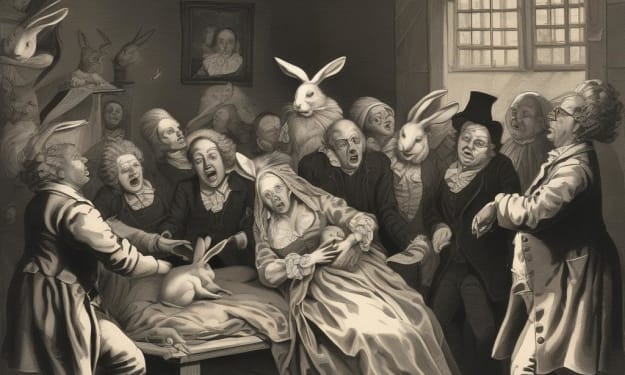
What if a shocking medical marvel turned out to be an elaborate hoax that fooled an entire nation? A Sensation is Born In 1726, in the quiet town of Godalming, England, a peasant woman named Mary Toft became the center of one of the most bizarre medical scandals in history. Mary, already a mother of three, claimed to have given birth—not to a human child—but to rabbits. This astonishing news quickly spread, capturing the imaginations of the public and the medical community.
By Anthony Michaelabout a year ago in History
Mystery of the Egyptian Pyramids: Has the Most Complex Puzzle Finally Been Solved?
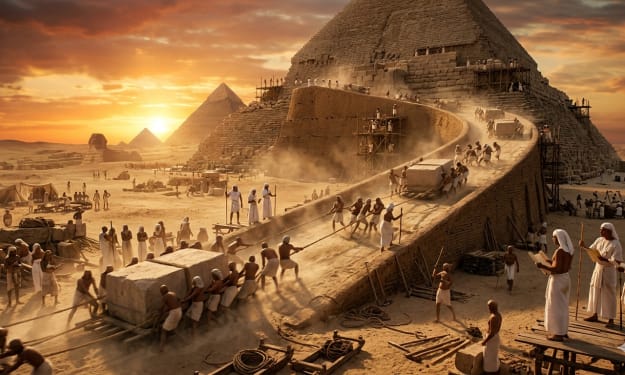
For centuries, the construction of the great pyramids of Egypt has been one of the world’s most fascinating historical mysteries. Towering above the desert sands near the ancient city of Giza, these monumental structures have puzzled historians, engineers, and archaeologists alike. How could a civilization that existed more than 4,500 years ago build such massive and precisely aligned structures without modern machinery?
By Irshad Abbasi 5 days ago in History
A Transparent Look at Vocal Challenges and Top Stories
Almost three years ago, we shared a resource article that served as a place for people to suggest new challenge prompts. We thought it would be a good idea to refresh that thread, and take the opportunity to answer a few common questions about top stories, how challenges are judged and how submissions are reviewed.
By Vocal Curation Team3 days ago in Resources


Comments
There are no comments for this story
Be the first to respond and start the conversation.