
Bengali Pahela Boishakh
The Joyous Celebration of the Bengali New Year and Its Deep Cultural Significance
Introduction
The first day of the Bengali calendar, Pahela Boishakh, is more than just the beginning of a new year. It is a colorful, cultural, and spiritual celebration that brings together communities and brings together millions of Bengali people in Bangladesh and West Bengal in India. Pahela Boishakh is a festival of renewal, hope, and unity that is rooted in history and tradition and embodies the spirit of Bengali identity and heritage.________________________________________
Historical Origins
The Bengali calendar, known as the Bangabda, was introduced during the reign of Mughal Emperor Akbar in the 16th century. It started out as a solar calendar to coincide with the agricultural seasons and make tax collection easier. Over the years, it evolved into a cultural touchstone for Bengalis, irrespective of religion or region.
Pahela Boishakh is observed on April 14th or 15th every year, depending on regional variations. It is significant to people who live in urban and rural areas alike because it marks the end of the harvest season and the start of a new life cycle.
Cultural Significance
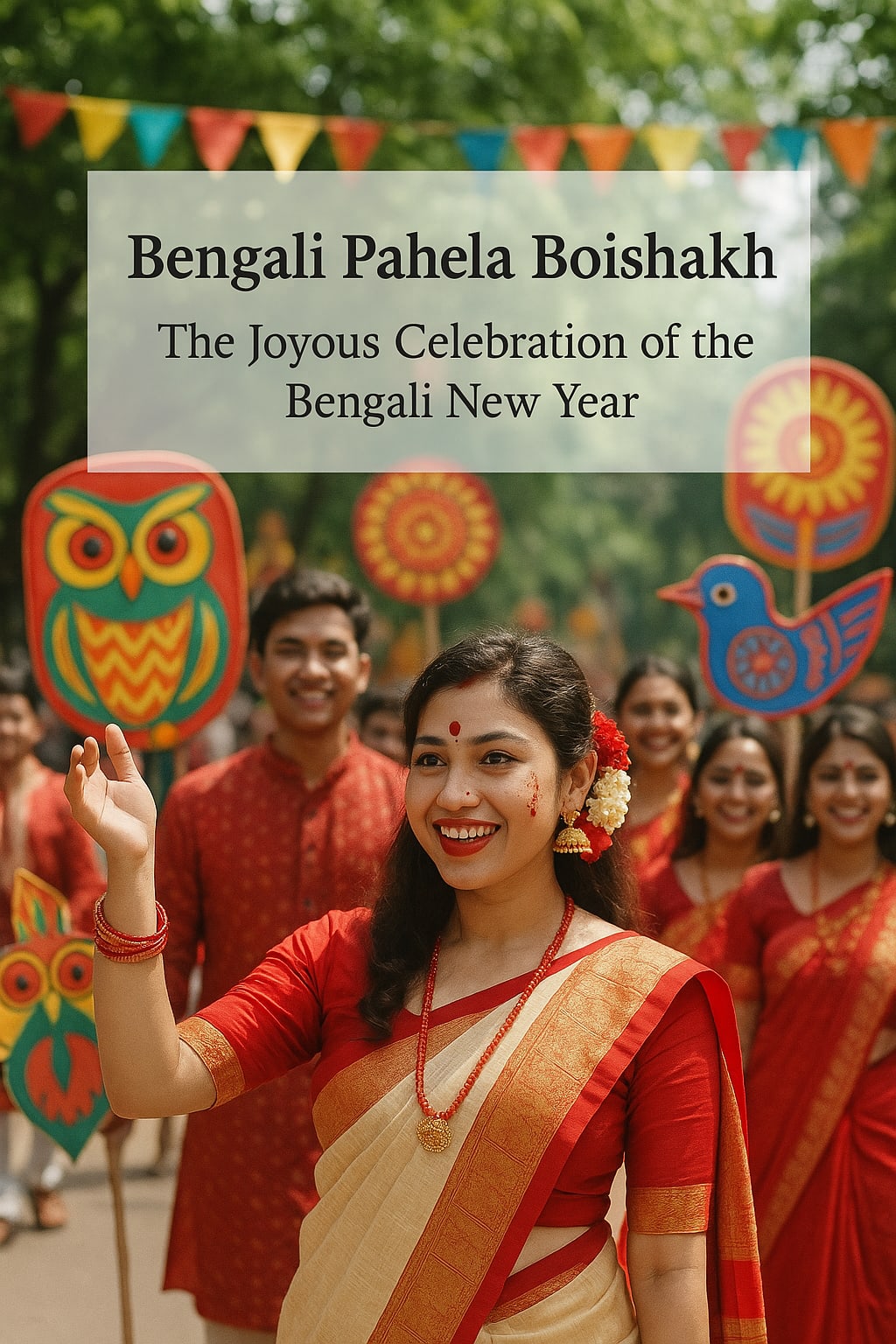
Pahela Boishakh is more than just a New Year's Day; it represents a celebration of Bengali culture in all its richness. The day begins with the traditional chant of “এসো হে বৈশাখ, এসো এসো” (Esho he Boishakh, esho esho — "Come, O Boishakh, come!"), immortalized by the great poet Rabindranath Tagore. The morning usually starts with cultural programs, music, and processions that showcase traditional dances, songs, and poetry readings.
The "Mangal Shobhajatra," a grand, colorful parade organized by students and artists, particularly from the Faculty of Fine Arts at the University of Dhaka, is one of this festival's most recognizable symbols. In 2016, UNESCO designated this procession as an Intangible Cultural Heritage of Humanity because it included floats, masks, and symbolic artworks that represented progress, peace, and resistance to evil.
Traditional Attire and Food
On this festive day, people dress in traditional Bengali clothing — women in white and red sarees with flowers adorning their hair, and men in punjabis and pajamas. These colors stand for celebration and purity. The streets, parks, and markets are all decorated with vibrant Alpana, a type of traditional floor art, and Bengali calligraphy, evoking a festive atmosphere. Food is an important part of the celebrations. Panta Bhaat (fermented rice), Ilish Maach (Hilsa fish), lentils, green chillies, and fried eggplant are all components of a typical Pahela Boishakh meal. The day is also celebrated with sweets like Rosogolla, Sandesh, and Pitha, making it a culinary delight.
Business and Boishakhi Melas
Pahela Boishakh is traditionally also a significant day for business communities, particularly Bengali Hindus. Business owners use a custom known as Halkhata to open new ledgers, close old ones, and give customers sweets in exchange for blessings from deities. It stands for a new beginning and a prosperous future. Boishakhi Melas, or fairs, spring up in towns and villages, selling traditional crafts, toys, foods from the area, and folk entertainment. These fairs are an important part of the rural celebration because they help to keep old customs alive and strengthen bonds between communities.
Unity Beyond Religion
One of the most beautiful aspects of Pahela Boishakh is its inclusive nature. Despite its origins in a Mughal administrative reform, the celebration is celebrated by Christians, Muslims, Hindus, and Buddhists of all faiths. In Bangladesh, where the celebration is a national holiday, it stands as a symbol of secularism and unity in diversity.
Conclusion
Pahela Boishakh is more than just a date on the calendar. It is a celebration of life, a tribute to Bengali culture, and a reminder of the community's shared identity. The joy of Pahela Boishakh is universal and contagious, whether you're walking through a bustling Mangal Shobhajatra in Dhaka, eating a home-cooked meal in a village, or attending cultural performances in Kolkata. The Pahela Boishakh traditions enable us to pause, reflect, and connect with our roots, our people, and our hopes for a brighter future in a world that is becoming increasingly digital and fast-paced.
Shubho Noboborsho! (Happy Bengali New Year!)
About the Creator
Ahmed Bin Belal
Digital storyteller exploring esports, gaming, and tech’s rise. I write insights on players, trends, and the future of digital culture on Vocal.
Keep reading
More stories from Ahmed Bin Belal and writers in History and other communities.
The Global Cost of Tariffs: How Trade Barriers Impact Earth’s Economy and Environment
Economics, politics, and protectionism all play a role in the discussion of tariffs, or taxes on imported goods. However, their influence goes far beyond national interests and market strategies. Tariffs have an impact not only on economies but also on the environment, public health, and global equity in today's interconnected world. Understanding how trade barriers like tariffs affect human progress and the planet we share is essential as nations confront rising climate concerns and the need for sustainable development.
By Ahmed Bin Belal11 months ago in Journal
The Mysterious Arms Drop: When Weapons Fell from the Sky Over India
In the mid-1990s, one of the most mysterious and controversial arms smuggling operations in South Asia unfolded in dramatic fashion when a large cache of weapons literally fell from the sky in eastern India. The incident involved an aircraft traveling between Karachi and Dhaka, allegations of international intelligence links, and a clandestine mission that continues to raise questions about who was behind it and why.
By Irshad Abbasi 2 days ago in History
Worth the Wait: Puerto Viejo, Costa Rica
Beach bumming in a small Caribbean beach town sounded like a perfect way to end our 6-month trip through Mexico and Central America. Or so we thought. The foul, fishy stench of rotten seaweed hit our nostrils as we stepped from the cramped bus and looked out at a rather depressing, empty, and underwhelming black sand beach. It was pouring with rain, and we had to quickly fish out our ponchos. We thought, this couldn’t be it, could it?
By Sh*t Happens - Lost Girl Travel3 days ago in Wander



Comments (2)
support me ..i will u
nice