
Becoming a Spy Woman
The likes of Margaretha Zelle (Mata Hari) and Nancy Wake.

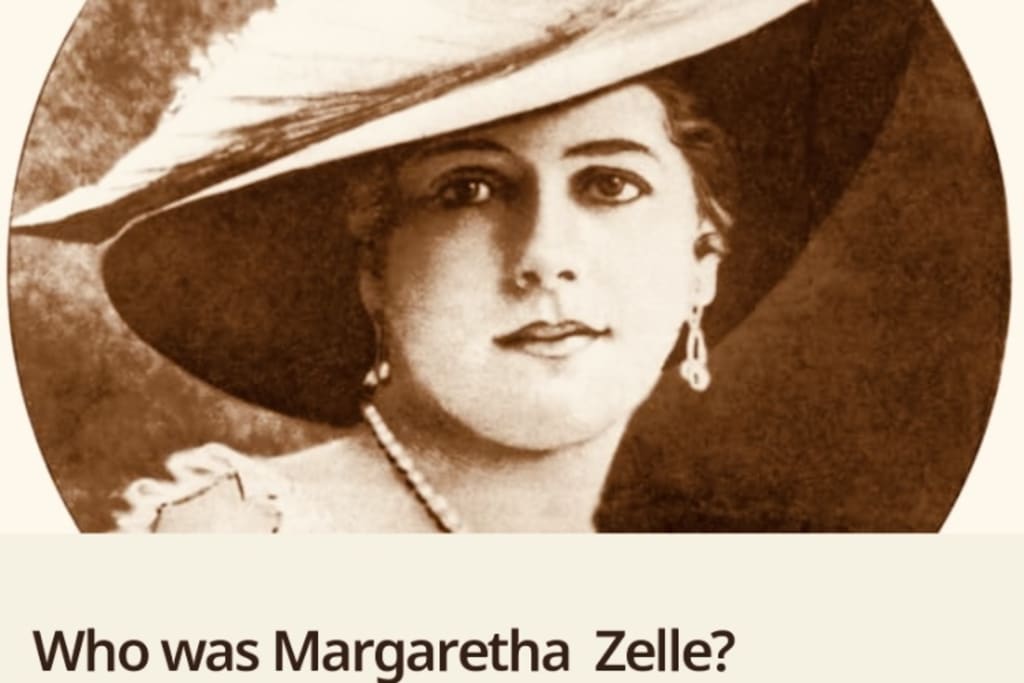
I am a spy woman.
I was born 7 August 1876 in Leeuwarden, Netherlands. The eldest of four children to Antje van der Meulen and Adam Zelle. I had three younger brothers; Johannes, Arie, and Cornelis. Both of my parents were Dutch. My father owned a hat shop, made investments in the oil industry, and became affluent enough to give me and my siblings a lavish early childhood, which included exclusive schools, until the age of 13.
My father went bankrupt shortly after. My parents divorced, and my mother died in 1891. Father remarried in Amsterdam, but the family fell apart, and I was sent to live with my godfather, in Sneek. I studied to be a kindergarten teacher in Leiden, but when the headmaster began to flirt with me conspicuously, I was removed from the institution by my godfather. A few months later, I fled to my uncle's home in The Hague.
At 18, I answered an advertisement in a Dutch newspaper placed by Dutch Army Captain Rudolf Mcleod, who was living in the Dutch East Indies, and was looking for a wife. I married MacLeod in Amsterdam on 11 July 1895. The marriage enabled me to move into the Dutch upper class and placed my finances on a sound footing. I moved with my husband to Malang on the east side of the island of Java, we had two children, Norman and Louise.
The marriage was an overall disappointment. Rudolf was an alcoholic and was physically abusive. He blamed me for his lack of promotion. He also openly kept a concubine, a socially accepted practice in the Dutch East Indies. I abandoned him temporarily, moving in with Van Rheedes, another Dutch officer. I studied Indonesian culture intensely for several months and joined a local dance company. I named myself Mata Hari, the word for "sun" in the local Malay language.
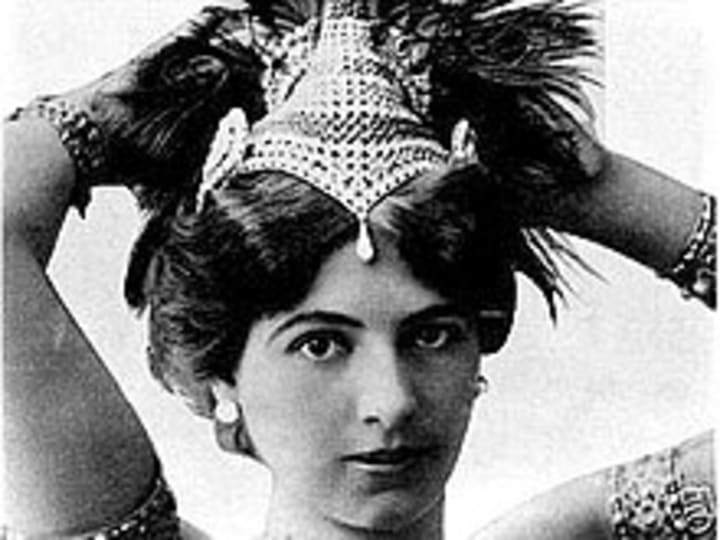
This was not a good time for women.
At Rudolf's urging, I decided to return to him, but his behavior did not change. I sought escape from my circumstances by studying the local culture. The children fell violently ill and died. Rudolf and I officially divorced in 1906. Rudolf had never paid child support and our lives had been extremely hard.
This development caused me much pain, I had struggled to survive and without help from Rudolf I was unable to live the way I should have to take care of the children.
In 1903, I moved to Paris, where I performed as a circus horse rider using the name Lady MacLeod.
Promiscuous, flirtatious, and openly flaunting my body, I captivated my audiences and was an overnight success from the debut of my act at the Musée Guimet on 13 March 1905. I became the long-time mistress of the millionaire industrialist Émile Étienne Guimet, who had founded the Musée. I posed as a Javanese princess of priestly Hindu birth, pretending to have been immersed in the art of sacred Indian dance since childhood. I was photographed numerous times during this period, nude or nearly so. Some of these pictures had been obtained by MacLeod and helped strengthen his case against me.
The Mata Hari persona brought a carefree provocative style to the stage in her act, which garnered wide acclaim. The most celebrated segment of her act was her progressive shedding of clothing until she wore just a jeweled breastplate and some ornaments upon her arms and head. (I was never seen bare-chested as I was self-conscious about having small breasts) Mata Hari wore a bodystocking for her performances that was similar in color to her skin, but that was later omitted.
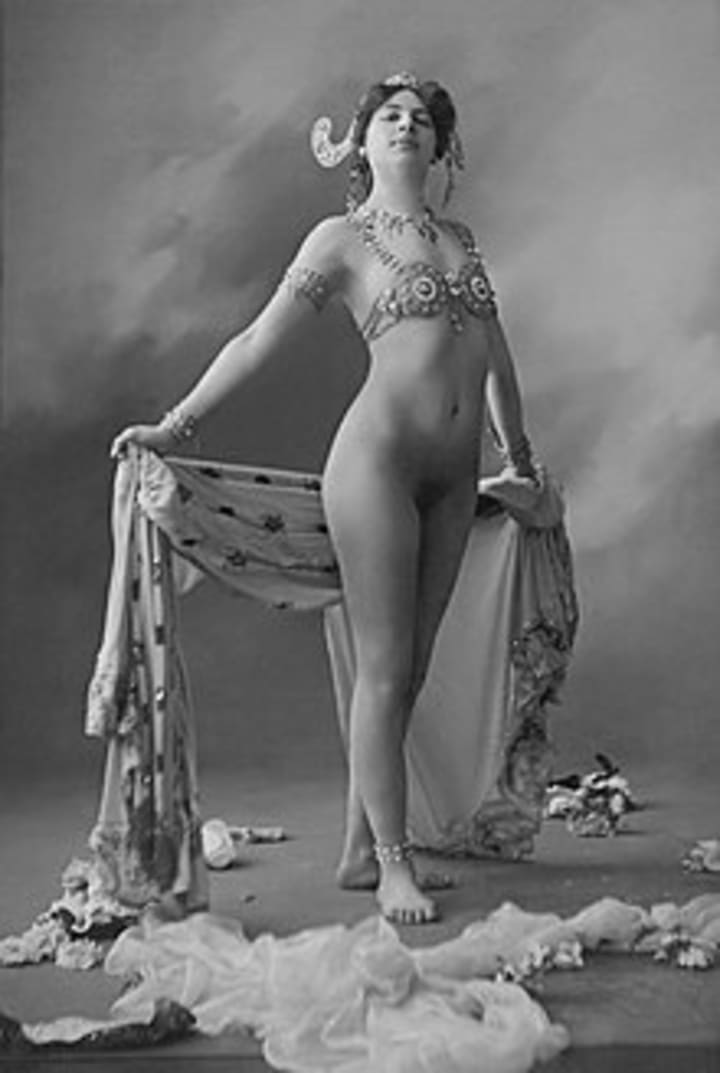
Although claims about my origins were fictitious, it was common for entertainers of my era to invent colorful stories about their origins as part of the show. My act was successful because it elevated erotic dance to a more respectable status and broke new ground in a style of entertainment for which Paris would be later world-famous. My style and free-willed attitude made me a popular woman, as did my eagerness to perform in exotic and revealing clothing. I posed for provocative photos and mingled in wealthy circles. Since most Europeans at the time were unfamiliar with the Dutch East Indies, my Mata Hari persona was thought of as exotic, and it was assumed my claims were genuine. One enthusiastic French journalist wrote in a Paris newspaper that Mata Hari was "so feline, extremely feminine, majestically tragic, the thousand curves and movements of her body trembling in a thousand rhythms. One journalist in Vienna wrote after seeing one of her performances that Mata Hari was "slender and tall with the flexible grace of a wild animal, with blue-black hair" and that her face "makes a strange foreign impression".
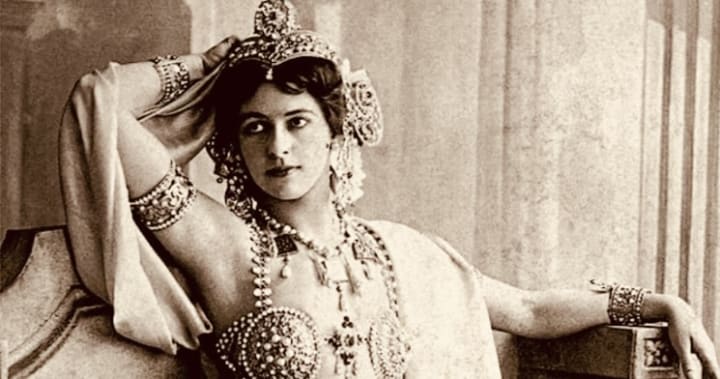
My Mata Hari career went into decline after 1912. On 13 March 1915, she performed in the last show of her career. I had begun my career relatively late as a dancer and had started putting on weight. However, by this time, I had become a successful courtesan, known more for my sensuality and eroticism than for my classical beauty. I had relationships with high-ranking military officers, politicians, and others in influential positions in many countries. My relationships and liaisons with powerful men frequently took me across international borders. Before World War I, I was generally viewed as an artist and a free-spirited bohemian, but as war approached, I began to be seen by some as a wanton and promiscuous woman, and perhaps a dangerous seductress.
During World War I, the Netherlands remained neutral. As a Dutch subject, I was thus able to cross national borders freely. To avoid the battlefields, I traveled between France and the Netherlands via Spain and Britain, and my movements inevitably attracted attention. During the war, I was involved in what was described as a very intense romantic-sexual relationship with Captain Vadim Maslov, a 23-year-old Russian pilot serving with the French, whom I considered the love of my life. Maslov was part of the 50,000-strong Russian Expeditionary Force sent to the Western Front in the spring of 1916.
In the summer of 1916, Maslov was shot down and badly wounded during a dogfight with the Germans, losing his sight in his left eye, which led me to ask for permission to visit my wounded lover at the hospital where he was staying near the front. As a citizen of a neutral country, I would not normally be allowed near the front. I was met by agents from the Deuxième Bureau who told me that I would be allowed to see Maslov if I agreed to spy for France.
"Before the war, Zelle had performed as Mata Hari several times before the Crown Prince Wilhelm, eldest son of Kaiser Wilhelm II and nominally a senior German general on the Western Front. The Deuxième Bureau believed she could obtain information by seducing the Crown Prince for military secrets. In fact, his involvement was minimal, and it was German government propaganda that promoted the image of the Crown Prince as a great warrior, the worthy successor to the Hohenzollern monarchs who had made Prussia strong and powerful. They wanted to avoid publicizing that the man expected to be the next Kaiser was a playboy noted for womanizing, partying, and indulging in alcohol, who spent another portion of his time associating with far right-wing politicians, with the intent to have his father declared insane and deposed".
Unaware that the Crown Prince did not have much to do with the running of Army Group Crown Prince or the 5th Army, the Deuxième Bureau offered me 1 million francs if I could seduce him and provide France with good intelligence about German plans. The fact that the Crown Prince had, before 1914, never commanded a unit larger than a regiment, and was now supposedly commanding both an army and an army group at the same time should have been a clue that his role in German decision-making was mostly nominal. My contact with the Deuxième Bureau was Captain Georges Ladoux, who later emerged as one of my principal accusers.
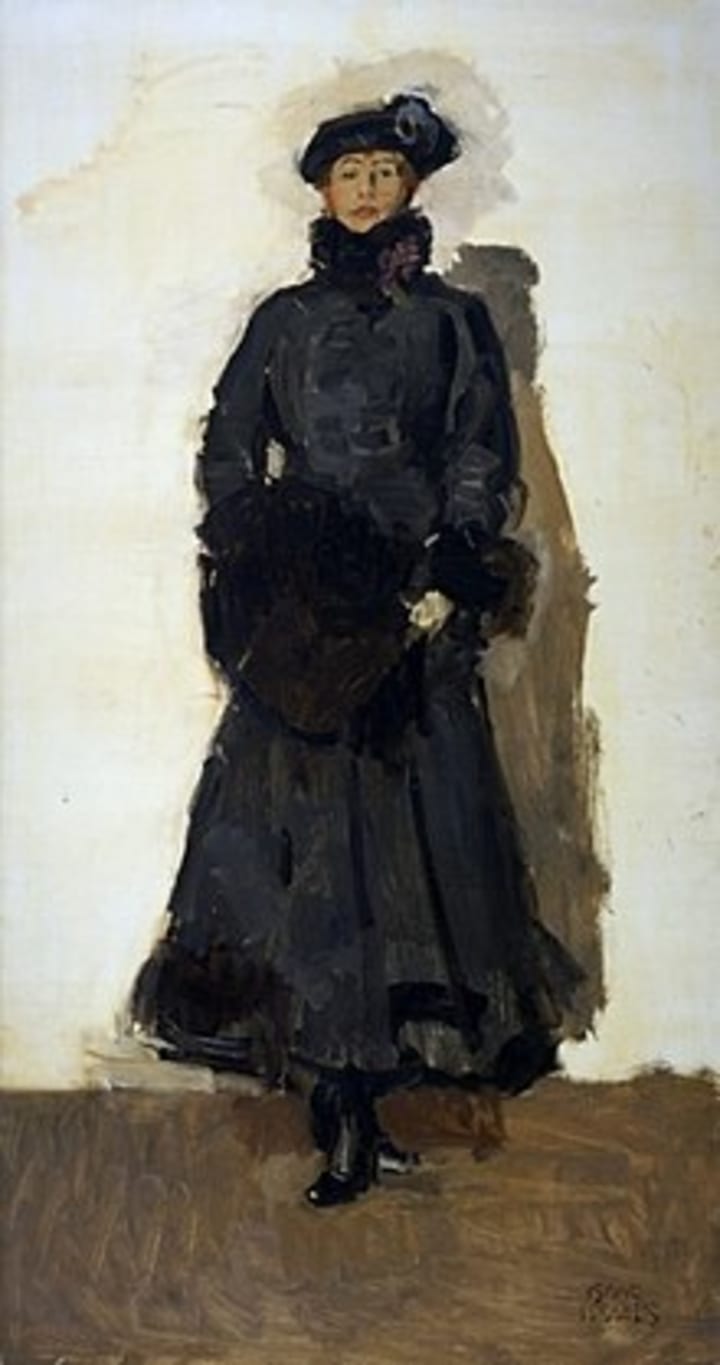
In November 1916 I was traveling from Spain aboard the steamship Zeelandia, when the ship called at the British port of Falmouth, I was arrested and taken to London, where I was interrogated at length by Sir Basil Thomson, assistant commissioner at New Scotland Yard in charge of counter-espionage. He gave an account of this in his 1922 book Queer People, saying that I eventually admitted to working for the Deuxième Bureau. Initially detained in Canon Row police station, I was then released and stayed at the Savoy Hotel.
" A full transcript of the interview is in Britain's National Archives and was broadcast, with Mata Hari played by Eleanor Bron, on the independent station LBC in 1080. It is unclear if she lied on this occasion, believing the story made her sound more intriguing, or if French authorities were using her in such a way but would not acknowledge her due to the embarrassment and international backlash it could cause".
I was eventually convicted of being a spy for Germany during World War 1, and condemned simply because the French army needed a scapegoat.
I was executed by a firing squad of 12 French soldiers just before dawn on 15th October, 1917. I was 41 years old.
I am sure they all expected me to beg for my life or be bowed down by misery. If so, they would be sorely disappointed.
I refused to be blindfolded or bound. They could not break my spirit. I blew them a kiss of defiance and succumbed to my fate.
May their wretched evil consciences remove sleep from their eyes forever.
I am now at peace!
My spirit was transferred to join that of the brave Nancy Wake.
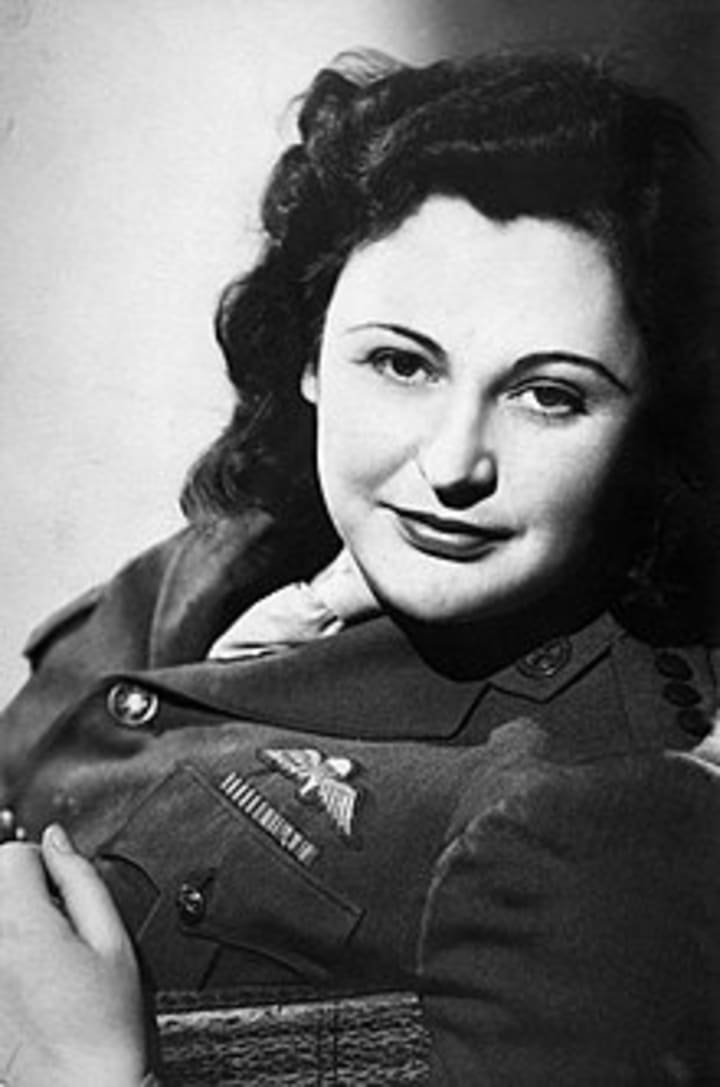
Nancy Grace Augusta Wake (30 August 1912 – 7 August 2011) known as the "White Mouse", was an Australian who worked as a spy for the British in World War II. At one time she was on the top of the Gestapo's most wanted list.
In England she joined the Special Operation Executive (SOE). In April 1944, Wake was parachuted into France to work with the French Resistance before the D-Day landings. She was involved in several major battles with the German army. She claimed to have once killed an SS soldier with her bare hands.
Nancy was given several important medals for bravery including the British George Medal, the French Croix de Guerre (on three occasions), the Médaille de la Résistance and she was made a Chevalier de la Légion d'Honneur. The Americans gave her the Medal of Freedom. In 2004 Australia made her a Companion of the Order of Australia.
She was an unusual woman for her time. She had a reputation among the soldiers she worked with for being a heavy drinker. Major John Farmer said about her drinking that "...we just couldn't work out where it all went". When the Australian government offered her a medal she said they could "stick their medals where the monkey sticks his nuts". She sold her medals to support her income in her old age. She said "There was no point in keeping them, I'll probably go to hell and they'd melt anyway".
Nancy Wake lived for 98 years and died August 2011, in London, England.
So in spite of them, I lived through Nancy to a ripe old age.
....................................................................................................
About the Creator
Novel Allen
You can only become truly accomplished at something you love. (Maya Angelou). Genuine accomplishment is not about financial gain, but about dedicating oneself to activities that bring joy and fulfillment.
Reader insights
Outstanding
Excellent work. Looking forward to reading more!
Top insights
Compelling and original writing
Creative use of language & vocab
Easy to read and follow
Well-structured & engaging content
Excellent storytelling
Original narrative & well developed characters
Expert insights and opinions
Arguments were carefully researched and presented
Eye opening
Niche topic & fresh perspectives
Heartfelt and relatable
The story invoked strong personal emotions
Masterful proofreading
Zero grammar & spelling mistakes
On-point and relevant
Writing reflected the title & theme
Keep reading
More stories from Novel Allen and writers in History and other communities.
Tintinnabulation...sound...noise, transcending into silence
To find the centered peace for which my soul fervently yearns, I would be thus encouraged to find myself the Kundalini master of the universe. Thus Centering my Chakras and Chi. In so doing I might also help all of those so inclined to find the peace and harmony required to mold this inharmonious worldly existence of ours, into centered happy vessels. In doing so, I may hopefully aid the unhappy suffering, noisy, clamoring mass of humanity which I am fortunately or unfortunately, finding myself a member of.
By Novel Allen3 years ago in History
Power's Sake
When it comes to gaining power, bad people use it to gain more They never gain power to do something with it, they gain power to have it, relish in it, double it down on itself so it grows exponentially and never goes anywhere. Even if you see the people in power commit an atrocity, that is never the true goal. It is a deplorable action for sure but the action itself usually doesn't matter it's the outcome.
By Donny Foley3 days ago in History
Military Strength of Alexander the Great and the Chola Empire: A Historical Comparison
Though separated by more than a thousand years and operating in vastly different geographical and cultural contexts, both forces achieved extraordinary success through discipline, innovation, and strategic brilliance. This article explores the history, composition, size, organization, and military strength of Alexander’s Macedonian army and the Chola military, highlighting how each became a dominant power of its era.
By Say the truth 3 days ago in History
Miss Persephone's Manual to a Seemingly Ordinary Life
Miss Persephone was found at the dining table, her blue eyes swollen, her tears arriving and retreating like the tides of the ocean. Earlier that day, her family had visited her in the retirement home where she had lived for eight years. It was her eightieth birthday.
By Imola Tóthabout 24 hours ago in Fiction




Comments (5)
When I read your subtitle, I got so excited when I saw Mata Hari because I knew it meant sun. However, it's one word, not two. Matahari. But I guess for the purposes of having a first and last name, she must have separated that into two words. Her story was so fascinating! I enjoyed it so much!
Very engaging piece. Learned quite a bit about Mata Hari! Well done ❤️
Awesome and amazing!!! Loved it!!!❤️❤️💕
Pretty provocative story. Interesting how a spy is
Mata Hari is one of those characters that I've heard of but never delved into. I didn't know she had such a troubled and adventurous life!