
Antarctica's Hidden Caves: A Secret World of Mysterious Species Revealed by Scientists
In the icy, desolate expanse of Antarctica, there lies a hidden world beneath the frozen surface. While most people associate Antarctica with endless glaciers and harsh, cold conditions, scientists have uncovered something extraordinary

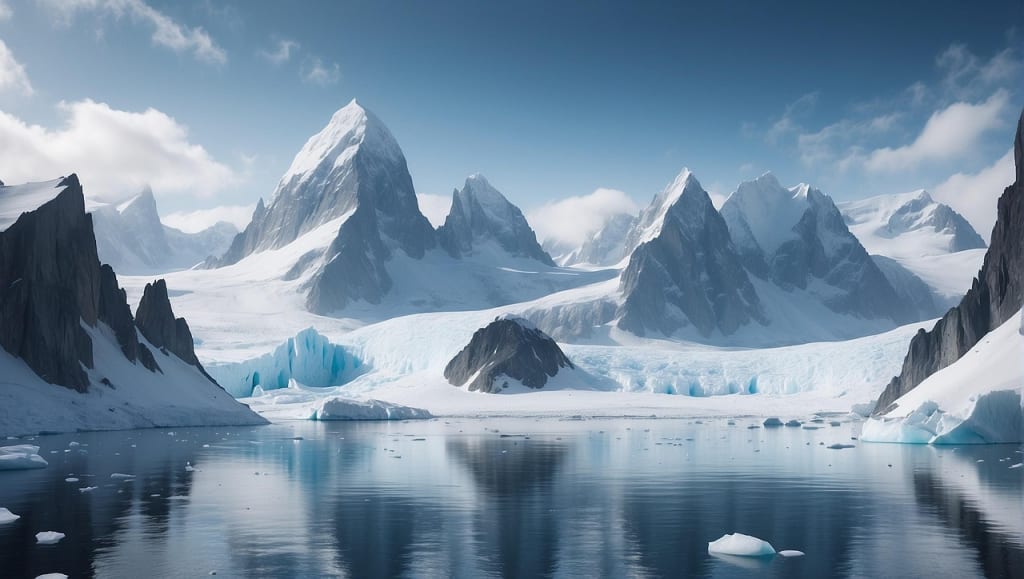
In the icy, desolate expanse of Antarctica, there lies a hidden world beneath the frozen surface. While most people associate Antarctica with endless glaciers and harsh, cold conditions, scientists have uncovered something extraordinary: warm, subterranean caves that harbor a surprising diversity of life forms. These caves are not just places of shelter but ecosystems teeming with species unknown to science. The discovery of this hidden world raises new questions about life on Earth, survival in extreme conditions, and the potential for similar environments in other parts of the universe.
A Surprising Discovery
Antarctica’s Warm Caves Antarctica has long been viewed as one of the most inhospitable places on Earth, with its vast ice sheets and freezing temperatures. However, in recent years, researchers have begun to explore areas of the continent that were previously overlooked, sub-glacial caves. These caves, found deep beneath the thick layers of ice, are unique in that they maintain temperatures well above freezing, creating an environment that is surprisingly hospitable to life.
In 2018, a team of scientists from the British Antarctic Survey made a breakthrough discovery when they drilled into the ice and found evidence of liquid water beneath the glaciers. This discovery pointed to the existence of underground caves that remained warm enough to support microbial life. What followed was even more astounding: these caves are home to not just microbes, but complex ecosystems, some of which have remained isolated from the outside world for millions of years.
How the Caves Survive in Extreme Cold. So, how do these warm caves exist in a place as cold as Antarctica? The answer lies in geothermal heat. The caves are located near volcanic areas, where heat from the Earth’s interior escapes and prevents the water within the caves from freezing. This constant source of warmth creates an environment where organisms can thrive. The warm temperatures in these caves are a stark contrast to the freezing conditions just a few meters above ground, making these hidden realms unique in the natural world.
Another factor that contributes to the warmth of these caves is the insulation provided by the thick layers of ice above them. The ice sheet acts as a blanket, trapping heat and creating a stable microclimate. This insulation has allowed the caves to remain stable over time, offering a haven for life forms that have adapted to these extreme conditions.
The Hidden Ecosystem
The real mystery of these caves, however, lies in the organisms that inhabit them. Despite being cut off from the outside world for so long, the caves contain a variety of species, many of which are completely unknown to science. Microbial life forms, such as bacteria and archaea, thrive in the dark, nutrient-rich environment, feeding off chemical reactions rather than sunlight.
More astonishingly, researchers have found evidence of larger, more complex organisms, including fungi, mosses, and small invertebrates. These species have adapted to life in the caves, developing unique traits that allow them to survive in such an isolated and extreme environment. Some of these organisms have evolved in ways that are vastly different from their counterparts found elsewhere on Earth, making them a subject of intense study for scientists seeking to understand the limits of life on our planet.
One of the most surprising discoveries was the presence of bioluminescent fungi, organisms that emit light in the absence of sunlight. These fungi can produce their light through a process known as bioluminescence, which allows them to attract prey or even communicate with one another in the pitch-black environment of the cave.
The Potential for Life Beyond Earth. The implications of these findings go beyond just the study of life on Earth. The discovery of such a thriving, isolated ecosystem raises intriguing questions about the possibility of life existing in similar environments on other planets. Scientists are particularly interested in the potential for life on moons like Europa, one of Jupiter’s satellites, where liquid water exists beneath an icy surface. If life can survive in the warm caves of Antarctica, it is conceivable that similar organisms could survive on other planets or moons with subsurface oceans.
Moreover, the discovery has sparked interest in the search for extraterrestrial life in environments previously considered too harsh to support life. The study of these extreme ecosystems on Earth may provide valuable insights into the types of life forms that could thrive in space, giving scientists a new perspective on the potential for life beyond our planet.

The Future of Exploration
As more research is conducted in these Antarctic caves, scientists are uncovering even more secrets about the life forms that inhabit them. The next steps in exploration involve carefully studying the genetic makeup of these organisms and understanding how they have adapted to such a unique environment. Researchers are also looking into the potential for these caves to provide clues about the history of life on Earth, particularly in terms of the evolution of life in extreme conditions.
Future expeditions are likely to focus on uncovering more about the underground ecosystems of Antarctica. With advancements in technology, scientists are now able to explore these caves in greater detail, using drones and other tools to navigate the difficult terrain. These new techniques will allow for more comprehensive studies of the species living in these caves and may even reveal new forms of life that have yet to be discovered.
The Mystery Remains
Antarctica’s warm caves have proven to be a treasure trove of scientific discovery, providing a glimpse into a hidden world that was once thought to be impossible. The life forms that thrive in these caves are not just survivors; they are unique, adapted creatures that continue to challenge our understanding of what life can endure. As scientists continue to explore these mysterious caves, the potential for discoveries seems limitless. Who knows what other secrets the frozen continent may hold, waiting to be uncovered by the curious minds of future explorers?
The findings in Antarctica’s warm caves remind us that Earth is still full of mysteries yet to be unraveled, and as our technology and understanding improve, we may one day find ourselves on the verge of even greater discoveries that could change the way we view life, both on Earth and beyond.
About the Creator
The Secret History Of The World
I have spent the last twenty years studying and learning about ancient history, religion, and mythology. I have a huge interest in this field and the paranormal. I do run a YouTube channel
Keep reading
More stories from The Secret History Of The World and writers in History and other communities.
The Blazing Curse of the ‘Crying Boy’ Paintings
A Painting Wrapped in Smoke and Whispers In the shadows of post-war Europe, amid the ruins and the silence, a painting appeared. It was simple. A young boy with dark, sorrowful eyes. A single tear clung to his cheek. His gaze followed you across the room. Unassuming. Tragic. But this wasn’t just any portrait. It became known by a name that would chill even the most skeptical hearts, “The Crying Boy.”
By The Secret History Of The WorldExclusive • 9 months ago
How I Learned That Aircraft Structures Are as Critical as Engines
When I first started studying aviation, I believed that engines and avionics defined an aircraft’s reliability. Over time, as I explored aerospace history and manufacturing records, I realized how incomplete that understanding was. Aircraft safety does not depend solely on thrust or navigation systems. It is deeply rooted in structural engineering, certified manufacturing, and the disciplined production of components that passengers never see.
By Beckett Dowhan5 days ago in History
Frames Through Time: Exploring a Love for Classic and Contemporary Film in Modern Culture
Movies hold a powerful place in everyday life. They entertain, teach, and inspire people across generations. Some viewers are drawn to old black-and-white films, while others prefer fast-paced modern movies. Many enjoy both. Classic and contemporary film exploration allows people to experience cinema as a living art form that grows without ever forgetting its roots. Exploring a love for classic and modern film helps viewers see how stories, emotions, and creativity connect across time. Film is a shared language. It crosses age, culture, and borders. When people watch movies from different eras, they discover that human feelings remain the same, even when styles change. This balance between tradition and innovation is what keeps cinema meaningful today.
By Matthew Carluccio3 days ago in History


Comments
There are no comments for this story
Be the first to respond and start the conversation.