
Ancient Egyptians – Are They White or Black?
The Black and White Theories


For almost 200 years, blacks and whites have been unable to divide the ancient Egyptians.
The question of what race the ancient Egyptians belonged to arose at the turn of the 18th and 19th centuries, when interest in racial classifications increased in the scientific community. Attempts to systematize peoples with external features have been made since time immemorial.
The ancient Egyptians themselves divided are people into 4 types, but more on that later.
• Ancient Egyptians
As soon as it arose, this issue immediately acquired a bright political and national coloring, since it turned out to be directly connected with the movement for the abolition of slavery.
One side argued that blacks were inferior no matter how you looked at them, and that they would never have been able to create an ancient Egyptian civilization.
The other insisted that the representatives of the highest nobility in Ancient Egypt possessed all the characteristics inherent in the Nubians, who belonged to the transitional race, combining the characteristics of blacks and Europeans.
In the 1970s, the topic became so heated that it was largely avoided in the scientific community to avoid being accused of black or white racism, but the controversy continues to this day.
• The Black Theory
The belief that the ancient Egyptians were Africans is one of the foundations of black nationalism. It is of the utmost importance to them that the ancient Egyptians were Negroid. This fact would be excellent evidence of the ability of blacks to create highly developed civilizations.

To support their theory, they cite an excerpt from the work of the ancient Greek historian Herodotus, who lived in the 5th century BC. He describes the Egyptians as people with skin the color of "melanchroia." But the word melanchroia cannot be translated unambiguously - it means both dark and black. So it is unclear whether Herodotus is writing about real black people or just dark-skinned people. And we should not forget that for a fairly light-skinned Greek, even dark-skinned Semites can already be "black."
• Pharaoh of Egypt According to a Modern Tradition
In addition to Herodotus' words, supporters of the theory cite as an example the studied mummies of Arsinoe, sister of Cleopatra and Tutankhamun, who have characteristic features of the Negroid race. However, here we are talking about the restoration of the appearance of the skull, and not about DNA analysis, so the question can be left open for now.
The study of these and other mummies shows high levels of melanin in the skin, typical of Africans. But such high levels may also be due to the fact that, during life, the person spends a lot of time in the sun and is simply very tanned.
Some modern white girls, blindly following the tanning fashion trends, get so carried away by the process that their skin becomes very dark, but this does not make them African. Even if they braid their hair in African braids.
Speaking about this theory, I would like to point out one very unpleasant moment. If contradictory data appears as a result of new research, scientists immediately completely forget that they are scientists and, instead of reasoned objections, they begin to declare that this is all a conspiracy and a manipulation of facts by white people.
American professor M. Ampim, who specializes in African and African-American history, even accused 19th century historians of deliberately destroying “evidence”.
• The White Theory
Speaking of the "white" theory, I would like to clarify it right away. Even if the ancient Egyptians were Europeans, this does not mean that they were light-eyed blondes.
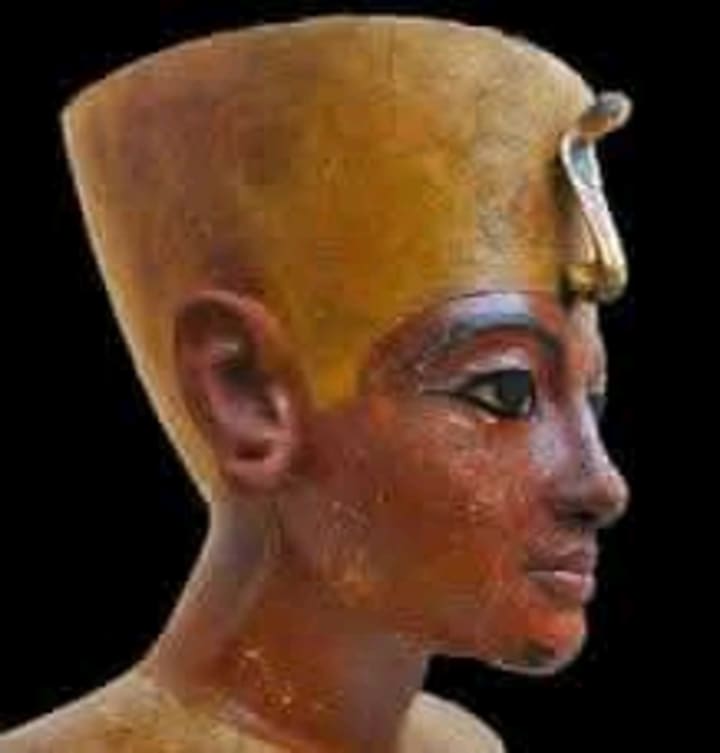
To be honest, the supporters of this idea sometimes have very strange arguments. For example, the American anthropologist D.K. Nott, who lived in the 19th century, claimed that the Egyptians were white only because blacks, in his opinion, were in principle incapable of creating anything due to their backwardness. His contemporaries did not lag behind and declared that if blacks were now slaves, then in Ancient Egypt they could only be slaves.
• Construction of the Pyramid by Slaves
At the beginning of the 20th century, a new theory about the Hamitic origin of the ancient Egyptians appeared, which can be rather conditionally attributed to the "white" theory, since not all anthropologists consider the Hamitic group to be part of the European family. In most classifications, both Semites and Hamites belong to the transitional race, combining the characteristics of Europeans and blacks - Euro-Africans.
In modern Egypt, there is a movement of Egyptian nationalists who also classify the ancient Egyptians as Europeans and consider themselves direct descendants of the ancient Egyptian civilization, despite the later Arab overlay.
And this opposition to the entire Arab world and interest in the culture of infidels is no longer to the liking of Islamists.
So Egyptian nationalists can be called desperate guys - they are fighting not only with supporters of the "black" theory, but also with Islamists.
• And What did the Egyptians Themselves Think?
The ancient Egyptians, based on the appearance of neighboring peoples, distinguished four races: light-skinned Libyans, darker and swarthy inhabitants of the Middle East, black Nubians and themselves, who had a brick-colored skin tone.
From left to right: a Libyan, a Nubian, a Middle Easterner (he is depicted here as light-skinned, unlike most other depictions, but can be identified, in particular, by his beard) and an Egyptian.
Interestingly, in their portrayals of fellow tribesmen, the Egyptians frequently illustrated women with very fair skin, while men were shown with darker complexions. This reminds me of the modern situation in India and among African-Americans – the social prestige of a man is higher when the bride or wife has a lighter skin tone than the partner.
About the Creator
Keep reading
More stories from Uchenna Cosmas Nwokafor and writers in History and other communities.
The Original Owners of South Africa: Are the Boers Aboriginal South Africans?
The Boers, also known as Afrikaners, are one of the white ethnic groups in South Africa and Namibia. They are mainly Dutch immigrants from the 17th to the 19th century, and are formed by the integration of French and German immigrants. They communicate in Afrikaans, which is also referred to as Afrikaans. Naturally, there are some who do. The key point is that the religious convictions of the Boers are predominantly Protestant, with a minority being Catholic. According to statistics in 2022, the total number of Boers is currently about 3.5 to 4 million.
By Uchenna Cosmas Nwokafor 7 months ago in History
Power's Sake
When it comes to gaining power, bad people use it to gain more They never gain power to do something with it, they gain power to have it, relish in it, double it down on itself so it grows exponentially and never goes anywhere. Even if you see the people in power commit an atrocity, that is never the true goal. It is a deplorable action for sure but the action itself usually doesn't matter it's the outcome.
By Donny Foleyabout 17 hours ago in History
The Night Walk of Justice
During the golden age of the Islamic Caliphate, when Umar ibn Al-Khattab (RA) was the leader of the Muslim world, the city of Madinah was known for its peace, discipline, and justice. Umar (RA) was not only a powerful ruler but also a humble servant of Allah who feared accountability more than authority.
By The best writer 8 days ago in History


Comments
There are no comments for this story
Be the first to respond and start the conversation.