
The Final Legacy of Alexander the Great: How One Man Changed the Ancient World
More than two thousand years after his death, Alexander the Great remains one of the most studied and debated figures in world history. His life was short, but the consequences of his conquests reshaped civilizations across three continents. While earlier parts of his story focus on battles and expansion, the true measure of Alexander’s greatness lies in what happened after his campaigns ended. His legacy did not disappear with his death in Babylon in 323 BCE. Instead, it spread across the ancient world and continued to influence politics, culture, trade, and knowledge for centuries.

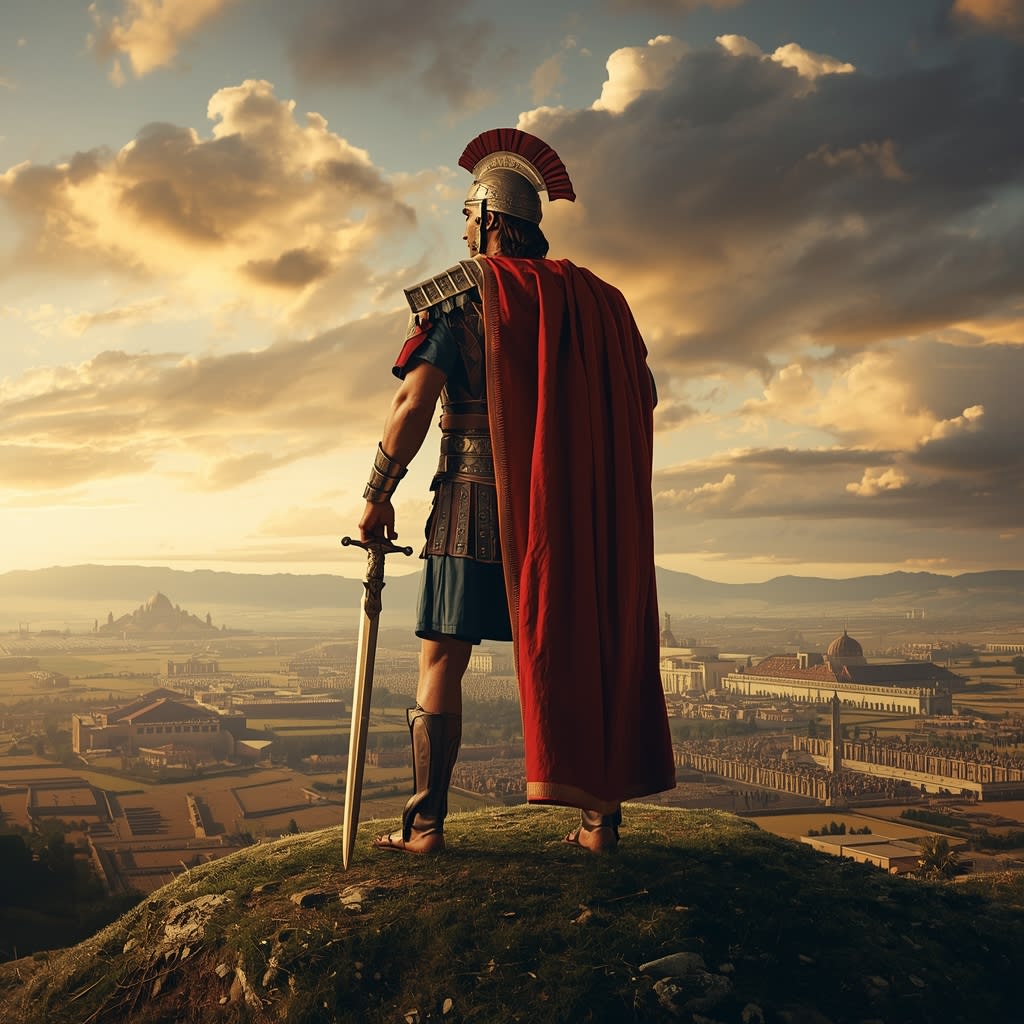
Alexander inherited a strong kingdom from his father, Philip II of Macedon, but he transformed it into something far larger. Within a little more than a decade, he conquered the Persian Empire, marched through Egypt, reached Central Asia, and entered parts of India. This rapid expansion created one of the largest empires of the ancient era. Yet Alexander’s vision went beyond military victory. He sought to create a world where Greek and Eastern cultures blended together. This cultural mixing became one of his most lasting achievements.
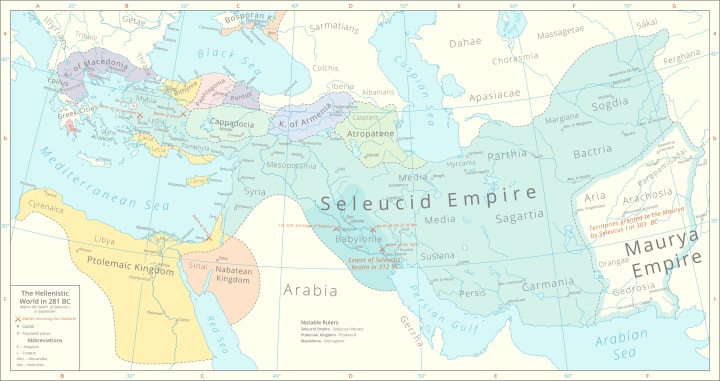
One of the clearest examples of Alexander’s legacy is the rise of the Hellenistic world. After his death, his generals divided the empire into several kingdoms, but they retained Greek language and customs as a unifying force. Greek became the common language of trade and administration across much of the Middle East and eastern Mediterranean. This made communication easier between different regions and allowed ideas to spread quickly. Greek philosophy, science, and art mixed with local traditions, creating a rich and diverse cultural environment.
Cities founded by Alexander played a key role in this transformation. He established dozens of cities, many of them named Alexandria. The most famous was Alexandria in Egypt. This city became one of the greatest centers of learning in the ancient world. It housed the legendary Library of Alexandria, which collected knowledge from across civilizations. Scholars gathered there to study mathematics, astronomy, medicine, and philosophy. Advances made during this period influenced later civilizations, including the Romans and eventually the modern world.
Trade also expanded under Alexander’s influence. His conquests opened routes connecting the Mediterranean with Central Asia and India. Merchants could travel more easily across regions that had previously been divided by hostile empires. Goods such as spices, textiles, precious stones, and metals moved across these routes, increasing economic activity. Cultural exchange followed trade, spreading ideas, art styles, and technologies between East and West.
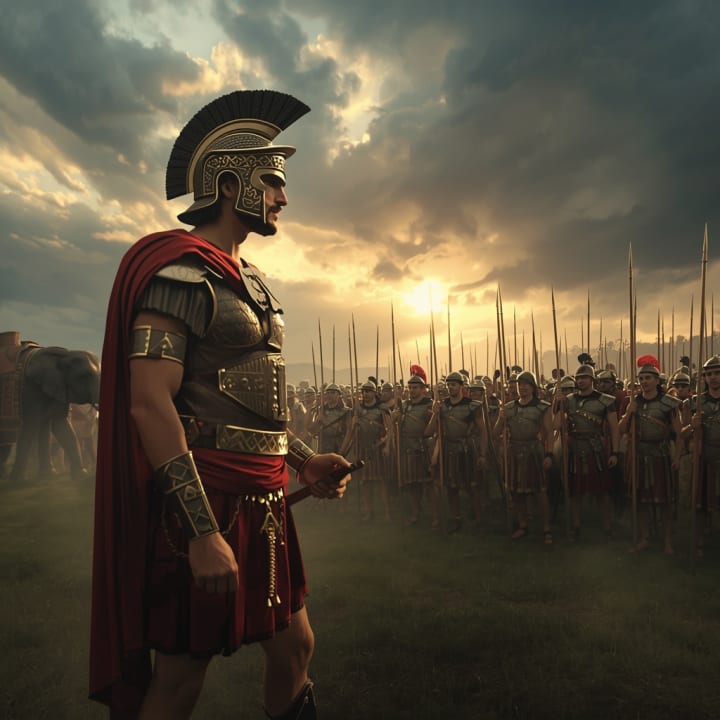
Alexander’s approach to leadership contributed to this blending of cultures. Unlike many conquerors, he often respected the traditions of the lands he conquered. He adopted elements of Persian dress and court ceremony and encouraged his soldiers to marry local women. These actions were sometimes unpopular with his Macedonian troops, who preferred to maintain their own identity. However, they helped create connections between different cultures and laid the foundation for the Hellenistic world.
Despite these achievements, Alexander’s legacy is not without controversy. His campaigns involved destruction, loss of life, and the collapse of existing political systems. Cities that resisted him were sometimes destroyed, and thousands died in battles fought across his empire. Some historians argue that his desire for conquest caused unnecessary suffering and instability. Others believe that the cultural exchange that followed his campaigns brought long-term benefits that shaped the development of civilization.
Another aspect of Alexander’s legacy is the myth that grew around him. Stories about his life spread across many cultures, each adding new details. In Greek and Roman traditions, he was celebrated as a heroic warrior and brilliant strategist. In Persian literature, he appeared as a complex ruler with both noble and destructive qualities. In parts of Asia, he was remembered as a powerful but distant figure whose arrival marked a turning point in history. Over time, these stories turned Alexander into a legendary character whose life blurred the line between fact and myth.
Even centuries later, rulers looked to Alexander as a model. Roman generals admired his military tactics and leadership. Medieval kings studied his campaigns. During the Renaissance, scholars rediscovered classical texts that described his achievements. In modern times, his name still symbolizes ambition and the pursuit of greatness. Military academies analyze his strategies, while historians debate his personality and motivations.
Alexander’s death at a young age also adds to the fascination surrounding him. Because he died at 32, people often wonder what more he might have achieved if he had lived longer. Would he have continued conquering new lands? Could he have maintained control over such a vast empire? Or would his ambitions have led to further conflict and instability? These unanswered questions keep his story alive in historical discussions.
What makes Alexander truly remarkable is not just the size of his empire but the speed with which he created it and the lasting impact it had. He connected regions that had rarely interacted and set the stage for centuries of cultural exchange. The Hellenistic period that followed his death saw advances in science, philosophy, and art that shaped later civilizations. His influence can still be seen in language, architecture, and cultural traditions across parts of Europe, the Middle East, and Asia.
In the end, Alexander the Great was a complex figure. He was a fearless general, an ambitious ruler, and a man driven by a vision of unity and glory. He inspired loyalty and admiration but also fear and resistance. His life demonstrates both the possibilities and the dangers of absolute power. Empires may rise and fall, but the ideas and connections they create can endure long after.
More than two millennia later, Alexander’s story continues to capture imaginations around the world. His legacy reminds us that history is shaped not only by the events of a single lifetime but also by the cultural and intellectual changes that follow. Whether seen as a hero, a conqueror, or a visionary, Alexander the Great remains one of the most influential figures in human history — a man whose ambitions reshaped the ancient world and whose legacy still echoes through time.
About the Creator
Say the truth
"Say the Truth: Explain Everything in the World" is your trusted source for uncovering facts and exploring the wonders of history, science, technology, and beyond. We simplify complex ideas and reveal truths to inspire curiosity .
Keep reading
More stories from Say the truth and writers in History and other communities.
Alexander the Great — Part 3: The Edge of the World and the Limits of Empire
After securing control of Bactria and Sogdiana, Alexander turned his attention eastward. He had long been fascinated by stories of India — a land of immense wealth, powerful kings, and exotic cultures. Greek historians described India as a place where rivers were vast, armies used elephants in battle, and philosophers lived in deep contemplation. For Alexander, it represented the next great frontier and perhaps the edge of the known world.
By Say the truth a day ago in History
Future Wars in the Age of Artificial Intelli
Future Wars in the Age of Artificial Intelligence If the new battlefield is hidden inside a nation’s systems, then Artificial Intelligence is becoming the most powerful weapon within it. Future wars will not begin with tanks crossing borders or fighter jets in the sky. They will begin with algorithms, data, and decisions made at machine speed. AI is changing not only how wars are fought, but also who controls power and how quickly conflicts can spiral out of control.
By Wings of Time 3 days ago in History
Augustus Caesar — The Silent Victor
Augustus Caesar did not conquer Rome with thunder and spectacle. He conquered it with silence, patience, and restraint. Where others seized power through open violence, Augustus mastered something far rarer: the ability to win without appearing to rule. In doing so, he ended a century of civil war and founded an empire that would endure for centuries. His genius was not in dramatic battlefield heroics, but in knowing when *not* to act—and when to let others believe nothing had changed.
By Fred Bradforda day ago in History
The Devil's Triangle
The sails ruffled in the breeze as we cruised along. The Sea Breeze was a mid-size catamaran that sailed out of Royal Naval Dockyard in Bermuda. We had booked this trip weeks in advance and were now looking at our Captain, Spike and two boat hands. Paddy and Wilson seemed like nice guys, joking around with the passengers and telling us some stories about Bermuda that only locals would know. Their island accents sounded almost British but they were pleasant to listen to.
By Barbara Gode Wiles4 days ago in Fiction



Comments
There are no comments for this story
Be the first to respond and start the conversation.