
After Swiss Alps New Year’s Eve Bar Fire, a Look at Some of America’s Worst Nightclub and Bar Fires
Tragedies That Reshaped Fire Safety and Public Awareness

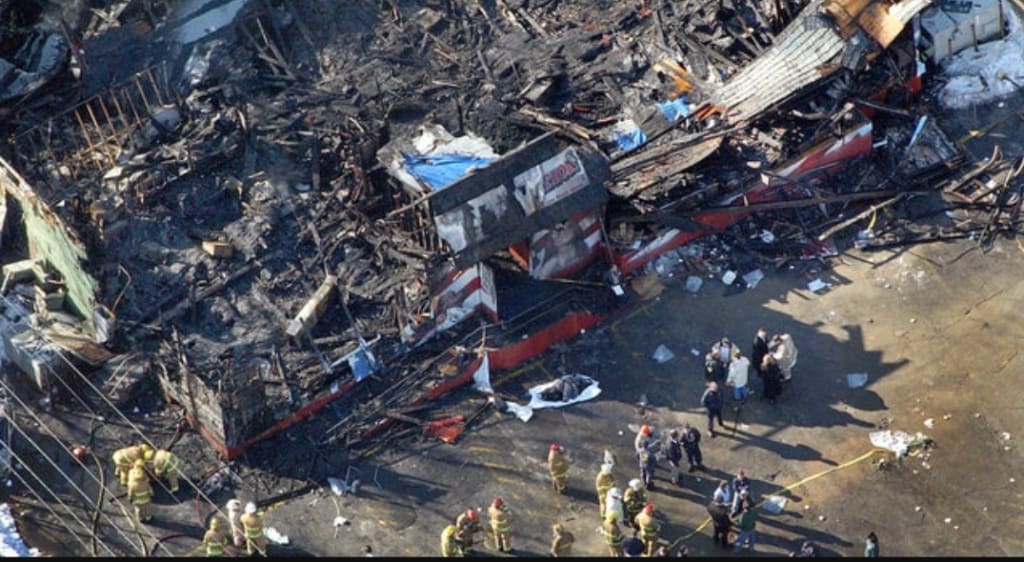
The tragic New Year’s Eve bar fire in the Swiss Alps has once again drawn global attention to the devastating consequences of fires in crowded entertainment venues. As celebrations turned into chaos, the incident served as a painful reminder of how quickly joy can give way to tragedy when safety systems fail or emergencies escalate. While investigations continue abroad, the disaster has renewed focus on similar catastrophes in the United States—fires that left lasting scars on communities and reshaped fire safety regulations nationwide.
America’s history includes several nightclub and bar fires that stand as sobering lessons in public safety, preparedness, and accountability.
Why Nightclubs and Bars Are High-Risk Venues
Nightclubs and bars present unique fire hazards due to crowded spaces, low lighting, loud music, alcohol consumption, and limited exits. Decorations, soundproofing materials, and pyrotechnics can further increase risk if safety standards are ignored. When fires break out in such environments, panic can spread rapidly, making evacuation difficult and often deadly.
Many of the worst tragedies in U.S. history occurred not because of fire alone, but due to blocked exits, overcrowding, and inadequate emergency planning.
The Station Nightclub Fire (2003 – Rhode Island)
One of the deadliest nightclub fires in American history occurred at The Station nightclub in West Warwick, Rhode Island. During a concert, indoor pyrotechnics ignited flammable soundproofing foam, causing the fire to spread rapidly. Within minutes, the venue was engulfed in flames.
One hundred people were killed, and more than 200 were injured. Many victims were trapped near exits as panicked crowds tried to escape. The tragedy led to sweeping changes in fire codes, building materials regulations, and restrictions on indoor pyrotechnics across the country.
Cocoanut Grove Fire (1942 – Boston)
The Cocoanut Grove nightclub fire remains the deadliest nightclub fire in U.S. history. On a crowded night in Boston, a fire broke out and quickly spread through the venue due to flammable decorations and inadequate ventilation.
Nearly 500 people lost their lives, many unable to escape because of locked or poorly marked exits. The disaster prompted major reforms in building safety codes, including requirements for outward-opening doors, illuminated exit signs, and occupancy limits—standards still enforced today.
Happy Land Social Club Fire (1990 – New York City)
In the Bronx, a deadly act of arson turned the Happy Land Social Club into a site of unimaginable loss. After an argument, a man set the club on fire, igniting gasoline near the entrance. With exits blocked and windows barred, patrons had little chance to escape.
The fire killed 87 people, most of them young immigrants. This tragedy highlighted the dangers of unlicensed venues, poor enforcement, and illegal building modifications, prompting stricter inspections and regulatory oversight in New York City.
Beverly Hills Supper Club Fire (1977 – Kentucky)
The Beverly Hills Supper Club fire in Southgate, Kentucky, claimed 165 lives and injured hundreds more. A fire that began in a lesser-used area spread unnoticed while a performance continued in the main hall. By the time guests realized the danger, exits were congested and escape routes unclear.
The tragedy exposed flaws in emergency communication, exit design, and fire detection systems, leading to enhanced standards for alarms, sprinklers, and crowd management.
Lessons Learned and Lasting Impact
Each of these fires revealed critical failures—whether in building design, crowd control, enforcement, or emergency response. Collectively, they pushed authorities to adopt stricter fire safety codes, occupancy regulations, and emergency preparedness standards.
Key reforms included:
Mandatory sprinkler systems in large venues
Clear, unobstructed exits
Restrictions on flammable materials
Regular safety inspections
Improved staff training for emergencies
These measures have saved countless lives, but tragedies like the Swiss Alps fire show that vigilance must remain constant.
Modern Challenges and Ongoing Risks
Despite improved regulations, risks still exist. Overcrowding, unauthorized renovations, and lax enforcement can undermine safety. Additionally, special events like New Year’s Eve celebrations increase hazards due to packed venues and heightened excitement.
Fire officials continue to emphasize the importance of public awareness, encouraging patrons to note exits upon entry and venue operators to prioritize safety over profit or aesthetics.
Conclusion
The Swiss Alps New Year’s Eve bar fire is a heartbreaking reminder that the dangers associated with nightlife venues have not disappeared. America’s history of nightclub and bar fires reveals painful lessons learned through immense loss, shaping the safety standards that protect people today.
Remembering tragedies like the Cocoanut Grove, The Station nightclub, and Happy Land Social Club is not about revisiting horror—it is about honoring lives lost by ensuring history does not repeat itself. Fire safety, enforcement, and preparedness remain shared responsibilities. As celebrations continue worldwide, these lessons serve as a powerful reminder that safety must always come first, especially in spaces meant for joy, connection, and community.
About the Creator
Asad Ali
I'm Asad Ali, a passionate blogger with 3 years of experience creating engaging and informative content across various niches. I specialize in crafting SEO-friendly articles that drive traffic and deliver value to readers.
The USA’s “Next Targets”?
Are These Really the USA’s “Next Targets”? Separating Fear, Facts, and Foreign Policy In recent weeks, a striking claim has circulated across social media and online discussions: “The USA’s next targets are Greenland, Cuba, Colombia, and Iran.” The statement is dramatic, alarming, and widely shared. But does it reflect reality—or does it reveal something deeper about how fear spreads during moments of global uncertainty?
By Wings of Time 6 days ago in History
Muammar al-Qaddafi: The Desert Revolutionary Who Ruled Libya for 42 Years
Muammar al-Qaddafi was born into a Bedouin family of the small al-Qadhadhfa tribe in the harsh environment of the Libyan desert. His early years were marked by poverty and traditional nomadic life—sleeping in tents, caring for livestock, and attending a local primary school in Sabha. From a young age, Qaddafi was deeply influenced by the sweeping changes in the Arab world, especially the rise of Arab nationalism championed by Egyptian leader Gamal Abdel Nasser. This ideology, centered on unity among Arab states and resistance to colonial influence, would shape his worldview throughout his life. � Pakistan Times +1 Qaddafi continued his education, moving between schools in Misrata and Sabha and showing early signs of political activism. During his studies he organized protests supporting Arab nationalist causes, including opposition to the dissolution of the short-lived United Arab Republic between Egypt and Syria. Expelled from school at one point for his activism, he eventually enrolled in the military academy in Benghazi, where he joined a group of young officers harboring revolutionary ambitions. � Pakistan Times +1 The 1969 Coup: From Officer to Leader On September 1, 1969, at the age of just 27, Qaddafi and a small group of junior military officers executed a swift and bloodless coup that overthrew King Idris I, who had ruled the newly independent Libya since 1951. The king was abroad for medical treatment, and the coup leaders seized the moment, abolishing the monarchy and declaring Libya a republic. Qaddafi was immediately named chairman of the Revolutionary Command Council and commander-in-chief of the armed forces—positions that gave him de facto control of the country. � Encyclopedia Britannica Once in power, Qaddafi moved quickly to assert Libya’s independence from Western influence. He ordered the removal of U.S. and British military bases from Libya and nationalized the country’s oil industry, which was dominated by foreign companies. He also expelled many Italians and Jews from Libya, echoing his brand of strict Islamic principles and fierce opposition to colonial legacy. � Encyclopedia Britannica Domestic Policies and The Green Book Qaddafi sought to reshape Libya’s society through a blend of Islamic socialism and revolutionary populism. In 1973 he published his influential manifesto, The Green Book, outlining his ideas of direct democracy, economic redistribution, and rejection of traditional political parties and institutions. According to Qaddafi, power should reside in people’s committees and popular congresses rather than centralized state structures. � Encyclopedia Britannica In practice, these reforms were a mixture of radical inclusivity and strict authoritarian control. Healthcare and education were made widely accessible, and Libya’s vast oil revenues funded ambitious development projects. But political dissent was ruthlessly suppressed, freedom of speech was virtually nonexistent, and secret police kept tight control over public life. While some Libyans benefited from state welfare, many others lived in fear of arbitrary detention and persecution. � Encyclopedia Britannica International Relations and Global Controversies Qaddafi’s ambitions were not confined to Libya. He positioned himself as a voice of anti-imperialism, supporting revolutionary movements and opposition groups across the globe, from the Irish Republican Army in Europe to radical organizations in the United States. These policies often brought Libya into direct conflict with Western powers. In 1986, U.S. aircraft bombed Qaddafi’s compound in Tripoli in retaliation for Libya’s alleged involvement in terrorist activities, killing several of his family members. � Encyclopedia Britannica Perhaps the most notorious international incident linked to Qaddafi was the bombing of Pan Am Flight 103 over Lockerbie, Scotland, in 1988, which killed 270 people. Libya’s alleged role in the tragedy led to years of United Nations and Western sanctions that isolated the regime. Although Libya later handed over suspects for trial and sanctions were gradually lifted in the early 2000s, the episode cemented Qaddafi’s reputation in the West as a sponsor of terrorism. � Encyclopedia Britannica The Arab Spring and the Fall of a Regime In 2011, inspired by uprisings in Tunisia and Egypt, Libyans took to the streets in protest against Qaddafi’s rule. What began as peaceful demonstrations quickly escalated into a full-scale civil conflict as government forces attempted to crush dissent with brutal force. The international community, alarmed by reports of mass atrocities, authorized a NATO intervention to protect civilians. After months of fighting, rebels captured Tripoli and later Qaddafi’s hometown of Sirte. On October 20, 2011, Qaddafi was killed by rebel fighters, bringing an end to his 42-year rule. � Encyclopedia Britannica +1 Legacy: A Leader of Contrasts Muammar al-Qaddafi’s life remains deeply contested. To some, he was a visionary revolutionary who challenged Western dominance and tried to uplift his people through welfare and development. To others, he was a ruthless autocrat whose regime was marked by repression, human rights abuses, and international provocation. His death did not bring immediate peace to Libya—rather, the country has struggled with instability and factional violence in the years since. Yet the debates over his legacy continue, reflecting the complex and often contradictory nature of his life and rule.
By Hasbanullah4 days ago in History
Standing While Falling
Quotation from Friedrich Nietzsche "He who wrestles long with monsters should beware lest he himself become a monster. And if you gaze long into an abyss, the abyss also gazes into you. Man is not destroyed by suffering, but by the meaning he makes of it."
By LUCCIAN LAYTH5 days ago in Critique


Comments
There are no comments for this story
Be the first to respond and start the conversation.