
AFRICAN TRIBES THAT AMAZE THE WORLD
Fascinating African tribes

African tribes have long fascinated the world with their rich cultural diversity, traditions, and ways of life. These diverse ethnic groups have captured the imagination of people worldwide through their unique customs, languages, art, and rituals.
1:MURSI TRIBE (WEARING LIPS PLATES)
The Mursi tribe, sometimes spelled as "Mursu" or "Murzu," is one of the many fascinating ethnic groups in Ethiopia, particularly known for their unique customs and distinctive appearance. Here's an overview of the Mursi tribe.The Mursi people primarily inhabit the remote Omo Valley region in southwestern Ethiopia. This area is characterized by arid savannahs and is home to several other indigenous tribes, each with its own rich cultural traditions.
One of the most striking aspects of the Mursi tribe is their distinctive body modification practices. Both Mursi men and women are known for wearing large lip plates, a practice that has made them particularly famous. Young girls have their lower lips pierced and gradually stretch them by inserting increasingly larger clay or wooden discs. The size of these lip plates can become quite significant, sometimes exceeding six inches in diameter.
Cultural Practices:
Lip Plates: As mentioned, the lip plates are a prominent and symbolic aspect of Mursi culture. The larger the lip plate, the higher the social status of the woman wearing it. These plates are seen as a symbol of beauty and identity.
Scarification: The Mursi people also engage in scarification, a practice where they make cuts on their bodies and rub ash or charcoal into the wounds. This creates raised patterns and designs on their skin, adding to their distinct appearance.
Cattle Herding: Like many other tribes in the region, the Mursi are pastoralists, relying on cattle herding as a primary means of subsistence. Cattle are not only a source of food and wealth but also hold cultural significance in their society.
Warrior Culture: Historically, the Mursi have been known for their warrior culture. Men were often involved in conflicts with neighboring tribes, and the warriors would decorate their bodies with paint and wear decorative headdresses during battles.
Ceremonial Rituals: The Mursi have various ceremonial rituals, including rites of passage, marriages, and celebrations that involve dancing, singing, and body adornments.
2:MAASAI TRIBE:
The Maasai people are perhaps one of Africa's most iconic tribes. They are known for their striking red attire, intricate beadwork, and impressive height. Located in East Africa, primarily in Kenya and Tanzania, the Maasai have preserved their nomadic pastoral lifestyle. They are known for their cattle herding and have a deep spiritual connection to their cattle. Maasai warriors are famous for their jumping dances, showcasing their strength and agility.
3:HIMBA TRIBE:
The Himba people reside in the arid landscapes of Namibia, where they have adapted to their harsh environment. What sets the Himba apart is their use of otjize, a mixture of butterfat and ochre pigment, which they apply to their skin and hair, giving them a distinctive red hue. The Himba have a matriarchal society, and their unique appearance and customs have drawn tourists and photographers to their villages.
4:SURI TRIBE:
Located in the remote southwestern part of Ethiopia, the Suri people are known for their body painting and intricate scarification. Both men and women adorn their bodies with beautiful patterns using natural pigments. The Suri also engage in stick-fighting, known as "Donga," which is a traditional way to settle disputes and prove courage. This visually striking tribal practice has attracted the attention of documentary filmmakers and adventurers.
5:HAMAR TRIBE:
Also from Ethiopia, the Hamar people are renowned for their distinctive hairstyles and elaborate ceremonies. Women of the tribe often wear colorful beaded necklaces and elaborate headgear. Perhaps the most famous ritual of the Hamar is the "bull-jumping" ceremony, where young men must jump over a line of bulls to prove their manhood. This event has become a symbol of Hamar culture and has intrigued anthropologists and photographers alike.
6:ZULU TRIBE:
The Zulu people of South Africa are known for their vibrant dance, music, and craftsmanship. Their traditional attire, including colorful beadwork and cowhide clothing, is visually captivating. Zulu dance, characterized by rhythmic stomping and vibrant costumes, is a significant part of their cultural heritage. The Zulu's historical significance, particularly in the context of the Zulu War, has made them a subject of interest in history books and films.Zulu culture is a rich and vibrant cultural heritage of the Zulu people, who are the largest ethnic group in South Africa. It encompasses various aspects of life, including language, traditions, music, dance, art, and spirituality. Here are some key elements of Zulu culture:
Language: The Zulu people speak isiZulu, a Bantu language, which is an integral part of their identity.
Traditional Attire: Zulu attire includes colorful garments, beadwork, and accessories. Traditional clothing is often worn during cultural ceremonies and celebrations.
Music and Dance: Zulu music and dance are lively and rhythmic, often accompanied by drums and other traditional instruments. The most well-known Zulu dance is the "Indlamu" or Zulu war dance.
Ceremonies: Zulus have various ceremonies and rituals, such as weddings, initiation ceremonies for young men (Ukwaluka), and coming-of-age ceremonies for girls (Umemulo).
7:Dogon Tribe:
In Mali, the Dogon people inhabit the Bandiagara Escarpment, a UNESCO World Heritage Site. The Dogon are renowned for their ancient knowledge of astronomy and their unique cliffside dwellings. They have a deep connection to the cosmos and are known for their detailed understanding of celestial bodies, particularly Sirius. The Dogon's cliffside villages, with their fascinating architecture, have captivated travelers and researchers.
In conclusion, these are just a handful of the many African tribes that have amazed the world with their unique customs, traditions, and ways of life. Each tribe mentioned here offers a glimpse into the incredible diversity found across the African continent. They remind us of the importance of preserving and respecting cultural heritage, as well as the beauty of human diversity on our planet.
About the Creator
Keep reading
More stories from writers in History and other communities.
Swami Vivekananda: The Voice That Awakened a Nation
Swami Vivekananda stands as one of the most powerful spiritual and intellectual figures of modern India. His life was short—only thirty-nine years—but his influence was immense and lasting. He did not merely preach religion; he awakened self-respect, courage, and unity in a colonized nation and introduced the depth of Indian philosophy to the modern world. Early Life: The Making of Narendra Nath Datta Swami Vivekananda was born on January 12, 1863, in Calcutta (now Kolkata), India, into a well-educated Bengali family. His given name was Narendra Nath Datta. His father, Vishwanath Datta, was a lawyer with a rational, liberal outlook, while his mother, Bhuvaneshwari Devi, was deeply spiritual and had a profound influence on Narendra’s character. From childhood, Narendra was intelligent, energetic, and fearless. He excelled in academics, music, gymnastics, and debate. He questioned everything—especially religion. Unlike blind believers, he wanted direct experience of truth. His constant question was simple yet powerful: “Have you seen God?” The Search for Truth As a young man, Narendra studied Western philosophy and science at Presidency College. He was influenced by thinkers like Kant, Hegel, and Spencer, yet he remained unsatisfied. Logic alone could not answer the deeper questions of life. His search eventually led him to Sri Ramakrishna Paramahamsa, a mystic priest of the Dakshineswar Kali Temple. When Narendra asked Ramakrishna the same bold question—“Have you seen God?”—Ramakrishna replied calmly, “Yes, I see God as clearly as I see you, only more intensely.” This answer changed Narendra’s life. At first, he doubted Ramakrishna and even argued with him, but over time he realized the depth of his spiritual experience. Ramakrishna taught him that all religions lead to the same truth and that service to humanity is service to God. Under his guidance, Narendra experienced spiritual awakening. Loss, Poverty, and Renunciation After Ramakrishna’s death in 1886, Narendra and a group of young disciples formed a monastic brotherhood. Soon after, tragedy struck—Narendra’s father died, leaving the family in financial crisis. Narendra struggled to find work and often went hungry, but his dignity never broke. Eventually, he renounced worldly life and became a wandering monk, taking the name Swami Vivekananda. He traveled across India on foot, living among villagers, saints, and the poor. What he saw deeply disturbed him: widespread poverty, ignorance, social injustice, and loss of self-confidence among Indians under British rule. Vivekananda realized that India’s problem was not lack of religion, but lack of strength, education, and self-belief. Journey to the West In 1893, Vivekananda traveled to the United States to attend the World’s Parliament of Religions in Chicago. He had no official invitation, little money, and faced many hardships. Yet destiny had other plans. On September 11, 1893, Vivekananda stood before a large audience of scholars and religious leaders. He began his speech with the words: “Sisters and brothers of America.” The audience rose in a standing ovation. Those simple words, spoken with sincerity and confidence, instantly captured hearts. In his speech, Vivekananda spoke of tolerance, universal brotherhood, and the harmony of religions. He presented Vedanta not as superstition, but as a rational, spiritual philosophy. For the first time, the West heard India speak with confidence and wisdom. Global Recognition After the Parliament, Vivekananda became famous in America and Europe. He lectured widely, teaching yoga, meditation, and Vedanta. He impressed audiences with his clarity, logic, humor, and spiritual depth. Yet he never forgot India. Even while gaining global recognition, his heart remained with the poor and suffering of his homeland. He believed spirituality must uplift society, not escape from it. Return to India: Awakening a Nation When Vivekananda returned to India in 1897, he was welcomed as a national hero. He traveled across the country, delivering powerful speeches that inspired pride and confidence. His message was clear: “Arise, awake, and stop not till the goal is reached.” Strength is life; weakness is death. Education should build character. Serve the poor as living gods. He emphasized practical spirituality—combining meditation with service. The Ramakrishna Mission To turn his ideas into action, Vivekananda founded the Ramakrishna Mission in 1897. The mission focused on education, healthcare, disaster relief, and spiritual training. It became a model of selfless service rooted in spiritual values. Unlike traditional religious institutions, the Ramakrishna Mission welcomed people of all castes, creeds, and backgrounds. Philosophy and Legacy Swami Vivekananda believed in: Unity of all religions Power of the human soul Equality of men and women Education as nation-building Service as worship He rejected superstition, blind faith, and social discrimination. He believed India would rise again—not by copying the West, but by combining ancient wisdom with modern science. Final Years and Mahasamadhi Swami Vivekananda’s intense work took a toll on his health. On July 4, 1902, at the age of 39, he passed away in Belur Math. Many believe he consciously chose the time of his departure. Though his life was brief, his impact was eternal. Why Vivekananda Still Matters Swami Vivekananda did not just speak to India—he spoke to humanity. He taught that every human being carries infinite potential. His words continue to inspire students, leaders, thinkers, and seekers around the world. He once said: “You cannot believe in God until you believe in yourself.” More than a monk, more than a philosopher, Swami Vivekananda was a force of awakening—a reminder that spiritual strength and social responsibility must walk
By The best writer a day ago in History
3 Harmless Habits That Once Caused Absolute Chaos
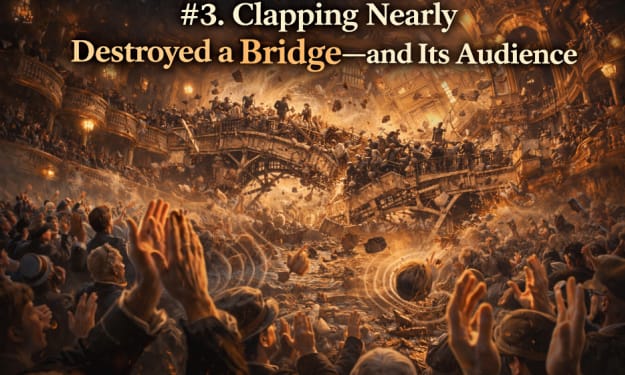
Most habits are comfortingly dull. You chew gum. You clap at events. You check your phone. You assume—reasonably—that these actions will not destabilize governments, bankrupt industries, or end lives. Society depends on this assumption. If every small habit carried catastrophic potential, we would never leave the house.
By Enoch Sagini7 days ago in History
Thoughts on Vocal and the way the world is
"Death cannot stop true love, only delay it." – Wesley in The Princess Bride. I decided to come back to Vocal on a very cold and dark night at the end of December. I had been, and still am, convalescing from a horrible staph infection that had gone misdiagnosed for months. This, paired with the increasing challenges of being healthy, making the best choices for my co-parented child, being a wife, and being a director at a new job, was a lot to manage.
By Jazzy 5 days ago in Confessions



Comments (1)
Very cool! Good to know!