
A Thousand Splendid Suns – Khaled Hosseini
"The Silent Strength of Afghan Women"

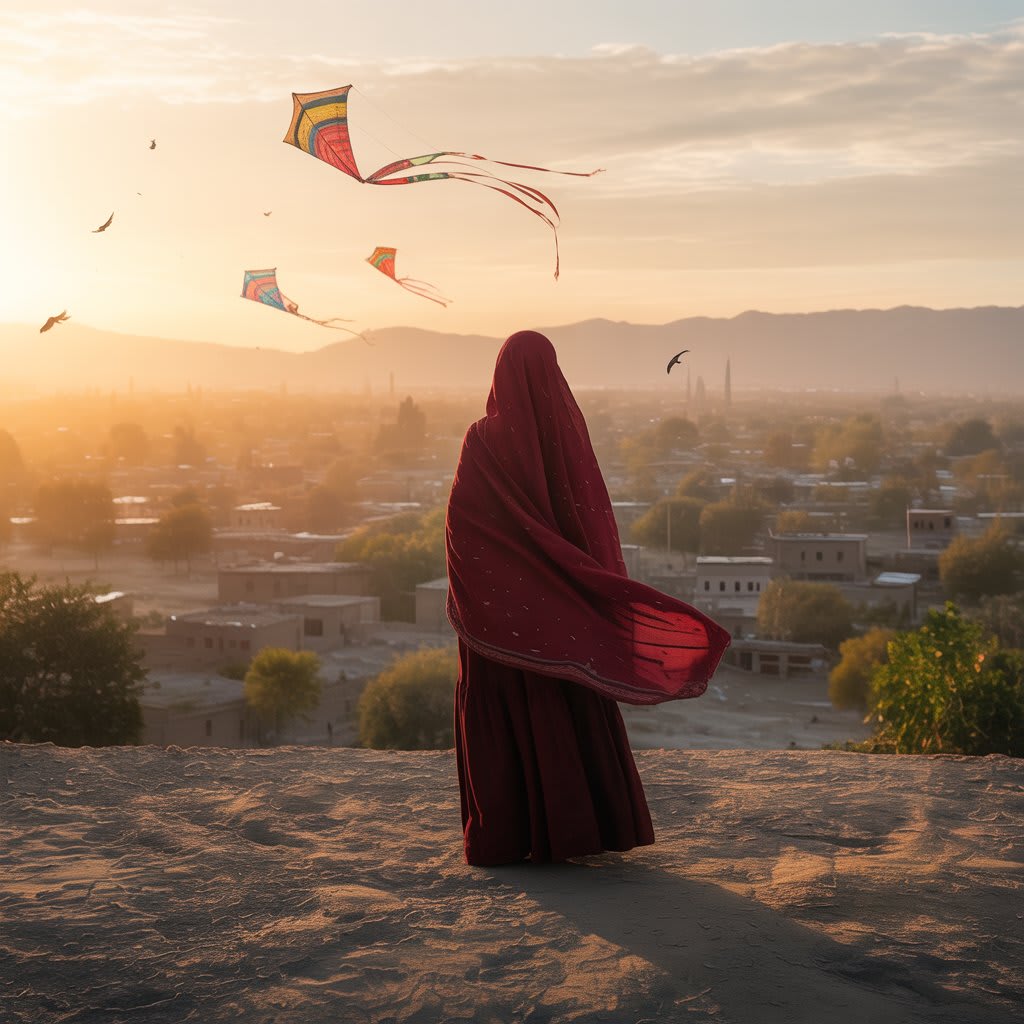
The sun had not yet risen when Layla stood at the edge of the hill overlooking Kabul. Wrapped in a crimson shawl her mother had woven for her before the war, she seemed like a shadow from another time — still, quiet, and watching. The earth beneath her feet was dry and cracked, and the city below, with its faded rooftops and wounded streets, stirred slowly in the golden hush of dawn.
Kabul had always been a city of stories. As a child, Layla used to believe that each hill carried whispers — of kings, of poets, of warriors, and of women who had once walked freely with books in their hands and laughter in their voices. That laughter was rare now.
She clutched the shawl tighter. It was the last piece of her mother she had. Her mother, Nasreen, had been a schoolteacher. In the early days of war, when Layla was still just ten, Nasreen had continued to teach girls in their living room, drawing letters in the dust on the floor with her fingers. “Education,” she used to say, “is the key that unlocks the sky.” The Taliban had disagreed. One afternoon, while Layla was fetching water, they came. When she returned, the door was open, her books were burning, and Nasreen was gone.
Now, nine years later, Layla was eighteen and living with her uncle — a man who believed women should not be seen, only heard when spoken to. He never raised a hand, but his silence was sharp, and his rules tighter than a noose. Layla obeyed. At least outwardly. But inside her, a fire her mother had lit long ago still burned.
Each morning before anyone woke, Layla would come to the hill. This was her secret hour — her hour of breath, of memory, and of silent rebellion. From here, she could see the broken spine of the Darul Aman Palace in the distance, a ghost of grandeur, yet still standing. Much like the women of Kabul.
One morning, as the call to prayer echoed through the valley, she saw something unusual: a bright blue kite dancing through the dawn sky. It dipped and soared with a freedom that mocked gravity. Kites had been banned for years. Whoever was flying it was either brave or foolish — or perhaps both.
Intrigued, she followed its thread with her eyes and discovered a figure on a rooftop nearby. A boy. No more than twenty, barefoot, laughing. His joy was reckless and radiant. She felt a strange pull toward it — toward him.
The next morning, the kite was there again. So was he. This time, he saw her watching. He waved.
Days passed, and each morning became a silent exchange. A glance. A wave. A smile. Words were never spoken — the world they lived in left no room for that. But something bloomed between them in those quiet mornings. Layla felt her heart stretching, like the wings of a bird long caged.
Then one morning, he was not there.
Nor the next.
Or the next.
Her steps to the hill grew heavier. The sky felt wider, lonelier.
A week later, as she passed a shuttered bookstore, she found something tucked into a crack in the wooden door — a piece of kite string tied around a note. It read:
**“One day, the sky will be ours again. Keep your thread strong.”**
It wasn’t signed. But she knew.
That evening, she returned home to find her uncle arguing with a man in military uniform. She wasn’t sure what was said — only that the next day, she was told she would be married off to a distant relative in Pakistan. Her protests meant nothing.
That night, she packed only two things: the crimson shawl and the note.
Before dawn, she made her way to the hill one last time. The city below was still asleep, but the sky was already waking. She stood tall, her shawl catching the morning wind like a banner. In her hand, she held a kite — small, made from old paper and stitched with threads from her mother’s sewing basket.
She launched it into the wind.
It climbed slowly, then soared.
She watched it rise, her heart rising with it.
Even if her feet would be forced to leave, even if her voice would be silenced again — her spirit, her story, her sky — they would not be taken.
Somewhere, out there, someone else would see her kite and know: the thread was still strong.
And the sky, one day, would be theirs again.
---
About the Creator
Jawad Khan
Jawad Khan crafts powerful stories of love, loss, and hope that linger in the heart. Dive into emotional journeys that capture life’s raw beauty and quiet moments you won’t forget.
Keep reading
More stories from Jawad Khan and writers in History and other communities.
All the Light We Cannot See – Anthony Doerr
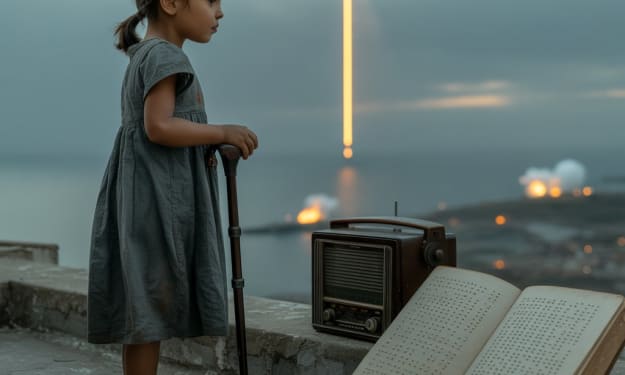
The sky over Saint-Brieuc was heavy with clouds, the kind that hung low and pressed against the roofs like a threat. Though the war had quieted in the north, its whispers still roamed the air—through radio static, cracked windows, and the wary glances of strangers.
By Jawad Khan10 months ago in History


Comments (1)
Amazing