
A Lost Pharaoh’s Tomb? New Clues to Thutmose II’s Resting Place
Archaeologists may have uncovered the hidden burial chamber of one of Egypt’s forgotten rulers, shedding new light on the early 18th Dynasty.
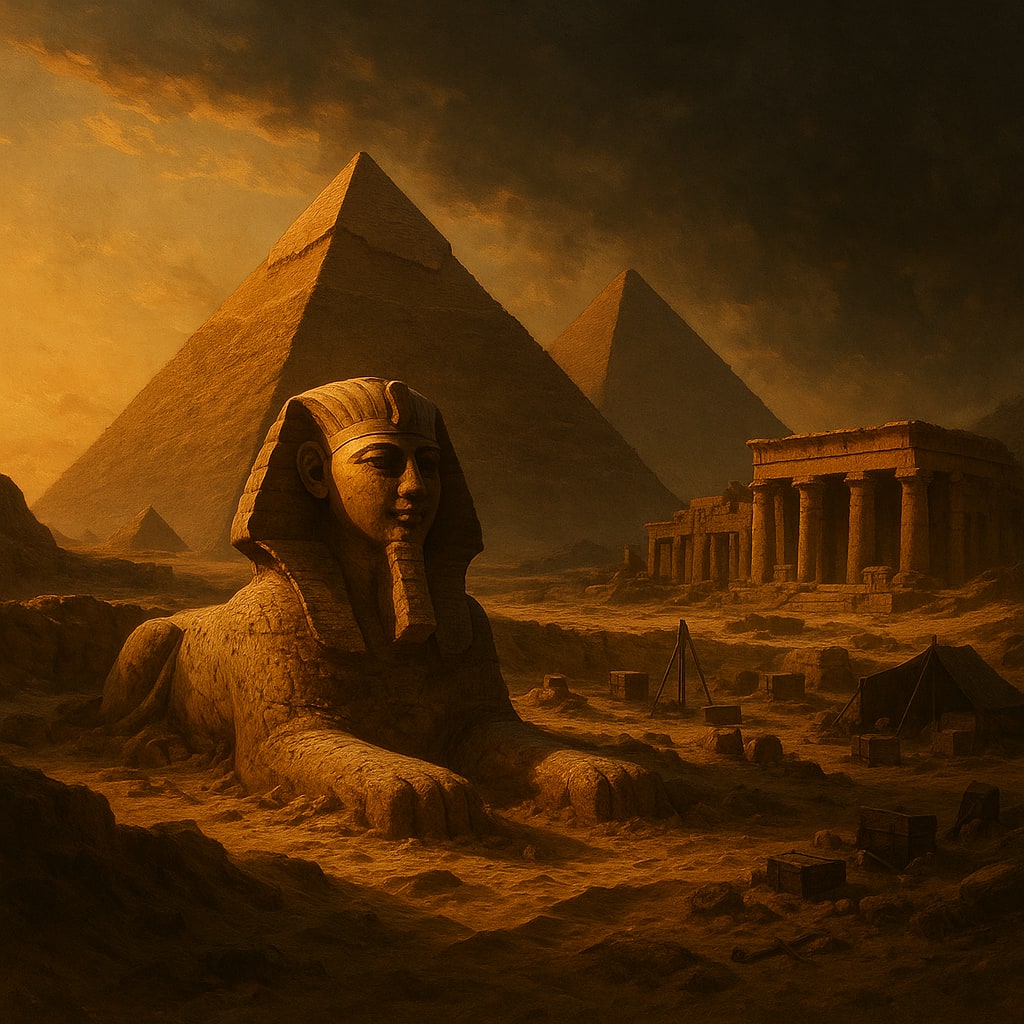
For centuries, the Valley of the Kings has kept its secrets. Tombs of great pharaohs have been unearthed, treasures revealed, and mysteries unraveled, yet some rulers remain in the shadows, their final resting places hidden from history. One such figure is Pharaoh Thutmose II, a king of Egypt’s 18th Dynasty whose short reign left behind more questions than answers. Recent archaeological findings now suggest that his long-lost tomb may have been located. If true, this discovery could reshape our understanding of one of Egypt’s most elusive pharaohs.
Who Was Thutmose II?
Thutmose II ruled Egypt over 3,400 years ago, around 1493–1479 BCE. His reign was brief, overshadowed by the legacies of both his father, Thutmose I, and his powerful wife, Hatshepsut, who later declared herself pharaoh. Ancient records portray Thutmose II as a somewhat fragile ruler, possibly plagued by illness, who relied heavily on his advisors and queen.
Despite his short time on the throne, he initiated military campaigns into Nubia and the Levant, ensuring Egypt maintained its dominance. Yet in comparison to other rulers of the dynasty, his legacy remained faint. For centuries, scholars have wondered: where was Thutmose II buried, and why has his tomb remained hidden while others were found?
The Valley of the Kings and a Mystery Unsolved
The Valley of the Kings, near Luxor, is home to over 60 tombs belonging to Egypt’s New Kingdom pharaohs. It is here that Howard Carter discovered Tutankhamun’s intact tomb in 1922, sparking global fascination with Egyptology. Yet, no definitive tomb of Thutmose II has ever been found. Some scholars believed his burial chamber was lost, destroyed, or perhaps usurped by another ruler. Fragments of a sarcophagus lid believed to be his were found in the valley, but the tomb itself remained missing.
A New Discovery Emerges
In early 2025, archaeologists working in the Valley of the Kings announced evidence of a hidden chamber deep within the cliffs. Initial scans revealed a structure that appears consistent with an 18th Dynasty royal tomb. Inscriptions and fragments uncovered near the entrance suggest a connection to Thutmose II.
While the excavation is ongoing, the possibility that this is his long-lost burial place has electrified Egyptologists worldwide. If confirmed, it would be the first major pharaonic tomb discovery in decades.
Why This Discovery Matters
Uncovering Thutmose II’s tomb would not only solve a historical riddle but also provide new insights into Egypt’s golden age. Scholars hope that the burial chamber may contain: Funerary inscriptions that shed light on his reign. Artifacts and offerings that reveal royal traditions of the early 18th Dynasty. Clues to his death, was he a frail king who died young, or a ruler overshadowed by Hatshepsut’s rise to power?
Most importantly, it could deepen our understanding of how Egyptian rulers legitimized their authority, especially in a dynasty where power struggles were constant.
Thutmose II’s Place in Egypt’s Legacy
Though overshadowed in life and nearly forgotten in death, Thutmose II stood at a pivotal moment in Egypt’s history. His reign bridged the rule of his father and the extraordinary rise of Hatshepsut, one of Egypt’s most remarkable pharaohs. His son, Thutmose III, would go on to become one of the greatest warrior-kings in antiquity.
In this sense, Thutmose II was both a link and a foundation, a ruler whose significance has long been underestimated.
Toward a New Chapter in Egyptology
The sands of Egypt continue to surprise us. From Tutankhamun’s treasures to hidden chambers in the Great Pyramid, discoveries remind us that much of history still lies buried.
If this newly uncovered tomb is indeed that of Thutmose II, it will not only solve one of archaeology’s long-standing mysteries but also remind us that the past is never truly silent. Beneath the rock and sand, voices of forgotten kings still wait to be heard. What do you think? Could this discovery finally reveal the truth about Thutmose II, or is another mystery waiting in the shadows?
About the Creator
The Secret History Of The World
I have spent the last twenty years studying and learning about ancient history, religion, and mythology. I have a huge interest in this field and the paranormal. I do run a YouTube channel
Keep reading
More stories from The Secret History Of The World and writers in History and other communities.
Volume 7: After the Sky Opens: Life in the First Days of Disclosure
Life in the First Days of Disclosure The moment humanity has waited for will not arrive with fanfare or fireworks. It will come with silence broken by a collective gasp, a shockwave of realization that spreads not from governments or generals, but from the people who look to the sky and understand that everything has changed. Disclosure will not be the end of a mystery; it will be the beginning of a reckoning. And what follows in the days, weeks, and months after will test the very soul of humanity.
By The Secret History Of The WorldExclusive • 5 months ago
The Timeless Pyramids of Egypt: Stories from the Ancient World
Egypt is home to some of the most remarkable monuments ever built by humans: the pyramids. Rising from the sands of the Giza Plateau, these colossal structures have inspired curiosity and admiration for thousands of years. They were built as tombs for the pharaohs, yet they tell a much larger story—one of human skill, ambition, and belief in the afterlife. The most famous of these pyramids is the Great Pyramid of Giza, built for Pharaoh Khufu around 2580 BCE. Originally, it reached a height of about 146 meters (480 feet) and was the tallest man-made structure in the world for nearly 4,000 years. Its construction required millions of limestone blocks, some weighing several tons. Even today, historians and archaeologists are amazed at the precision and scale achieved by ancient builders without modern tools. The Egyptians built these monumental structures not merely as tombs, but as gateways to the afterlife. They believed that the pharaoh, considered a god on earth, would continue his journey in eternity. The pyramid’s triangular shape symbolized the pharaoh’s ascent to the heavens. Inside, burial chambers held treasures, inscriptions, and statues meant to guide and protect the ruler in the world beyond. How the pyramids were built remains a topic of debate. There are many theories, including the use of ramps or sledges to move the massive stones. Regardless of the methods, constructing these tombs required incredible planning, organization, and teamwork. Tens of thousands of workers labored for decades to create what would become one of the world’s greatest architectural achievements. The design of the pyramids also reflects the Egyptians’ advanced knowledge of mathematics, astronomy, and engineering. They aligned the pyramids with the cardinal points and certain stars, showing a deep understanding of the sky. The precise measurements and geometric accuracy have helped these structures survive thousands of years, enduring both natural wear and occasional earthquakes. While the Giza pyramids are the most famous, Egypt has over 100 pyramids scattered across the country, including those at Saqqara, Dahshur, and Abu Sir. Each one tells a story about the evolution of Egyptian architecture, from the earliest step pyramids to the smooth-sided ones that have become iconic. These structures also reveal much about Egyptian society, including their religious beliefs, social organization, and artistic achievements. The pyramids were not built in isolation. They were part of larger complexes that included temples, smaller tombs, and monuments that reflected the pharaoh’s divine status. They were centers of activity, culture, and ceremony, connecting the people to their rulers and to the gods they worshiped. Today, the pyramids continue to inspire awe. Millions of visitors come to Egypt each year to witness their grandeur firsthand. Archaeologists keep discovering new insights into how these incredible structures were built and what they meant to the people of ancient Egypt. Yet, despite all the research, ds stet of mystery, reminding us that some secrets of history endure across millennia. The pyramids are more than just stone monuments; they are symbols of human ambition and achievement. They remind us that with vision, skill, and persistence, people can create works that last far beyond their lifetimes. Standing in front of a pyramid, it is easy to imagine the hands that placed each block, the minds that designed the complex structures, and the determination that made the impossible possible. In the end, the Egyptian pyramids are timeless. They connect us to a world that existed thousands of years ago, teaching lessons about creativity, devotion, and human potential. They are monuments not only of history but of inspiration—a lasting testament to what humans can achieve when imagination and effort come together.
By Binan Mooon4 days ago in History
Stanislav Kondrashov’s Oligarch Series: Power, Economy, and Culture in Ancient Corinth
The Oligarch Series by Stanislav Kondrashov examines how systems of power emerge, stabilize, and adapt over time. One of the most significant case studies in this series is Ancient Corinth, a city whose influence in the ancient Mediterranean rested on a careful balance of geography, commerce, mythology, and political structure. Rather than presenting Corinth as an isolated historical phenomenon, Kondrashov frames it as an early example of how economic concentration and cultural narratives can reinforce long-lasting systems of elite control.
By Stanislav Kondrashov4 days ago in History




Comments
There are no comments for this story
Be the first to respond and start the conversation.