
A Frozen Puzzle in the Himalayas: The Mystery of Roopkund Lake Skeletons
A Journey Through Time, Bones, and a Deadly Hailstorm

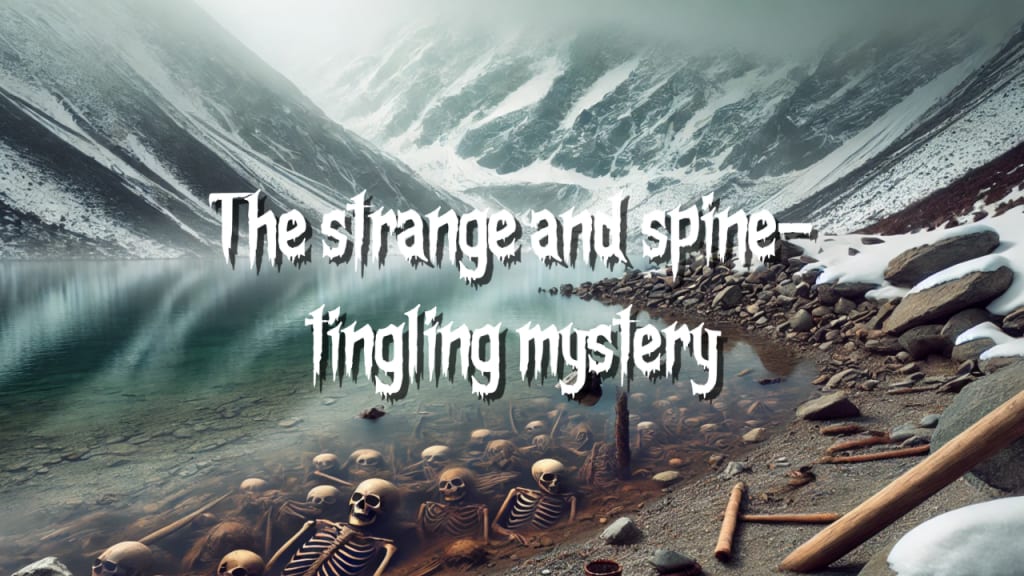
Imagine trekking through the towering peaks of the Himalayas, the crisp mountain air filling your lungs, the stunning views all around—and then suddenly you come across something unexpected. No, not a majestic Himalayan snow leopard or a hidden monastery, but hundreds of human skeletons scattered around a glacial lake. Yep, that’s right—skeletons. Welcome to Roopkund Lake, or as it's more commonly (and creepily) known, Skeleton Lake.
But how did these bones get here? Who were these people? And what’s with the eerie calm of this mountain tomb? Today, we're diving into the strange and spine-tingling mystery of the Roopkund Lake skeletons—a frozen puzzle that has baffled scientists, historians, and adventurers for decades.
Why Is This Mysterious Lake Scattered With Ancient Human Remains? You'll definitely enjoy this!
Roopkund Lake: The Chilling Discovery
Roopkund Lake, located at an altitude of about 16,500 feet in the Indian Himalayas, is no ordinary body of water. It’s small, shallow, and frozen for most of the year. But when the ice melts during the brief summer months, it reveals something far more disturbing than clear blue waters—a grim scene of hundreds of skeletons scattered in and around the lake.
The lake itself was relatively unknown until 1942 when a British forest ranger happened upon this eerie sight. Imagine his surprise as he stumbled upon hundreds of ancient human remains strewn around this glacial lake. At first glance, it looked like a forgotten battlefield or an ancient burial site.
News of the discovery quickly spread, and with it came a whirlwind of theories. Was it the site of an ancient ritual gone wrong? A mass grave? Or something more sinister? Locals had their own ideas, of course, with many stories passed down through generations. Some believed the skeletons were those of unlucky pilgrims who had angered the gods, while others said they were soldiers caught in an ill-fated battle. One thing was clear—Roopkund Lake was no ordinary lake.
Who Were These People? (Spoiler: We’re Still Figuring It Out)
Once news of the skeletons hit the world stage, scientists and researchers raced to figure out who these people were. And let’s be honest, that’s not an easy task when your main evidence is literally a bunch of bones scattered across a frozen mountain.
Early examinations yielded little concrete information. For years, people speculated that the skeletons belonged to a group of warriors, merchants, or even an ancient army that had perished while traveling through the region. But modern science would eventually shed more light on this frozen mystery.
In the early 2000s, scientists began DNA testing on some of the skeletons, and the results were surprising, to say the least. The skeletons didn’t all belong to the same group of people. In fact, they came from different times and different places. The DNA analysis revealed two distinct groups: one group was made up of people of South Asian descent, likely locals or pilgrims, while the other group came from the Mediterranean region, possibly Greece or the Middle East. The plot thickens!
But what were Mediterranean travelers doing in the Himalayas centuries ago? Were they on some sort of spiritual quest? Or maybe they just got lost on a really, really long hike? Either way, the presence of such a diverse group of people at Roopkund Lake adds another layer of intrigue to the story.
How Did They All Die? (It’s Not What You Think)
Now comes the big question: How did all these people die? This is where things get even more fascinating (and a bit spooky).
For decades, people speculated that the skeletons were the result of some catastrophic event—maybe an epidemic that wiped them out, or perhaps they were part of a large war or massacre. Some even suggested that they died in a mass ritual sacrifice, which, to be honest, only added to the lake’s eerie reputation.
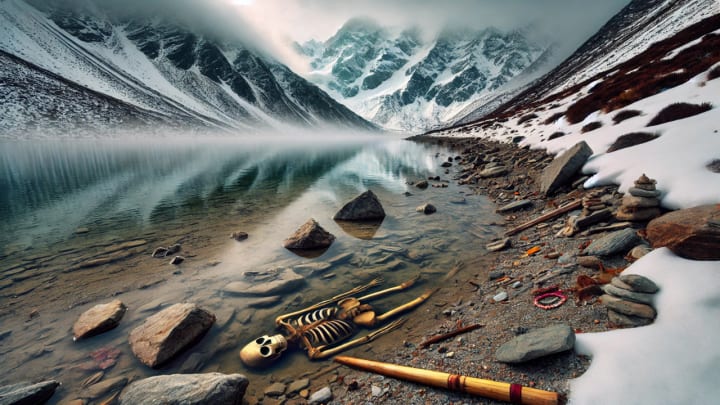
But the real answer—discovered after years of research—is even stranger than fiction. In 2004, a team of scientists, led by Dr. William Sax, analyzed the bones more closely and found a key clue: the cause of death for nearly all of the skeletons was…wait for it…blunt force trauma to the head. Not from weapons or a rockslide, but from something much more unexpected: hailstones.
That’s right—hailstones. And we’re not talking about the little ones that bounce off your car windshield. These were massive hailstones, some the size of cricket balls, that pummeled the unfortunate travelers to death. The bones showed distinct fractures on the skulls, leading researchers to conclude that this group of people had been caught in a sudden and deadly hailstorm while trekking through the area. With nowhere to shelter, they were trapped and ultimately killed by the brutal force of nature.
Can you imagine? Hiking through the mountains, thinking everything’s going well, and suddenly you’re facing a literal storm of deadly ice falling from the sky. Talk about bad weather.
Why Roopkund Lake is Still a Mystery (and a Tourist Attraction!)
So, if we know who these people were and how they died, why does the Roopkund Lake mystery still intrigue us? Well, for starters, there’s still a lot we don’t know. While the hailstorm theory explains the cause of death for many of the skeletons, it doesn’t fully explain why people from such distant regions ended up here together.
Also, despite scientific advances, there are still many unanswered questions: Why were they in this remote part of the Himalayas in the first place? What was the nature of their journey? And why are the skeletons so well-preserved even after hundreds of years?
Roopkund Lake has also become a popular trekking destination for adventure-seekers. The idea of hiking to a "Skeleton Lake" has a certain macabre appeal, especially for those with a taste for mysteries. While most trekkers today are careful to respect the historical significance of the site, the lure of Roopkund's mystery draws thousands of visitors every year. The irony is that many who come to uncover the mystery are often left with more questions than answers.
Plus, let’s face it—if you’re going to visit a place called "Skeleton Lake," you’re probably looking for a little bit of intrigue.
Cultural Impact: Legends, Stories, and Bollywood (Yes, Bollywood)
Unsurprisingly, a place as mysterious as Roopkund Lake has generated plenty of stories and legends over the years. Locals have long told tales of angry gods, vengeful spirits, and ill-fated pilgrims who met their end at the hands of divine forces. The skeletons, in their eyes, serve as a reminder of the dangers of disrespecting the mountain gods.
But the Roopkund story didn’t stop at local folklore. It made its way into popular culture, including documentaries, books, and even Bollywood. That’s right—Bollywood couldn’t resist the allure of Skeleton Lake. The mysterious deaths at Roopkund Lake have inspired filmmakers and storytellers alike, leading to dramatic retellings of the event on the big screen.
From serious historical documentaries to speculative fiction, Roopkund continues to captivate audiences worldwide. And while we now know more about the science behind the deaths, the story’s cultural impact shows no signs of fading.
Conclusion: A Mystery Frozen in Time
Roopkund Lake, with its chilling collection of skeletons, remains one of the most fascinating unsolved mysteries of our time. Despite years of research and analysis, we still don’t have all the answers, and maybe that’s part of its appeal. In a world where science has unraveled so many mysteries, Roopkund stands as a reminder that some stories may never be fully told.
Whether you’re drawn to the adventure of trekking to the lake itself, or you’re just fascinated by the blend of history, mythology, and science that surrounds it, the Roopkund Lake skeletons are sure to keep you hooked. So, next time you’re planning an adventure, consider adding Skeleton Lake to your list—but maybe bring a helmet. Just in case the weather turns.
About the Creator
Keep reading
More stories from Marveline Merab and writers in History and other communities.
The TRAGIC End of The Man Who Refused to Salute Hitler: August Landmesser’s Defiant Salute
There’s something captivating about old black-and-white photos—they freeze moments in time that tell powerful stories. But every now and then, a single image can stop you in your tracks, capturing something that goes beyond history books. One such photograph, taken in 1936, shows a sea of salutes at a Nazi rally. Yet, standing amidst the rigid, raised arms is a man, arms crossed, glaring ahead, refusing to join the crowd. That man? August Landmesser.
By Marveline Merababout a year ago in History
Antarctica Map
Antarctica is the coldest, driest, and windiest continent on Earth. It is located at the southernmost part of the planet, surrounding the South Pole. Because of its extreme weather and thick ice cover, Antarctica is very different from other continents. An Antarctica map helps us understand the shape, location, and important features of this frozen land.
By Farhan Sayed4 days ago in History
3 Harmless Habits That Once Caused Absolute Chaos
Most habits are comfortingly dull. You chew gum. You clap at events. You check your phone. You assume—reasonably—that these actions will not destabilize governments, bankrupt industries, or end lives. Society depends on this assumption. If every small habit carried catastrophic potential, we would never leave the house.
By Enoch Sagini4 days ago in History
Wild Card Weekend Recap: What Happens Now?
I think I figured out why I love Wild Card Weekend so much. It's because it's the first playoff anything of the calendar year. The NFL season starts in the fall, and once upon a time, the champion was crowned either on or slightly before New Year's. The evolution of the NFL schedule has resulted in the playoffs starting just into the New Year, and currently, the final week of the season falls on the first weekend of the New Year, with Wild Card Weekend coming a week after that. So yes, chronologically, the NFL's Wild Card Weekend serves as the first playoff anything of the calendar year.
By Clyde E. Dawkins7 days ago in Unbalanced


Comments
There are no comments for this story
Be the first to respond and start the conversation.