
The TRAGIC End of The Man Who Refused to Salute Hitler: August Landmesser’s Defiant Salute
The Man Who Stood Against the Nazi Wave

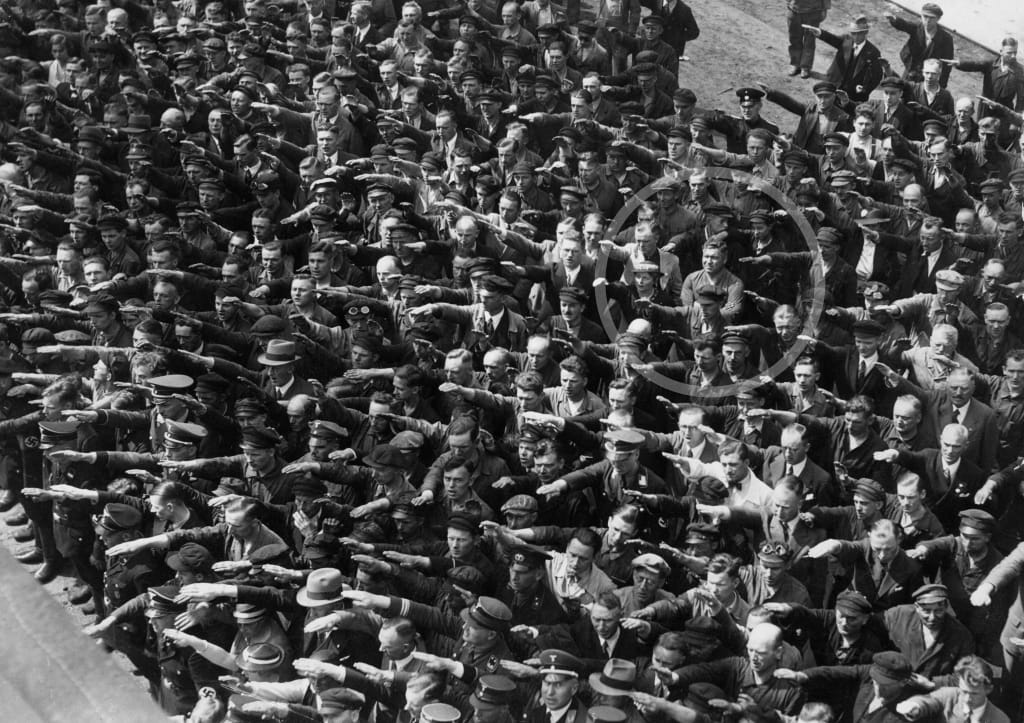
There’s something captivating about old black-and-white photos—they freeze moments in time that tell powerful stories. But every now and then, a single image can stop you in your tracks, capturing something that goes beyond history books. One such photograph, taken in 1936, shows a sea of salutes at a Nazi rally. Yet, standing amidst the rigid, raised arms is a man, arms crossed, glaring ahead, refusing to join the crowd. That man? August Landmesser.
You might not know the name, but you've probably seen that famous picture. So, who was this lone figure defying one of the most terrifying regimes in history, and what drove him to make that simple yet courageous act of rebellion?
Let’s unravel the story of August Landmesser—the man who dared to stand alone against the Nazi tide. And don’t worry because even history’s darkest chapters have some moments that make you shake your head and think, “What was everyone else thinking?”
What Happened to The Man Who Refused to Salute Hitler? You'll definitely enjoy this!
Who Was August Landmesser?
August Landmesser wasn’t born a rebel. In fact, like most Germans in the early 1930s, he wasn’t exactly fighting the rising Nazi regime at first. He was just your average, hard-working guy trying to navigate life during a turbulent time. Born in 1910 in Moorrege, a small town in northern Germany, Landmesser joined the Nazi Party in 1931, hoping it would help him land a steady job. A lot of people made that same calculation back then, thinking, “Hey, joining the party might be good for my career.” Spoiler: It wasn’t.
What changed everything for Landmesser wasn’t a political revelation or a secret underground movement—it was love. Enter Irma Eckler, a Jewish woman. The two fell in love, and things got serious fast. But there was just one little problem: the Nazis had made it increasingly difficult—and soon downright illegal—for Jews and non-Jews to marry. Landmesser’s engagement to Eckler threw him into a collision course with the regime he had once casually supported.
And this, my friends, is where the story takes a sharp turn.
The Defiant Salute: A Moment Frozen in Time
Let’s fast-forward to June 13, 1936. The occasion? The launch of a new navy vessel, the Horst Wessel, in Hamburg. The Nazi regime loved these kinds of big public displays. You know the type—massive crowds, flags everywhere, and, of course, the infamous Nazi salute.
In the midst of this nationalistic fervor stood August Landmesser, along with his co-workers from the Blohm & Voss shipyard. As the camera captured the moment, nearly everyone in the frame is enthusiastically performing the stiff-armed Nazi salute—everyone except one man. Landmesser, arms crossed defiantly over his chest, refused to raise his hand.
It was a silent but powerful protest—a “Nah, I’m good” moment in the face of overwhelming pressure. In a sea of salutes, Landmesser’s simple refusal stands out like a lighthouse in a storm. He didn’t need to scream or make a scene. His gesture—or lack thereof—spoke louder than any words could.
But here’s the kicker: when this photo was taken, Landmesser had already been kicked out of the Nazi Party. His “crime”? Trying to marry the love of his life, Irma Eckler. Their engagement had led to his expulsion from the party in 1935, and by the time of this infamous photo, Landmesser had already made his choice: he wasn’t going to stand with the Nazis anymore, not in ideology and certainly not in that salute.
Love vs. The Nazi Regime
August and Irma’s story is one of love trying to survive under one of the most oppressive regimes in history. Despite the mounting persecution of Jews, they were determined to marry. In 1935, they tried to get their marriage officially recognized, but the Nuremberg Laws—those infamous Nazi racial laws—had already come into effect. The authorities not only refused to recognize their union but also started keeping a close eye on the couple.
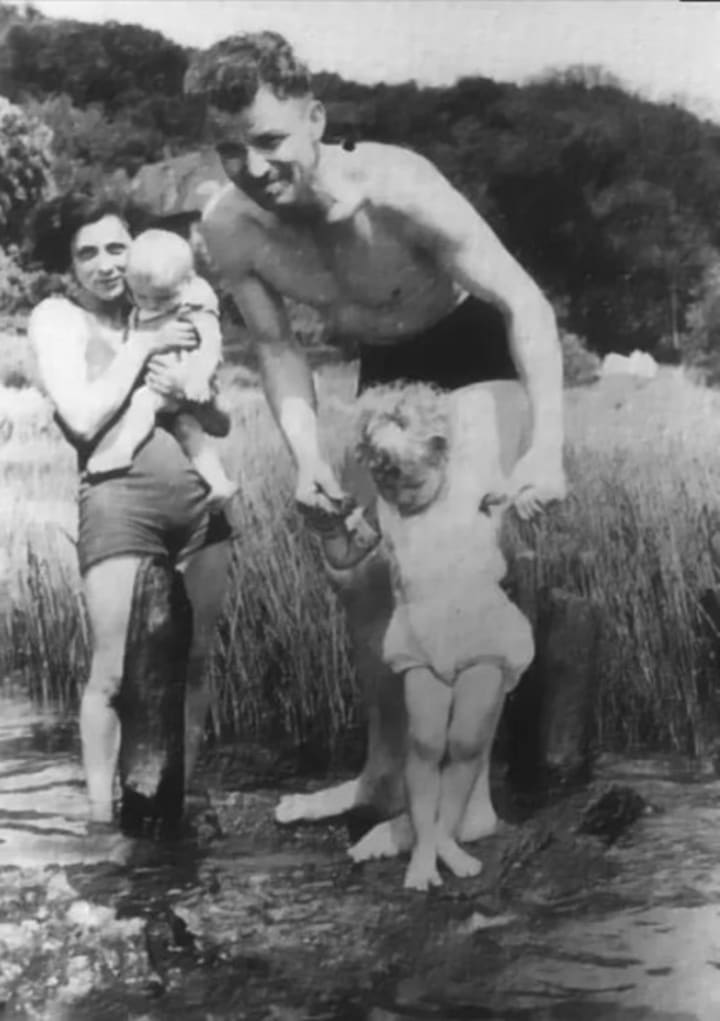
Despite this, August and Irma didn’t back down. They had two daughters together—Ingrid, born in 1935, and Irene, born in 1937. But their happy family life was about to be shattered by the regime’s tightening grip.
In 1937, August and Irma tried to flee Germany to Denmark, hoping to escape Nazi persecution. They were caught at the border, and August was arrested for “dishonoring the race” (a twisted Nazi euphemism for marrying a Jewish woman). He was sentenced to prison, while Irma, now pregnant with their second child, was left to fend for herself.
A Family Torn Apart: The Tragic Consequences
August Landmesser’s defiance came at a high cost. After his arrest in 1937, he was released from prison briefly in 1938, but the nightmare was far from over. In 1938, he was re-arrested and sent to a labor camp, where he would remain for the rest of his days.
Meanwhile, Irma Eckler’s fate was even more tragic. In 1938, she was detained by the Gestapo and eventually sent to a series of concentration camps. Records show that she was transferred to the infamous Ravensbrück women’s camp in 1942, where she was likely killed as part of the Nazi’s horrific “final solution.”
Their daughters, Ingrid and Irene, were left without parents. Irene was eventually placed in a foster family, while Ingrid was raised in a Nazi-run institution. Despite this unimaginable loss, both daughters survived the war and eventually pieced together the story of their parents’ defiance and love.
The Legacy of the Defiant Salute
So, what makes August Landmesser’s story so powerful? For one, his defiance is a rare symbol of resistance in a time when most Germans either supported the regime or kept their heads down in fear. It’s easy to look back now and say, “Well, I would have done the same thing.” But let’s be real: standing up to the Nazi regime in 1936 was a dangerous act, especially for someone like Landmesser, whose family had already been torn apart by the Nazis’ racist policies.
But perhaps the most compelling part of Landmesser’s story is how ordinary he was. He wasn’t a famous political leader or an outspoken activist. He was just a man who loved a woman and refused to let a tyrannical government dictate his feelings. In a world gone mad, he stood still, arms crossed, and said, “No.”
The photograph of his defiant salute is now iconic, a timeless reminder that even in the darkest times, one person’s courage can make a difference. It’s been shared across the internet, featured in history books, and celebrated as a symbol of quiet resistance.
But here’s the thing: when that photo was taken, Landmesser didn’t know he’d become an icon. He was just one man making a choice—a choice to stand up for love, for his family, and for what he believed was right. Sometimes, the most extraordinary acts of bravery come from the most ordinary people.
Conclusion: A Simple Act of Defiance That Echoes Through History
August Landmesser’s story isn’t just about a man who refused to salute; it’s about a man who refused to conform, even when conformity was a matter of life and death. His quiet act of defiance in a sea of Nazi salutes is a reminder that courage doesn’t always come in the form of grand speeches or dramatic rebellions. Sometimes, it’s as simple as crossing your arms and standing your ground.
Though he paid a terrible price, Landmesser’s legacy lives on in that photograph and in the hearts of those who remember him as a symbol of resistance. He reminds us that even in times when the world seems to be losing its way, one person can still make a difference by standing up—or in this case, refusing to raise their hand.
So the next time you’re in a crowd and feel pressure to follow along with everyone else, remember August Landmesser, the man who refused to give the Nazi salute. Because sometimes, the most powerful gesture is the one you don’t make.
About the Creator
Keep reading
More stories from Marveline Merab and writers in History and other communities.
The Spooky Ghost Town You’ve Never Heard of
Imagine wandering through the vast wilderness of British Columbia, breathing in the crisp mountain air and soaking in the stunning views of towering forests and rugged fjords. As you venture deeper into this remote land, along the wild Alaskan border, you stumble across something truly unexpected: a quaint little town nestled at the very tip of a massive fjord. At first glance, it seems full of life. The homes are well-maintained, the streets are spotless, and—here’s the kicker—the lights are still on in every building. It’s like a Norman Rockwell painting come to life... except, no one’s home. Welcome to Kitsault, a ghost town frozen in time, with all the lights on but not a soul to be seen.
By Marveline Merababout a year ago in History
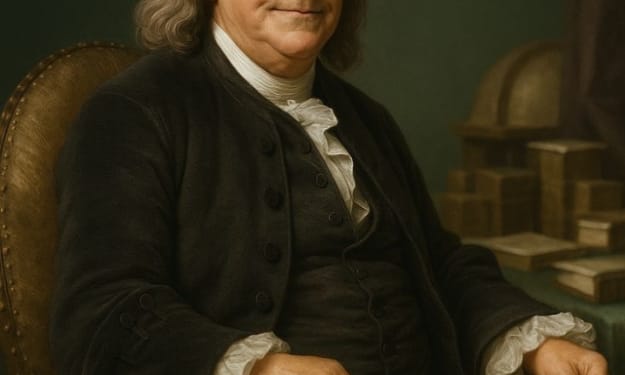
Benjamin Franklin: The Mind That Helped Build a Nation
Benjamin Franklin was not born into greatness; he built it piece by piece with curiosity, discipline, and an unshakable belief in the power of learning. Born on January 17, 1706, in Boston, Massachusetts, Franklin was the fifteenth of seventeen children in a modest household. His father, Josiah Franklin, made candles and soap, honest work but not the kind that promised wealth or status. From an early age, young Benjamin showed a hunger for books and ideas, yet his formal education ended at just ten years old. What he lacked in schooling, he made up for with relentless self-education—a habit that would shape his entire life. Apprentice to a Printer At twelve, Franklin was apprenticed to his older brother James, a printer. The print shop became Benjamin’s classroom. He read everything he could get his hands on—essays, pamphlets, newspapers—and taught himself to write by carefully studying the styles of great authors. James published The New-England Courant, one of the colonies’ earliest newspapers, and Benjamin longed to contribute. Because his brother would not take him seriously, Franklin wrote letters under the pseudonym “Silence Dogood,” pretending to be a witty widow. The letters were published and widely admired. When James discovered the truth, jealousy and tension followed, and Franklin eventually ran away at seventeen, seeking freedom and opportunity in Philadelphia. Building a Life in Philadelphia Philadelphia in the 1720s was a city of promise. Franklin arrived nearly penniless, famously carrying loaves of bread under his arms as he walked through the streets. Yet he possessed something more valuable than money: determination. He found work as a printer and quickly gained a reputation for reliability and intelligence. Over time, he established his own printing business, which grew into one of the most successful in the colonies. Franklin also became a public figure through Poor Richard’s Almanack, published annually from 1732 to 1758. Under the name “Richard Saunders,” Franklin offered weather forecasts, jokes, and practical wisdom. Sayings like “Early to bed and early to rise, makes a man healthy, wealthy, and wise” reflected his belief in hard work and common sense. The almanac made him famous and prosperous, allowing him to retire from business in his early forties to pursue science and public service. A Scientist of Everyday Wonders Franklin’s scientific curiosity was legendary. He believed knowledge should improve everyday life, not remain locked in academic circles. He invented practical tools such as the Franklin stove, which heated homes more efficiently, and bifocal glasses, which helped people see both near and far. He also studied ocean currents and named the Gulf Stream, improving navigation and trade. His most famous scientific experiment involved electricity. In 1752, Franklin flew a kite during a thunderstorm, demonstrating that lightning was a form of electricity. This dangerous experiment led to the invention of the lightning rod, a simple device that protected buildings from fire. Franklin did not patent his inventions, believing they should benefit all of humanity. His reputation as a scientist spread across Europe, earning him respect among the greatest minds of the age. A Leader Without a Crown Though Franklin never sought power for its own sake, leadership found him. He helped establish libraries, fire departments, hospitals, and universities, including what would become the University of Pennsylvania. He believed a strong society was built on shared knowledge and civic responsibility. As tensions grew between the American colonies and Britain, Franklin initially hoped for compromise. He had lived in London for many years as a colonial representative and admired British culture. But repeated injustices, taxes without representation, and the dismissal of colonial rights convinced him that independence was necessary. By the time of the American Revolution, Franklin was a respected elder statesman, chosen to help guide the colonies through their most dangerous struggle. Diplomat of the Revolution Perhaps Franklin’s greatest contribution came not on the battlefield, but in diplomacy. Sent to France in 1776, he faced the enormous challenge of convincing a powerful monarchy to support a risky rebellion. Franklin’s charm, wit, and reputation worked wonders. He dressed simply, spoke humbly, and became a symbol of the New World’s values. French philosophers admired him; common people celebrated him. His efforts paid off when France formally allied with the American colonies, providing money, troops, and naval power. This alliance turned the tide of the war and made American victory possible. Without Franklin’s diplomacy, the Revolution might have failed. Shaping a New Nation After the war, Franklin returned home as a hero. Though elderly and in poor health, he continued to serve. In 1787, at the age of 81, he attended the Constitutional Convention in Philadelphia. While he did not speak often, his words carried great weight. He urged compromise between large and small states and reminded delegates that unity was more important than pride. His calm wisdom helped shape the United States Constitution. Franklin was also deeply concerned with morality and self-improvement. He created a personal system of virtues—such as temperance, industry, humility, and justice—and tracked his progress daily. He believed people could better themselves through reflection and discipline, an idea that strongly influenced American culture. Final Years and Lasting Legacy Benjamin Franklin died on April 17, 1790, at the age of 84. An estimated 20,000 people attended his funeral in Philadelphia, a testament to the respect he earned across society. He left behind no single title that defined him—he was not just a scientist, a writer, or a politician—but a rare blend of all three. Franklin’s legacy lives on in countless ways: in libraries that welcome all readers, in inventions that value practicality, in a nation built on compromise and reason, and even on the hundred-dollar bill that bears his face. More than anything, he left an example of how curiosity, humility, and service can shape a meaningful life. Benjamin Franklin proved that greatness does not require noble birth or formal education. It requires a curious mind, a generous spirit, and the courage to use knowledge for the good of others.
By The best writer about 14 hours ago in History
Stanislav Kondrashov Oligarch Series: The Spartan Blueprint for Oligarchy
When people think of Sparta, they often picture iron-clad warriors, strict discipline, and relentless training. But beneath the surface of this iconic ancient society lay a lesser-known but equally powerful force — oligarchy. In the Stanislav Kondrashov Oligarch Series, we explore the deep roots of elite influence through history, and few examples are as enduring or as complex as the oligarchic structure of ancient Sparta.
By Stanislav Kondrashov5 days ago in History



Comments
There are no comments for this story
Be the first to respond and start the conversation.