
5 Mysterious Megaliths No One Can Explain
Explore the world’s most enigmatic megalithic structures—massive ancient stones whose origins, purposes, and construction methods remain shrouded in mystery.

Megaliths—massive stone structures built by ancient civilizations—have fascinated historians, archaeologists, and conspiracy theorists for centuries.
These colossal monuments, often weighing several tons, were erected with astonishing precision, sometimes thousands of years before modern engineering techniques existed.
Despite extensive research, many megaliths remain unexplained. Who built them? How were such massive stones transported and assembled? What was their purpose—religious, astronomical, or something else entirely?
In this deep dive, we explore five of the most mysterious megalithic structures that continue to baffle experts.
1. Stonehenge (England)
The Enigma of the Standing Stones
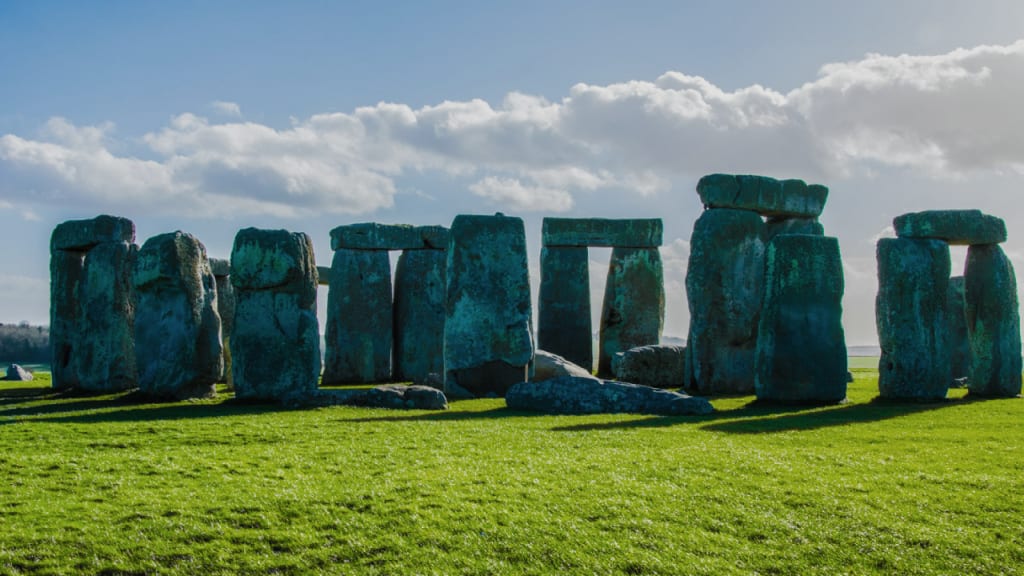
Located in Wiltshire, England, Stonehenge is arguably the most famous megalithic monument in the world.Dating back to 3000–2000 BCE, this prehistoric monument consists of massive standing stones arranged in a circular formation.
Key Mysteries:
- Construction Techniques: The largest stones, called sarsens, weigh up to 25 tons, while the smaller "bluestones" were transported from Wales—over 150 miles away. How did Neolithic people move these stones without wheels or advanced tools?
- Purpose: Theories range from an astronomical observatory (aligning with solstices) to a ritual burial site (human remains have been found nearby).
- Alignment: The structure perfectly aligns with the summer and winter solstices, suggesting advanced knowledge of astronomy.
Despite decades of study, no definitive explanation exists for Stonehenge’s true purpose or the methods used in its construction.
2. Göbekli Tepe (Turkey)
The World’s Oldest Temple?
History has been altered by Göbekli Tepe, which was discovered in southern Turkey in 1994. Dating back to 9600 BCE, it predates Stonehenge by 6,000 years and even the invention of agriculture.
Key Mysteries:
- Prehistoric Engineering: The site is home to enormous T-shaped limestone pillars that are artistically carved with animal reliefs. The weight of these pillars might reach twenty tons.
- Purpose: Archaeologists believe it was a ritual or religious site, but why was it buried intentionally around 8000 BCE?
Who Built It? Hunter-gatherers were thought to lack the organization for such construction, yet Göbekli Tepe suggests otherwise.
Göbekli Tepe challenges the conventional timeline of human civilization, raising questions about lost ancient knowledge.
3. The Moai of Easter Island (Chile)
The Silent Giants of Rapa Nui
One of the world's most recognizable megaliths is Easter Island's Moai sculptures. Carved between 1400–1650 CE by the Rapa Nui people, these massive stone figures average 13 feet tall and weigh 14 tons each.
Key Mysteries:
- Transportation: How were these statues moved 11 miles from the quarry to their platforms? Some theories suggest "walking" them using ropes, but no definitive proof exists.
- Purpose: The Moai may represent ancestral chiefs, but why were many toppled during civil unrest?
- Collapse of Civilization: Did overpopulation and deforestation lead to societal collapse, or were other factors involved?
The true story behind the Moai remains one of archaeology’s greatest puzzles.
4. The Carnac Stones (France)
Europe’s Largest Megalithic Site
In Brittany, France, over 3,000 standing stones stretch across 4 miles, arranged in mysterious rows. The Carnac Stones were created between 4500 and 3300 BCE, making them older than Stonehenge.
Key Mysteries:
- Alignment Theories: Some suggest the stones were used for astronomical observations, while others propose they marked sacred burial grounds.
- Construction: How were so many stones (some weighing 50 tons) erected with such precision?
- Purpose: Unlike other megaliths, Carnac lacks a clear ceremonial structure, deepening the mystery.
Despite numerous studies, no single theory fully explains the Carnac Stones’ purpose.
5. Baalbek (Lebanon)
The Roman Temple Built on a Megalithic Mystery
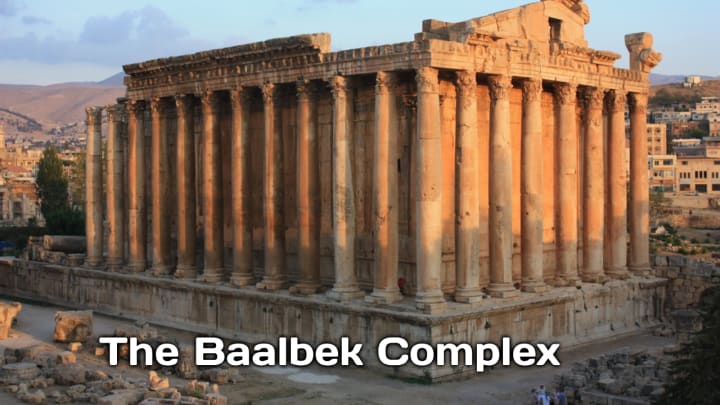
The Baalbek complex in Lebanon features Roman temples built atop an even older megalithic foundation. The most puzzling part? The "Trilithon"—three 800-ton stone blocks perfectly fitted together.
Key Mysteries:
- Giant Stones: The Trilithon stones are among the largest ever carved by humans. How were they moved and lifted into place?
- Pre-Roman Origins: Who built the original foundation? Some speculate a lost advanced civilization predating the Romans.
- Possible Extraterrestrial Theories: Due to the sheer scale, fringe theories suggest ancient alien involvement, though mainstream scholars dismiss this.
Baalbek remains one of the most perplexing megalithic sites, with unanswered questions about its true builders.
Conclusion: Why Do These Megaliths Defy Explanation?
From Stonehenge’s celestial alignments to Göbekli Tepe’s prehistoric sophistication, these megaliths challenge our understanding of ancient civilizations.
About the Creator
Himadri Niloy
Who explores forgotten histories, cultural echoes, and the silent revolutions of time.
Keep reading
More stories from Himadri Niloy and writers in History and other communities.
How Music Played a Role in Social Revolutions
Music has always been a potent force for societal transformation, serving as more than just amusement. Throughout history, songs have amplified the voices of the oppressed, united movements, and challenged oppressive regimes.
By Himadri Niloy8 months ago in History
A Story of the World
The history of the world is the longest story ever told—a vast journey that began long before written words, long before cities, and even before humans themselves. It is a story shaped by nature, driven by curiosity, and transformed by ideas, power, faith, and struggle. The Dawn of Life and Early Humanity Billions of years ago, the Earth was a violent and restless place. Volcanoes erupted, oceans formed, and the first simple life appeared in the seas. Over immense stretches of time, life evolved from single-celled organisms into complex plants and animals. Eventually, a branch of primates learned to walk upright, use tools, and think beyond survival. These were the early humans. For tens of thousands of years, humans lived as hunters and gatherers. They followed animals, gathered plants, and learned to cooperate in small groups. Fire changed everything—it provided warmth, protection, and a way to cook food. Language allowed ideas to pass from one generation to the next. Slowly, humans spread across continents, adapting to deserts, forests, mountains, and ice. The Agricultural Revolution and the First Civilizations Around 10,000 years ago, a turning point arrived: agriculture. Humans learned to grow crops and domesticate animals. This allowed them to settle in one place, build villages, and increase their population. Farming began independently in regions such as Mesopotamia, the Indus Valley, China, Egypt, and Mesoamerica. With settled life came civilization. Cities rose near rivers that provided water and fertile soil. Governments formed to organize labor and protect land. Writing was invented to record trade, laws, and stories. The first legal codes appeared, such as the Code of Hammurabi, which tried to define justice. Religion became organized, explaining the mysteries of life and death and giving meaning to human existence. Empires, Power, and Belief As civilizations grew, so did conflict. Powerful kingdoms expanded into empires through conquest and control. The Egyptian, Persian, Greek, Roman, Mauryan, and Han empires shaped large parts of the ancient world. Roads, armies, taxes, and laws connected millions of people under a single rule. Ideas traveled along with armies and traders. Greek thinkers explored philosophy, science, and democracy. In India and China, deep philosophies like Hinduism, Buddhism, Confucianism, and Taoism offered guidance on morality and harmony. In the Middle East, monotheistic faiths emerged, teaching belief in one God and emphasizing justice and compassion. The Roman Empire became a bridge between ancient and modern worlds. It spread law, engineering, and language across Europe and the Mediterranean. Yet no empire lasts forever. Over time, internal weakness, economic strain, and outside pressures caused great empires to fall. The Middle Ages and the Flow of Knowledge After the fall of Rome in the West, Europe entered a period often called the Middle Ages. Power was divided among kings, nobles, and the Church. Life was difficult for many, but this era was not without progress. Universities formed, architecture flourished, and faith shaped daily life. Meanwhile, the Islamic world experienced a golden age. Scholars preserved and expanded knowledge in mathematics, medicine, astronomy, and philosophy. Cities like Baghdad and Cordoba became centers of learning, where ideas from Greece, India, and Persia were studied and improved. Trade routes connected Asia, Africa, and Europe, allowing goods and cultures to mix. In Asia, powerful dynasties ruled China, advancing technology such as paper, printing, gunpowder, and the compass. These inventions would later transform the world. The Renaissance and the Age of Exploration Around the 14th century, a rebirth of learning began in Europe: the Renaissance. Artists, scientists, and thinkers looked back to classical knowledge while pushing forward with new ideas. Figures like Leonardo da Vinci and Galileo challenged old beliefs and celebrated human potential. At the same time, explorers set sail across unknown oceans. The Age of Exploration connected the world as never before. Europeans reached the Americas, Africa, and Asia, creating global trade networks. This brought wealth and knowledge—but also suffering. Indigenous civilizations were destroyed, millions were enslaved, and colonial empires rose through exploitation. Revolutions and the Modern World The 18th and 19th centuries were ages of revolution. Political revolutions in America and France challenged absolute monarchy and promoted ideas of liberty, equality, and rights. The Industrial Revolution transformed economies, as machines replaced manual labor and cities grew rapidly. Life improved for some, but workers often faced harsh conditions. New ideologies emerged—capitalism, socialism, nationalism—each offering different visions of society. Nations formed and competed, leading to global conflicts. The 20th century witnessed two devastating world wars that reshaped borders and shattered illusions of progress. Yet from the ruins came international cooperation, technological leaps, and movements for independence and civil rights. The World Today and Beyond In recent decades, technology has accelerated history. Computers, the internet, and artificial intelligence have changed how humans communicate, learn, and work. Globalization has connected economies and cultures, while also creating new challenges. Climate change, inequality, and conflict remind humanity that progress is fragile. The history of the world is not just a record of kings and wars—it is the story of ordinary people: farmers, thinkers, builders, dreamers. It is a story of mistakes and lessons, destruction and hope. Each generation inherits this long journey and adds its own chapter. The future remains unwritten. Like those who came before, humanity stands at a crossroads—guided by the past, tested in the present, and responsible for what comes next.
By The best writer 5 days ago in History




Comments (1)
Stonehenge is mind-blowing. Moving those heavy stones without modern tech? And the purpose is still a mystery. Fascinating stuff. Göbekli Tepe being so old and having those carved pillars is incredible. Shows ancient civilizations had more going on than we thought.