
120 Days Underwater
Rudiger Koch set world record and explored ocean life


In an impressive achievement that embodies human perseverance, scientific ingenuity, and extreme exploration, Rudiger Koch, a German aerospace engineer, is the new record holder for the longest time living in a submerged underwater chamber without the use of depressurization. Koch surfaced from his submerged capsule on Friday off the coast of Panama after spending an astounding 120 days, 11 meters (36 feet) under the Caribbean Sea. The feat, verified by Guinness World Records adjudicator Susana Reyes, saw Koch break the previous record of 100 days, which was set by American Joseph Dituri, who resided in an underwater lodge in a Florida lagoon.
A Vision Brought to Life
Rudiger Koch's path to establishing this impossible record mushroomed from the seed of a wild idea. Koch, a 59-year-old engineer with a lifelong passion for the sea, wanted to test mankind's accepted limits of living. What began as a personal kind of stunt soon became an ambitious project to show that the seas could be a place where human beings could reasonably live, and for a very long time.
For Koch, it was about far more than mere endurance. It was a repudiation of the way we have come to think about human settlement and sustainability. Speaking to AFP midway through his trip, Koch took a moment to reflect on the wider significance of his mission: "What we are trying to show here is that the oceans are so far an industrially untapped area in the universe and humanity can expand there." His project was an attempt to prove that with the right technology and support systems in place, humans could flourish under the waves.
Koch's undersea capsule, situated approximately 15 minutes by boat from Panama's northern coast, was his residence for four months. The capsule was only 30 square meters (320 square feet), but had all the necessities one would find in a small apartment, plus a rather unusual view. It boasted a bed, toilet, television, computer, and even an exercise bike so Koch could stay in shape as he was secluded from the world above him.
The only downside was no shower, but it's small potatoes given all the modern amenities. Power came from solar panels on the surface, with a backup generator there to keep the current flowing to Koch. The capsule was linked by a tight spiral staircase to another chamber above the surface of the sea (a, below), where food and supplies were delivered, and a doctor came to visit. The world was lovingly crafted to withstand the pressures of life beneath the sea as well as to accommodate Koch's outreach and adventuring within a comfortable, safe, and self-confined structure.
The Struggle to Exist Underneath
Living underwater for such a long time is intense, and Koch encountered some difficulties during his 120 days of living under the sea. ''There was a lot of distance that you had to struggle against,'' she said. Koch had his capsule to himself, but he wasn't completely alone in nature. All his actions were captured by four cameras, which recorded his physical and mental well-being around the clock. "I sent in quite a bit of proof to validate whatever claims I make by my own honest opinion, but there's often been 24-hour surveillance to kind of confirm the veracity of my document and to ensure that I'm playing by the rules of Guinness World Records,'' Kim told Wired.
Unlike the surveillance that others experienced, Koch was more or less on his own. The capsule was comfortable, but the design provided few chances for social interaction, except with occasional visits from the doctor or team members who brought supplies. But then, Koch came to relish the loneliness of it all, resting easy in the utter quiet of the underwater world he inhabited.
''It's beautiful when it is quiet and it is dark, and the sea is glowing,'' Koch said after finishing his record breaking stay. ''It is not describable; you got to feel that for yourself.'' His sentiment echoed the one of an explorer -an explorer who has found wonder and solace in the deep blue ocean. As the days slid by, Koch grew more attuned to the underwater world around him, his time in the sea a kind of meditation and respite from the cacophony of the surface world.
The Sea as a New Frontier
Koch didn't set out, after all, to prove she could survive a year alone- she was aiming to break the boundaries of human exploration. He dreamed of a future in which people would live and work under the sea, transforming the oceans into a new frontier of habitation and exploration. He believes the sea remains ripe for potential, as an alternative to the crowded, congested land masses where human life is becoming increasingly confined.
While the world scrambles to deal with climate change and overpopulation, the underwater experiment proposed by Koch seems at once tantalizing and benign. Can the ocean become a solution, a new frontier for humanity, providing homes and resources that can be consumed over time? As technology and our approach to marine architecture have evolved, such ideas may not be confined to the world of science fiction.
Jules Verne's iconic tale of Twenty Thousand Leagues Under the Sea is perhaps a classic that has inspired Koch to look at our relationship with the deep sea. The book was sitting on his bedside table, a reminder of the rich history of the adventures and explorers who had sought to tame the Roaring Forties. Koch herself shared a mission to unlock the mysteries of the deep, calling on the spirit of Verne's character Captain Nemo, who navigated the depths of the sea in a submersible, insisting that the oceans' secrets were worth risking his life.
It was a changed Koch who reflected on his journey after stepping out of the capsule. ''It was such an adventurous thing to do, and now it's done, there's a kind of regret even, I must admit. I loved it here," he said, wistfully. He was filled with the thrill of achievement, but he also obviously yearned to see the future of human life beneath the waves.
A Toast to Achievement
As a celebration of his extraordinary journey to nowhere, Koch raised a glass of champagne (not a droplet of the float into my face kind) and puffed on a victory cigar. His victory was short-lived, though, as he jumped into the Caribbean Sea, which had a boat ready to take him back to dry land. He was feted with a party afloat, everyone celebrating this astonishing feat that riveted the world.
But above and beyond the accolades and the world record, Koch's accomplishment is also a testament to the power of human ingenuity and the strength of human will. It is a vision of what is in store for us if we had the nerve to challenge the status quo and envision ourselves outside the limits of what is(and may be.)
About the Creator
Keep reading
More stories from Rohitha Lanka and writers in History and other communities.
Discover the World's Deepest Lake
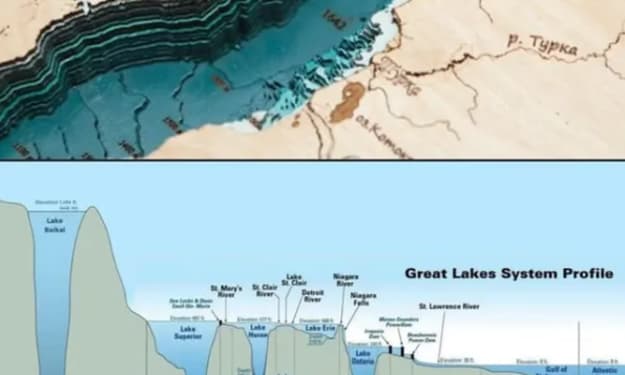
Lake Baikal's Icy Depths- A Natural Wonder The depth of the lake is 1,642 meters -Belgium area, and this makes it the deepest lake in the world. It is also the residence of a mind-boggling 20 percent of the planet’s fresh water, and it holds the world's greatest stock of biodiversity, including untold species that can be found nowhere else on the face of the earth. Amid the breathtaking views that take your breath away, Twisties tours offer a sensational encounter with the unbridled magnificence of one of the planet's last remaining untouched ecosystems.
By Rohitha Lanka9 months ago in History
If America Walks Away from NATO, the World Will Feel the Shock
If America Walks Away from NATO, the World Will Feel the Shock For more than seventy years, NATO has stood as a symbol of collective security and shared responsibility. It was never a perfect alliance, but it worked because it was built on a simple idea: when nations stand together, wars are less likely to happen. Today, however, that foundation is being shaken—not by foreign enemies, but by growing voices inside the United States questioning whether NATO is still worth it.
By Wings of Time about 21 hours ago in History
Venezuela’s President Under Pressure: Arrest Calls, Indictments, and a Nation at a Crossroads
How the Arrest Narrative Began The idea of arresting Venezuela’s president did not appear out of nowhere. It stems from years of accusations that range from human-rights abuses to corruption and drug-related activities. U.S. authorities have filed formal charges against Nicolás Maduro, linking him to cocaine trafficking networks and large-scale financial misconduct. These cases place him among the few sitting leaders facing active international legal pressure.
By Muhammad Islam khan swatiabout 10 hours ago in History



Comments
There are no comments for this story
Be the first to respond and start the conversation.