
Why The Ikkis Team “Had a Bit of a Debate” About Casting Dharmendra, Reveals Writer
Why Casting a Bollywood Legend Sparked Creative Debate Behind the Scenes of The Ikkis
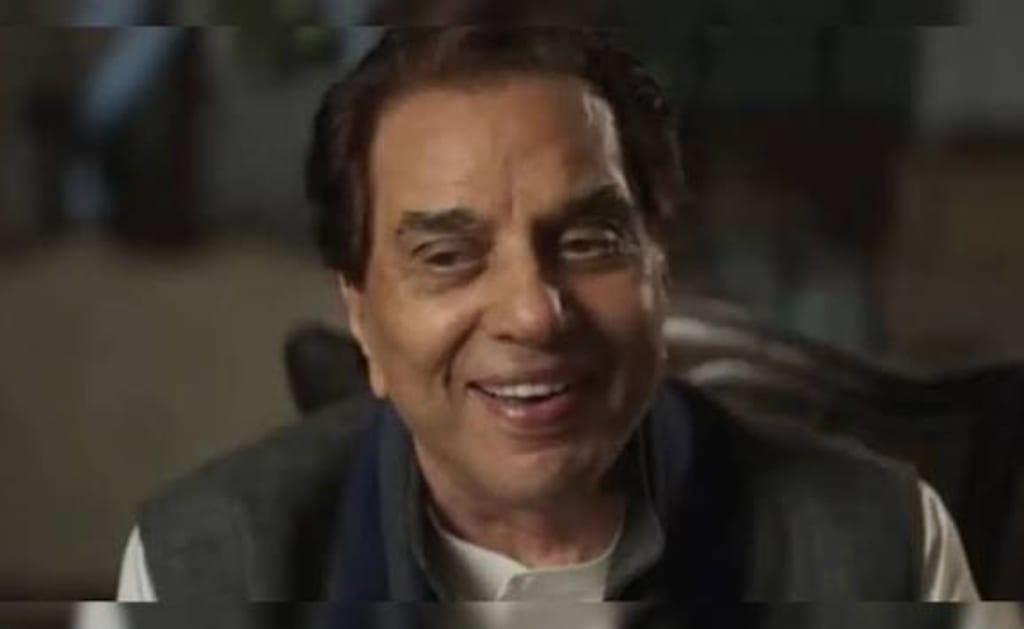
Start writing...Casting a legend is never a simple decision. When the makers of The Ikkis began shaping their story, one name naturally surfaced early in discussions: Dharmendra. Revered across generations, the veteran actor has been a towering presence in Indian cinema for over six decades. Yet, as the film’s writer recently revealed, bringing Dharmendra on board was not an automatic choice. In fact, it sparked what he described as “a bit of a debate” within the creative team—a debate that ultimately speaks volumes about changing storytelling priorities in contemporary Indian cinema.
At the heart of the discussion was not Dharmendra’s talent or legacy. Those, the writer stressed, were never in doubt. Instead, the debate centered on tone, authenticity, and audience perception. The Ikkis is not a nostalgia-driven project designed to celebrate cinematic icons for their own sake. It is a story rooted in character nuance, emotional realism, and a very specific worldview. The team was concerned that casting a superstar of Dharmendra’s stature might unintentionally overshadow the character he was meant to portray.
“In today’s cinema, audiences are extremely aware,” the writer explained. “When a legend like Dharmendra walks on screen, viewers don’t just see the character—they see Dharmendra.” This star-text effect, while powerful, can be a double-edged sword. For a film that relies on immersion and subtlety, the risk was that the audience’s emotional response might be shaped more by reverence than by narrative logic.
Another point of debate involved generational expectations. Dharmendra’s fan base spans decades, from those who grew up watching his action-packed roles in the 1970s to younger viewers who know him through selective appearances and public persona. The writers questioned whether these expectations would align with the restrained, layered role envisioned in The Ikkis. Would audiences accept Dharmendra in a quieter, more introspective part, or would they unconsciously wait for echoes of his larger-than-life past?
There were also internal creative considerations. The team reportedly explored alternative casting options, including lesser-known actors who could “disappear” more easily into the role. This approach reflects a broader trend in modern Indian cinema, where realism often takes precedence over star power. Films and series today increasingly favor actors who serve the story rather than dominate it.
However, as discussions evolved, so did the team’s perspective. What began as skepticism gradually turned into curiosity. The question shifted from “Will Dharmendra overpower the role?” to “What if he redefines it?” The writer admitted that the turning point came during deeper character analysis. The role demanded not just performance skill, but lived experience—someone who could convey emotional weight with minimal dialogue, using silence, posture, and presence.
“That’s when we realized Dharmendra might actually be perfect,” the writer said. Age, often viewed as a limitation in casting, became an asset. His life experience, cinematic journey, and natural gravitas aligned organically with the character’s inner world. Rather than distracting from realism, his presence could enhance it—if handled carefully.
Crucially, Dharmendra himself played a role in resolving the debate. According to the writer, the actor approached the project without ego or demands. He was open to discussions, receptive to the director’s vision, and willing to shed his superstar image in service of the story. This humility reassured the team that he would not impose himself on the narrative, but blend into it.
The final decision to cast Dharmendra was not a compromise, but a creative leap of faith. It reflected confidence not only in the actor, but in the audience’s ability to evolve. The makers trusted that viewers today are ready to see legends in new lights—less as icons, more as human beings.
The writer emphasized that this debate was healthy, not divisive. It represented a maturing industry where casting choices are scrutinized as carefully as scripts. “Ten years ago, this wouldn’t even have been a discussion,” he noted. “You’d cast a legend and move on. Now, every choice is about storytelling integrity.”
As The Ikkis moves closer to release, the casting of Dharmendra stands as one of its most intriguing aspects. Whether audiences will see the legend first or the character first remains to be seen. But the very fact that the team questioned, debated, and ultimately chose with intention suggests a film deeply aware of its creative responsibility.
In the end, the debate about Dharmendra was not about doubt—it was about respect. Respect for the story, for the audience, and for a legendary actor whose greatest strength may now lie in reinvention rather than nostalgia
About the Creator
Keep reading
More stories from Fiazahmedbrohi and writers in Geeks and other communities.
Official and Confirmed: Heavy Snow Set to Begin Late Tonight, Raising Fears of Major Disruptions and Travel Chaos
Meteorological agencies have officially confirmed that heavy snowfall will begin late tonight, triggering widespread weather alerts and raising serious concerns about travel chaos, power outages, and daily life disruptions. Authorities are urging people to prepare now, as conditions are expected to deteriorate rapidly once snowfall intensifies. Unlike brief winter flurries, this weather system is being described as severe, prolonged, and disruptive, with the potential to paralyze transport networks and strain emergency services. What’s Driving This Major Snow Event? The incoming storm is the result of a powerful collision between Arctic air and moisture-rich weather systems, creating ideal conditions for intense snowfall. Forecasters warn that once the cold front fully settles, snow could fall relentlessly for several hours, with accumulation accelerating overnight. In many regions, temperatures are expected to remain well below freezing, meaning snow will stick immediately, increasing the risk of icy roads and frozen infrastructure. Travel Chaos Almost Inevitable Transport authorities have already issued alerts warning that road, rail, and air travel will be severely affected. Snowfall during overnight and early morning hours poses particular risks, as commuters may wake up to impassable roads and delayed services. Motorways and rural routes are expected to be the hardest hit, with drifting snow and black ice creating dangerous driving conditions. Rail operators are preparing for speed restrictions, delays, and possible cancellations, while airports have activated snow-clearing protocols in anticipation of runway closures. Officials are strongly advising people to avoid non-essential travel, especially during peak morning hours. Schools, Businesses, and Public Services at Risk Local authorities are closely monitoring conditions, with the possibility of school closures increasing if snowfall intensifies as predicted. In previous events of similar magnitude, hundreds of schools were forced to shut with little notice. Businesses are also preparing contingency plans, including remote work arrangements where possible. Emergency services have warned that response times may be slower due to blocked roads and hazardous conditions. Hospitals and care facilities are prioritizing staff accommodation and transport to ensure essential workers can reach their posts safely. Power Outages and Infrastructure Concerns Heavy snow combined with strong winds can place enormous pressure on power lines, trees, and communication networks. Energy providers have placed repair crews on standby, warning that localized power outages are possible if lines are damaged by falling branches or ice buildup. Water systems and exposed pipes are also vulnerable in prolonged freezing conditions. Residents are being encouraged to insulate pipes, check heating systems, and prepare emergency supplies, including torches, batteries, and blankets. Advice for Staying Safe Authorities and weather experts have shared practical advice to help people stay safe during the storm: Keep mobile phones fully charged Stock up on essential food and medication Avoid driving unless absolutely necessary Check on elderly or vulnerable neighbors Dress in layers and wear proper winter footwear Drivers who must travel are advised to carry emergency kits, including warm clothing, food, water, and a shovel. Why This Snowfall Is Different What makes this event particularly concerning is not just the volume of snow, but its timing and persistence. Falling overnight and continuing into the morning rush, it has the potential to catch people off guard, leaving little time for road crews to clear major routes. Meteorologists also warn that after snowfall ends, plummeting temperatures could turn melting snow into dangerous ice, prolonging disruption well beyond the storm itself. Climate Patterns and Extreme Winters While winter snow is not unusual, scientists note that extreme and unpredictable weather events are becoming more frequent. Shifts in global climate patterns can lead to colder air plunging south more often, producing intense snowfall even in areas unaccustomed to it. This event serves as another reminder that infrastructure and emergency planning must adapt to a changing climate reality. Authorities Urge Caution as Overnight Snowfall Threatens Roads, Power Supplies, and Daily Life Weather Alerts Issued Nationwide as Arctic Air Brings Dangerous Winter Conditions From Travel Chaos to Power Outages: How the Snowstorm Could Disrupt Millions Emergency Services on High Alert as Heavy Snow and Ice Move In Why This Storm Is Different and What Residents Should Do Now Schools, Transport, and Businesses Brace for Severe Winter Disruptions Meteorologists Warn of Prolonged Snowfall and Icy Conditions After the Storm
By Fiazahmedbrohi 2 days ago in Geeks
Silver Screen Magic with Mae West
American actress and singer Mae West became a popular film actress during the Great Depression. She started entertaining in vaudeville, then performed on Broadway, and finally went to Hollywood. She signed up with Paramount Pictures and made her debut in the 1932 film “Night After Night.” She also starred in musicals, comedies, and crime dramas. The American Film Institute named her one of the best classic Hollywood actresses.
By Rasma Raisters3 days ago in Geeks
Premier League in Italy: How to Watch
The 2025–26 Premier League season is underway, marking the 34th edition of the competition and the 127th year of top-flight English football. Liverpool start their title defense with confidence after lifting their second Premier League trophy last season, but the return of Leeds United, Burnley, and Sunderland ensures fresh rivalries – including the long-awaited Tyne–Wear derby, back for the first time since 2015–16.
By David Cook5 days ago in Geeks




Comments
There are no comments for this story
Be the first to respond and start the conversation.