
When Chinatown Said “Enough”: The 1980–81 Protests Against Charlie Chan and the Curse of the Dragon Queen
In 1980–81, Chinese-American activists protested Charlie Chan and the Curse of the Dragon Queen in San Francisco and across the U.S., calling out racist stereotypes. Here’s the story of those protests and why they still matter.

A Familiar Figure, A New Generation of Critics
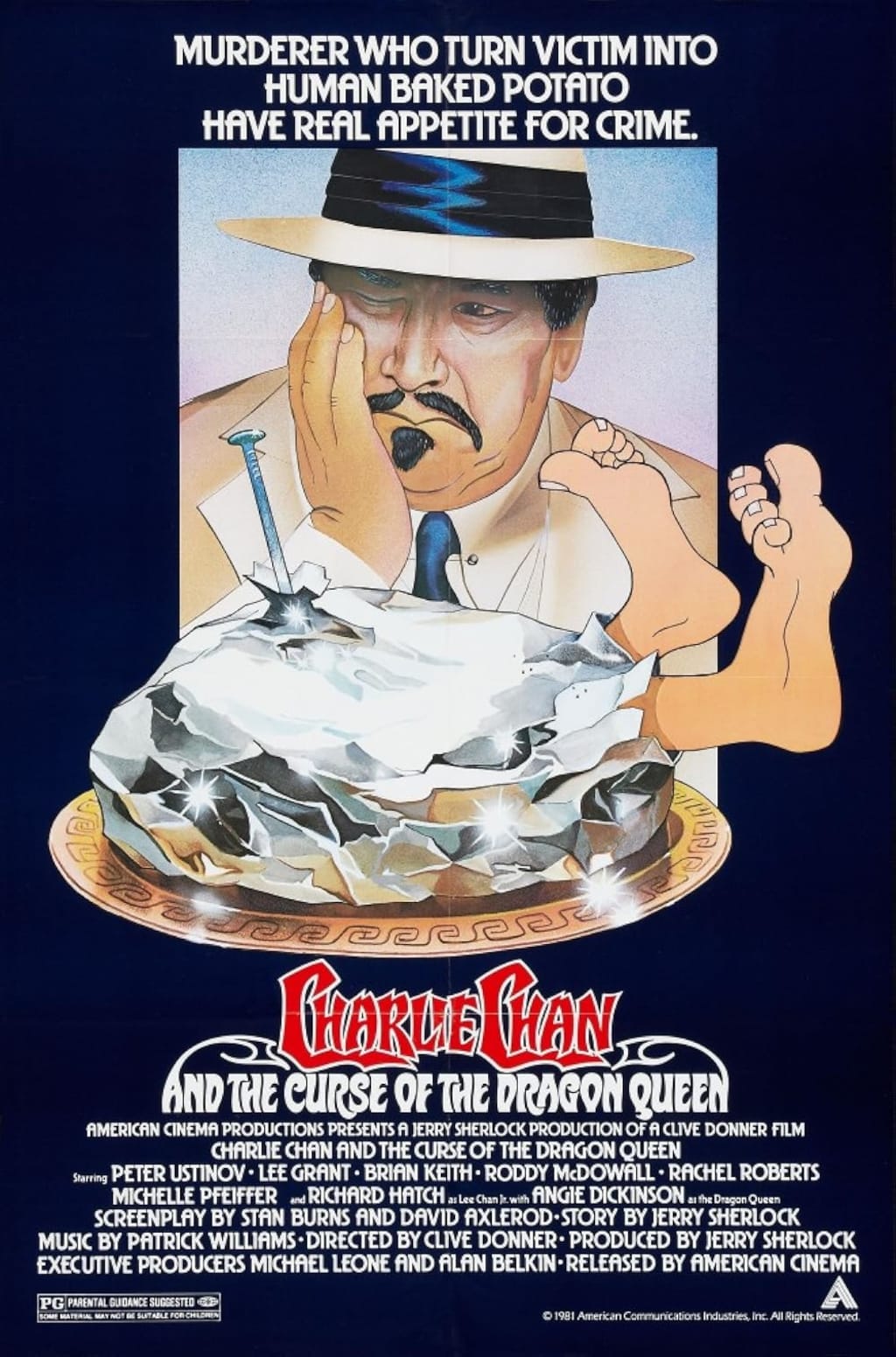
Charlie Chan was once Hollywood’s most famous Asian detective — a fictional character created by novelist Earl Derr Biggers in the 1920s. For decades, the role was played by white actors in heavy makeup, delivering “fortune-cookie” wisdom in broken English. Studios considered Chan a cultural icon.
By the time Charlie Chan and the Curse of the Dragon Queen hit theaters in 1981, the world had changed. The Asian-American movement of the late 1960s and ’70s had inspired a new political consciousness. Community leaders, students, and artists saw Chan not as a harmless relic, but as a racist caricature that still shaped how Asian Americans were seen in everyday life.
This time, San Francisco’s Chinatown and Los Angeles activists pushed back hard. They picketed sets while the movie was being filmed in 1980 and later protested outside theaters, determined to show that Hollywood stereotypes were no longer acceptable.
⸻
Picket Lines and Picturehouses: How Organizers Protested
The protests against The Curse of the Dragon Queen were organized by a loose coalition of student groups, neighborhood associations, and community activists. In San Francisco, organizers gathered in Chinatown, holding public meetings to denounce the production and warn that filming in the city would spark backlash.
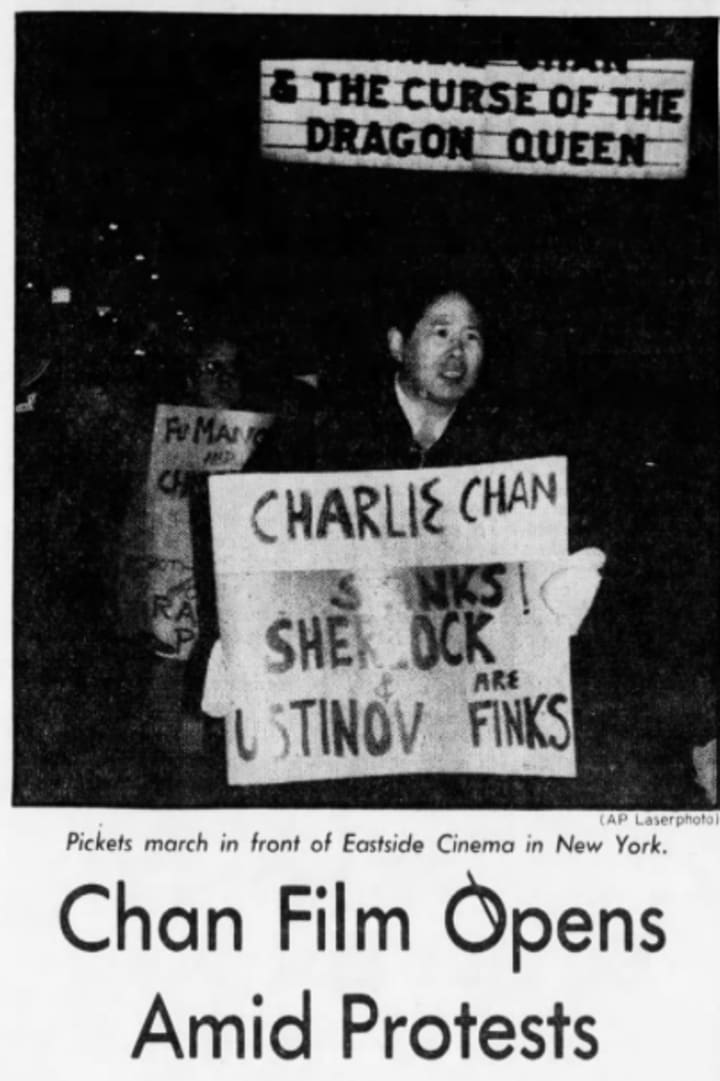
When cameras rolled, protesters appeared at shooting locations, carrying signs and chanting outside set barricades. In Los Angeles, picketers confronted the production directly, handing out flyers that explained why the Charlie Chan stereotype was damaging.
When the movie opened in 1981, demonstrations continued. Outside cinemas, activists gave interviews to the press and handed moviegoers leaflets condemning the film. Archival photos show demonstrators holding placards that mocked the “fortune cookie” wisdom and exaggerated obsequiousness that defined Chan. These protests weren’t just about a single film — they were part of a broader demand for dignity and authentic representation.
⸻
What Activists Said — and Why It Mattered
The criticisms of The Curse of the Dragon Queen were sharp and specific:
1. Yellowface Casting – Once again, a white actor (Peter Ustinov) was cast as Charlie Chan, perpetuating a decades-old practice that erased Asian performers from Hollywood’s biggest roles.
2. Stereotyped Speech and Behavior – Activists objected to the “Chop Suey pidgin English,” fortune-cookie proverbs, and constant bowing and servility that Chan embodied. These traits were played for laughs, but for organizers they reinforced real-world prejudices — the idea that Asians were submissive, inscrutable outsiders.
3. Cultural Damage Beyond the Screen – Protesters stressed that stereotypes had consequences. When films repeated the same caricatures, audiences applied those images to real neighbors, classmates, and co-workers. What Hollywood saw as harmless entertainment, Asian Americans experienced as barriers to opportunity and dignity.
By placing Chan in the spotlight again, the filmmakers ignored decades of criticism and essentially told Asian Americans their concerns didn’t matter.
⸻
From Set to Scholarship: The Long Afterlife of Chan
The protests did not stop The Curse of the Dragon Queen from being released. The film came out in February 1981 and was met with poor reviews, fading quickly at the box office. But the protests ensured that the story wasn’t just about another flop — it became an example of resistance, a moment when Asian-American voices could no longer be ignored.
In the years that followed, similar campaigns arose whenever old Charlie Chan films were revived. In 2003, for example, Fox Movie Channel canceled a Chan retrospective after complaints from advocacy groups, citing the same racist stereotypes that San Francisco activists had protested two decades earlier.
Today, the 1980–81 protests are remembered as part of the broader Asian-American media movement, alongside campaigns against yellowface casting and calls for more authentic roles. They demonstrated that organized community resistance could influence public discussion and force Hollywood — slowly, unevenly — to reckon with its portrayals of race.
⸻
How We Should Judge the Film Today
Looking back, Charlie Chan and the Curse of the Dragon Queen is a case study in cultural tone-deafness. Reviving a stereotype that had already been condemned, played once more by a white actor, and doubling down on the caricatured language and behavior — all at a time when Asian-American communities were demanding representation — the film feels less like comedy than insult.
The protests that surrounded its production and release remain the most meaningful part of its legacy. They remind us that stereotypes aren’t frozen on the screen; they spill into classrooms, workplaces, and daily interactions. And they remind us that resistance — even against something as “small” as a single film — can echo for decades.

Subscribe to Movies of the 80s here on Vocal and on our YouTube channel where you can get daily videos on the best and worst movies of the 80s.
About the Creator
Movies of the 80s
We love the 1980s. Everything on this page is all about movies of the 1980s. Starting in 1980 and working our way the decade, we are preserving the stories and movies of the greatest decade, the 80s. https://www.youtube.com/@Moviesofthe80s
Keep reading
More stories from Movies of the 80s and writers in Geeks and other communities.
How American Pop Was Made: Ralph Bakshi, Rotoscoping, and the Music That Kept It Off Video Until 1998
Rotoscoping: Tracing Life Into Frame The 1981 animated feature American Pop remains one of Ralph Bakshi’s boldest and most unusual experiments. While mainstream animation in the early 1980s leaned toward family entertainment, Bakshi was chasing something very different: an animated epic that captured the sweep of American music across four generations.
By Movies of the 80s4 months ago in Geeks
Silver Screen Magic with Mae West
American actress and singer Mae West became a popular film actress during the Great Depression. She started entertaining in vaudeville, then performed on Broadway, and finally went to Hollywood. She signed up with Paramount Pictures and made her debut in the 1932 film “Night After Night.” She also starred in musicals, comedies, and crime dramas. The American Film Institute named her one of the best classic Hollywood actresses.
By Rasma Raisters6 days ago in Geeks
‘If You’re Flushing the Toilet with Grey Water, People Should Know’: How China Turned Rain into an Asset
China, a nation grappling with rapid urbanization, rising populations, and the mounting pressures of climate change, has taken an innovative approach to one of humanity’s oldest challenges: water management. In cities stretching from Beijing to Shenzhen, rainwater is no longer merely something to drain away—it’s an asset, captured, reused, and integrated into urban infrastructure. This approach, blending modern engineering with environmental foresight, is redefining how millions of Chinese citizens interact with water, whether it’s drinking, bathing, or flushing their toilets. Grey Water and Urban Innovation One of the key components of China’s water management strategy is the extensive use of grey water. Grey water refers to wastewater from sinks, showers, and washing machines—essentially, water that is not heavily contaminated by human waste. Rather than sending this water directly to treatment plants, cities across China are filtering and redirecting it for secondary purposes, such as irrigation, industrial cooling, and even flushing toilets in residential buildings. As one Chinese environmental engineer candidly put it, “If you’re flushing the toilet with grey water, people should know.” Transparency and public education have been central to the success of these programs, ensuring that residents understand how recycled water is treated and reused safely. This awareness is crucial in overcoming cultural stigma and building public trust around non-traditional water sources. Capturing Rainwater: Turning a Seasonal Resource into Daily Utility China’s approach goes beyond recycling household wastewater. Urban planners have transformed entire cityscapes into rainwater catchment systems. Green rooftops, permeable pavements, and underground storage reservoirs are now common in many Chinese cities. These systems not only mitigate urban flooding during the rainy season but also provide a supplementary water supply during dry periods. In Shenzhen, for instance, a city of over 17 million residents, municipal authorities have installed expansive rainwater harvesting networks. Rainwater is channeled through pipes into filtration systems and stored for later use in gardens, parks, and even residential complexes. These initiatives have reduced dependence on distant reservoirs and groundwater extraction, lowering the ecological footprint of water consumption. Public-Private Partnerships Fueling Progress The scale of China’s urban water innovations would not have been possible without collaboration between government authorities, private enterprises, and local communities. Companies specializing in water filtration and smart monitoring systems have partnered with municipalities to ensure that rainwater and grey water meet rigorous quality standards. Smart meters track usage, detect contamination, and regulate distribution, ensuring that every drop of recycled water is both safe and efficiently deployed. In residential complexes, dashboards display daily water savings, raising awareness among tenants and motivating more sustainable practices. This blend of technology and community engagement has been a cornerstone of China’s success in turning rain and grey water into valuable urban resources. Environmental and Economic Benefits The impact of China’s water strategy is multifaceted. Environmentally, recycling grey water and capturing rainfall reduces strain on natural water bodies, helps maintain groundwater levels, and cuts the energy required for pumping and treating fresh water. Urban rivers and lakes benefit from reduced runoff and pollution, while green spaces thrive on sustainable irrigation. Economically, the strategy reduces water procurement costs for municipalities and homeowners alike. In some regions, residents have reported up to 30% savings on their monthly water bills by utilizing grey water systems and rainwater harvesting. For cities facing the twin pressures of population growth and climate-induced water scarcity, these savings are substantial. Challenges and Lessons Learned Despite its successes, China’s approach is not without challenges. Ensuring consistent water quality, maintaining infrastructure, and educating the public about grey water usage remain ongoing priorities. Some residents initially expressed concern about potential health risks, highlighting the importance of transparency and rigorous monitoring. China’s experience offers lessons for other countries facing similar water scarcity issues. By integrating urban planning, technology, and public engagement, cities can transform water from a limited resource into a renewable asset. It is a reminder that infrastructure investments, when paired with community awareness, can produce sustainable solutions for the 21st century. The Future of Water in Chinese Cities As climate change intensifies and urban populations grow, China’s innovations in water management are likely to become even more critical. Policymakers are exploring expanded applications, including industrial reuse, advanced filtration for potable water, and artificial recharge of aquifers. The ultimate goal is a resilient urban water ecosystem where rain and grey water reduce dependency on conventional sources, minimize environmental impact, and support sustainable growth. By turning rain and grey water into assets rather than waste, China is demonstrating that scarcity can drive ingenuity. Citizens are learning to embrace the idea that the water they use, even in the bathroom or laundry, can serve multiple purposes if treated and managed wisely. The transformation is not just technological—it’s cultural, signaling a shift in how humans value one of their most essential resources.
By Fiaz Ahmed Brohi3 days ago in Geeks


Comments
There are no comments for this story
Be the first to respond and start the conversation.