
Torpedo Fired from Autonomous Submarine: Stealth Vessel Proves Underwater Warfare Supremacy
“How AI-powered submarines are redefining stealth, strategy, and the future of naval combat.”

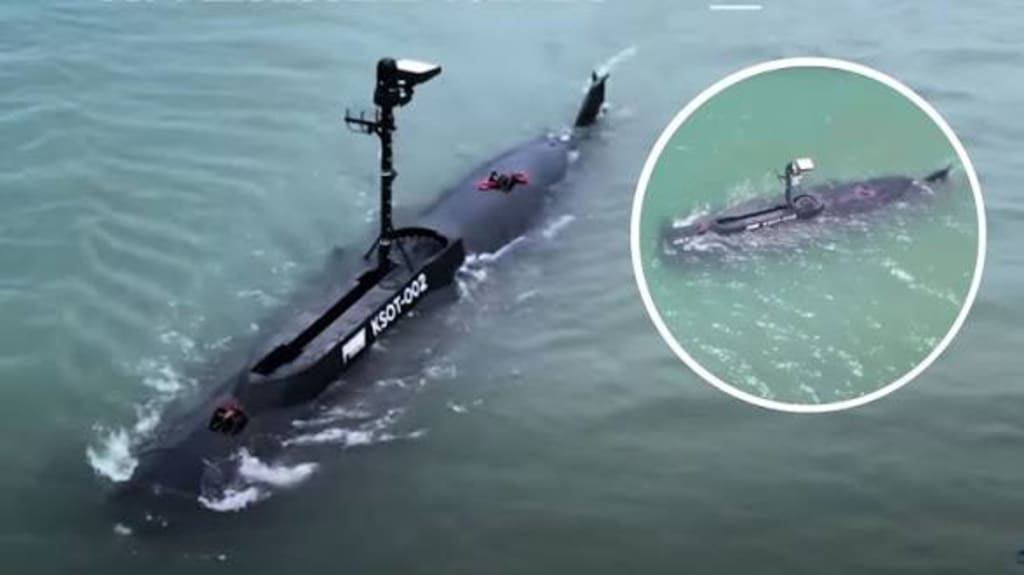
Inside the breakthrough that could redefine naval combat and underwater strategy
In a remarkable demonstration of modern military technology, a torpedo was recently fired from an autonomous submarine, marking a milestone in naval warfare. Unlike traditional submarines, this unmanned vessel combines stealth, artificial intelligence, and advanced weaponry to operate independently — a development that some experts say may redefine underwater combat forever.
---
A new era of naval power
For centuries, submarines have been the silent predators of the seas, capable of evading detection and striking with devastating precision. Traditional vessels, however, rely heavily on human crews, communication channels, and onboard sensors, all of which carry operational risks.
Autonomous submarines, sometimes called unmanned underwater vehicles (UUVs) or autonomous underwater vehicles (AUVs), can navigate, detect targets, and even launch torpedoes without direct human control. In this recent trial, the submarine successfully identified a target, calculated the optimal attack trajectory, and fired a torpedo with pinpoint accuracy — all while maintaining full stealth.
---
How it works
The vessel’s success rests on three key technologies:
1. Artificial Intelligence Navigation – The submarine uses advanced AI to chart its course, avoid obstacles, and adapt to changing underwater conditions. This allows it to operate in hostile or complex environments without risking a human crew.
2. Autonomous Targeting Systems – AI algorithms analyze sonar data, detect potential threats, and calculate firing solutions faster than human operators could. This capability is crucial in high-speed naval engagements, where seconds can determine the outcome.
3. Stealth Technology – Modern materials, hull design, and noise-reduction systems make the vessel virtually invisible to sonar. Unlike traditional submarines, autonomous models can linger near strategic locations for extended periods without detection.
Together, these features allow the submarine to operate independently, efficiently, and lethally.
---
Why this matters for global naval strategy
Naval experts warn that autonomous submarines could dramatically shift the balance of power at sea. Here’s why:
Reduced risk to human life: Crewless submarines remove the need to put sailors in extreme danger, allowing nations to take calculated risks in contested waters.
Persistent presence: Autonomous vessels can remain submerged and on patrol longer than crewed submarines, extending surveillance and deterrence capabilities.
Force multiplication: Smaller navies may achieve disproportionate strategic advantages by deploying autonomous submarines alongside traditional fleets.
Dr. Elena Petrov, a defense analyst specializing in naval AI, explains:
> “Autonomous submarines aren’t just new toys for the navy. They change the calculus of deterrence. If an unmanned vessel can operate undetected for weeks and strike with precision, adversaries must rethink how they protect their assets at sea.”
---
Global implications and competition
Several countries are racing to develop autonomous underwater combat vehicles, including the United States, China, and Russia. Each nation aims to integrate AI-driven submarines into its fleets for reconnaissance, mine detection, and offensive operations.
The U.S. Navy has invested heavily in experimental autonomous submarines capable of long-range operations and cooperative maneuvers with manned vessels.
China is reportedly testing AI-controlled attack submarines designed to patrol contested regions like the South China Sea.
Russia has announced a series of autonomous submersibles that could operate in both shallow and deep waters for intelligence and strike missions.
The successful torpedo launch demonstrates the first practical application of an autonomous underwater combat system, signaling a new chapter in global maritime security.
---
Ethical and tactical considerations
While the technology is impressive, it raises several questions:
Rules of engagement: Who is responsible if an autonomous submarine mistakenly fires on a civilian vessel?
Escalation risks: Autonomous weapons could shorten decision times, increasing the likelihood of accidental conflict.
Cybersecurity threats: AI systems can be hacked or manipulated, potentially turning advanced submarines against their operators.
Despite these challenges, most experts agree that autonomous submarines will be a central component of future naval strategy. Nations that fail to adapt risk losing both intelligence advantage and operational supremacy.
---
Looking ahead
The successful test firing of a torpedo from an autonomous submarine is more than a technological feat — it’s a signal of what the future of naval warfare looks like. Nations will likely accelerate investment in AI-driven underwater systems, pushing the boundaries of stealth, endurance, and precision.
For now, the silent depths of the world’s oceans may host machines capable of independent decision-making, strategic strikes, and prolonged missions, all without a human aboard. As technology continues to evolve, one thing is certain: the age of crewless underwater warfare has officially arrived.
About the Creator
Fiaz Ahmed
I am Fiaz Ahmed. I am a passionate writer. I love covering trending topics and breaking news. With a sharp eye for what’s happening around the world, and crafts timely and engaging stories that keep readers informed and updated.
Keep reading
More stories from Fiaz Ahmed and writers in Geeks and other communities.
A Jailed Hacking Kingpin Reveals All About the Gang That Left a Trail of Destruction
“Inside the mind of the cybercriminal who built an empire on data, fear, and digital chaos.” --- In an age when wars are fought not only with weapons but with keyboards, few names have struck more fear in the online world than that of Elias “Ghost” Marquez, the infamous hacker who once led a global cybercrime syndicate known only as The Phantom Circuit. Now behind bars, Marquez has begun to talk — and what he’s revealing about his digital empire paints a chilling picture of how easily the world’s systems can be brought to their knees.
By Fiaz Ahmed 2 months ago in Geeks
Silver Screen Magic with Mae West
American actress and singer Mae West became a popular film actress during the Great Depression. She started entertaining in vaudeville, then performed on Broadway, and finally went to Hollywood. She signed up with Paramount Pictures and made her debut in the 1932 film “Night After Night.” She also starred in musicals, comedies, and crime dramas. The American Film Institute named her one of the best classic Hollywood actresses.
By Rasma Raisters5 days ago in Geeks
So You Decided To Become a Nurse Practitioner:
So you decided to become an "Advanced Practice" nurse. Congratulations!... is what I would say if this was a good idea. Grad school? In this economy? What were you thinking? Likely it was something along the lines of either 1) “I've seen these other chucklefucks do it— Why can't I?” or even 2) “I've got a nice career, I should shake it up. I miss feeling like I have no clue what I'm doing.”
By Sandor Szabo2 days ago in Fiction



Comments
There are no comments for this story
Be the first to respond and start the conversation.