
TONTO'S TALE UNTAMED: DECONSTRUCTING DISNEY'S DIVISIVE 'THE LONE RANGER'
"The Lone Ranger" (2013): A Blockbuster Misfire and Hollywood Cautionary Tale


"Hi-yo Silver, away!" The iconic cry, synonymous with justice and the Old West, echoes through generations. But in 2013, the masked rider's call was met with more of a muted whimper than a triumphant roar. Disney's "The Lone Ranger," a big-budget reimagining of the classic radio and television character, rode into theaters burdened by immense expectations and plagued by production woes. Intended to be a summer blockbuster, it quickly became a cautionary tale of Hollywood hubris, a film as fascinating for its failure as it is for its ambition. This article delves deep into the heart of "The Lone Ranger," dissecting its plot, cast, production, and the storm of critical and public opinion that engulfed it, ultimately asking: what went wrong?
Plot:

The film deviates significantly from the traditional Lone Ranger origin story. Told through the framing device of an elderly Tonto (Johnny Depp) recounting the tale to a young boy at a Wild West exhibit in 1933, the narrative unfolds in 1869 Texas. John Reid (Armie Hammer), a squeamish lawyer with a strong moral compass, returns to his hometown to uphold the law. He’s quickly thrust into the violent world he sought to avoid when his brother, Texas Ranger Dan Reid, is ambushed and murdered by the notorious outlaw Butch Cavendish (William Fichtner).
Rescued and guided by Tonto, a Comanche warrior who believes John is a "spirit walker" destined for greatness, John reluctantly joins forces with him. Tonto, driven by a personal vendetta against Cavendish and a desperate desire to right the wrongs inflicted upon his tribe, believes Cavendish’s actions are linked to a larger conspiracy involving the railroad baron Latham Cole (Tom Wilkinson), a ruthless businessman determined to exploit Native American lands.
John, initially opposed to violence, is forced to adopt the disguise of the Lone Ranger to evade capture and bring Cavendish and his associates to justice. He struggles with the methods of vigilantism and constantly clashes with Tonto's unconventional, often mystical, approach. The narrative is a blend of action sequences, slapstick comedy, and dramatic explorations of themes like corruption, betrayal, and the plight of Native Americans.
A major twist reveals that Cole isn't merely a railroad baron, but a powerful and influential figure orchestrating the Indian Wars for personal gain. He’s secretly shipping silver across the newly built railroad lines, using the conflict as a smokescreen. This conspiracy adds a layer of complexity to the otherwise straightforward revenge plot.
The film culminates in a grand train sequence, a whirlwind of explosions, stunts, and close calls, as the Lone Ranger and Tonto attempt to stop Cole and expose his criminal activities. While they ultimately succeed in preventing the shipment of silver and bringing Cavendish to justice (again, after he inexplicably returns from the dead), the victory comes at a cost. The Lone Ranger is left disillusioned with the justice system, and Tonto disappears into the wilderness, leaving the audience to question the lasting impact of their unlikely partnership. The story's fragmented, almost chaotic narrative style, interspersed with Tonto's unreliable narration, contributed to the film's uneven pacing and confused tonal identity.
Cast:

Armie Hammer, fresh off his success in "The Social Network," was cast as John Reid, aka the Lone Ranger. Hammer brought a certain earnestness and comedic awkwardness to the role, effectively portraying Reid's initial naiveté and his gradual transformation into a reluctant hero. However, his performance was often overshadowed by Depp's more flamboyant portrayal of Tonto.
Johnny Depp, as Tonto, dominated the screen. Depp's interpretation of the character was a far cry from the stoic sidekick of the classic Western. This Tonto was eccentric, unpredictable, and at times, bordering on the absurd. While Depp claimed his portrayal was a respectful nod to his Native American heritage, it was widely criticized as a caricature, perpetuating harmful stereotypes and reducing a complex cultural identity to a collection of quirky mannerisms.
William Fichtner played Butch Cavendish with chilling menace, embodying the ruthless cruelty of the Wild West outlaw. Tom Wilkinson, as Latham Cole, provided a nuanced portrayal of a corrupt businessman driven by greed and power. Helena Bonham Carter, in a brief but memorable role as Red Harrington, the madam of a brothel with a hidden ivory leg that doubles as a shotgun, added a touch of dark humor to the proceedings.
Reviews:
"The Lone Ranger" was met with overwhelmingly negative reviews. Critics lambasted the film for its excessive length, convoluted plot, jarring tonal shifts, and Depp's controversial portrayal of Tonto. The film was accused of being culturally insensitive, historically inaccurate, and ultimately, just plain boring.
Many critics questioned the film's attempt to blend serious themes of Native American genocide with slapstick comedy and over-the-top action sequences. The uneven pacing and lack of focus were also frequent points of criticism.
Audience reviews were equally harsh. Many viewers felt that the film strayed too far from the source material, sacrificing the classic Western hero for a convoluted and ultimately unsatisfying narrative. The film's length and lack of consistent tone were also major complaints among general audiences. However, some viewers did appreciate the film's ambition and its attempt to offer a fresh perspective on the Lone Ranger mythos, even if it ultimately fell short.
Production:
The production of "The Lone Ranger" was plagued by delays, budget overruns, and creative disagreements. The project was initially conceived as a darker, more revisionist Western, but Disney reportedly pressured the filmmakers to tone down the violence and inject more humor.
The film's budget ballooned to an estimated $215 million, making it one of the most expensive Westerns ever made. Production was temporarily shut down in 2011 due to concerns about cost overruns, forcing the filmmakers to make significant cuts to the script and visual effects.
Writing and Casting:

The screenplay for "The Lone Ranger" underwent numerous rewrites, with several writers contributing to the final product. The initial concept, envisioned by Justin Haythe, aimed for a grittier and more historically accurate portrayal of the Old West. However, as the project evolved, the script became increasingly comedic and action-oriented.
The casting of Johnny Depp as Tonto was a controversial decision from the outset. While Depp's star power undoubtedly attracted attention to the project, his unconventional interpretation of the character raised concerns about cultural appropriation and the perpetuation of harmful stereotypes. The casting of Armie Hammer as the Lone Ranger was less controversial, but his performance was often overshadowed by Depp's more flamboyant portrayal.
Principal Photography:
Principal photography for "The Lone Ranger" took place in various locations across the American Southwest, including New Mexico, Utah, Arizona, and Colorado. The shoot was reportedly grueling, with long hours, challenging weather conditions, and logistical difficulties associated with filming in remote locations.
Rumor has it that Johnny Depp nearly lost his life during one scene involving a runaway horse. He managed to hold on for dear life, but reportedly joked about needing a "stunt double for his stunt double" afterwards.
Production Design:

The production design of "The Lone Ranger" was ambitious and visually impressive. The film featured meticulously crafted sets, authentic costumes, and stunning cinematography that captured the vastness and beauty of the American West. The attention to detail in the set design and costumes helped to create a believable and immersive world, even if the narrative itself was less convincing.
Sound Design & Music:
The sound design of "The Lone Ranger" was particularly noteworthy. The film featured a dynamic and immersive soundscape that brought the Old West to life. The sound effects were realistic and impactful, and the musical score, composed by Hans Zimmer, was both epic and evocative. Zimmer incorporated elements of the classic "William Tell Overture," the iconic theme song of the Lone Ranger, into his score, providing a nostalgic connection to the character's rich history.
Visual Effects:
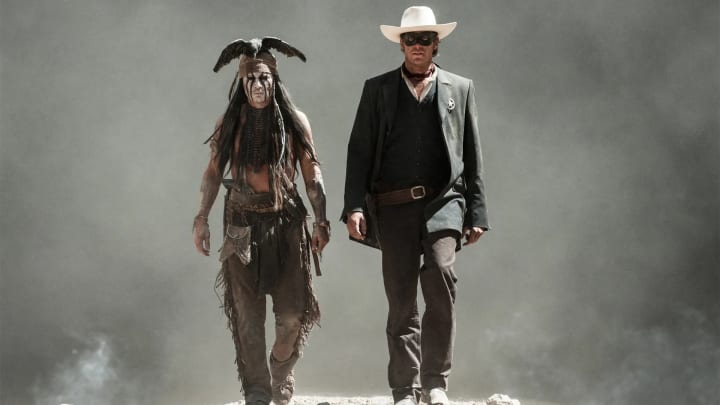
The visual effects in "The Lone Ranger" were a mixed bag. While some of the CGI sequences were impressive, particularly the train sequences, others felt unconvincing and poorly integrated into the live-action footage. The overuse of CGI was a frequent criticism, with many viewers feeling that the film relied too heavily on visual effects rather than practical stunts and real-world locations.
Influences:
"The Lone Ranger" drew inspiration from a variety of sources, including classic Westerns, historical accounts of the Indian Wars, and the Lone Ranger radio and television shows. The film also incorporated elements of revisionist Westerns, attempting to subvert traditional Western tropes and offer a more nuanced perspective on the history of the American West.
Scientific Knowledge :
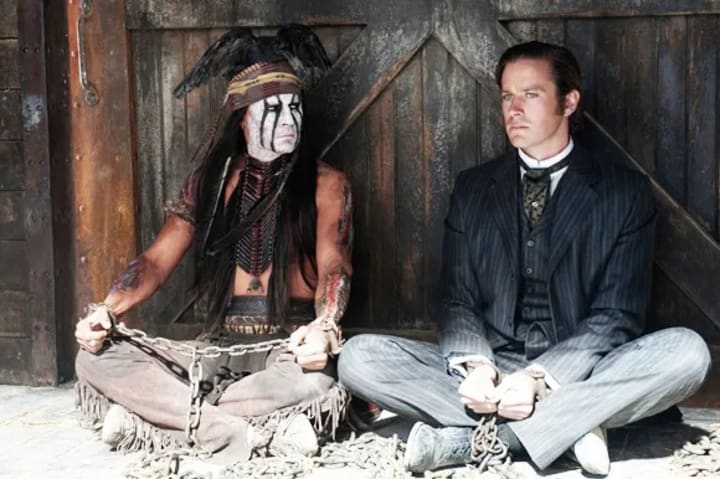
The film does not heavily rely on scientific knowledge, but it touches upon aspects of 19th-century railroad technology and the use of silver in industrial applications. The narrative also hints at the historical exploitation of natural resources and the environmental impact of railroad construction.
Marketing, Release & Box Office:
Disney launched a massive marketing campaign for "The Lone Ranger," spending an estimated $150 million to promote the film. The campaign included television commercials, print ads, online promotions, and partnerships with various brands. However, the film's negative reviews and controversial casting of Depp as Tonto made it difficult to generate positive buzz.
"The Lone Ranger" was released in theaters on July 3, 2013, and was a major box office disappointment. The film grossed only $89.3 million domestically and $260.5 million worldwide, far short of its production budget and marketing costs. The film's failure was attributed to a combination of factors, including negative reviews, controversial casting, and a lack of audience interest in a revisionist Western.
Critical Responses:
In conclusion, "The Lone Ranger" stands as a prime example of a high-profile Hollywood project that failed to live up to expectations. Plagued by production problems, creative disagreements, and controversial casting choices, the film was met with overwhelmingly negative reviews and a disappointing box office performance. While the film's ambitious production design, impressive sound design, and epic score were commendable, they were ultimately overshadowed by the film's convoluted plot, jarring tonal shifts, and Depp's controversial portrayal of Tonto. "The Lone Ranger" remains a cautionary tale of Hollywood hubris, a reminder that even the most iconic characters and talented filmmakers can stumble when faced with insurmountable challenges and misguided creative decisions. The film, ultimately, remains a curious case study in how not to revive a classic Western hero.
About the Creator
Xavier
Global news reporter covering science, tech, environment, Entertainment & sports. Delivering balanced insights to inform and inspire readers worldwide. Sometimes a poet.
The Politics of Playing Dress-Up
Well, to start off I'd like to say a happy world book day to all who celebrate. I know I haven't really posted anything on my socials about it but I'm not a jubilant kind of person. I lay low most of the time. Let's start off with a popular anecdote from the vaults...
By Annie Kapur4 days ago in Geeks
Chess the Musical Back on Broadway!
Have I ever mentioned how much of a fan of the musical Chess I am? I know the answer is “No,” because if it were “Yes,” this one-off story of my day, taking a nibble out of the Big Apple, would become Chapter 327 of my new novel Bishop’s Gamble: The Chess Variations of the ABBA Musical.
By Meredith Harmon4 days ago in Geeks



Comments
There are no comments for this story
Be the first to respond and start the conversation.