
TITANIC: A CINEMATIC VOYAGE OF LOVE, LOSS, AND UNFORGETTABLE SPECTACLE
James Cameron's Titanic, released in 1997, wasn’t just a movie; it was a cultural phenomenon. A sweeping epic that blended historical tragedy with a passionate love story, it captivated audiences worldwide, redefining the blockbuster landscape and etching itself into the collective consciousness.


More than a simple retelling of the ill-fated voyage of the RMS Titanic, the film was a testament to human connection in the face of overwhelming disaster. The narrative, oscillating between the contemporary discovery of the wreckage and the fateful days leading up to the ship's sinking, offered a poignant reflection on love, class divisions, and the enduring power of memory. Titanic became a milestone, setting new standards for visual effects, production design, and the emotional depth achievable in a big-budget film.
Plot:
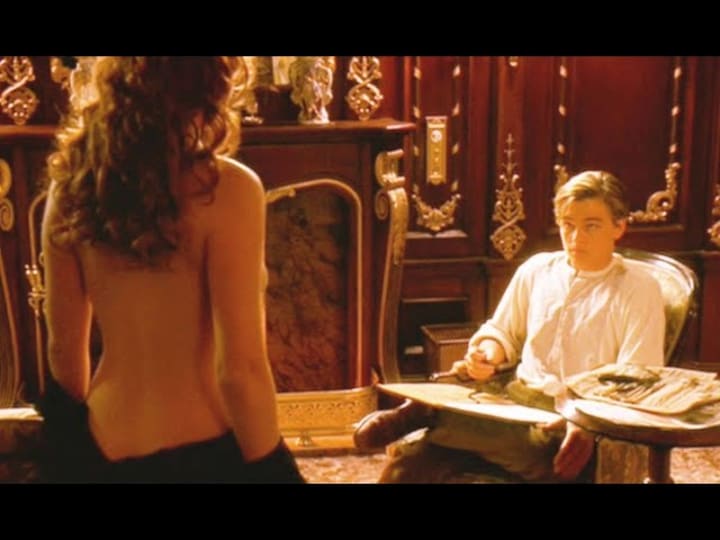
The film opens in present day, with treasure hunter Brock Lovett (Bill Paxton) searching the wreck of the Titanic for a legendary diamond necklace, "The Heart of the Ocean." Instead, his team recovers a drawing of a nude woman wearing the necklace, prompting an elderly Rose DeWitt Bukater (Gloria Stuart) to contact them. Rose recounts her experiences aboard the Titanic in 1912, flashing back to her younger self (Kate Winslet), a seventeen-year-old aristocratic woman engaged to the wealthy, but arrogant and controlling, Caledon Hockley (Billy Zane).
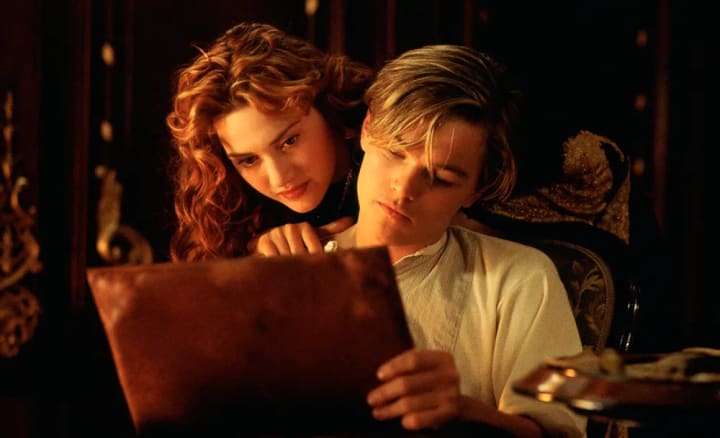
Repulsed by Caledon and suffocated by the expectations of her social class, Rose contemplates suicide. Jack Dawson (Leonardo DiCaprio), a penniless artist, intervenes, saving her life and forging an immediate connection. Their budding romance blossoms against the opulent backdrop of the Titanic, defying the rigid class boundaries that separate them. They share stolen moments, dancing in third-class, sketching portraits, and expressing a freedom Rose has never known.
Caledon, threatened by Jack's influence over Rose, schemes to keep them apart, framing Jack for theft. As the Titanic sails closer to its impending doom, their love story reaches its peak amidst the ship's grandeur. Then, disaster strikes. The "unsinkable" Titanic collides with an iceberg, unleashing a terrifying chain of events.
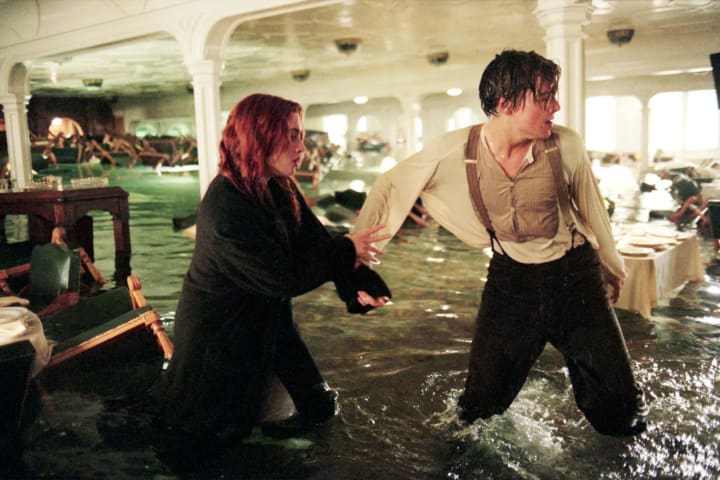
Chaos erupts as the ship begins to sink. Rose and Jack struggle to survive, navigating the flooded corridors and crowded lifeboats. Caledon, using his wealth and influence, secures a place for himself on a lifeboat, leaving Rose behind. Rose, however, chooses to stay with Jack, demonstrating the depth of her love and her rejection of the stifling world she once belonged to.
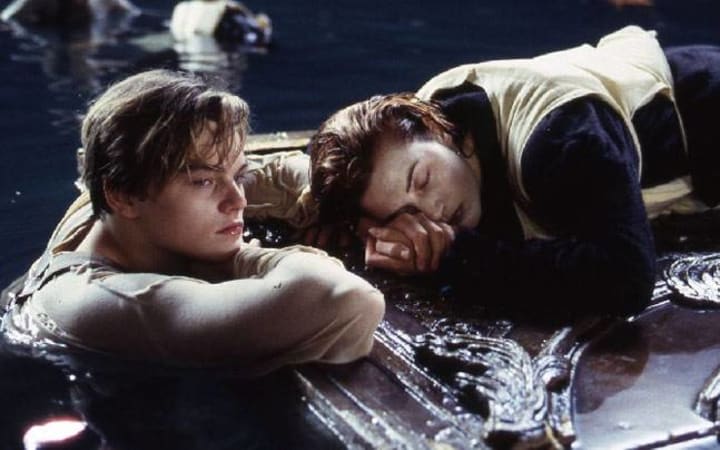
In the freezing water, amidst the wreckage and the desperate cries of passengers, Jack helps Rose onto a floating door, keeping her afloat while he succumbs to hypothermia. In his final moments, he extracts a promise from her to live a full and adventurous life, reminding her never to give up.
The film returns to the present day, with the elderly Rose revealing that she has kept her promise to Jack, living a long and fulfilling life. She drops the Heart of the Ocean into the sea, symbolizing her final letting go of the past and her eternal connection to Jack.
Cast:
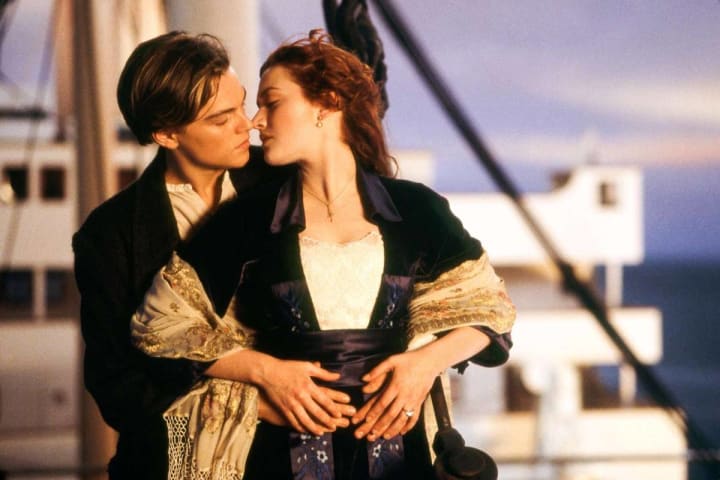
Leonardo DiCaprio as Jack Dawson: DiCaprio delivered a career-defining performance as the charming and free-spirited artist. His portrayal of Jack was youthful, passionate, and deeply affecting, captivating audiences with his infectious optimism and unwavering love for Rose.
Kate Winslet as Rose DeWitt Bukater: Winslet's portrayal of Rose was equally compelling, capturing the character's transformation from a repressed young woman to a strong and independent survivor. Her chemistry with DiCaprio was undeniable, making their love story truly believable and emotionally resonant.
Billy Zane as Caledon Hockley: Zane masterfully portrayed the villainous Caledon, a character driven by arrogance, entitlement, and a desperate need for control. His performance was both convincing and detestable, making him the perfect antagonist to Jack and Rose's love.
Gloria Stuart as Old Rose: Stuart's performance as the elderly Rose provided a crucial framing narrative, adding depth and perspective to the story. Her poignant portrayal of a woman reflecting on her past was both touching and inspiring.
Bill Paxton as Brock Lovett: Paxton played the treasure hunter obsessed with the Titanic, providing a contemporary connection to the historical tragedy. His character served as a conduit for the audience, allowing them to explore the story through his eyes.
Reviews:

Titanic garnered mixed but generally positive reviews upon its initial release. Critics lauded the film's stunning visuals, its epic scope, and the captivating performances of DiCaprio and Winslet. Many praised Cameron's masterful storytelling and his ability to blend historical accuracy with a compelling love story. However, some critics found the dialogue clichéd and the plot predictable, criticizing the film's length and perceived sentimentality. Despite these criticisms, the sheer scale and emotional impact of Titanic resonated deeply with audiences worldwide, solidifying its status as a cinematic masterpiece.
Production:
The production of Titanic was an undertaking of immense scale and ambition. James Cameron, known for his meticulous attention to detail and his pioneering use of technology, envisioned a film that would transport audiences back to the fateful voyage of the Titanic in a way never before seen. The budget swelled to over $200 million, making it the most expensive film ever made at the time.
Writing and Casting:

Cameron wrote the screenplay himself, weaving a fictional love story around the historical events of the Titanic disaster. He aimed to create characters that audiences could connect with emotionally, using the romance between Jack and Rose to explore themes of class, love, and sacrifice. The casting process was rigorous, with DiCaprio and Winslet ultimately chosen for their undeniable chemistry and their ability to embody the characters' complex emotions.
Principal Photography:
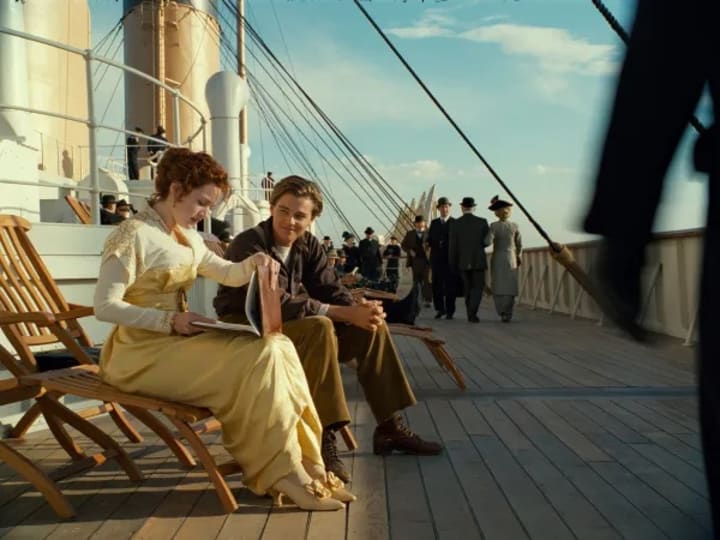
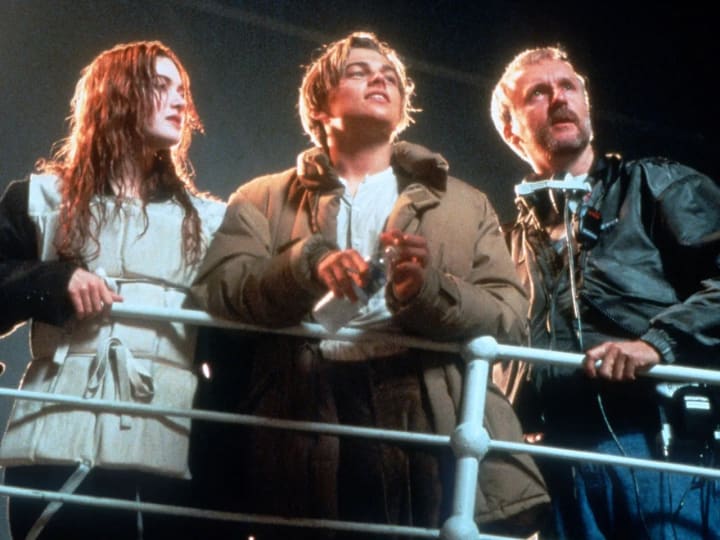
Filming took place in Baja California, Mexico, where a massive replica of the Titanic's exterior was constructed. The set was so large that it required its own fire department. The production faced numerous challenges, including unpredictable weather, technical difficulties, and the sheer logistical complexity of filming such a large-scale epic. Despite the challenges, the cast and crew persevered, driven by Cameron's unwavering vision. A funny anecdote: During the filming of the freezing water scenes, the "water" was actually heated, but the air was still frigid. The actors still had to shiver and pretend to be freezing, which, according to Winslet, was actually quite difficult when the water was "rather pleasant."
Production Design:
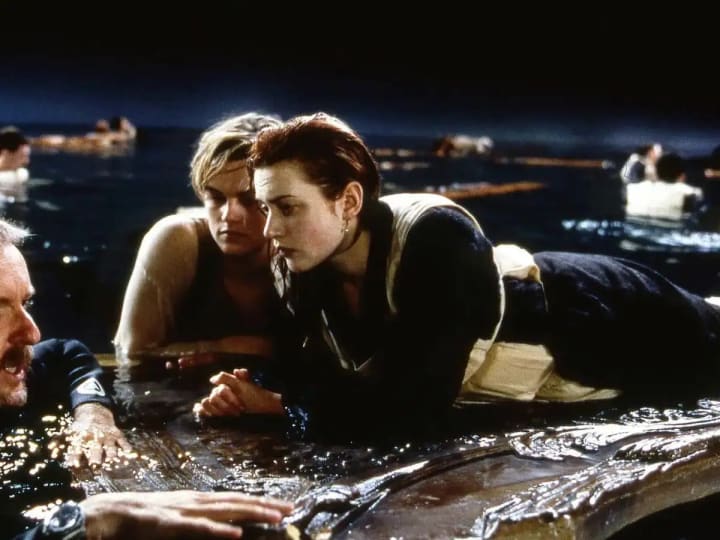
The production design of Titanic was meticulous and painstakingly accurate. Cameron assembled a team of historians and experts to ensure that every detail, from the ship's interiors to the costumes worn by the passengers, was historically authentic. The set design was so immersive that it felt as if audiences were truly transported back to 1912. The costumes, designed by Deborah Lynn Scott, were lavish and detailed, reflecting the social status and personalities of the characters.
Sound Design & Music:
The sound design of Titanic was both immersive and emotionally evocative. The sound effects, from the creaking of the ship's hull to the deafening roar of the iceberg collision, were meticulously crafted to create a sense of realism and tension. The musical score, composed by James Horner, was equally powerful, enhancing the film's emotional impact. The film's theme song, "My Heart Will Go On," sung by Celine Dion, became a global phenomenon, further solidifying Titanic's place in popular culture.
Visual Effects:
Titanic revolutionized the use of visual effects in cinema. Cameron and his team at Digital Domain created groundbreaking visual effects that brought the sinking of the Titanic to life with unprecedented realism. The effects were so seamless that audiences often couldn't distinguish between the real footage and the CGI. The film's visual effects set a new standard for cinematic realism and inspired a generation of filmmakers.
Influences:
Titanic drew inspiration from various sources, including the historical accounts of the Titanic disaster, the writings of Walter Lord, and the works of Charles Dickens. Cameron also cited the classic film A Night to Remember as an influence. The film's exploration of class divisions and social injustice echoes themes found in Dickens' novels, while its epic scope and romantic sensibility recall classic Hollywood epics.
Scientific Knowledge :
Cameron incorporated scientific knowledge into the film to ensure its accuracy. He consulted with maritime experts to understand the mechanics of the Titanic's sinking, including the angle of the ship's descent and the physics of the iceberg collision. He also used computer simulations to recreate the sinking process with greater precision. The film's attention to scientific detail added to its realism and credibility.
Marketing, Release & Box Office:
The marketing campaign for Titanic was massive and targeted a broad audience. Trailers, television spots, and print ads highlighted the film's epic scale, its romantic love story, and its stunning visual effects. The film was released in December 1997, and its box office performance exceeded all expectations. Titanic became the highest-grossing film of all time, earning over $1.8 billion worldwide. The film's success was driven by word-of-mouth, repeat viewings, and its ability to connect with audiences on an emotional level.
Critical Responses:
Despite some initial criticisms, Titanic ultimately garnered widespread critical acclaim and achieved unparalleled commercial success. The film won 11 Academy Awards, including Best Picture and Best Director, tying the record set by Ben-Hur. Titanic became a cultural phenomenon, inspiring countless imitators and solidifying James Cameron's reputation as one of the most innovative and influential filmmakers of our time. The legacy of Titanic continues to endure, reminding us of the power of love, the fragility of life, and the enduring fascination with one of history's most tragic events. It's a testament to how a well-told story, coupled with groundbreaking visuals and a captivating score, can transcend cinematic boundaries and resonate with generations.
About the Creator
Xavier
Global news reporter covering science, tech, environment, Entertainment & sports. Delivering balanced insights to inform and inspire readers worldwide. Sometimes a poet.
Silver Screen Magic with Mae West
American actress and singer Mae West became a popular film actress during the Great Depression. She started entertaining in vaudeville, then performed on Broadway, and finally went to Hollywood. She signed up with Paramount Pictures and made her debut in the 1932 film “Night After Night.” She also starred in musicals, comedies, and crime dramas. The American Film Institute named her one of the best classic Hollywood actresses.
By Rasma Raisters6 days ago in Geeks
Teddi Mellencamp
Teddi Mellencamp is often introduced to the public through a familiar lens: reality television. As a former cast member of The Real Housewives of Beverly Hills, she became a recognizable name in pop culture. However, reducing Teddi Mellencamp to a single role misses the complexity of her journey. Her story is not only about fame, but about identity, accountability, and the challenges of defining oneself outside of inherited legacy and public expectation. Born into a well-known family, Teddi is the daughter of legendary musician John Mellencamp. While this connection opened doors, it also came with an unspoken burden. From an early age, she was aware that her last name carried weight. Rather than leaning into celebrity privilege, Teddi has repeatedly emphasized her desire to build something independently, even when that path proved uncomfortable or controversial. Early Life and the Search for Self Growing up with a famous parent often creates a complicated relationship with identity, and Teddi Mellencamp has been candid about that reality. She spent much of her early adulthood trying to understand who she was beyond her surname. This search led her through various careers, including acting, music, and eventually wellness coaching. Teddi has spoken openly about her struggles with self-esteem, body image, and emotional eating. These challenges became formative experiences that later shaped her professional direction. Rather than hiding those struggles, she chose to build her platform around them, which resonated with many people who saw pieces of their own lives reflected in her honesty. Reality Television and Public Scrutiny Teddi joined The Real Housewives of Beverly Hills in 2017, entering a world where personal conflict is often amplified for entertainment. Her reputation on the show was defined by a commitment to what she called “accountability,” a trait that set her apart from her castmates but also placed her in the center of controversy. While some viewers appreciated her straightforward nature, others criticized her for being rigid or judgmental. Reality television rarely allows space for nuance, and Teddi often found herself portrayed in extremes. Over time, the constant scrutiny took a toll. Her departure from the show marked a turning point, signaling a desire to step away from a format that no longer aligned with her personal growth. Building a Wellness Brand One of the most discussed aspects of Teddi Mellencamp’s career is her work in the wellness industry. Her accountability-focused coaching program attracted attention for its strict structure and promises of transformation. Supporters praised the discipline and motivation it provided, while critics questioned its methods and sustainability. Teddi has addressed these critiques publicly, acknowledging mistakes and emphasizing the importance of evolving practices. Regardless of where opinions fall, her experience highlights a broader conversation about wellness culture, responsibility, and transparency in an industry that often operates without clear boundaries. What stands out is her willingness to engage with criticism rather than avoid it. In an era where public figures often deflect accountability, Teddi’s approach has been to confront uncomfortable conversations head-on, even when doing so risks backlash. Family, Motherhood, and Balance Beyond professional pursuits, Teddi Mellencamp frequently speaks about motherhood as one of the most grounding forces in her life. Raising children while navigating public attention has reshaped her priorities. She has described motherhood as both humbling and transformative, challenging her to model resilience, honesty, and self-acceptance. Balancing family life with a public career is not easy, particularly when personal decisions are subject to public commentary. Teddi’s openness about parenting struggles, marital challenges, and mental health has contributed to a more relatable public image, one that extends beyond the polished narratives often seen on social media. Life After Reality TV Since stepping away from Real Housewives, Teddi has explored new avenues, including podcasting and public speaking. These platforms allow for deeper, more thoughtful discussions than reality television typically permits. Through long-form conversations, she has been able to share perspectives on accountability, personal growth, and navigating criticism in a digital age. Her evolution reflects a broader trend among former reality stars who seek to reclaim their narratives. Rather than remaining confined to a single identity, Teddi has demonstrated that reinvention is possible, even after highly publicized experiences. Public Perception and Personal Growth Public opinion about Teddi Mellencamp remains divided, and perhaps that is inevitable. Visibility invites judgment, and growth is rarely linear. What distinguishes her journey is a consistent effort to learn from missteps rather than deny them. She has spoken about therapy, self-reflection, and the importance of separating personal worth from public validation. These themes resonate in a culture increasingly aware of the mental health costs associated with constant exposure and online criticism. A Continuing Story Teddi Mellencamp’s story is not defined by a single role, controversy, or achievement. It is an ongoing process of self-definition in the public eye. From navigating the expectations tied to her family name to confronting the realities of wellness culture and reality television, her journey reflects the complexity of modern public life. Rather than presenting herself as flawless, Teddi continues to position herself as a work in progress. That willingness to evolve, admit fault, and keep moving forward is what makes her story compelling. In a media landscape that often rewards perfection, her narrative offers something more human: the acknowledgment that growth comes from discomfort, and identity is shaped through accountability—not just success.
By Saboor Brohi 4 days ago in Geeks



Comments (1)
Nice work! I really enjoyed this. Keep up the good work.