
The Stone Road of Oak Island: A Forgotten Pathway to a Buried Truth?
Buried beneath centuries of dirt and secrecy, something rises that speaks clearly through structure, intention, and the undeniable weight of stone.

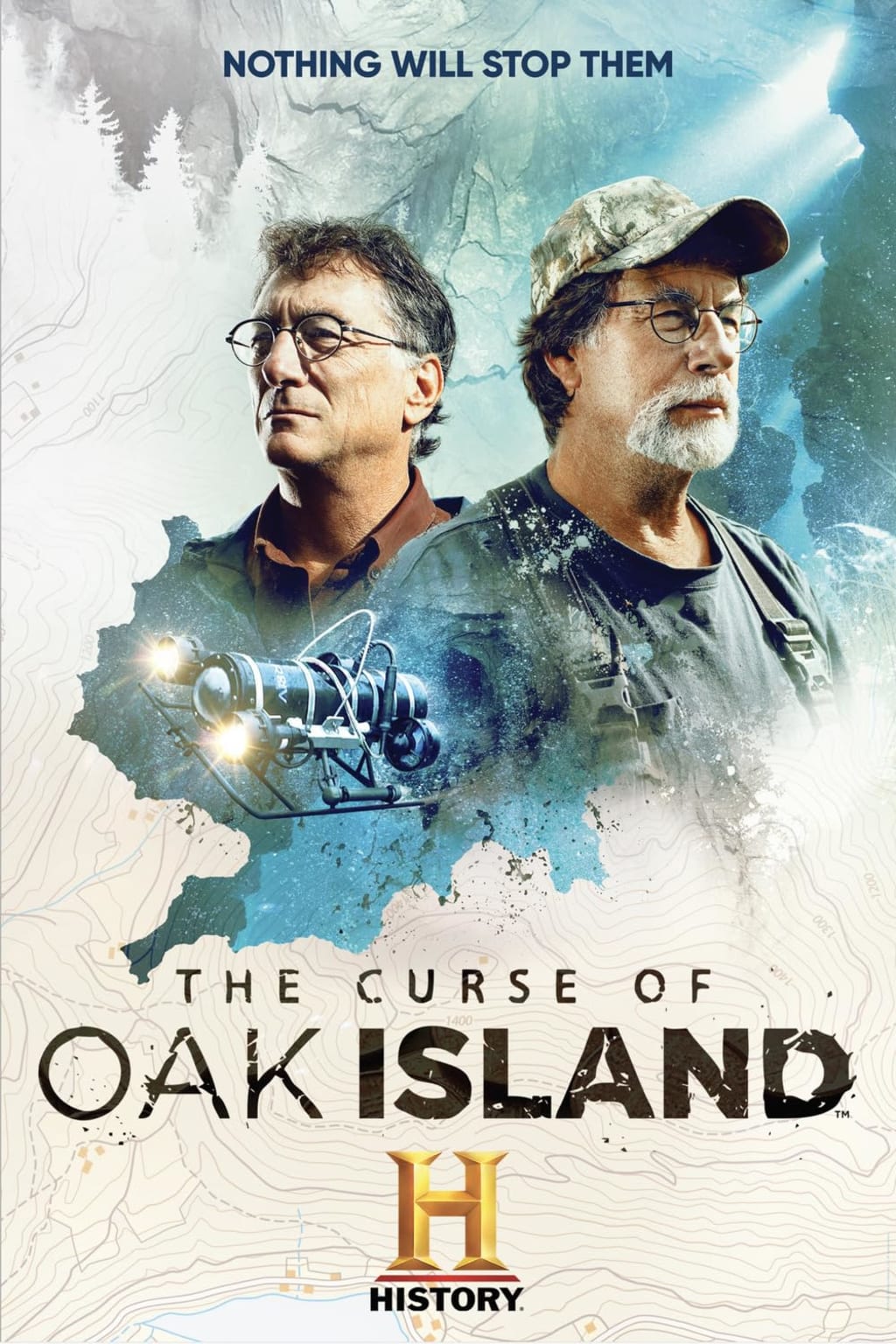
On Oak Island, even the ground seems to lie.
But sometimes, buried beneath centuries of dirt and secrecy, something rises that speaks clearly — through structure, intention, and the undeniable weight of stone.
This is the Stone Road.
A discovery that changed everything.
A path built long before television crews and sonar rigs. A road with no name on any map, no record in any settler’s log. A stone-paved artery, hidden beneath the swamp and winding toward the unknown.
And the question that haunts it remains:
Who built it — and where does it lead?
The Discovery: An Impossible Road Beneath the Swamp
The swamp was always strange. Anomalies in sediment. Unnatural geometry.
But then, the shovels struck stone. Not random debris — but purposefully laid rock. A roadbed, broad and flat, made of heavy stones carefully stacked and compacted, disappearing beneath the murky water and swamp soil.
A medieval-style causeway, constructed with skill and precision — linking the edge of the island to somewhere inland.
This was no settler’s shortcut. No erosion feature.
This was intentional.
The moment the first full segment of the Stone Road was uncovered, the team knew they weren’t dealing with a footpath.
They were looking at infrastructure.
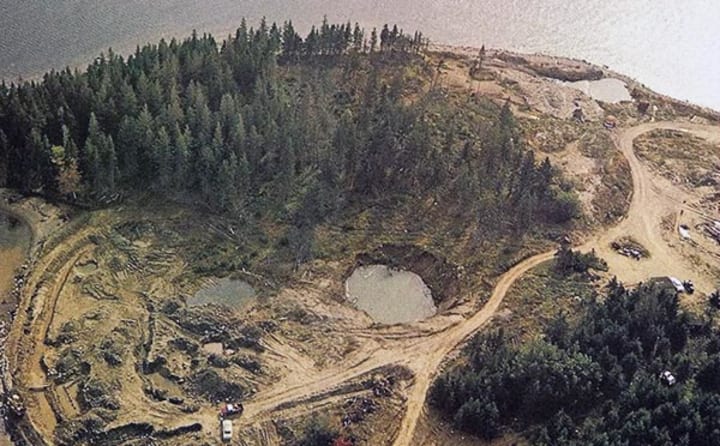
Built to Bear the Weight of Secrets
The width. The density. The placement.
This wasn’t a trail for people on foot.
The Stone Road appears to have been built to support heavy carts, crates, or wagons — traffic that demanded reinforced structure. Archaeologists estimate that the road’s stone layers were constructed in phases, with deliberate bedding layers beneath.
It was designed to last.
To move something heavy.
Something that couldn't be trusted to float across open water. Something that couldn’t risk being seen from the sea.
And that leads to one chilling possibility:
The Stone Road wasn’t built to bring materials onto the island.
It was built to move something inward.
Something worth hiding.
Who Built It — And When? A Silent Signature Beneath Every Stone
No construction records exist for the road. No settler accounts mention it. No colonial maps chart its shape.
But carbon dating from swamp materials above and around the road suggests it could predate European colonization in the region.
So who had the motive — and manpower — to build it?
1. The Knights Templar Theory
If the road leads to a vault — or multiple vaults — some theorists believe it was constructed by Templar engineers, part of a vast, sacred project to conceal holy relics far from prying eyes.
Templar architecture often included secret passageways, stonework, and logistics planning for transporting sacred objects. The Oak Island Stone Road fits that mold.
2. Early European Military Engineers
Others suggest the road was built by French or Spanish military forces, perhaps to move artillery or loot. This theory gains traction with finds of oxen shoes, hand-forged tools, and early construction pegs along the path.
3. Pirate Infrastructure
Some believe it’s linked to organized piracy — not lone pirates, but syndicates that required landing and concealment operations for massive, stolen hauls.
But then comes the question:
If pirates built it, why build a road at all when ships could dock?
Unless… they were afraid of being seen.
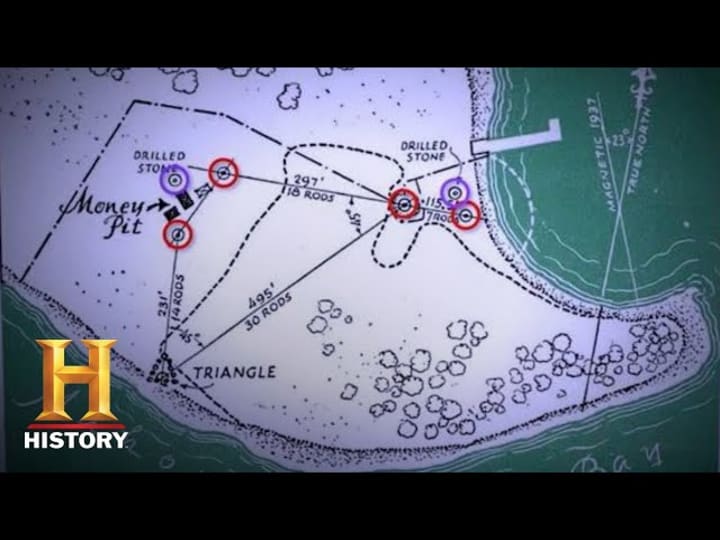
Where Does the Stone Road Lead?
It begins near the edge of the swamp. Then it vanishes, buried beneath centuries of shifting earth and deliberate concealment.
Does it head toward the Money Pit?
Toward Borehole 10-X?
Or something no one’s even found yet?
Some scans suggest the road may lead underneath the swamp, connecting Smith’s Cove to areas inland where other structures and anomalies have been identified.
It could be a supply line to a construction site.
Or the final route to a hidden chamber — a last leg in a journey only a few ever completed.
And if that’s the case, the Stone Road is more than a road.
It’s a guide. A key. A breadcrumb trail left by those who knew that their secret might someday be discovered — but only by those who walked the right path.
Artifacts Along the Path: Echoes of Purpose
Alongside the road, searchers have uncovered artifacts — relics that breathe life into the stones beneath them:
Iron tools, forged in old-world styles, discarded or lost by the builders.
Oxen shoes, suggesting the use of draft animals to carry immense weight.
Burnt fragments and slag, possible indicators of smelting or blacksmith work nearby.
Wooden dowels and pegs, suggesting adjacent wooden structures once framed this mysterious corridor.
Each find adds to the weight of evidence:
This wasn’t a random trail.
It was a procession path — either toward creation… or concealment.

Why Hide a Road? The Burying of the Path
At some point, the Stone Road was deliberately buried.
Layered with clay. Hidden beneath a swamp that may itself have been constructed to drown the evidence.
Why?
To erase the evidence of advanced construction.
To prevent future discovery of what it led to.
To let the island protect its truth — through saltwater, silt, and silence.
The decision to bury the road may have been the final act of those who left Oak Island behind — a clean sweep, a disappearing act, a message:
You’re not meant to follow this path.
But what if… we should?
The Road as Revelation: A Timeline Rewritten
The discovery of the Stone Road may be one of the most important breakthroughs in Oak Island’s modern history.
It changes the question from “Was something hidden here?” to “How much effort was spent hiding it?”
The road proves that major construction occurred long before modern tools. It shows that someone moved massive weight with purpose.
And it suggests — with unsettling clarity — that everything was built to lead somewhere.
The road isn’t random.
It’s directional.
It goes somewhere important.
And it may be the one truth Oak Island can no longer bury.
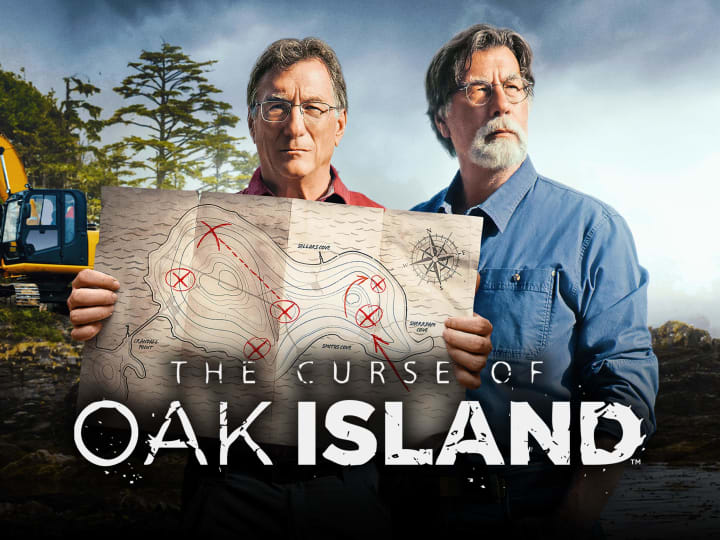
Conclusion: A Road Too Perfect to Be Forgotten
The Stone Road isn’t just another Oak Island clue.
It’s proof of planning.
Of effort.
Of fear — fear that what it led to would one day be found.
But the road has risen. Piece by piece. Stone by stone.
And as it returns to the surface, it brings with it the question that haunts every dig, every theory, every weary dreamer who’s looked out across that mysterious shore:
What waits at the end?
Treasure?
Scripture?
A secret too dangerous to speak?
Whatever it is — someone built a road to get it there.
And someone else buried it to make sure it stayed forgotten.
About the Creator
Rukka Nova
A full-time blogger on a writing spree!
Keep reading
More stories from Rukka Nova and writers in Geeks and other communities.
Silver Screen Magic with Mae West
American actress and singer Mae West became a popular film actress during the Great Depression. She started entertaining in vaudeville, then performed on Broadway, and finally went to Hollywood. She signed up with Paramount Pictures and made her debut in the 1932 film “Night After Night.” She also starred in musicals, comedies, and crime dramas. The American Film Institute named her one of the best classic Hollywood actresses.
By Rasma Raisters6 days ago in Geeks
How to Succeed at the Benson Directory®
Congratulations and welcome to the Benson Directory® employee #22391! As our newest call handler, you will have the privilege of speaking with dozens of unique and interesting people on a daily basis as well as the opportunity to earn bonuses for high performance. Contained within this handbook you will find a set of ease to follow instructions designed to help you settle in to your new role and begin paving the way to success.
By S. A. Crawford2 days ago in Fiction



Comments (1)
The discovery of the Stone Road on Oak Island is fascinating. You mention the anomalies in the swamp that led to finding this intentional road. It makes me wonder what kind of technology or knowledge they had back then to build such a precise structure. And the idea that it was built to move something heavy and hidden is really intriguing. Do you think we'll ever truly know what it was and who exactly built this mysterious road?