
The Science Beneath the Surface: How Technology Is Peeling Back the Layers of Oak Island
The Science Beneath the Surface: How Technology Is Peeling Back the Layers of Oak Island

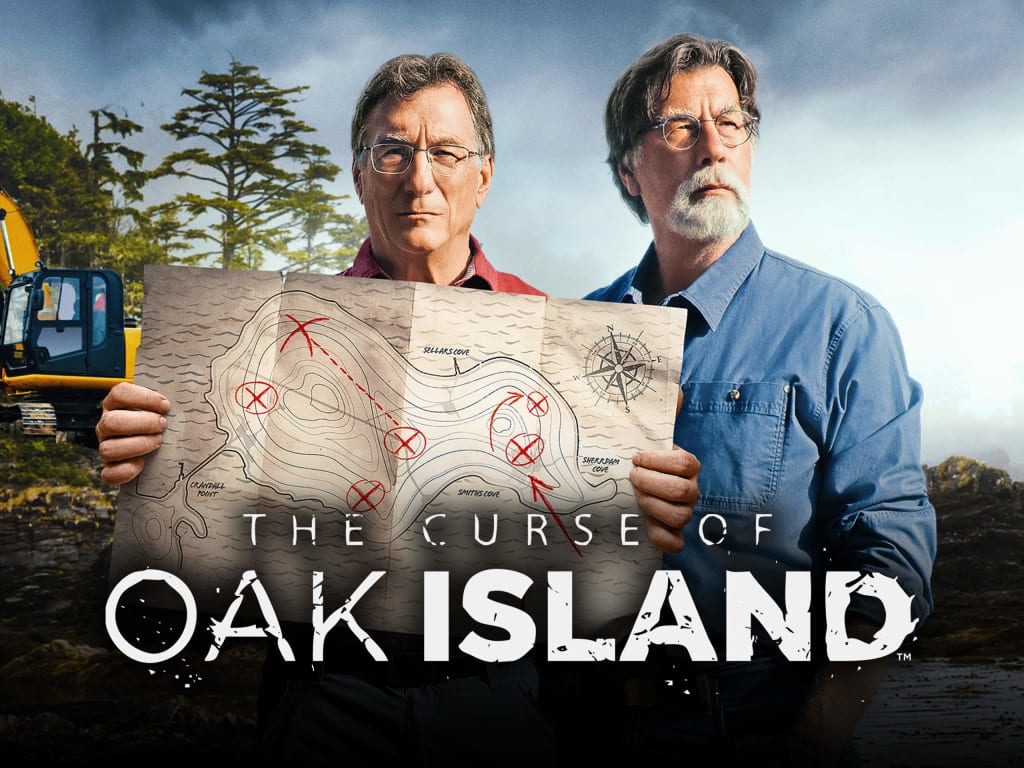
Oak Island is a riddle carved in stone and soaked in seawater.
For more than 200 years, men have dug with shovels, dynamite, and blind hope — chasing whispers of treasure and the ghosts of builders no one can name.
But the modern era brought something the legends never saw coming:
Science.
Today, Oak Island is being dissected with tools once reserved for space exploration and deep-earth mining. These aren’t guesses. They’re instruments of truth.
And one by one, they’re confirming what the old stories always said:
Something is down there.
Seismic Scanning: Listening to the Island’s Heartbeat
Think of seismic scanning as a sonogram for the Earth.
Using controlled vibrations — thuds from a seismic source — the team sends pulses into the ground. When those waves bounce back, they paint a picture of what’s below.
It’s not photography. It’s sound interpreted as structure.
And what it revealed beneath Oak Island changed everything.
Cavities.
Void spaces.
Rectangular anomalies at depths where nothing should exist.
Beneath the swamp, seismic scanning suggested the outline of a ship-shaped formation. Beneath the Money Pit, it hinted at large, layered voids — possible chambers, or vaults.
These aren’t guesses. They’re shadows of real structure, heard through rock and silence.
And they’re exactly where the legends said they’d be.

Ground Penetrating Radar (GPR): X-Raying the Past
GPR is like an archaeologist’s sixth sense — a cartographer for secrets buried just beneath our feet.
The equipment sends radar waves into the ground. When the waves hit something solid — wood, metal, voids — they bounce back and create a real-time scan.
GPR has uncovered:
Buried roads beneath the swamp, pointing to ancient infrastructure.
Man-made post holes, forming geometric alignments that defy coincidence.
Unknown tunnels, running near the Money Pit and Smith’s Cove.
What’s most chilling? Many of these finds line up with places already tied to centuries of legends and anomalies.
GPR doesn’t lie.
It simply reveals what the island has worked so hard to bury.
Core Drilling and Boreholes: Touching the Untouched
If scanning tools tell you what’s there, core drilling is how you bring it into your hands.
Drilling rigs bore narrow shafts deep into the island, extracting core samples — cylindrical cuts of Earth that reveal layers of soil, wood, and occasionally… something far stranger.
It was through boreholes that the team found:
Ancient timber from over 700 years ago.
Void spaces, some shaped too perfectly to be natural.
Artifacts buried hundreds of feet down, including leather fragments, parchment, and potential box structures.
Each borehole is a conversation with the past.
A way of reaching out through time and bringing back evidence that Oak Island isn’t just legend — it’s architecture.
Buried. Sealed. Forgotten.

Dendrochronology and Artifact Dating: Reading Time Through Trees
How do you date a secret?
Sometimes, the answer lies in a tree ring.
Dendrochronology is the science of determining the age of wooden materials by studying their growth rings. When combined with radiocarbon dating, it allows experts to date artifacts and construction timber to the decade — sometimes even the year.
And what they’ve found is staggering:
Wood from support structures dated to the 1200s–1400s.
Construction material in boreholes predating known colonial activity.
Remains from wharves and platforms with European tool marks.
These aren’t leftovers from settlers.
They’re messages from builders who came — and vanished — long before history admits they were here.
The rings don’t lie.
And neither do the layers of time they grew in.
Underwater Exploration and Diving: Into the Island’s Abyss
Beneath the waters of Oak Island — from Smith’s Cove to Borehole 10-X — lies the unreachable, the unseen.
So the team goes in.
Diving operations have explored collapsed shafts, submerged tunnels, and sunken chambers. With lights, cameras, and nerves of steel, divers have ventured into places where few have returned unscathed.
In the murky depths of 10-X, early footage showed what appeared to be:
Structured walls, possibly man-made.
A chest-shaped object, half-buried.
And most hauntingly… the outline of a human form.
Whether it was a trick of shadow or a guardian long forgotten, the island has never been more alive — or more dangerous — than beneath the surface.
Diving isn’t just exploration. On Oak Island, it’s confrontation.
With truth. With fear. With the unknown.

Geochemical Analysis: The Island Bleeds Gold
It’s not always the solid things that prove a treasure is real. Sometimes, the answer is in what leaks out.
Using advanced geochemical testing, scientists have analyzed water samples from boreholes and shafts across the island.
The results?
Trace amounts of gold, in places with no natural source.
Lead particles, with isotopic signatures pointing to European origins.
Anomalous levels of silver and iron, consistent with buried treasure corrosion.
This isn’t speculation. It’s chemistry.
And it suggests that deep beneath the island, metal is decaying.
Not scattered fragments — but concentrated deposits, still hidden in sealed chambers.
The Earth is bleeding treasure.
And science is the first to smell it.
Conclusion: When Legends Meet Laser Precision
For centuries, the Oak Island mystery survived on campfire tales and fading maps.
But now, satellites scan the soil.
Waves echo through rock.
Water carries whispers of gold.
Science hasn’t killed the mystery.
It’s proving it.
Each machine, each scan, each core sample isn’t the end of a story — it’s a breadcrumb on a path the world never thought was real.
Oak Island still holds its secrets. But for the first time, they’re being measured, dated, heard, and seen.
Because when myth collides with modern technology, only one thing matters:
What’s real… and what’s next.
About the Creator
Rukka Nova
A full-time blogger on a writing spree!
Keep reading
More stories from Rukka Nova and writers in Geeks and other communities.
The Stone Road of Oak Island: A Forgotten Pathway to a Buried Truth?
On Oak Island, even the ground seems to lie. But sometimes, buried beneath centuries of dirt and secrecy, something rises that speaks clearly — through structure, intention, and the undeniable weight of stone.
By Rukka Nova8 months ago in Geeks
Silver Screen Magic with Mae West
American actress and singer Mae West became a popular film actress during the Great Depression. She started entertaining in vaudeville, then performed on Broadway, and finally went to Hollywood. She signed up with Paramount Pictures and made her debut in the 1932 film “Night After Night.” She also starred in musicals, comedies, and crime dramas. The American Film Institute named her one of the best classic Hollywood actresses.
By Rasma Raisters4 days ago in Geeks



Comments (1)
This article is fascinating. The use of modern science on Oak Island is really interesting. I remember when I worked on a project where we used similar seismic scanning techniques to find underground structures. It's amazing how these methods can reveal so much. Do you think they'll ever actually find the treasure? And what do you make of all these anomalies lining up with the legends?