
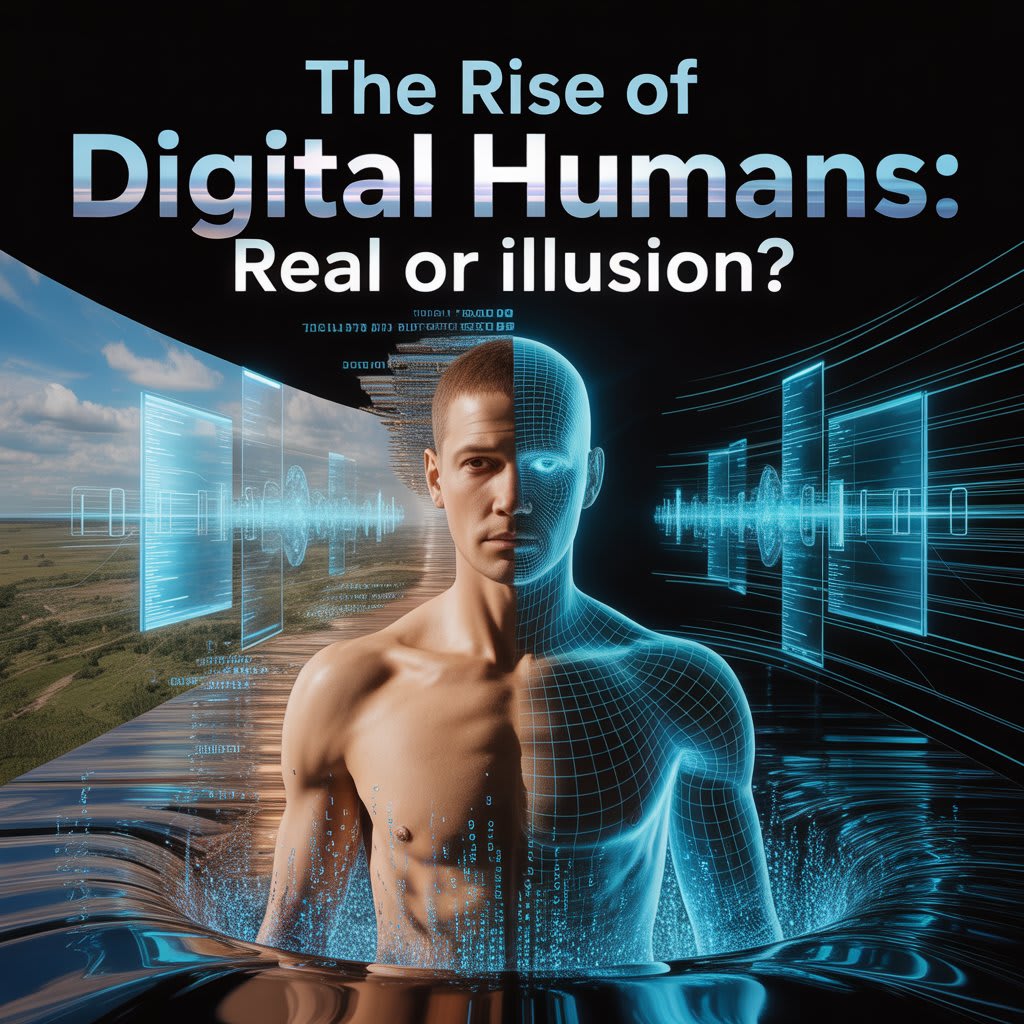
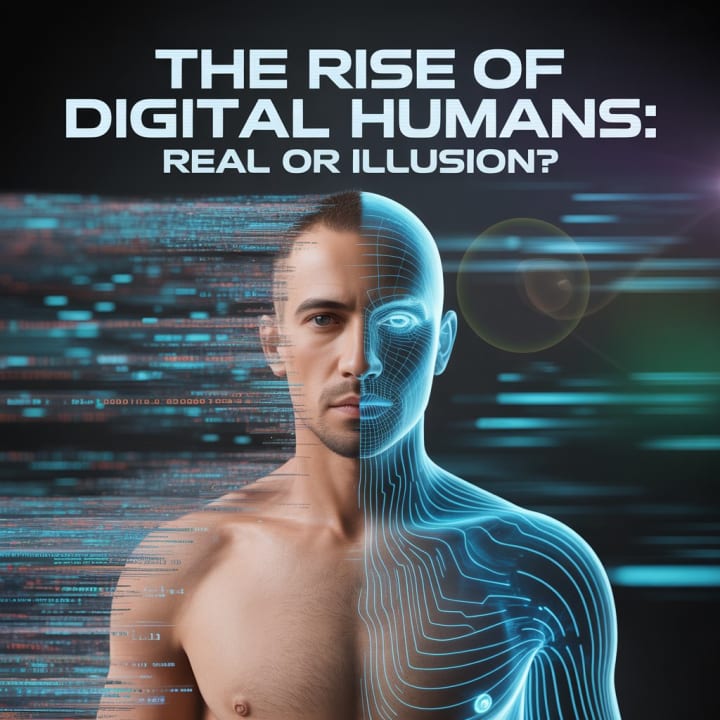
The Rise of Digital Humans: Real or Illusion?
When technology starts to feel alive, what does it mean to be human anymore?


Introduction: The First Time I Met a “Digital Human”
The first time I spoke to a digital human, I didn’t expect to feel anything.
It was a virtual assistant built to sound human — soft voice, perfect pauses, even little laughs that felt strangely familiar. I asked it questions out of curiosity, expecting a robotic tone, but instead… it felt like talking to a real person.
When the chat ended, I sat back in silence.
Part of me was impressed — the other part, unsettled.
Because for the first time, I wondered: if something can act human, sound human, and respond with empathy — does it, in some way, become human?
That question has stayed with me ever since.
1. The Line Between Real and Artificial
In 2025, digital humans aren’t just sci-fi experiments. They’re influencers, therapists, brand ambassadors, teachers, and even virtual friends.
They have faces that smile, voices that comfort, and expressions that mimic emotion so convincingly that you forget — they’re made of code.
And yet, here’s the paradox: while they’re built to resemble us, they highlight what makes us human even more — our flaws, our unpredictability, our emotions that can’t be neatly programmed.
Technology may be learning to feel real, but we are the only ones who truly feel.
2. Why We’re Drawn to Them
I used to think digital humans were just clever marketing tools. But then I realized why they’re spreading so fast — because we’re lonely.
We live in a world where people scroll endlessly yet still feel unseen. Where conversations happen in comments and DMs, not across dinner tables.
Digital humans promise connection without judgment. They listen without interruption, comfort without fatigue, and respond without bias.
In a world that often feels too busy for empathy, even artificial warmth can feel better than none.
That realization both comforted me… and scared me.
3. The Moment That Changed My View
A few months ago, I came across a project where a company built a “digital memorial” — a replica of a woman who had passed away. Her family could talk to her avatar, hear her voice, and even see her gestures recreated through AI.
When I watched the video, I cried. Not because it was creepy — but because it was beautiful and heartbreaking all at once.
It made me wonder:
Are we preserving love through technology?
Or are we refusing to let go of what’s meant to fade?
That blurred line — between memory and simulation — is where the rise of digital humans feels both miraculous and fragile.
4. The Beauty of Imperfection
Here’s what I’ve come to realize: perfection isn’t what makes something feel real — imperfection does.
Real humans forget words, interrupt each other, cry unexpectedly, laugh too loudly, or say the wrong thing. That’s what makes us alive.
Digital humans, for all their brilliance, can’t truly make mistakes — not the human kind, at least. They can mimic emotion, but not experience it. They can simulate empathy, but not need it.
Maybe that’s the invisible thread that keeps us apart — the simple truth that to be human is to be unfinished.
5. The Reflection We Didn’t Expect
I think the rise of digital humans isn’t about replacing us — it’s about revealing us.
They reflect our desires, our loneliness, our longing for connection.
They hold up a mirror to the parts of ourselves we’ve outsourced — our patience, our listening, our empathy.
When I look at a digital human now, I don’t just see technology. I see a reflection of what we crave most — understanding.
It’s not the code that fascinates me. It’s the way it makes me question the boundaries of what it means to be alive.
6. Living With Both Worlds
We’re standing at the edge of a strange and wonderful era — one where humans and digital humans coexist, creating art, stories, and relationships that cross the line between real and artificial.
Maybe that’s not something to fear. Maybe it’s something to learn from.
Because if technology can learn to be more human, perhaps we can learn — once again — to be more human, too.
We can bring back empathy, curiosity, and presence — not because machines do it better, but because they remind us why it matters.

Conclusion: Real or Illusion?
So, are digital humans real or illusion?
Maybe they’re both.
They’re real enough to make us think, feel, and question — but still an illusion in the sense that they only reflect what we give them.
The truth is, the rise of digital humans isn’t just about technology. It’s a story about us — our evolution, our fears, and our endless desire to connect.
We created them in our image.
Now they’re helping us rediscover what it truly means to be alive.
----------------------------------
Thank you for reading...
Regards: Fazal Hadi
About the Creator
Fazal Hadi
Hello, I’m Fazal Hadi, a motivational storyteller who writes honest, human stories that inspire growth, hope, and inner strength.
Keep reading
More stories from Fazal Hadi and writers in Geeks and other communities.
Marvel Zombie
The last entry into our 2025 superhero projects catalogue is Marvel Zombies. This was a show that was anticipated by absolutely no one and it disappeared from the public consciousness as quickly as it was released. There was nothing special about the project that made it a must see, or a must remember. In fact if anything it's a must forget.
By Alexandrea Callaghan16 days ago in Geeks
The Invite Movie Review
In a world where social gatherings often reveal more than they conceal, the psychological thriller The Invite turns a simple dinner party into a crucible of tension, paranoia, and moral ambiguity. This 2022 film, directed by Jessica M. Thompson, takes audiences on a gripping journey that blends suspense, mystery, and subtle social commentary. Unlike conventional horror or thriller movies, The Invite builds its dread through human behavior, relationships, and the gradual unraveling of secrets, creating an experience that lingers long after the credits roll.
By David Cook5 days ago in Geeks


Comments
There are no comments for this story
Be the first to respond and start the conversation.