
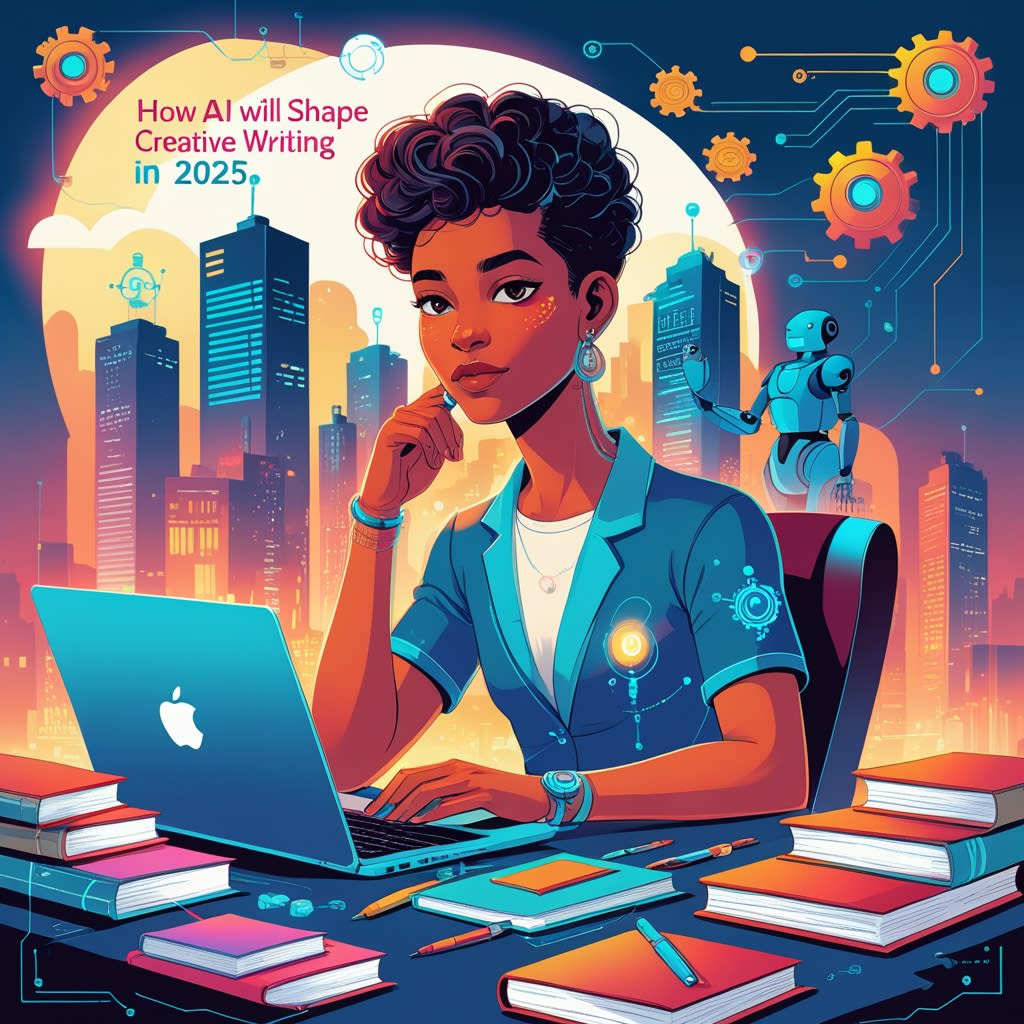
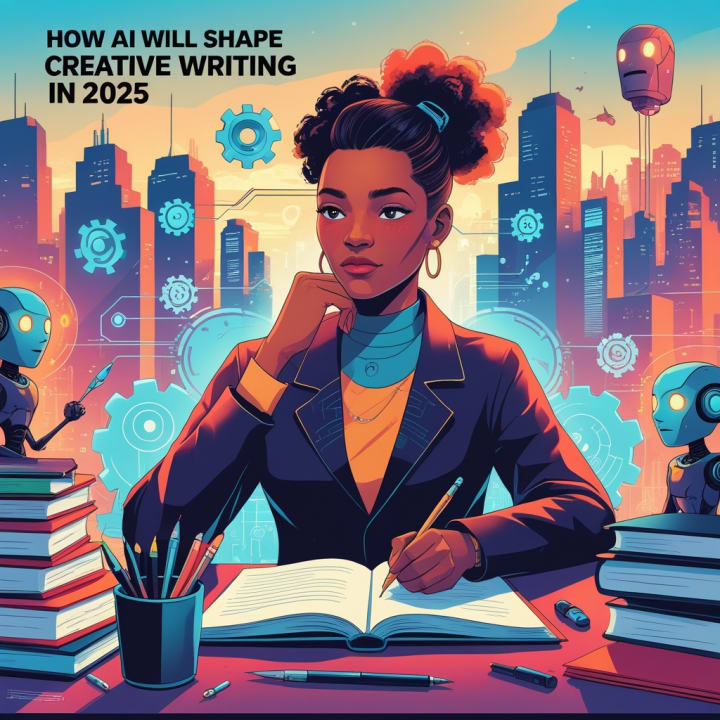
How AI Will Shape Creative Writing in 2025
The rise of collaboration between human hearts and digital minds.

Introduction: A New Chapter for Storytellers
A few years ago, the idea of machines helping us write stories felt strange — almost threatening. Writers everywhere whispered the same worry: “Will AI replace us?”
But as I sit here in 2025, typing this story with an AI assistant open on another screen, I realize something beautiful — it’s not replacing us. It’s reminding us who we are.
Artificial intelligence isn’t here to steal creativity; it’s here to stretch it. To hold a mirror up to our imagination and ask, “What if we dream a little bigger?”
This is how AI is reshaping creative writing — not as a rival, but as a partner.
________________________________________
1. The End of Writer’s Block
I remember staring at a blank page for hours, waiting for the right sentence to appear. Some days, it never did. The silence between my thoughts and my keyboard felt endless.
Now, I use AI like a spark. When I’m stuck, I ask it questions: “What if the story started in a storm?” or “How would this character react to heartbreak?” The answers aren’t perfect, but they wake up my imagination.
AI doesn’t write the story for me — it helps me see possibilities I might have missed. It’s like brainstorming with someone who never runs out of ideas, yet always lets me make the final call.
________________________________________
2. Writing as Collaboration, Not Competition
In the early days, many writers saw AI as competition. But the truth is, creative writing was never about typing words — it’s about emotion, experience, and human truth.
AI can suggest words, rhythms, or styles. But only a human can feel heartbreak, hope, or the quiet ache of loss. The soul of a story still belongs to us.
Today, I see AI as a co-creator. It helps polish sentences, structure ideas, and even experiment with voices — but the heart of every piece still beats with my memories, my pain, my laughter.
We’re not losing storytelling. We’re expanding it.
________________________________________
3. Personalized Writing Tools for Every Dreamer
In 2025, writing software is deeply personal. It learns your tone, your pacing, your favorite themes.
Imagine an AI that says, “This sounds like you,” or “You usually use a more hopeful ending.” It doesn’t rewrite your work — it reminds you of your voice.
This year, I started using an AI app that analyzes my drafts and highlights what emotions my writing evokes. Seeing my own patterns — like how often I write about nostalgia or renewal — taught me more about my creative self than any workshop ever did.
________________________________________
4. A New Kind of Mentor
Before AI, mentorship in writing was a privilege. You needed connections, classes, or costly courses. But now, millions of new writers can learn storytelling structures, emotional pacing, or character design — all through free or affordable AI tools.
It’s democratizing creativity. Everyone, regardless of background or education, can now learn to express their voice beautifully.
AI has become a quiet teacher for a new generation of storytellers — one that’s patient, accessible, and non-judgmental.
________________________________________
5. Preserving Human Emotion in a Digital Age
Of course, there’s a challenge. The danger isn’t that AI will erase human creativity — it’s that we’ll forget what makes it human.
As a writer, I try to use AI thoughtfully. I let it help with structure, not soul. I let it refine, not replace.
The key is intention. Technology gives us efficiency, but we must give it empathy. The stories that touch people — that make them cry, smile, or remember — will always come from a beating heart, not a blinking cursor.

________________________________________
6. The Return of Storytelling as a Shared Experience
Interestingly, AI has made writing more social again.
Communities of writers now collaborate with AI prompts, co-create stories, and build shared universes together online. We’re no longer locked in lonely creative caves; we’re creating together.
AI has turned storytelling into a kind of conversation — between people, cultures, and ideas. The walls between reader and writer are blurring, and something new is being born: interactive creativity.
________________________________________
7. What Writers Gain, Not What We Lose
For me, the greatest gift of AI has been time. I spend less of it wrestling with editing or structure — and more of it focusing on emotion, message, and authenticity.
It’s also given me confidence. When I see my stories evolve through these tools, I feel less like I’m “cheating” and more like I’m evolving. Just as writers once embraced the typewriter or spell check, we’re now embracing something bigger — an assistant that helps us think differently.
________________________________________
Conclusion: The Heart Behind the Code
So, how will AI shape creative writing in 2025?
It won’t be by out-writing us. It will be by reminding us why we write at all.
----------------------------------
Thank you for reading...
Regards: Fazal Hadi
About the Creator
Fazal Hadi
Hello, I’m Fazal Hadi, a motivational storyteller who writes honest, human stories that inspire growth, hope, and inner strength.
Keep reading
More stories from Fazal Hadi and writers in Geeks and other communities.
Marvel Zombie
The last entry into our 2025 superhero projects catalogue is Marvel Zombies. This was a show that was anticipated by absolutely no one and it disappeared from the public consciousness as quickly as it was released. There was nothing special about the project that made it a must see, or a must remember. In fact if anything it's a must forget.
By Alexandrea Callaghan17 days ago in Geeks
Angelina Jolie in Alice Winocour's Paris 'Couture' Film Official Trailer
"It's a shout of rage, of liberation." HanWay Films debuted the first official trailer for Couture, a French film about the Paris fashion industry. This premiered at TIFF 2025 last year and other festivals and will be debuting in French cinemas this February. Though there's still no US release expected anytime soon as it didn't get many good reviews (58% on RT). Angelina Jolie stars as an American filmmaker named Maxine who arrives in Paris for Fashion Week on a life-and-death journey, facing challenges and self-discovery. The triptych story follows three women in Paris, including a young fresh face model named Ada, and a make-up artist working in the shadows of the catwalks. A "powerful & intimate journey of self-reflection & resilience set against the electric backdrop of Paris Fashion Week." Written & directed by French César nominated writer / director Alice Winocour, the film stars mega famous actress Angelina Jolie as Maxine Walker, with Louis Garrel, Anyier Anei, Ella Rumpf, Guillaume Marbeck, & Garance Marillier, also featuring Vincent Lindon. This only looks like it's worth a watch for anyone who is deeply into the fashion industry.
By Dena Falken Esq5 days ago in Geeks



Comments
There are no comments for this story
Be the first to respond and start the conversation.