
🧠 The Psychology of Villains: Why We Love the Bad Guys
The Dark Charisma of Fiction’s Greatest Antagonists

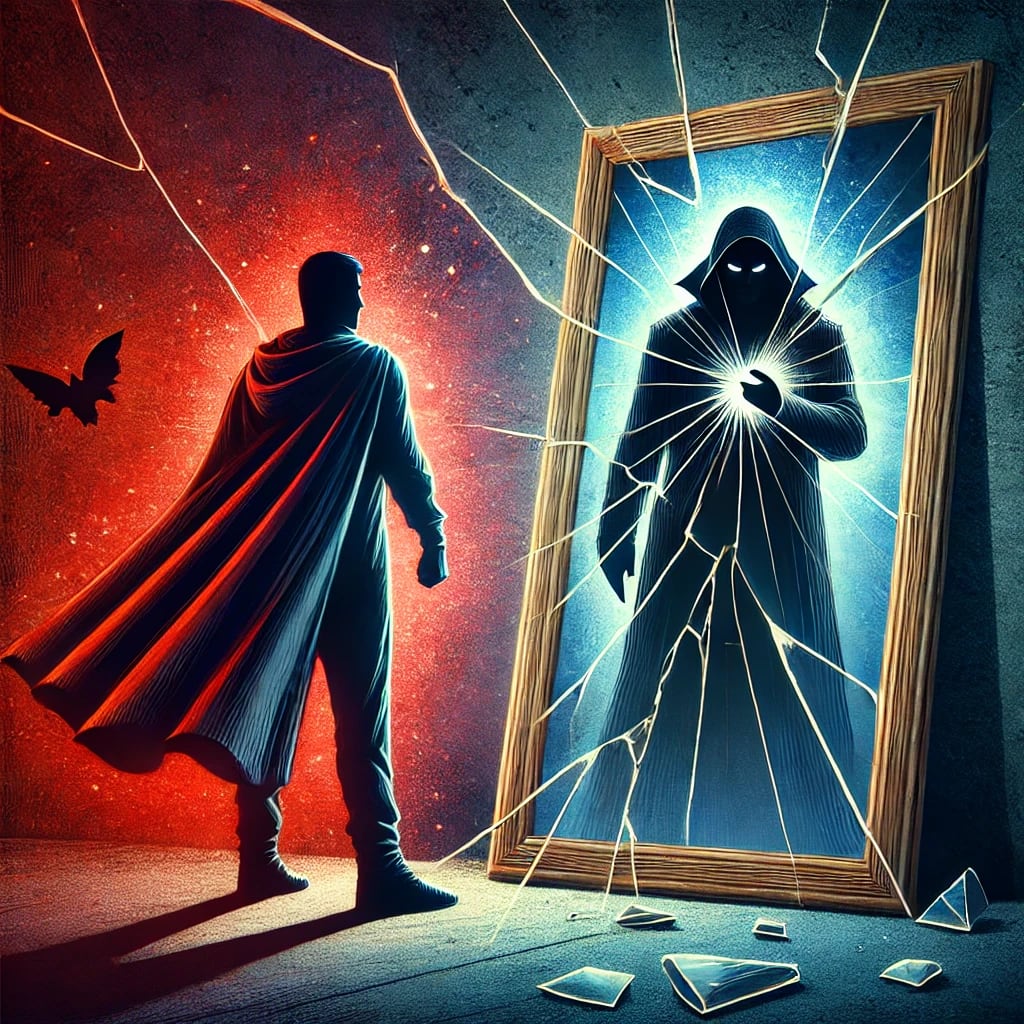
Introduction: Why Do We Root for the Villain?
Think about the last movie or TV show you loved. Did you find yourself secretly drawn to the villain?
Maybe it was Joker’s chaos, Darth Vader’s tragic fall, or Loki’s charm and unpredictability. Maybe you even thought, "They kind of have a point."
But why? Why do bad guys often feel more compelling than the heroes who are supposed to stop them?
The answer lies in psychology, storytelling, and human nature. Villains aren’t just obstacles for heroes—they challenge our morals, tap into our emotions, and force us to question the world around us.
Let’s break down why we love villains, what makes them so captivating, and how they reflect the dark side within us all.
1. Villains Represent the Forbidden Side of Human Nature
Every person has dark impulses—anger, revenge, ambition, selfishness. But society teaches us to suppress these instincts.
Villains, however, embrace what we cannot.
🔹 Joker (The Dark Knight, 2008): Total chaos, freedom, and rebellion against order.
🔹 Cersei Lannister (Game of Thrones): Power-hungry, ruthless, and unapologetically ambitious.
🔹 Walter White (Breaking Bad): A man who transforms from weak to powerful, doing whatever it takes.
We don’t necessarily agree with their actions, but we’re fascinated by their willingness to cross lines we never would.
The Psychological Connection
According to Carl Jung, we all have a “shadow self”—the hidden, darker part of our personality. Watching villains lets us safely explore that darkness without real consequences.
2. Villains Have More Depth Than Heroes
Many villains start as good people before making choices that lead them down a dark path.
This makes them more relatable than heroes who are often purely good from the beginning.
🔹 Darth Vader (Star Wars): Once a hero, but driven to darkness by love, fear, and manipulation.
🔹 Killmonger (Black Panther): His cause (fighting oppression) is noble—his methods are extreme.
🔹 Magneto (X-Men): A survivor of genocide who fights for mutant rights, but at any cost.
Villains like these make us ask:
"Would I have done the same if I were in their position?"
Heroes often follow predictable arcs, while villains keep us guessing.
3. The Villain’s Perspective Often Makes Sense
A great villain doesn’t see themselves as “evil.”
Instead, they believe they’re the hero of their own story. Sometimes, they even make valid points:
🔹 Thanos (Avengers: Infinity War): Overpopulation is a real issue—but his solution (erasing half the universe) is extreme.
🔹 Erik Killmonger (Black Panther): His anger at racial injustice is justified, but his violent approach isn’t.
🔹 Ra’s al Ghul (Batman Begins): He believes civilization is corrupt and must be “reset.”
A villain with a logical philosophy makes them far more compelling than a cartoonish, one-dimensional bad guy.
This is why fans debate: Was Thanos actually right?
4. Villains Make Heroes More Interesting
A hero is only as strong as the villain they face.
Imagine Batman without the Joker. Would he be as fascinating? Would he be as driven?
🔹 The Joker forces Batman to confront his own moral limits.
🔹 Lord Voldemort turns Harry Potter’s story into a battle of destiny.
🔹 The Green Goblin challenges Spider-Man’s belief in responsibility.
A weak villain = a forgettable hero.
That’s why we remember great rivalries—because they push heroes to their breaking points.
5. The Charisma Factor: Why Villains Are Often More Fun
Let’s be honest—many villains are just cooler than their heroic counterparts.
They get:
✔️ The best dialogue ("Why so serious?")
✔️ The most dramatic entrances
✔️ The most stylish costumes
✔️ An attitude that breaks the rules
Would you rather hang out with the Joker or Superman? Be honest.
Villains aren’t weighed down by moral obligations, which makes them more unpredictable, exciting, and fun to watch.
6. When the Villain Becomes the Hero
In some cases, villains become so popular that they turn into protagonists:
🔹 Loki (Marvel): Started as a villain, but fans loved his charisma so much that he became a central hero.
🔹 Venom (Spider-Man Universe): Once an enemy, now a fan-favorite antihero.
🔹 Gru (Despicable Me): A literal supervillain who becomes the main character.
These characters prove that sometimes, villains are more interesting than the heroes they fight.
Final Thoughts: We All Have a Little Villain in Us
The reason we love villains is simple: They reflect the parts of ourselves we don’t always acknowledge.
Sometimes, we feel:
🔥 Angry at injustice (like Killmonger).
🔥 Frustrated with society (like the Joker).
🔥 Tempted to take shortcuts to success (like Walter White).
Villains let us explore these emotions without acting on them in real life.
So next time you find yourself rooting for the bad guy, don’t feel guilty.
It just means you’re human.
And maybe, just maybe… a little bit villainous.
About the Creator
Ahmet Kıvanç Demirkıran
As a technology and innovation enthusiast, I aim to bring fresh perspectives to my readers, drawing from my experience.
Keep reading
More stories from Ahmet Kıvanç Demirkıran and writers in Geeks and other communities.
Silver Screen Magic with Mae West
American actress and singer Mae West became a popular film actress during the Great Depression. She started entertaining in vaudeville, then performed on Broadway, and finally went to Hollywood. She signed up with Paramount Pictures and made her debut in the 1932 film “Night After Night.” She also starred in musicals, comedies, and crime dramas. The American Film Institute named her one of the best classic Hollywood actresses.
By Rasma Raisters6 days ago in Geeks
25 Years Ago The World Welcome Hobbits & Lord of The Rings into Theaters
Twenty-five years ago, a gamble reshaped cinema—and few people realized it in the moment. Where it all started! In December 2001, audiences stepped into Middle-earth with The Lord of the Rings: The Fellowship of the Ring, and something quietly seismic happened. This wasn’t just another fantasy movie arriving for the holiday season. It wasn’t a niche genre experiment or a disposable blockbuster meant to fade once the credits rolled. It was the opening chapter of a cinematic undertaking so ambitious that, even now, it feels borderline impossible that it worked at all.
By Lawrence Lease2 days ago in Geeks


Comments
There are no comments for this story
Be the first to respond and start the conversation.