
The Girl Who Messaged Herself: The Internet Mystery That Defied Every Rule of Reality
A chilling digital disappearance that left behind one impossible clue — a message that should never have existed.

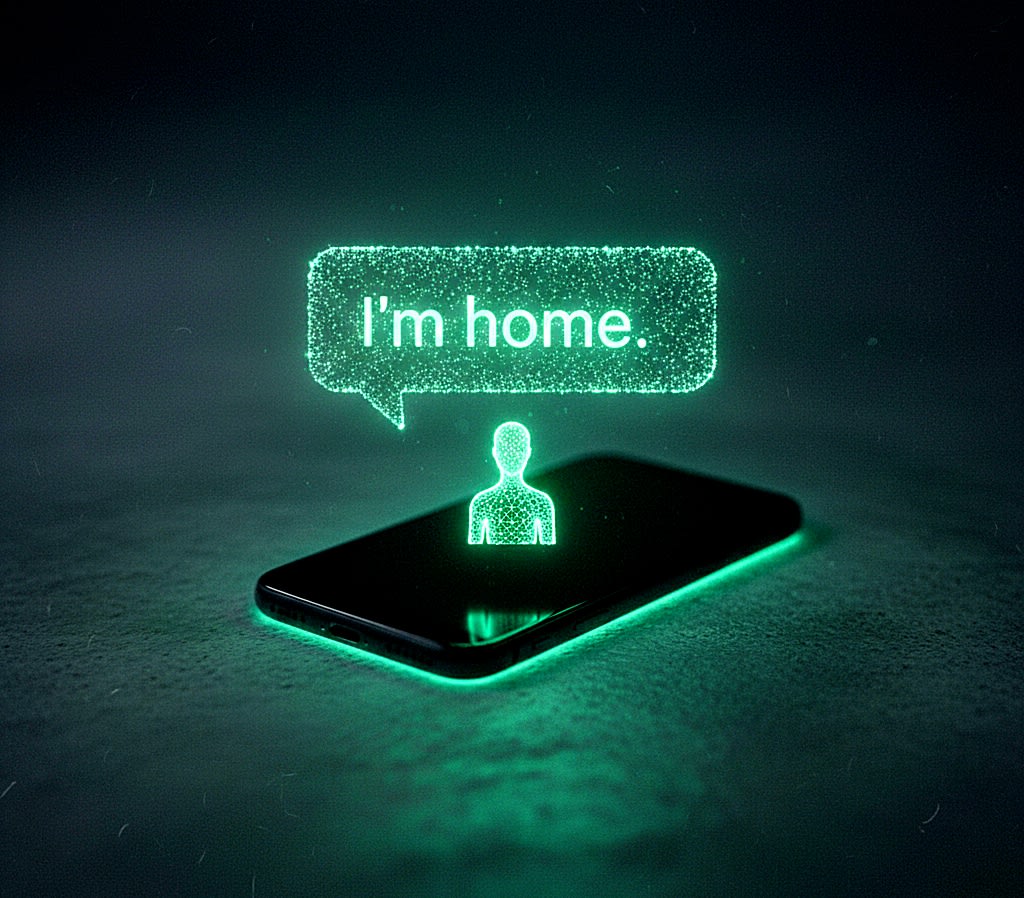
The Girl Who Messaged Herself: The Internet Mystery That Defied Every Rule of Reality
It started with a single message.
Not the dramatic kind, not a confession or a threat, not a goodbye.
Just a simple, almost boring line:
“I’m home.”
Nothing extraordinary. Except for one impossible detail…
The girl who received the message had gone missing 14 hours earlier.
And the message came from her own phone.
That tiny, harmless notification became the spark for one of the strangest internet mysteries of the last decade. Bloggers obsessed over it. Reddit detectives tore apart every timestamp. Conspiracy channels milked the story dry.
But even after all the noise, one question never found an answer:
How does someone send a message to themselves while they’re missing?
The Disappearance
Her name was never fully confirmed—different sources call her “Mari,” “Maryam,” or simply “M.”
A quiet university student, no drama, no shady past, not a party girl. She walked out of her dorm one evening, leaving everything behind: laptop on the desk, charger plugged in, half-finished tea still warm.
CCTV captured her stepping outside at 7:46 PM.
Then nothing. No footage. No sightings.
Just… absence.
Police treated it as a typical missing-person case at first. Students disappear all the time—stress, breakups, burnout, who knows. But things changed the next morning when her roommate unlocked her phone to check for clues.
That’s when she saw the message.
The one sent to herself.
Time of message: 4:13 AM
Location ping: her dorm room
Device: her own phone
But her phone was found powered off, inside her drawer.
The Investigation That Went Nowhere
Digital forensics tried breaking down the message:
• No signs of hacking
• No foreign devices connected
• No SIM cloning
• No cloud spoofing
• No remote access
• No VPN trails
• No duplicate IMEI
It was like the message existed in a vacuum—appearing out of nothing, from nowhere, without any normal technological cause.
Experts gave interviews, each one more confused than the last. “Technically possible but practically absurd,” one of them said.
The message wasn’t the only strange thing.
Her last known movements made even less sense.
She walked out of campus.
Thirty minutes later, her phone connected to a cell tower west of the city—an empty industrial zone.
Then complete silence for hours.
Then the 4:13 AM message.
If it were a kidnapper, they wouldn’t bring the phone back to her dorm.
If it were her, she never re-entered the building on camera.
If it were a glitch… glitches don’t compose texts.
And then came the part of the story that still gives people chills.
The Second Message
Six days after she vanished, at 2:52 AM, her Instagram account posted a single story:
a completely black screen with one word at the bottom:
“waiting.”
No location.
No typing pattern match.
No metadata.
Nothing.
People called it staged, others called it AI-generated, but the timestamp ruined all theories.
At the moment of posting, her account had no active login sessions anywhere.
It was like a ghost posting from an account that didn’t exist.
Theories, Clues, and the Heavy Silence
The internet did what it always does: it divided into believers and skeptics.
Some said she ran away and staged everything.
Some claimed she was kidnapped and her captor was “playing games.”
Some insisted it was a system glitch—though no known glitch sends messages through powered-off phones.
Others suggested something darker: a copy of her digital identity acting on its own.
But the strangest observation came from a cybersecurity blogger:
“The message wasn’t delivered through telecom servers. It was generated locally.”
Locally.
Meaning: the phone typed to itself.
Months passed.
No new clues.
Her case slowly slipped into the endless ocean of unsolved digital disappearances.
And then one final detail came out—a detail the investigators tried to keep quiet.
The Last Search on Her Phone
Inside the phone’s browser history, a search was found.
It was made at 4:12 AM, one minute before the mysterious text.
The search term:
“Can someone be in two places at once?”
No one knew who typed it.
Or why.
Or from where.
And that single search turned a missing-person case into a full-blown internet legend.
Why This Mystery Still Haunts the Web
Because it hits a fear we secretly carry:
technology sees things we don’t.
Perhaps the camera missed her.
Perhaps the tower logs glitched.
But the phone search? The message? The story post?
Those belonged to someone.
Someone who was either her…
or wasn’t.
Her case sits today in a quiet folder with hundreds of others.
But unlike those, this one still breathes.
Every few months, screenshots pop up on forums.
Someone claims a new clue.
Someone says they cracked the puzzle.
Someone reposts the 4:13 AM screenshot and asks the same question:
Who pressed “send”?
Mysteries can hide in forests, mountains, abandoned houses…
but the scariest ones hide in the little screen we stare at all day.
And this one refuses to fade.
About the Creator
The Insight Ledger
Writing about what moves us, breaks us, and makes us human — psychology, love, fear, and the endless maze of thought.
Keep reading
More stories from The Insight Ledger and writers in Geeks and other communities.
💫 The Shadow Signal: How One Strange Pulse Reopened a Forgotten Cosmic Mystery
Space has a talent for reminding humanity that we understand far less than we think. Every few years, a discovery comes along that shakes the dust off some forgotten mystery and forces scientists to rethink everything from solar winds to planetary atmospheres. This story begins with one quiet, aging spacecraft drifting alone in the cold dark — and a signal that never should have existed.
By The Insight Ledger about a month ago in Geeks
Silver Screen Magic with Mae West
American actress and singer Mae West became a popular film actress during the Great Depression. She started entertaining in vaudeville, then performed on Broadway, and finally went to Hollywood. She signed up with Paramount Pictures and made her debut in the 1932 film “Night After Night.” She also starred in musicals, comedies, and crime dramas. The American Film Institute named her one of the best classic Hollywood actresses.
By Rasma Raisters6 days ago in Geeks
25 Years Ago The World Welcome Hobbits & Lord of The Rings into Theaters
Twenty-five years ago, a gamble reshaped cinema—and few people realized it in the moment. Where it all started! In December 2001, audiences stepped into Middle-earth with The Lord of the Rings: The Fellowship of the Ring, and something quietly seismic happened. This wasn’t just another fantasy movie arriving for the holiday season. It wasn’t a niche genre experiment or a disposable blockbuster meant to fade once the credits rolled. It was the opening chapter of a cinematic undertaking so ambitious that, even now, it feels borderline impossible that it worked at all.
By Lawrence Lease2 days ago in Geeks




Comments
There are no comments for this story
Be the first to respond and start the conversation.