literature
Geek literature from the New York Times or the recesses of online. Our favorite stories showcase geeks.
Book Review: "The Hollow Ones" by Guillermo Del Toro and Chuck Hogan
I have read quite a few books that bore some amount of resemblance to the television show ‘The X Files’ and honestly, every time I do, there is always something that I have to say about it. This ‘something’ is normally associated with the fact that I find a section or subplot somewhat unbelievable. There is always some aspect of the book that I feel does not make sense and it has nothing to do with the ‘supernatural’ aspect of the storyline. It actually has to do with the way in which the characters respond to the supernatural ideas that are presented to them, especially if they are not used to working with supernatural ideas. In this book, I found it rather difficult again, to believe that a character such as the reasonable Odessa would reply to a supernatural incident with believing it head on rather than spending time questioning the behaviours of it. I do not think that an FBI agent with all of their training would be inclined to see and watch for these things that leave the human body. It may have destroyed part of the story for me.
By Annie Kapur5 years ago in Geeks
The Mystical History of Rasputin
One night of 1916 a man named Felix Yusupov invited a holy man to dinner but that was only upfront, intention of host was to murder his guest. But why does on earth someone wanted to kill a priest? The priest was to blame for the fate of an empire.
By Mohammad Ahmed5 years ago in Geeks
The Danger of Nature in Mary Shelley's “Frankenstein”
Written and revised by Mary Shelley, “Frankenstein” has since become one of the most adapted and best-selling gothic novels of all time. Focusing on the studies of anatomy by Victor Frankenstein, it details his creation of a living monster. Victor later loses the monster and goes mad looking for him in dangerous conditions that often threaten the lives of those nearest and dearest to him. Apart from the deaths of physical people, nature presents something threatening to Victor as well. As a scientist, he must be reasonable - echoing back to the age Mary Shelley was born just after, the Age of Reason. But, Victor proves to be a romantic when it comes to his discussions of the sublime aspects of the natural landscape and therefore echoes the modern period in which Mary Shelley herself is thriving - the Romantic Age. Nature is often presented as something not just threatening, but something that is directly dangerous to either the physical or psychological being of the protagonist/narrator at the time. Through science, it is often presented as the subject that should be left alone to flourish rather than bent to one’s own will. Victor Frankenstein, learning this the hard way, will pay the ultimate price for attempting the bend nature and play God. The human condition cannot flourish and cannot thrive in an atmosphere and scene that is filled with creations that are known to be against nature and thus, things in the Monster’s path die out or become damaged.
By Annie Kapur5 years ago in Geeks
Book Review: "The Chianti Flask" by Marie Belloc Lowndes
I have read so many of the British Library Crime Classics Books that now, I am actually just waiting for more and more of them to come out so that I can read the newer ones. One of the more recent ones I read included a foreign man who was hunted down but, I think that this book - “The Chianti Flask” was very different than the usual requests I have of a crime novel. As you know, I am in love with classic crime. Crime novels and films of the 1930s and 1940s are among some of my favourite re-reads and replays on my bookshelf and DVD player. The books of John Dickinson Carr and the like alongside the films of Humphrey Bogart, Edward G. Robinson and the classic Hollywood era. But I think that “The Chianti Flask” has truly changed my perception on what classic crime novels can be. More focused on the way in which there is a psychological perception of crime through the accused and their social circles - this book is fantastic at moving the genre forward into the new, darker criminal fiction age.
By Annie Kapur5 years ago in Geeks
Evangeline Lilly on Her Book Series, ‘The Squickerwonkers’
Evangeline Lilly is best known as the first female actor to co-lead a Marvel Cinematic Universe film. After the success of 2015’s Ant-Man, Lilly’s character Hope Van Dyne donned the mantle of The Wasp in this year’s Ant-Man and the Wasp.
By Monita Roy Mohan5 years ago in Geeks
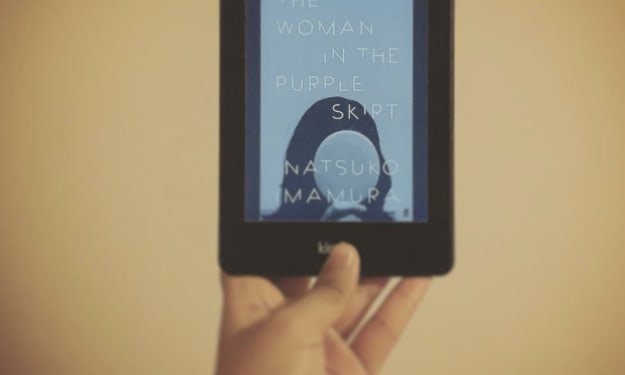
Book Review: "The Woman in the Purple Skirt" by Natsuko Mamura
Over time, I have read many books from the land of Japan. Japanese fiction is some of the most incredible, heartfelt and magnificent fiction in the world. You cannot go wrong with a traditionalist family gone awry like Junichiro Tanazaki’s “The Makioka Sisters” and you definitely cannot shy away from Yasunari Kawabata’s mind-bending narratives of the human psyche pushed to the edge such as: “Dandelions”, “Thousand Cranes” and “The Sound of the Mountain”. Reading Yukio Mishima’s “Confessions of a Mask”, “The Sound of the Waves” or the disturbing “The Sailor Who Fell From Grace with the Sea” is like being on a trip through the less-explored and more explicit parts of modern 20th century Japanese Culture. In our own 21st century we have had great authors such as: Haruki Murakami, Yoko Ogawa, Hiromi Kawakami, the great Koji Suzuki and who can forget Koushun Takami - creator of “Battle Royale”. It is not uncommon to say that Japanese Literature from about 1930 until now has been in its golden age. We are witnessing some of the novelists that will go down in history as greats and legends and the same can be said for this newer novelist - Natsuko Mamura.
By Annie Kapur5 years ago in Geeks
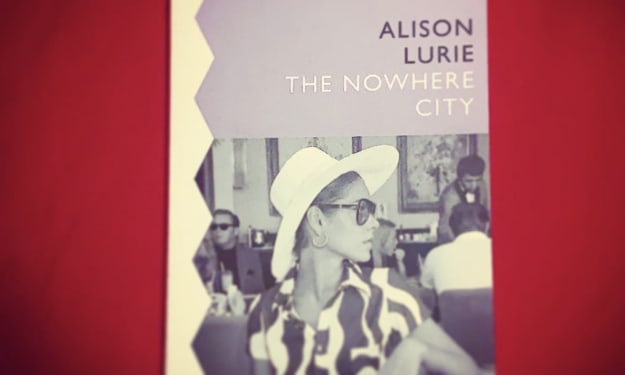
Book Review: "Nowhere City" by Alison Lurie
Books about failed marriages, broken relationships and movement which is neither looked forward to nor wanted is a big thing for the modernist, realist and post-modernist eras. Authors such as Richard Yates and his moving “Revolutionary Road”, “Eleven Kinds of Loneliness” and “A Good School” which all demonstrate different types of failed relationships between lovers, friends and acquaintances have been part of one of the biggest movements in the literary emotions of humans. Authors such as Christopher Isherwood have taken this one step further with both familial relationships and those with homosexual undertones at a time when the LGBTQ+ movement was still fighting for their human rights. Novels such as “Brideshead Revisited” all the way through to “Cloud Atlas” have explored the extremities of human emotion from love, to strength to suicide and back again. In the work of Alison Lurie though, I find that these relationships have a tendency to be slightly unrealistic in their sense of endurance. It is almost a romanticised emotional abuse that is more befitted to a mid-career Lana Del Rey song than a realist novel. Ever since I read her novel “The Last Resort” I can honestly say that I have felt this way more than once. Though she is a brilliant writer, sometimes her relationship writing can get carried away with any amount that a person can endure from another person. Not just making it unrealistic, but making the abuse of the mind a romanticised aspect that I certainly do not agree with.
By Annie Kapur5 years ago in Geeks
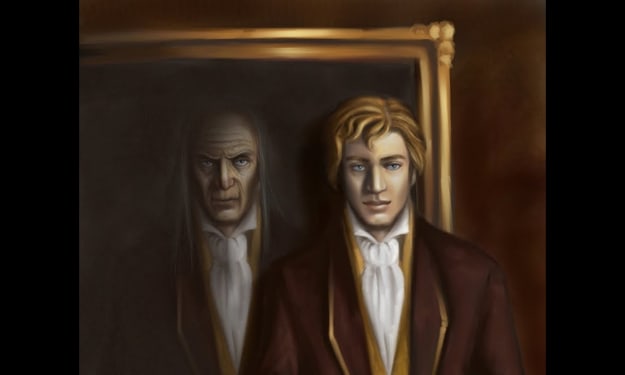
"The Picture of Dorian Gray" and Immorality. Top Story - July 2021.
Published in the summer of 1890 in Lippincott’s Magazine, “The Picture of Dorian Gray” by Oscar Wilde has been closely associated with the era of decadence and hedonism during the fin-de-siecle because of its presentation of the fall of the upper class man. The character of Dorian is directly representative of the upper class youth who, by spending time with his elders and not contributing to society in any good way, has descended into a life of debauchery and sin. In the Victorian Era, the novel was seen as an absolute scandal because of its reflection of an upper class man, who in that time was seen as a model for society to follow - in the light of something that was closer to the nature of the peasantry (in the eyes of the upper class). This uproar caused the book to be banned and then edited, republished without many of the ‘sins’ that the public put it down to. Unfortunately, it caused the downfall of its author as well - landing him in a hard labour prison.
By Annie Kapur5 years ago in Geeks
The Top 5 Books I Want To Read One Day
As I've read more books, my taste in literature developed. I was less fussy about genres and was more open to taking book recommendations from people. My aunt, grandmother, dad and many of my peers are avid readers and we often give book recommendations to each other. When I first read fiction later in primary school, I stuck to Nancy Drew's mystery novels, the Warriors novels and classic literature. I was never big into comic books and I didn't enjoy reading books that were too large. When I was twelve years old, I become more open to reading fantasy novels, folktales, historical fiction books and biographies. Since I was big into history, I mainly focused on reading books that discussed Indigenous people from North America.
By Talia Devora5 years ago in Geeks
Heavy by Kiese Laymon
This book is so honest, so poetic, so in your face can't turn away...this memoir is a love /hate letter to Kiese's best friend and most important part of his life, his mother. He is telling her all the parts of him, everything that has happened to him, all the ways she was a part of that, and he is doing it in such a way that it is impossible for her not to feel every inch of what he was feeling experiencing it. I know this because as a reader, with no connection to this author, I felt every inch of what he was feeling experiencing it.
By Nailah Robinson5 years ago in Geeks