literature
Geek literature from the New York Times or the recesses of online. Our favorite stories showcase geeks.
In Honor of my 50th Rejection from a Major Spec Magazine
Earlier this week, I was rejected by Fantasy & Science Fiction Magazine for the 50th time. Truthfully, I'm not sure if this qualifies as "impressive." Most people would have given up by now, I imagine; some don't, and never will, content to smash their skulls against that particular wall until there's nothing left but fragments. Others, I must assume, are far more reasonable.
By Andrew Johnston5 years ago in Geeks
An interpretation of "Alice in Wonderland" by Lewis Carroll
“Alice’s Adventures in Wonderland”, by Lewis Carroll, has attracted a great deal of critical attention since it was first published in 1865, much of it centred on the hidden meanings and allusions that it might contain. There are, for example, many references to people who were known to the author’s original audience of the three daughters of Henry Liddell, the Dean of Christ Church, Oxford.
By John Welford5 years ago in Geeks
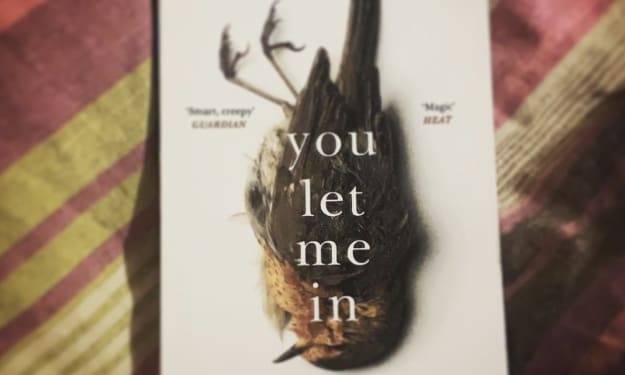
Book Review: "You Let Me In" by Camilla Bruce
If you know me then you also know that I absolutely adore folk horror with all of my heart and more. Not just the Faustian Pact we see in the play by Christopher Marlowe and Goethe’s iconic masterpiece. But also more modern books such as: “Bellman and Black” by Diane Setterfield, “A Cosmology of Monsters” by Shaun Hamill, the modern masterpiece “Tyll” by Daniel Kehlmann and there are many more. Folk horror, I am proud to say, is making a very special comeback amongst the film scene with the films of Ari Aster becoming ever more popular and ever more folkloric, and I can only hope that this spills over into literature and we get a flood of folk horror because I will have so much more to read. Just imagine me as an anime character with those big massive heart eyes and that is pretty much what I will look like. But now you’re going to probably ask: what is folk horror? Folk horror is simple. It takes folkloric archetypes such as fairies, magic beings, faustian pacts, etc. and works them into the real world, creating a disturbing mix between the real and unreal. This is exactly what “You Let Me In” by Camilla Bruce does as well. And it does it so well that I almost put the book back down it was that repulsive.
By Annie Kapur5 years ago in Geeks
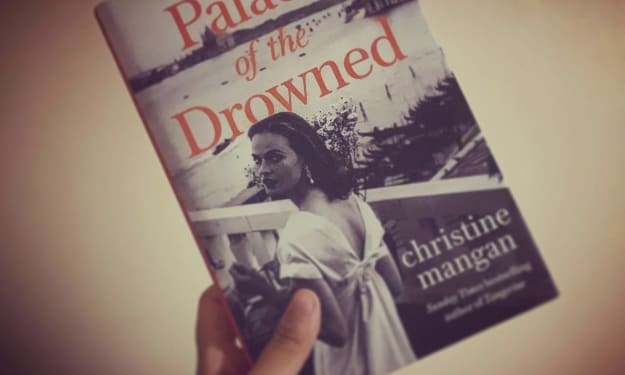
Book Review: "Palace of the Drowned" by Christine Mangan
When it comes to literature about or set in Italy, there are many that I have read. There is a beautiful book about the Medici by Christopher Hibbert - quite a prolific writer of some of the most incredible cities and times in the world including the French Revolution. There is also an amazing book by the late and legendary author Jan Morris entitled “Venice”. It has to be the greatest book I have ever read about the city and in the top five I have ever read about or set in Italy - it is a vibrant, historical and near-perfect guide to the history and culture of such an exquisite place. There are a number of others including obviously “Innocence” by Penelope Fitzgerald, “Hannibal” by Thomas Harris and also the strange and horrific “Monster of Florence” which is a nonfiction novel by Douglas Preston and Mario Spezi - based on the true story of a serial killer that terrorised Florence some time ago.
By Annie Kapur5 years ago in Geeks
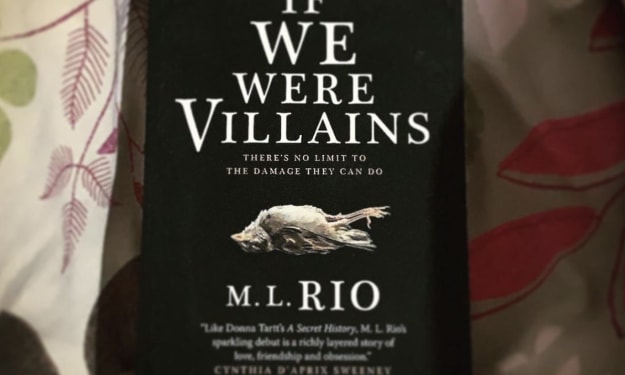
Book Review: "If We Were Villains" by M.L Rio
Shakespeare has always been a great inspiration to me. I have numerous posters of him on my bedroom walls and I own many many books and secondary sources on Shakespeare. Studying him for years dating from the age of twelve all the way through to being twenty-three then continuing my studies into Shakespeare on my own has been one hell of a ride. To this day, re-reading “Richard II” and “Richard III” (two of my favourite plays), I have been discovering new things after more than ten years of research. One thing I always love is when a writer entwines the principles, themes, words and characters of Shakespeare with their own work. It shows not only an appreciation and an understanding, but I love reading about how the writer has interpreted the text and obviously, I absolutely adored this one by ML Rio.
By Annie Kapur5 years ago in Geeks
The Importance of Reading "The Gulag Archipelago”
When it comes to reading in the 20th century, many people think of the main few authors: Virginia Woolf, F. Scott Fitzgerald and probably Nabokov and Kerouac if we are being a little bit out there. But very rarely do I hear anybody speak of Aleksandr Solzhenitsyn’s famed literary experimental biography, part investigative journalism and part historical consciousness narrative - “The Gulag Archipelago”. In our modern times, it is probably one of the most important texts if we wanted to learn about the failings of a state and government towards its people, and in hindsight we can all say ‘well, they could have done A, B and C differently…’ but Aleksandr Solzhenitsyn gives us a whole new view on this. Instead of hindsight of what could have been done differently, Solzhenitsyn tells us, ‘this is what happened, this is why it happened…’ complete with outcomes in the midst which may have been considered to our own audience to be counterproductive to revolution such as: the brainwashing and Stockholm syndrome of the prisoners and the way in which many simply accepted their fate - finally, Aleksandr Solzhenitsyn ends on the ‘here is what the history books, films and criticisms of the empire will not tell you…’ thus rendering all of our hindsight opinions pretty much useless when attempted to be used in action.
By Annie Kapur5 years ago in Geeks
The Three Strangers: a story by Thomas Hardy
“The Three Strangers” is one of the stories included in Thomas Hardy’s collection of “Wessex Tales”, originally published in 1888, but the story first appeared on its own in “Longman’s Magazine” and bears the date of March 1883. Its first readers in Hardy’s native Dorset would have been well aware of the hard times then being experienced in the rural areas and would therefore have related sympathetically to the conditions hinted at in the story, which was set in the 1820s during a similar period of agricultural distress.
By John Welford5 years ago in Geeks
Book Review: "The Forever Home" by Sue Watson
I have a guilty pleasure for social thrillers. Thrillers in which a couple is undergoing a huge amount of changes and both of them have some sort of sociopathic behaviours going on. It is wonderful to see what the next writer does with this set up because there is always, and I mean always, something new and different to read within the sub-genre. There are all kinds of different elements that have their own standing within these novels too. Elements such as: horror, drama, tragedy, violence, romance, action and even at times there is a bit of comic relief thrown in there to lighten the mood a little. But, there is always a mix - it is never just a thriller. I used to have a friend who judged me harshly for reading this books because I am a literature graduate, I was supposed to read ‘smart books’ and ‘classics’ and not ‘chick flick thrillers’. I called it nonsense and carried on reading them because I enjoy them. It’s nice to get away for a bit into someone else’s world and read about a troubled marriage with so many problems unfolding. It’s like spying on and gossiping about a relationship that doesn’t exist. Sue Watson’s “Forever Home” brings something incredibly exciting to the genre - a couple that works on the realms of television who are now experiencing many problems behind the scenes, and the secrets are beginning to seep out.
By Annie Kapur5 years ago in Geeks
The Reeve's Tale, by Geoffrey Chaucer
The Reeve’s Tale follows immediately after the Miller’s Tale in Chaucer’s Canterbury Tales, and is told as a rejoinder to it. A reeve, in medieval society, was in the pay of the lord of the manor, responsible for seeing that the lord’s crops and animals were looked after. Under the feudal system, the villagers were required to work partly on the lord’s land, or offer a portion of their professional services, for no return other than the lord’s protection and access to his court of justice. The reeve acted as the lord’s enforcer to make sure that this work was done properly, and he was therefore unlikely to be a popular character.
By John Welford5 years ago in Geeks
Book Review: "Bellman and Black" by Diane Setterfield
The Modern Gothic is a difficult genre to write in seeing as it is one of the most written genres of the 20th and 21st centuries. Novels by Shirley Jackson and Stephen King have often been cited as the greats of their time. Daphne Du Maurier, Anne Rice and Susan Hill are the women who took it over in the mid-century most notably considering Du Maurier’s friendship with Sir Alfred Hitchcock by which her books “Rebecca”, “The Birds” and “Jamaica Inn” were made into films. But, as women took over the modern gothic, we arrive back to one of the greatest writers of all time - Shirley Jackson. The atmospheric gothic being set up by her adept method at portraying psychological horror, her method has been copied by many authors throughout our own time. One of these authors who uses Shirley Jackson’s methods successfully is Diane Setterfield. In her book “Bellman and Black”, she blends together the past and present in this modern gothic to present her reader with a clashing of time periods. The old representing the terrifying past from which the protagonist tries to run away from and the new in which they are constantly paranoid that the past will come back for them. A lot like the predicament Nellie finds herself in within “The Haunting of Hill House”, this book “Bellman and Black” has a protagonist on the verge of a nervous breakdown because of some moves that may prove fatal.
By Annie Kapur5 years ago in Geeks