
"Hard Times", a novel by Charles Dickens
A summary of the plot

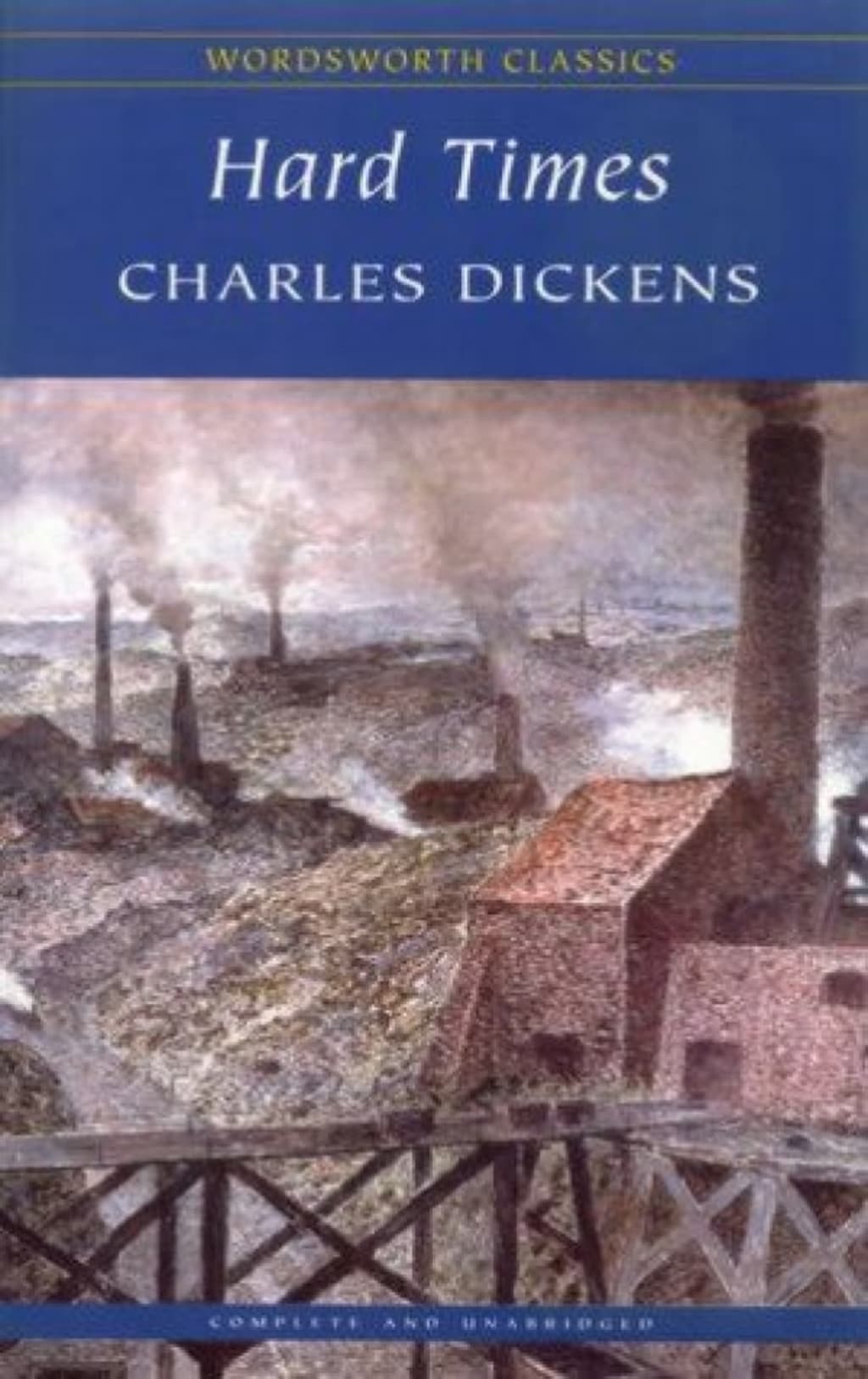
Hard Times, the tenth novel by Charles Dickens, has two notable claims to fame; not only is it Dickens’s shortest novel but it is also the only one set entirely outside London.
Hard Times has never been one of his most popular novels, but it brings to the fore many of the themes that occupied Dickens throughout his life, particularly education, industrial conditions and the right of people of all classes to enjoy life.
The story is set in the fictional “Coketown”, which is widely accepted as being modelled on the Lancashire town of Preston, which had been visited by Dickens not long before he began work on the novel. The similarity of the name with that of the Leicestershire town of Coalville is purely coincidental.
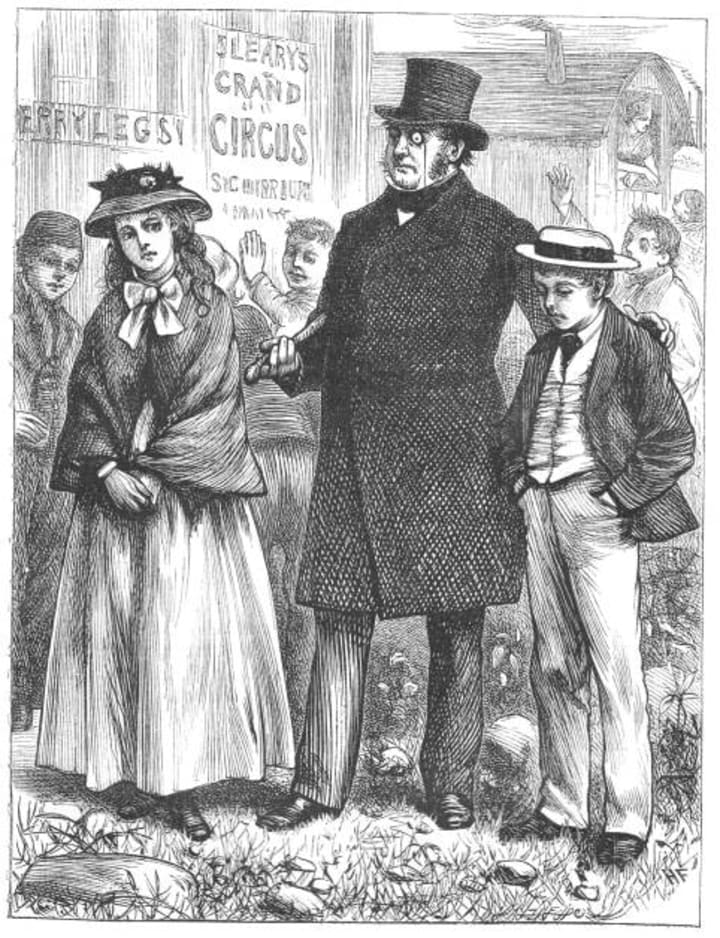
The book opens in a school run by Mr Gradgrind, whose educational philosophy, based on Utilitarianism, is that only facts matter, and life is to be endured not enjoyed. The world of the school and the factory is brought into sharp focus by that of the circus, to which Sissy Jupe, one of Gradgrind’s pupils, belongs. Gradgrind is mortified to find his own two eldest children peering under the flap of the circus tent to experience a world that has been withheld from them until now. Sissy is forced to choose between the life of the circus or gaining an education, and she chooses the latter.
Louisa Gradgrind, his daughter, agrees to marry Josiah Bounderby, the “self made man” who owns the factory and the bank. Gradgrind’s aim is to cement an alliance between the two families which will help Louisa’s brother Tom to advance in life.
Stephen Blackpool, one of the factory “hands”, is the victim of a loveless marriage but in love with a woman named Rachel. When the factory workers go on strike, Stephen refuses to join the strike and is spurned by his fellow workers. He is also fired by Bounderby and falsely accused of the bank robbery that has just occurred. He dies when he falls down a mine shaft just as he is about to clear his name.
Louisa’s marriage is unhappy and she is preyed upon by the worthless idler James Harthouse. However, she refuses to accept his advances and goes to her father’s house where she accuses him of having deprived her of a normal childhood that would have allowed her to develop emotionally. Bounderby has been told that Louisa is about to elope with Harthouse, and goes to Gradgrind’s house, where he offers Louisa an ultimatum of either returning to him or waving her marriage goodbye. Not surprisingly, she welcomes the opportunity to turn her back on Bounderby. Sissy, who has given moral support to both Louisa and Rachel, is able to get Harthouse to abandon his quest for Louisa.
Louisa suspects that Tom was behind the bank robbery, and for implicating Stephen Blackpool. Sissy had also suspected Tom, and sends him off to hide at the circus. The circus folk, unaware of Tom’s guilt, are able to arrange for Tom to escape to Liverpool and take a ship to America.
Bounderby loses his money in speculation and dies in the street. Gradgrind abandons his Utilitarianism, and Louisa continues to live a loveless life. The only happy ending is for Sissy, who has children of her own who are not deprived of love or enjoyment as they grow up.
There are a number of interesting sidelights in the novel on various aspects of Victorian life. One such is the question of divorce, which was virtually impossible for anyone without money. At the time that Hard Times was being written (it appeared in twenty weekly parts from April to August 1854), a Bill on divorce was going through Parliament but it failed to become law.
Dickens’s own marriage was becoming increasingly strained at this time and separation was to follow only four years later. Dickens, like Stephen Blackpool, was never able to divorce his wife and marry the woman he loved.
About the Creator
John Welford
John was a retired librarian, having spent most of his career in academic and industrial libraries.
He wrote on a number of subjects and also wrote stories as a member of the "Hinckley Scribblers".
Unfortunately John died in early July.
Keep reading
More stories from John Welford and writers in Geeks and other communities.
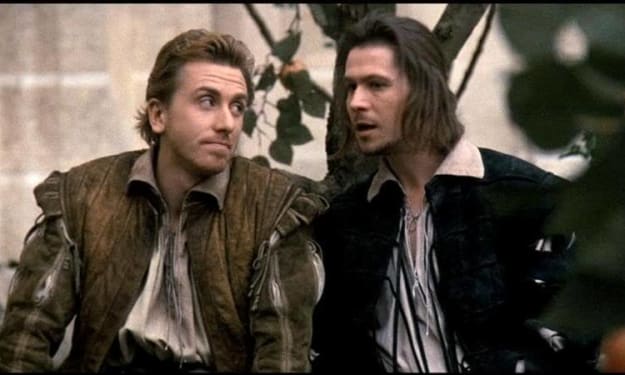
"Rosencrantz and Guildenstern are Dead", a play by Tom Stoppard
Tom Stoppard took the title of his 1966 play from a line towards the end of Shakespeare’s “Hamlet”. All the main characters are dead, which leaves the concluding lines to be spoken by Hamlet’s friend Horatio and the Norwegian general Fortinbras. An ambassador from England announces that he has come too late to tell the Danish king that his orders have been obeyed and that “Rosencrantz and Guildenstern are dead”.
By John Welford5 years ago in Geeks
The Politics of Playing Dress-Up
Well, to start off I'd like to say a happy world book day to all who celebrate. I know I haven't really posted anything on my socials about it but I'm not a jubilant kind of person. I lay low most of the time. Let's start off with a popular anecdote from the vaults...
By Annie Kapur5 days ago in Geeks
Squirtle Exposed: The Tiny Water Pokémon That Makes a Big Splash in Every Battle
Squirtle is one of the most beloved and iconic starter Pokémon in the franchise, offering a perfect blend of charm, strategic depth, and adaptability. As the Water-type counterpart in the original Kanto starter lineup, Squirtle has captured the imagination of trainers for decades. Its small size and approachable design conceal its potential for incredible power and tactical versatility, making it an essential choice for beginners and competitive players alike.
By Lukáš Hrdličkaabout 19 hours ago in Geeks


Comments
There are no comments for this story
Be the first to respond and start the conversation.