
Pennhurst State School and Hospital
Why It's Shifty (Week 29)

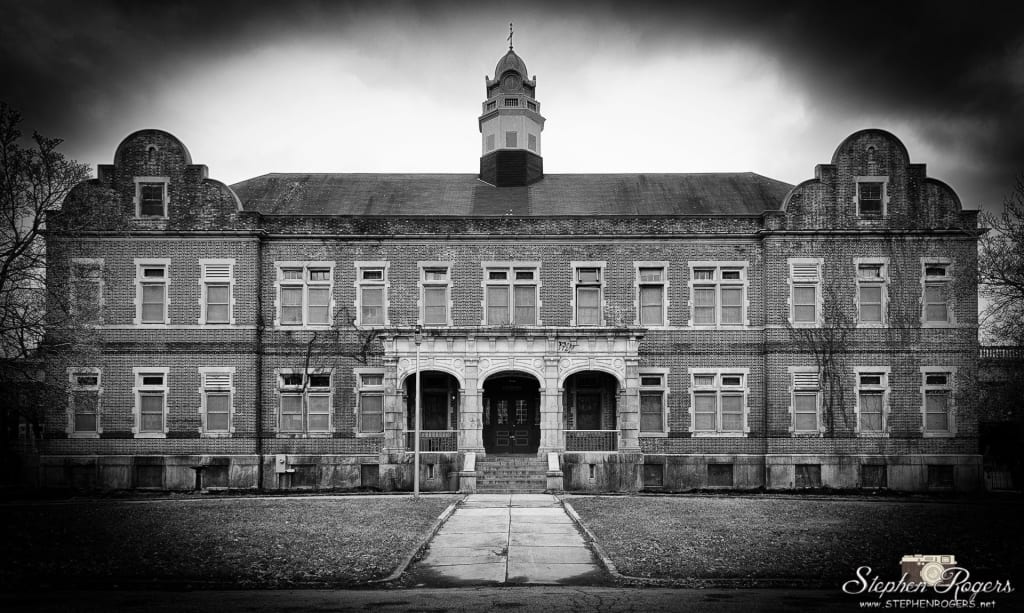
Welcome to this week's episode of 'Why It's Shifty' and today we're looking at the Pennhurst State School and Hospital. For those of you who are interested, the Pennhurst Asylum was basically one of the worst things that has happened to the mentally ill and the intellectually disabled in the history of the western world. Some of the details of what happened during the stays of people at this hospital are distressing and so, reader discretion is advised.
Plot
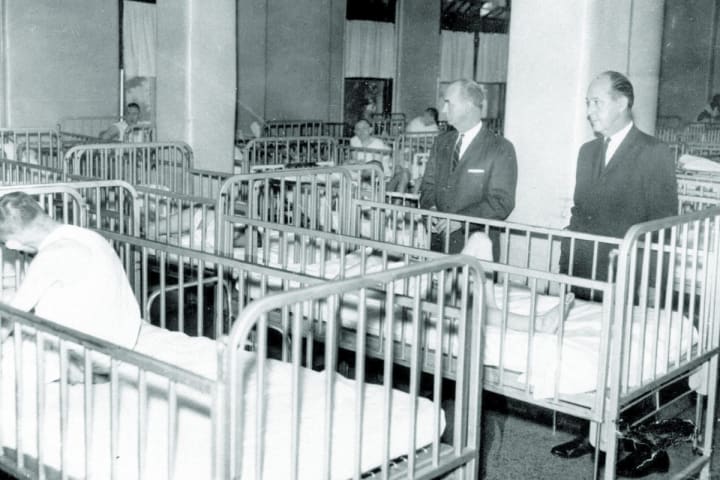
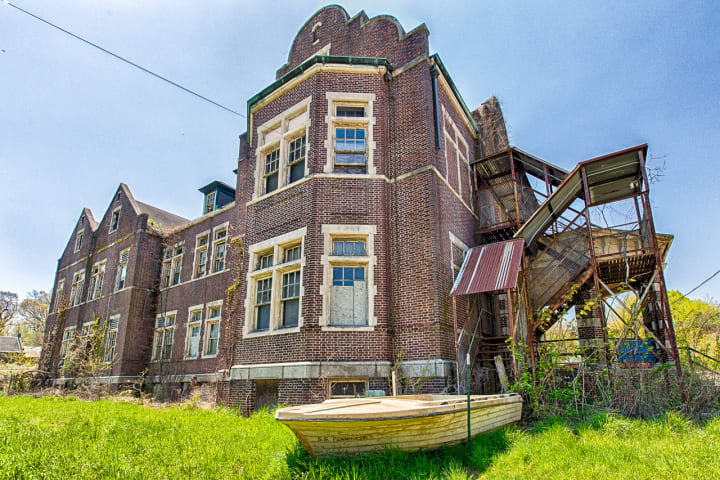
Pennhurst State School and Hospital, located in Spring City, Pennsylvania, was a state-run institution originally opened in 1908 as the Eastern Pennsylvania State Institution for the Feeble-Minded and Epileptic. Its purpose was to house and care for individuals with intellectual and developmental disabilities, though it quickly became notorious for overcrowding, neglect, and systemic abuse.
In its early years, Pennhurst reflected the eugenics-driven attitudes of the time. Residents were often institutionalised not only due to disability but also because of perceived social deviance or poverty. Medical care, education, and social development were severely lacking. Staff were overburdened, undertrained, and in many cases indifferent or cruel. The institution grew to house over 3,000 residents despite its capacity being far lower.
By the mid-20th century, conditions had deteriorated significantly. Reports surfaced of patients being subjected to inhumane treatment, including physical abuse, unnecessary restraint, and long-term isolation. Basic needs such as hygiene, nutrition, and medical care were routinely neglected. The facilities were dilapidated, and residents were often left naked, underfed, and ignored.
The turning point came in the late 1960s and 1970s, when investigative journalist Bill Baldini aired a five-part exposé titled Suffer the Little Children, which shocked the public. His report, combined with subsequent lawsuits and testimonies, revealed a deeply broken system. One landmark legal case, Halderman v. Pennhurst State School and Hospital (1974), led to a ruling that residents had a constitutional right to appropriate care and education in the least restrictive environment.
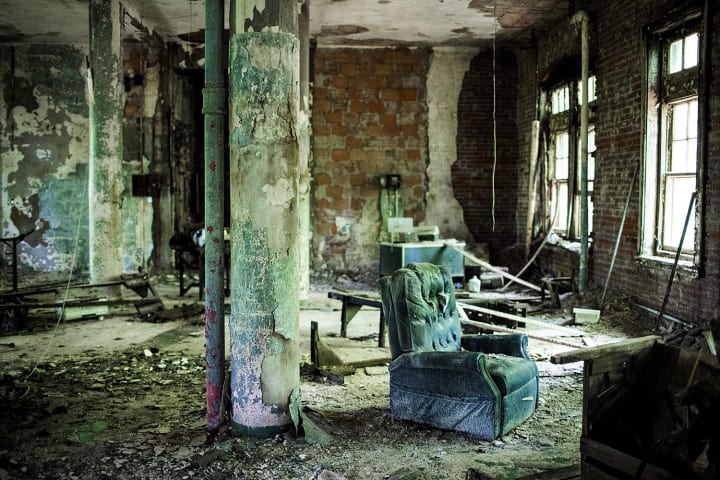
Pennhurst officially closed in 1987, public opinion had shifted. Many former residents were transferred to smaller, supported living environments. The abandoned building has since been thought to be haunted. This caused it to be converted into an attraction.
Visitors and staff have claimed to experience a wide range of paranormal phenomena. These include unexplained voices, shadowy figures, footsteps in empty corridors, sudden cold spots, and objects moving on their own. One of the most commonly reported occurrences is the sound of children crying, despite the buildings being long deserted. Some investigators claim to have captured EVP recordings with voices saying things like “help me” or “why are you here?”
The most haunted areas are said to be the Quaker Building and the Mayflower Building. The Quaker Building, which once housed violent or severely disabled patients, is associated with feelings of intense dread and physical sensations like being pushed or scratched. The basement, where restraints and isolation rooms were located, is particularly notorious.
Many believe that the spirits haunting Pennhurst are those of former residents who suffered abuse, neglect, or died within its walls. Some psychics and paranormal researchers have claimed to make contact with spirits who express confusion, sadness, or anger, possibly reflecting the trauma endured during their lifetimes.
Into the Theories
Residual Energy:
The residual energy theory suggests that the traumatic events which occurred at Pennhurst left behind a psychic imprint on the environment. According to this belief, intense emotional or physical suffering such as, that experienced by many of the residents, can become “recorded” in the walls of buildings.
These impressions may then replay like a loop, causing sightings, sounds, and sensations that appear ghostly. People often report hearing screams, crying, or footsteps, but these hauntings tend not to interact with the living, supporting the idea of a non-conscious echo rather than intelligent spirits.
Supporters of this theory point to the long history of abuse, isolation, and fear at Pennhurst, claiming that the overwhelming negativity has permeated the atmosphere.
Spirit Attachment:
The spirit attachment theory posits that the souls of former residents remain bound to the site due to unresolved trauma, confusion, or a lack of closure. Many of Pennhurst’s patients died in conditions of neglect or despair, often without family, support, or adequate medical care. According to this theory, such spirits may not realise they are dead, or may refuse to move on due to fear, anger, or unfinished emotional business.
Paranormal investigators have reported intelligent hauntings, where entities respond to questions or appear to interact with the living. Objects move, voices are heard answering investigators, and shadow figures seem to watch from corners and this is evidence, believers argue, of conscious spirits trapped between worlds.
Collective Psychological Projection:
This theory suggests that Pennhurst’s hauntings are not the result of supernatural activity, but rather of collective psychological projection, where powerful expectations and emotions create the illusion of paranormal events.
Pennhurst’s grim history and decaying architecture naturally evoke fear, sadness, and unease. When people enter the space already convinced of its haunted reputation, they may interpret ordinary occurrences: creaking floorboards, drafts, or their own heightened anxiety, as evidence of ghosts.
In high-stress or suggestive environments, the human brain can play tricks, generating hallucinations, feelings of being watched, or misinterpreting sensory information. The more infamous a site becomes, the more likely people are to "see" what they expect.
Why It's Shifty
Well, there's no wonder about why it's shifty. I want to be respectful when I say this, there is probably no actual haunting going on here but actually instead, it's a bunch of people who feel terrible about what happened in this place. The disabled were kept like animals (actually, they were kept worse than animals) and abused. The kinds of things I have read about this place are horrific, I haven't included it all because quite a bit of it upset me. Here's an underlying fact: the abuse people suffered here was no less than a crime against humanity.
Conclusion
This was pretty heavy. The more you research about this place, the darker it gets and I will leave it up to you to get into the details. Meanwhile, I hope you are waiting for next week and perhaps, I won't make it too heavy...
Next Week: The Lizzie Borden House
So much for 'not so heavy'...
About the Creator
Annie Kapur
I am:
🙋🏽♀️ Annie
📚 Avid Reader
📝 Reviewer and Commentator
🎓 Post-Grad Millennial (M.A)
***
I have:
📖 280K+ reads on Vocal
🫶🏼 Love for reading & research
🦋/X @AnnieWithBooks
***
🏡 UK
Keep reading
More stories from Annie Kapur and writers in Geeks and other communities.
Death in Venice by Thomas Mann
Death in Venice is a novella by the German auhor Thomas Mann (who appears somewhat on my list of greatest books with an entry titled Lotte in Weimar). It was originally published in 1912 under the name Der Tod in Venedig and it still stands as one of his most studied pieces. If you did not believe that Thomas Mann was a master of psychological insight before then you sure as hell will when reading this incredible, and slightly controversial, text. Mann had already become a big name in the literature world with the success of his novel Buddenbrooks written just over a decade before. Unlike his former novel, Death in Venice seems more like a study in decay - the decay of both the body and the spirit.
By Annie Kapur4 months ago in Geeks
Silver Screen Magic with Mae West
American actress and singer Mae West became a popular film actress during the Great Depression. She started entertaining in vaudeville, then performed on Broadway, and finally went to Hollywood. She signed up with Paramount Pictures and made her debut in the 1932 film “Night After Night.” She also starred in musicals, comedies, and crime dramas. The American Film Institute named her one of the best classic Hollywood actresses.
By Rasma Raisters6 days ago in Geeks



Comments (3)
Unfortunately, there is more than one asylum that has a history of inhumane treatment like this (although perhaps not as bad). Treatment of those suffering from mental illness has been horrible in the past and has come a long way, even though stigma still exists. Thank you for sharing your thoughts on this horrible place. It could definitely inspire a horror story or two, that's for sure.
The cruelty of human nature disgusts me... I'm so ashamed that these kind of things could happen (along many others). I don't know if places can be haunted or not, but I'm pretty sure the energy can get stuck. I work a lot in the area where millions of people died during the WWI in France and the energy is very heavy there. I didn't know first, I just felt so bad while I was there, then I was told and it made sense. I don't know if it's the actual knowledge of the history of the place and my mind makes it up... but we were working in the forest that was planted on WWI trenches and I felt so bad.It affected my mood and I often felt like I was watched, but not like when an animal is watching from the bush, like something larger was there. Maybe I just imagine... but I can understand how an abandoned asylum like this one could make people feel like it's haunted. I wouldn't be surprised if I'd come out from it feeling like I went a bit crazy just by being there.... It was a captivating read! I'm waiting for the next.
A heavy but really eye-opening read. You did a great job mixing the history with the ghost stories.