
Death in Venice by Thomas Mann
Why It's a Masterpiece (Week 81)

Death in Venice is a novella by the German auhor Thomas Mann (who appears somewhat on my list of greatest books with an entry titled Lotte in Weimar). It was originally published in 1912 under the name Der Tod in Venedig and it still stands as one of his most studied pieces. If you did not believe that Thomas Mann was a master of psychological insight before then you sure as hell will when reading this incredible, and slightly controversial, text. Mann had already become a big name in the literature world with the success of his novel Buddenbrooks written just over a decade before. Unlike his former novel, Death in Venice seems more like a study in decay - the decay of both the body and the spirit.
Mann's life was at a turning point during this period, he was definitely becoming more philosophical in his writings and was known to engage with writers such as Friedrich Nietzsche and Sigmund Freud. Nietzsche’s concepts of the Dionysian (pleasure, chaos) and the Apollonian (order, rationality) play a central role in the work, as Mann grapples with the conflict between reason and sensuality. Freud’s theories of repression and the unconscious mind also inform the psychological depth of the protagonist.
Thomas Mann's personal experiences fed into his writing of Death in Venice as in 1911, he travelled to the city with his family. It is here where he observed a Polish boy who became the foundational inspiration for the character of Tadzio. Desire and mortality seem to be two of the key themes in the text and were definitely influenced by the way in which Thomas Mann saw this Polish boy.
Plot
The book follows the story of Gustav von Aschenbach, an ageing and successful German writer, whose disciplined life begins to unravel during a fateful trip to Venice. Aschenbach, a man of high intellect and rigorous self-control, has long been celebrated for his literary achievements, which embody order, restraint, and the ideals of rationality.
At the novella’s beginning, Aschenbach experiences a moment of restlessness and dissatisfaction with his regimented life. Seeking inspiration and change, he decides to travel to Venice, a city renowned for its beauty and decadence. Upon arriving at the Lido, a fashionable resort area, Aschenbach is captivated by its picturesque atmosphere but soon finds himself fixating on a young Polish boy named Tadzio, who is staying at the same hotel with his family.
Tadzio embodies physical perfection and youthful beauty, and Aschenbach becomes increasingly obsessed with him. Thomas Mann’s descriptions of Tadzio are filled with mythological and aesthetic symbolism, portraying him as a living work of art, an ideal of beauty that transcends everything terrible in reality.
Aschenbach begins to follow Tadzio through Venice, watching him from a distance and deriving a perverse sense of artistic inspiration from the boy’s presence. This obsession marks a stark departure from Aschenbach’s formerly disciplined life, as he surrenders to irrational desires.
Meanwhile, Venice begins to descend into an eerie atmosphere of decay. A cholera epidemic spreads through the city, though the authorities attempt to suppress news of it to avoid panic among tourists. Aschenbach, aware of the danger but unwilling to leave Tadzio, remains in Venice, consumed by his fixation. The city’s physical decay mirrors Aschenbach’s moral and psychological decline as his obsession deepens.
In the novella’s final scenes, Aschenbach’s health deteriorates, and he becomes feverish and delirious. Watching Tadzio play on the beach one last time, Aschenbach sees the boy gesture toward the horizon, a moment laden with symbolic meaning, as if Tadzio is guiding him toward death. Moments later, Aschenbach collapses and dies, a victim of both the cholera epidemic and his own inner torment.
The novella concludes with Aschenbach’s death - the readers are left with all of the beauty and all of the destruction.
Into the Book
Within Death in Venice lies the tension between rationality and desire, a conflict that defines the protagonist, Gustav von Aschenbach. Aschenbach begins as a straight-up character of self-discipline and intellectual control, embodying the Apollonian ideals of reason and order.
His literary achievements are built on restraint and a rejection of sensual indulgence. However, his encounter with Tadzio represents the intrusion of the Dionysian (passion, chaos, and irrationality) into his life.
The author explores this theme through the gradual disintegration of Aschenbach’s character. Tadzio, described as a figure of “divine beauty,” becomes an object of obsession that undermines Aschenbach’s carefully constructed identity. The protagonist recognises the irrationality of his desires, yet he cannot resist them: “He knew that the abyss was already under him, that his love for the beautiful boy was bringing him to the brink of ruin.”
This conflict reflects Mann’s engagement with Nietzschean philosophy. The Apollonian (rationality and order) and Dionysian (sensual and spontaneous) forces within Aschenbach mirror the struggle between order and chaos. As Aschenbach succumbs to his passions, his moral and psychological decline accelerates, culminating in his death. Thomas Mann suggests that the suppression of desire can lead to its violent eruption, exposing the fragility of human control.
“Solitude gives birth to the original in us, to beauty unfamiliar and perilous - to poetry. But also, it gives birth to the opposite: to the perverse, the illicit, the absurd.”
- Death in Venice by Thomas Mann
Another key theme in Death in Venice is the nature of beauty and its potentially destructive power. For Aschenbach, Tadzio represents an ideal of beauty that transcends the physical world. Mann often describes Tadzio in mythological and artistic terms, comparing him to figures from Greek sculpture and classical mythology: “He was like a Greek statue, perfect in form and harmony.”
This idealisation of beauty becomes Aschenbach’s undoing. While Tadzio inspires a renewed sense of artistic wonder, this inspiration comes at a profound cost. Aschenbach’s obsession blinds him to reality, leading him to ignore the spreading cholera epidemic and his own deteriorating health. Beauty becomes both a source of inspiration and a force of destruction.
Mann’s exploration of beauty reflects its dual nature: it elevates the spirit but also seduces and corrupts. Aschenbach’s pursuit of Tadzio reflects the artist’s eternal struggle to capture perfection, even as the pursuit leads to personal ruin. The novella poses questions about the price of aesthetic ideals and the dangers of surrendering to beauty’s allure.
“Nothing is stranger or more ticklish than a relationship between people who know each other only by sight, who meet and observe each other daily - no hourly - and are nevertheless compelled to keep up the pose of an indifferent stranger, neither greeting nor addressing each other, whether out of etiquette or their own whim.”
- Death in Venice by Thomas Mann
The themes of decay and mortality permeate Death in Venice, underscoring the futility of beauty and life itself. Venice, with its crumbling architecture and hidden cholera epidemic, serves as a powerful symbol of physical and moral decline. Mann describes the city in evocative detail, portraying it as a place of “rotting splendour” that mirrors Aschenbach’s inner disintegration.
The juxtaposition of beauty and decay is central to the novella’s imagery. Tadzio, as a symbol of youthful perfection, contrasts sharply with the sickness spreading through the city and Aschenbach’s ageing body. This contrast highlights the inevitability of mortality, even in the presence of ideal beauty. Aschenbach himself is acutely aware of his declining health, yet he refuses to leave Venice, clinging to his doomed pursuit of Tadzio.
Mann’s depiction of Venice’s decay serves as a reminder of the transience of human existence. Aschenbach’s death on the beach, while gazing at Tadzio, reinforces the novella’s theme of mortality.
In his final moments, beauty and death become inseparable, suggesting that the pursuit of aesthetic perfection can lead to self-destruction.
“A lonely, quiet person has observations and experiences that are at once both more indistinct and more penetrating than those of one more gregarious; his thoughts are weightier, stranger, and never without a tinge of sadness. . . . Loneliness fosters that which is original, daringly and bewilderingly beautiful, poetic. But loneliness also fosters that which is perverse, incongruous, absurd, forbidden.”
- Death in Venice by Thomas Mann
Why It's a Masterpiece
Death in Venice is widely regarded as a masterpiece for its profound psychological insight, rich symbolism, and philosophical depth. Thomas Mann’s exploration of universal themes, such as: the conflict between reason and desire, the nature of beauty, and the inevitability of mortality connects with most of humanity's own struggles. The author's elegant and precise prose, combined with its evocative imagery, elevates it to the level of high art - a beauty and chaos all of its own.
One of the key reasons for its ability to endure is Mann’s ability to blend personal experience with broader philosophical concerns. Drawing on Nietzschean ideas of the Apollonian and Dionysian, as well as Freudian concepts of repression, Mann creates a character in Gustav von Aschenbach who embodies the contradictions of human nature. His descent into obsession is both tragic and relatable, capturing the fragility of self-control in the face of overwhelming desire.
The book's setting in Venice adds to its mystery and beauty, with the city’s decaying aesthetics reflecting the themes of decline and mortality. Mann’s use of mythological allusions and classical references enriches the narrative, offering layers of meaning for readers to uncover as the story continues on.
Conclusion
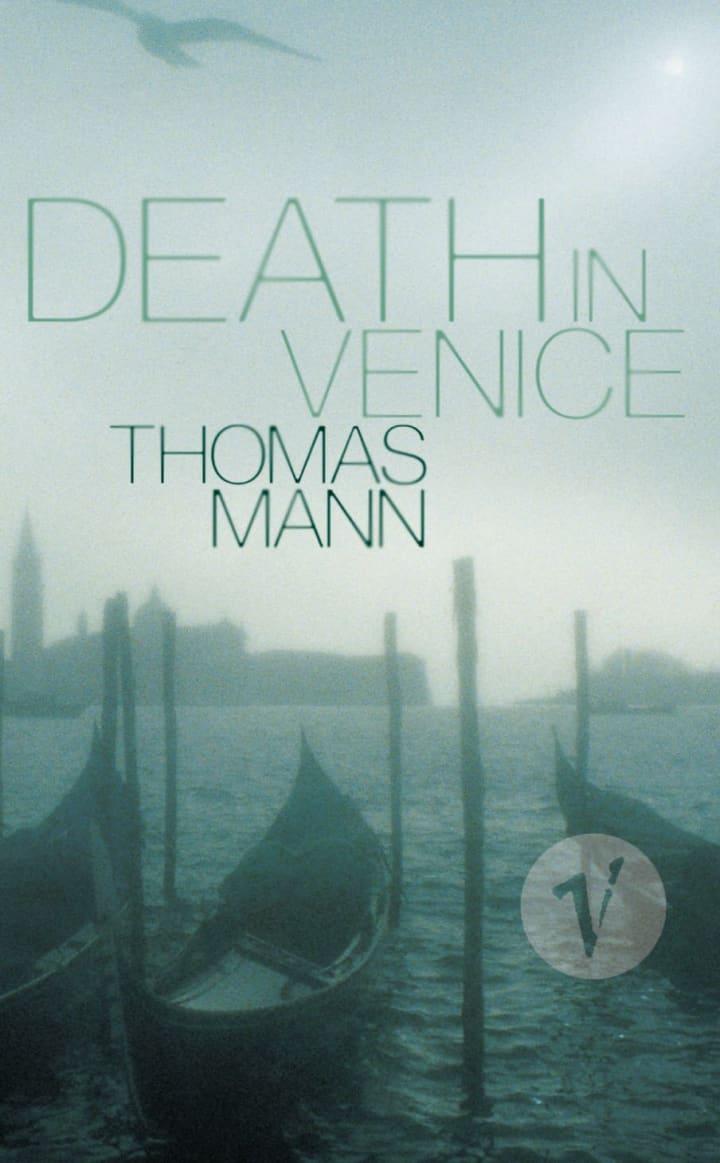
Death in Venice is one of the great novels of the Western World, even though it is perhaps just as controversial as the novel Lolita by Vladimir Nabokov. I have often enjoyed the way in which the book itself depicts a story deteriorating before our eyes and, for the fact it is written so beautifully, it becomes a physical representation of its own main theme: beauty and destruction through chaos.
Next Week: Les Grand Meaulnes by Alain-Fournier
About the Creator
Annie Kapur
I am:
🙋🏽♀️ Annie
📚 Avid Reader
📝 Reviewer and Commentator
🎓 Post-Grad Millennial (M.A)
***
I have:
📖 280K+ reads on Vocal
🫶🏼 Love for reading & research
🦋/X @AnnieWithBooks
***
🏡 UK
Keep reading
More stories from Annie Kapur and writers in Geeks and other communities.
Book Review: "Glamorous Notions" by Megan Chance
So I'm back to reading some books on my phone (which is why you won't find a 'photograph taken by me' on the front seeing as I take the photos with my phone and well, I simply can't do it). One of the books I got was called Glamorous Notions which, I know, doesn't look like my kind of book at all. I tend to avoid the whole 'Hollywood inspired vapid espionage book' altogether. But I have to say that this one, with its frequent flashbacks and the hidden past of the protagonist which slowly gets unfolded, makes for a genuinely interesting read. So, even though I perhaps wasn't fully on board with it - I definitely enjoyed it enough to feature it here with (I might add) a pretty good score...
By Annie Kapur4 months ago in Geeks
Silver Screen Magic with Mae West
American actress and singer Mae West became a popular film actress during the Great Depression. She started entertaining in vaudeville, then performed on Broadway, and finally went to Hollywood. She signed up with Paramount Pictures and made her debut in the 1932 film “Night After Night.” She also starred in musicals, comedies, and crime dramas. The American Film Institute named her one of the best classic Hollywood actresses.
By Rasma Raisters5 days ago in Geeks
How to Watch Premier League?
The crown jewel of English football, Premier League soccer is back. The most- watched sports league in the world features 20 of UK’s best football clubs. Here are some of the ways you can watch and stream the 2025-26 season of Premier League. Don’t miss a match day.
By David Cook3 days ago in Geeks



Comments (1)
I read the Heim translation, and I think that this is one of the best stories about obsession ever written. Thank you for this, and I have my copy of Les Grand Meaulnes posed on my shelf.