
Nostromo by Joseph Conrad
Why It's a Masterpiece (Week 77)

Published in 1904, Joseph Conrad’s Nostromo: A Tale of the Seaboard is a complex novel exploring themes of imperialism, greed, and moral ambiguity. Conrad was inspired by his experiences as a merchant seaman and his fascination with Latin America, particularly its tumultuous political landscape and the exploitative practices of European powers. The novel reflects his interest in the effects of imperialism on both individuals and nations, as well as his exploration of human nature under the pressures of ambition and power.
Set in the fictional South American republic of Costaguana, Nostromo was initially serialised in T.P.’s Weekly before its publication in book form by Harper and Brothers in the United States and Methuen in the United Kingdom. The title refers to the novel’s central figure, an enigmatic Italian sailor whose name means “our man,” symbolising his initial role as a trusted servant to the European elite.
Plot
Nostromo is set in the fictional South American republic of Costaguana, a volatile nation plagued by political corruption and foreign exploitation. The novel centres on the rich silver mine of Sulaco, owned by Charles Gould, an Englishman who becomes obsessed with preserving its profitability despite the chaos surrounding him. Gould views the mine as a beacon of progress but remains blind to its role in fuelling greed and conflict.
The narrative opens with a political upheaval threatening to destabilise the country. Gould allies himself with European financiers to protect the mine, inadvertently inviting foreign interference. As the rebellion grows, Gould entrusts Nostromo, a charismatic Italian foreman famed for his integrity and resourcefulness, with the task of smuggling the mine’s silver out of Sulaco to prevent its seizure by revolutionary forces.
Nostromo successfully hides the treasure on a remote island but finds himself increasingly isolated and morally compromised. While others continue to see him as an incorruptible hero, he becomes consumed by greed and a desire for recognition. The silver, which represents both opportunity and corruption, exerts a destructive influence on everyone it touches.
Meanwhile, Costaguana descends further into chaos, with competing factions vying for power. Decoud, a journalist aiding Gould’s cause, commits suicide after succumbing to despair over the futility of their efforts. Nostromo’s downfall is marked by his estrangement from the community he once served and his secret obsession with the hidden silver. His attempt to claim the treasure leads to his untimely death, ironically caused by his own actions being misunderstood.
Into the Book

The Corrupting Power of Wealth:
The central theme of Nostromo is the corrupting power of wealth, epitomised by the silver mine of Sulaco. Initially seen as a force for progress, the mine becomes a symbol of human greed and the destruction it causes. Gould, who seeks to use the mine to stabilise Costaguana, becomes consumed by his obsession, neglecting his moral values and his wife, Emilia. His belief that the silver can bring order to chaos ironically fuels the very instability he wishes to combat.
Nostromo, initially an idealistic figure, falls victim to the allure of wealth. The silver, hidden on the island, becomes his obsession, leading him to betray his own principles. Conrad writes, “The incorruptible Nostromo had been the man of the people, and now the treasure had made him the man of nothing.” The mine’s influence poisons everyone it touches, demonstrating Conrad’s belief in the moral degradation caused by the pursuit of material wealth.
“There is no peace and no rest in the development of material interests. They have their law, and their justice. But it is founded on expediency, and is inhuman; it is without rectitude, without the continuity and the force that can be found only in a moral principle.”
- Nostromo by Joseph Conrad
The Exploitation of Latin America:
Nostromo critiques the imperialist exploitation of Latin America, depicting Costaguana as a country ravaged by foreign interests. European and American investors treat the nation as a resource to be exploited, disregarding its people and culture. The mine serves as a microcosm of imperialist greed, where the interests of a few powerful individuals dictate the fate of an entire country.
Conrad’s portrayal of the working-class characters, such as the dock workers and indigenous labourers, highlights the human cost of imperialism. These characters remain voiceless and powerless, used as tools in the struggles of wealthier factions. The novel’s intricate depiction of Costaguana’s political landscape underscores the devastating impact of foreign interference on local governance.
“He was ruined in every way, but a man possessed of passion is not a bankrupt in life.”
- Nostromo by Joseph Conrad
Psychological Isolation:
Conrad delves deeply into the psychological isolation of his characters, particularly Nostromo and Decoud. Both men find themselves alienated by their roles in the silver’s fate. Nostromo, idolised as a hero, is burdened by the community’s expectations and his secret knowledge of the treasure. His growing disillusionment reflects the moral ambiguity that pervades the novel.
Decoud’s descent into despair highlights the futility of idealistic ambitions in the face of systemic corruption. His ultimate act of suicide underscores the novel’s bleak perspective on human agency. Conrad’s use of shifting perspectives and complex characters reinforces the theme of moral ambiguity, leaving readers questioning the motivations and actions of each figure.
“Action is consolatory. It is the enemy of thought and the friend of flattering illusions. Only in the conduct of our action can we find the sense of mastery over the Fates.”
- Nostromo by Joseph Conrad
Why It's a Masterpiece
Nostromo is hailed as a masterpiece for its intricate narrative structure, profound themes, and psychological depth. Conrad’s ability to weave a complex, multi-layered story set in a vividly realised world has made it a cornerstone of modernist literature. The novel’s exploration of themes such as: the corrupting influence of wealth, the consequences of imperialism, and the complexities of human morality are often highlighted as one of its best qualities.
Conrad’s characters are neither wholly good nor evil, but deeply flawed and multifaceted. This realism elevates the novel above conventional adventure stories, offering a nuanced portrayal of human nature. Nostromo’s transformation from an admired hero to a tragic figure epitomises Conrad’s exploration of moral decay and the fragility of integrity.
The novel’s prose, though challenging, is celebrated for its lyrical beauty and philosophical depth. Conrad’s use of symbolism, particularly the silver mine as a representation of greed and destruction, is a testament to his literary genius. The political backdrop of Costaguana adds another layer of complexity, reflecting the socio-political dynamics of the early 20th century.
Conclusion
Conrad’s exploration of greed, power, and moral ambiguity continues to resonate in a world still grappling with the consequences of exploitation and inequality. The novel’s richly drawn characters and philosophical depth invite readers to reflect on the complexities of human ambition and the cost of progress. Nostromo can be imagined as a lesser known classic by a great writer which echoes themes and ideas in his more famed Heart of Darkness. However, it should definitely not be missed out by anyone exploring this section of literature.
Next Week: The Magician by W. Somerset Maugham
About the Creator
Annie Kapur
I am:
🙋🏽♀️ Annie
📚 Avid Reader
📝 Reviewer and Commentator
🎓 Post-Grad Millennial (M.A)
***
I have:
📖 280K+ reads on Vocal
🫶🏼 Love for reading & research
🦋/X @AnnieWithBooks
***
🏡 UK
Keep reading
More stories from Annie Kapur and writers in Geeks and other communities.
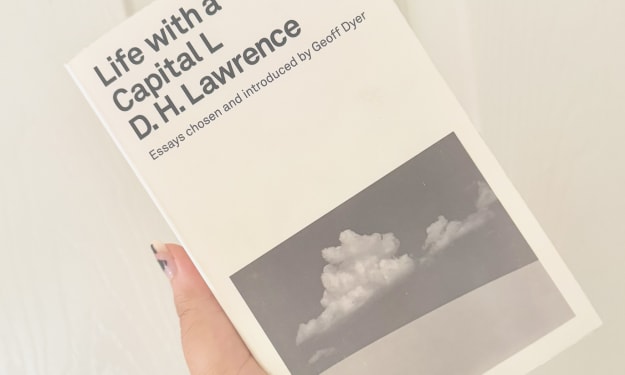
Book Review: "Life with a Capital L" by D.H Lawrence
“The best we can do is listen to the dark hound of Heaven, and start off into the dark of the unknown...” - D.H Lawrence Five years' ago I became pretty obsessed with the anthology book Life with a Capital L by D.H Lawrence. In this summer of re-reads, I've chosen to revisit this classic in a bit more depth. Sometimes, when we return to a book we can discover new things and, rethink things we've highlighted in the past. Most of the things I had highlighted in this book before were related to laughing at Lawrence's incredible wit and tone. I will reinstate this however, I do hope more people consider reading this book. Lawrence is a brilliant writer and his novels prove that, it's true - but this anthology really solidifies it as an undeniable fact.
By Annie Kapur5 months ago in Geeks
Silver Screen Magic with Mae West
American actress and singer Mae West became a popular film actress during the Great Depression. She started entertaining in vaudeville, then performed on Broadway, and finally went to Hollywood. She signed up with Paramount Pictures and made her debut in the 1932 film “Night After Night.” She also starred in musicals, comedies, and crime dramas. The American Film Institute named her one of the best classic Hollywood actresses.
By Rasma Raisters6 days ago in Geeks
Villainess Review: Amanda (Disturbing the Peace)
It's been a minute, or two, or three, since I've written a Villainess Review, though the year-end Top 10 lists centered on Lifetime film villainesses feel like a big two-part review. One of my big promises for 2026: the Villainess Reviews will be plentiful again. I don't have a set schedule for them; I never do. But there will be quite a bit on Vocal, as this April will mark my fifth anniversary of me actually doing this. Fittingly, my very first of almost 2000 stories on this site was a Villainess Review.
By Clyde E. Dawkins4 days ago in Geeks



Comments (1)
I have read many of the short stories, but this was missed. His longer novels await my attention and I thank you for the reminder. ⛵️