
Book Review: "Life with a Capital L" by D.H Lawrence
5/5 - a re-read of a fantastic anthology of prose...

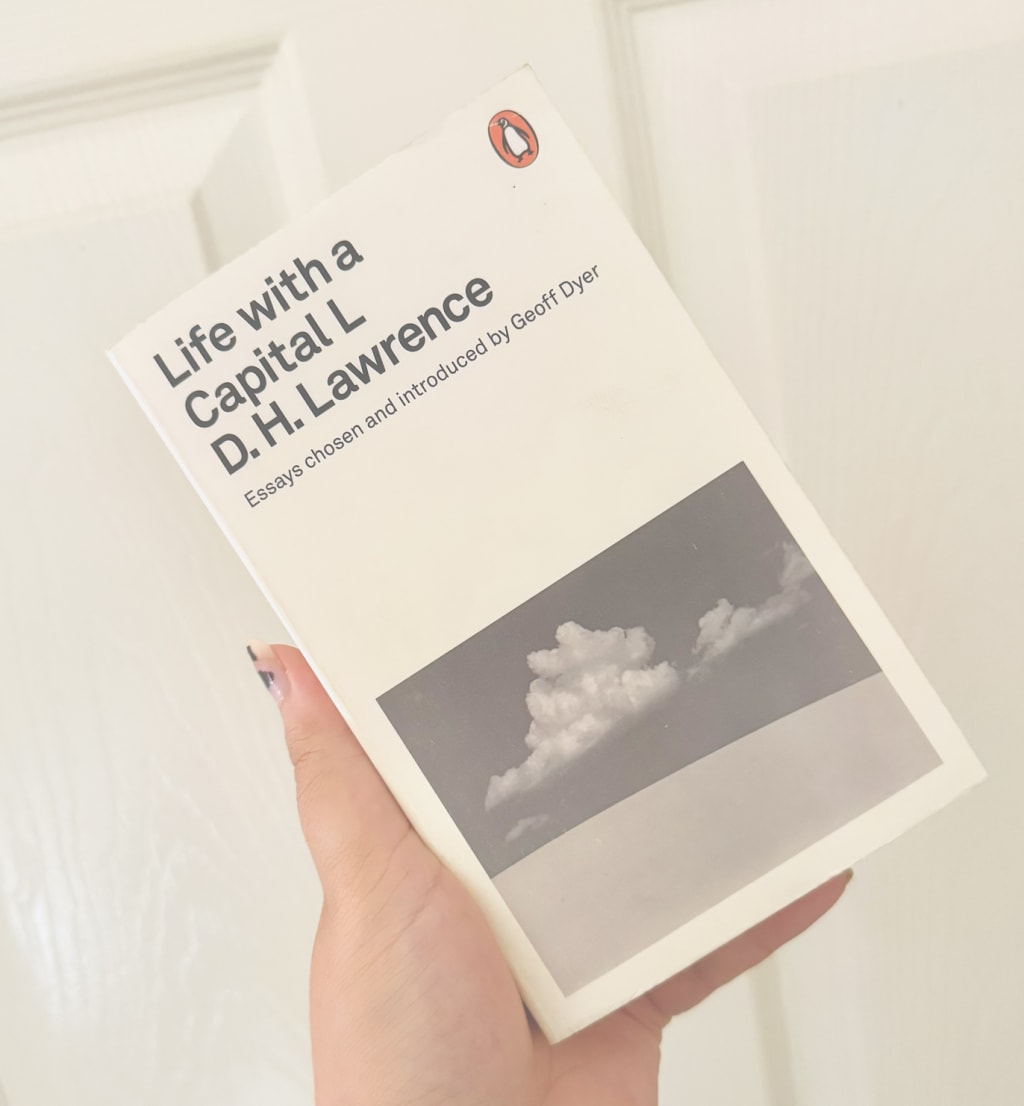
“The best we can do is listen to the dark hound of Heaven, and start off into the dark of the unknown...”
- D.H Lawrence
Five years' ago I became pretty obsessed with the anthology book Life with a Capital L by D.H Lawrence. In this summer of re-reads, I've chosen to revisit this classic in a bit more depth. Sometimes, when we return to a book we can discover new things and, rethink things we've highlighted in the past. Most of the things I had highlighted in this book before were related to laughing at Lawrence's incredible wit and tone. I will reinstate this however, I do hope more people consider reading this book. Lawrence is a brilliant writer and his novels prove that, it's true - but this anthology really solidifies it as an undeniable fact.
This book is edited by Geoff Dyer and he does a pretty great job of compiling Lawrence's most compelling essays and analysis. The pieces included range from early literary criticism and philosophical musings to travel writing, reflections on religion, and quirky nature observations. They are organised chronologically so the reader definitely gets to see the progression of Lawrence's writing sophistication and his experiments with tone and style.
This structure not only provides historical context but also enables the reader to witness Lawrence’s recurring obsessions from flesh and spirit to death, nature, art, and vitality. What emerges in this collection is not a linear manifesto but a restless, often contradictory series of dispatches from a mind always in motion. If you have any doubts about his mind and talents, then perhaps read about his life a bit more and I'm sure you will change your notions. A palette of his inmost philosophies and his spiritual panics, this book never fails to impress me with even the quietest of passages being tinged with his moral fights.
Nature, for Lawrence, isn’t simply scenery but an active, animate force pulsing with symbolic and emotional resonance. He treats the natural world, not with the detachment of a scientist, but with the reverence and intuition of a poet-priest. An incredible and often iconic structure of lines and thoughts, Lawrence allows the reader to enter his reflections on the natural world and see them for what they really are in an age where everything is becoming automatised. It comes out most in his travel sketches. Lawrence is always trying to feel more intensely, think more truthfully, and express more directly. And yes, his travel writing definitely resists the genre’s conventions, focusing less on geographic detail than on existential texture such as: the feel of Italy, the echo of the Andes and the strangeness of other people.
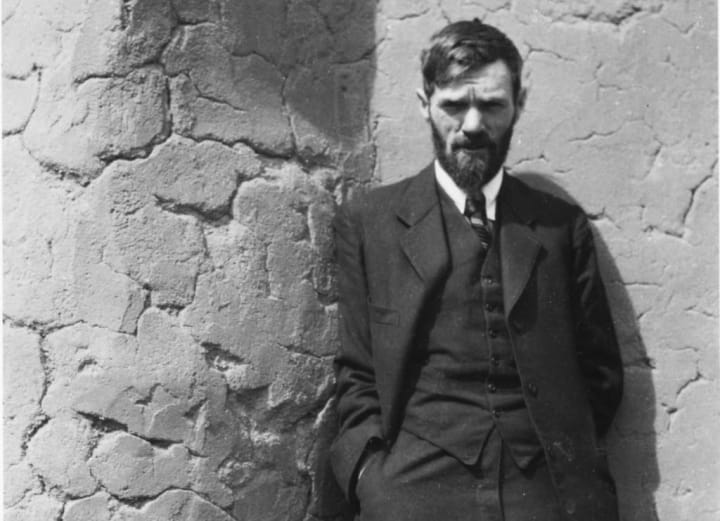
D.H Lawrence is a man of many writing talents. In one piece, he reflects on a crucifix nailed to a tree in the Alps, blending aesthetics, theology, and weather into a moving meditation on suffering and transcendence. In another, he contemplates the beauty of spring emerging amidst the pain of grief, showing how nature can both mirror and counter human sorrow. His descriptions upon human emotions are often not just accurate to our own feelings today, but they are entwined within extended metaphors and written within actual experiences. Both of these contribute to creating a fuller, more three-dimensional picture of the very emotions he is writing upon.
There are sketches of Indigenous dance rituals in New Mexico, where Lawrence marvels at the spiritual energy pulsing through communal performance, viewing it as something modern Europe has lost. To be honest, that was one of my favourite things to read within. A new experience, yes, but to D.H Lawrence it is also an image of humanity and its differences. How people have gained and lost certain aspects of their own humanity and, upon being A short essay on a porcupine’s death in the Rockies, meanwhile, reads like an allegorical poem, tender and unsettling, turning animal suffering into existential reflection. I cannot stress enough how much I am not into reading about animals having harm caused to them, but there was less Shooting an Elephant here than I realised. It was more of an introspective essay.
There are a number of religious essays and references, probably proving my point about the fact that we truly didn't know the man at all. His fiction works are one thing to go off yes, but especially after the trial, there seems to be a movement towards an inner-self we have not realised even today. But if there is one thing that D.H Lawrence doesn't offer, it is comfort. His risk to live openly almost cost him his entire livelihood and to this day, Lady Chatterley's Lover is still viewed by some as too sexually graphic. But, if D.H Lawrence has taught us anything it is that "there is no paradise"- so should it matter at all what others think?
About the Creator
Annie Kapur
I am:
🙋🏽♀️ Annie
📚 Avid Reader
📝 Reviewer and Commentator
🎓 Post-Grad Millennial (M.A)
***
I have:
📖 280K+ reads on Vocal
🫶🏼 Love for reading & research
🦋/X @AnnieWithBooks
***
🏡 UK
Keep reading
More stories from Annie Kapur and writers in Geeks and other communities.
Book Review: "Victory" by Joseph Conrad
I don't know how to tell you this, but this is my first time reading this one. Regardless of how long I've often spent pouring over Heart of Darkness, not matter how much effort I spent in my teens acquiring a nice copy of Lord Jim, I never even came across Victory. But whilst scrolling Twitter a few weeks back I saw that someone else had read it. The writing '...by Joseph Conrad' after the title was where I basically said that I was sold. Victory was a brilliant read and I hope that I can work this into my 'Why it's a Masterpiece' series soon.
By Annie Kapur5 months ago in Geeks
Silver Screen Magic with Mae West
American actress and singer Mae West became a popular film actress during the Great Depression. She started entertaining in vaudeville, then performed on Broadway, and finally went to Hollywood. She signed up with Paramount Pictures and made her debut in the 1932 film “Night After Night.” She also starred in musicals, comedies, and crime dramas. The American Film Institute named her one of the best classic Hollywood actresses.
By Rasma Raisters6 days ago in Geeks
The premiere of Tell Me Lies: Season 3: Release Date, New Characters, and Plot Changes
The Hulu drama "Tell Me Lies," which has captivated viewers with its unflinching examination of toxic relationships and the long-term effects of youthful choices, launched its "third season" on January 13, 2026, with the surprise release of its first three episodes. A surprise for fans, Hulu released three episodes instead of the two that had been expected. This set a tumultuous tone for a season that promises high stakes, emotional upheaval, and character conflict that gets worse.
By Raviha Imran6 days ago in Geeks
Miss Persephone's Manual to a Seemingly Ordinary Life
Miss Persephone was found at the dining table, her blue eyes swollen, her tears arriving and retreating like the tides of the ocean. Earlier that day, her family had visited her in the retirement home where she had lived for eight years. It was her eightieth birthday.
By Imola Tóth4 days ago in Fiction




Comments
There are no comments for this story
Be the first to respond and start the conversation.