
Mr Norris Changes Trains by Christopher Isherwood
Why It's a Masterpiece (Week 63)

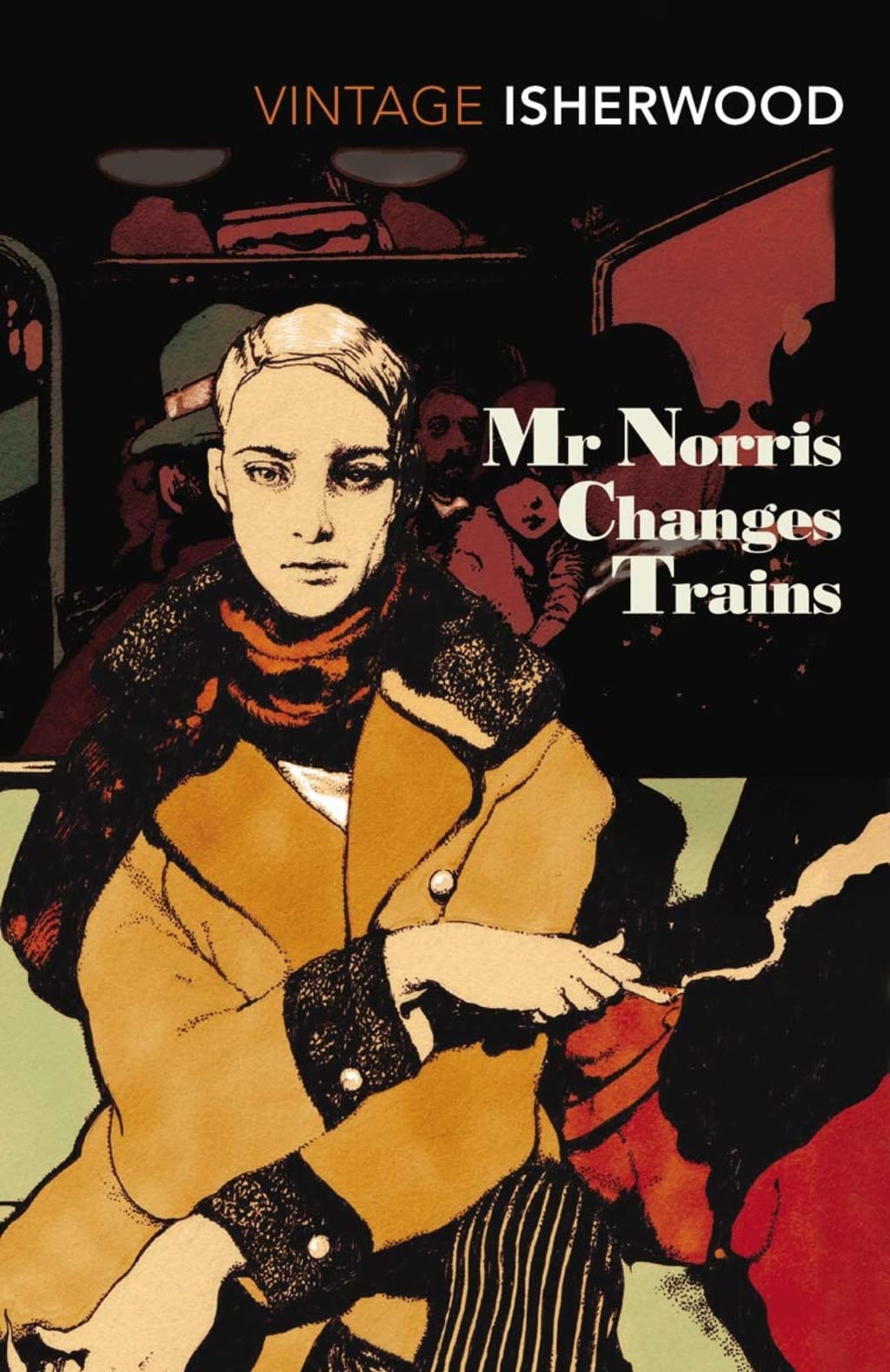
Mr Norris Changes Trains, written by Christopher Isherwood, was published in 1935 by The Hogarth Press, marking a significant point in Isherwood’s career and the development of British literature. This novel, based on his experiences in Weimar Berlin during the early 1930s, was the first of two books Isherwood wrote about Berlin’s turbulent political and social scene. Together with his later work, Goodbye to Berlin, it forms The Berlin Stories, a series that documents the decadence, desperation, and danger present in pre-World War II Germany.
The book was initially published in the United States under the title The Last of Mr Norris, but both titles refer to Arthur Norris, a mysterious, eccentric Englishman who becomes the unlikely friend of the protagonist, William Bradshaw. The novel enjoyed positive critical reception and gained a dedicated readership, especially for its sharp social commentary and vivid portrayal of a decaying society on the brink of change.
Plot
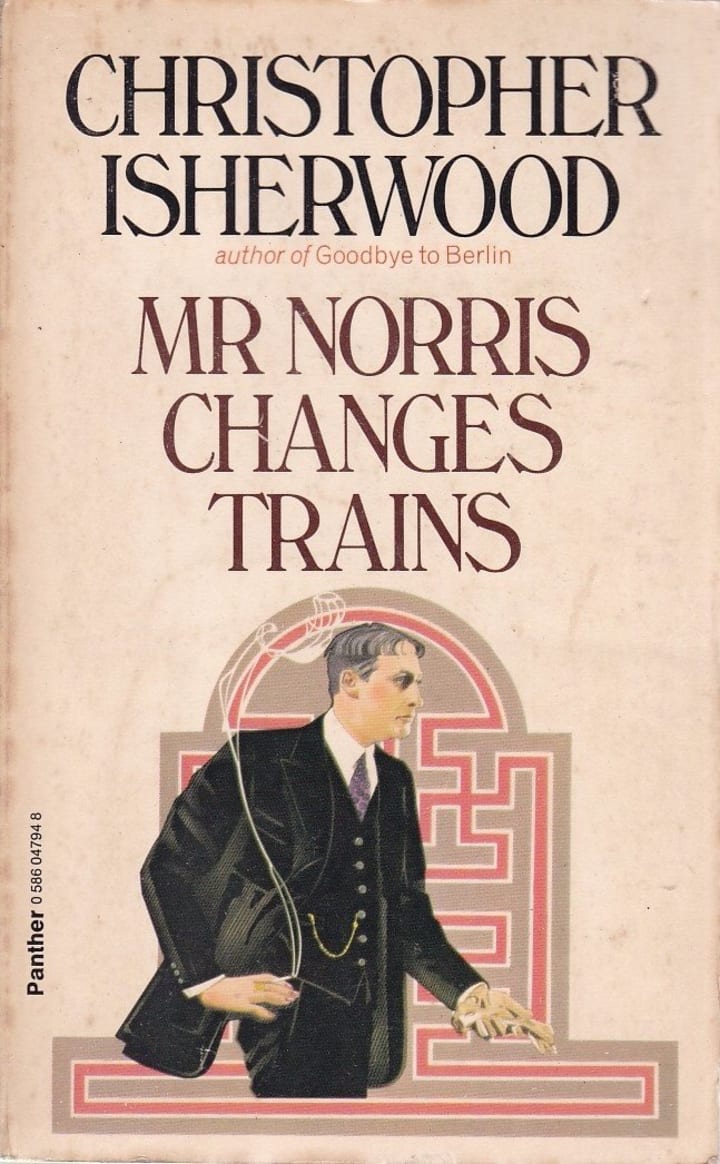
Mr Norris Changes Trains follows the story of William Bradshaw, a young Englishman living in Berlin in the early 1930s, a time when Germany is fraught with political tension, economic turmoil, and social upheaval. During a train journey, Bradshaw meets Arthur Norris, an enigmatic, flamboyant Englishman with eccentric tastes and a mysterious past. Norris’s eccentricity and charm intrigue Bradshaw, and they strike up an unusual friendship.
As Bradshaw becomes further entangled in Norris’s world, he learns about his friend’s double life and secret affiliations. Norris is involved with various questionable characters, including shady business associates and political operatives, leading Bradshaw to suspect that he may be more than the harmless eccentric he appears to be. Norris’s personal life is similarly complex; he has a precarious relationship with a manipulative and influential figure named Baron von Pregnitz (nicknamed Kuno) and is also involved in underground political activities, aligning himself loosely with the Communists.
Through Norris, Bradshaw is introduced to the underbelly of Berlin society, from its cabarets and cafés to its dangerous political circles. While Bradshaw is initially a passive observer, he gradually realises the serious implications of Norris’s affiliations. Norris’s financial instability and political entanglements soon catch up with him, leading to a series of crises that threaten his safety. The Communist cause is increasingly under pressure, with the Nazis rising to power, and Norris’s involvement becomes perilous as the political climate becomes more dangerous. His association with Kuno and the Communist underground makes him a target, and eventually, Norris has no choice but to flee Germany to escape certain arrest or worse.
The novel ends with Norris’s departure from Berlin, leaving Bradshaw to reflect on his enigmatic friend and the surreal experience of life in a society spiralling towards chaos. Through Bradshaw’s relationship with Norris, Isherwood portrays the fractured political landscape of Weimar Berlin and the lives of those caught between shifting allegiances. Mr Norris Changes Trains serves as both a dark comedy and a poignant exploration of the human cost of political upheaval. It vividly captures a society on the edge of collapse, with Isherwood’s prose illuminating both the allure and the dangers of the world that Norris inhabits.
Into the Book

The theme of political instability is at the novel’s core, as Isherwood situates his characters within the tumultuous setting of Weimar Berlin. The political uncertainty of the era permeates the lives of Bradshaw and Norris, affecting their actions and relationships. Isherwood’s choice of Berlin; a city renowned for its social experimentation but plagued by economic ruin and political extremism serves as a microcosm for the collapse of democratic ideals in favour of radicalism. Isherwood uses simple yet foreboding language to hint at the looming threat, describing Berlin as “dishevelled” and “nervous.” Through Bradshaw’s observations, readers witness the erosion of societal stability as Norris, seemingly detached from politics, is drawn into Communist activities that reveal the treacherous alliances people form to survive. The constant reference to “unpredictable times” reinforces the precariousness of life and the vulnerability of individuals under the threat of authoritarianism.
“I always say that I only wish to have three sorts of people as my friends, those who are very rich, those who are very witty, and those who are very beautiful.”
- Mr Norris Changes Trains by Christopher Isherwood
Identity and deception play a significant role, especially through Arthur Norris’s character. Norris embodies duplicity; he presents himself as a harmless dandy, yet he harbours numerous secrets, from his political affiliations to his financial troubles. Isherwood crafts Norris’s dialogue with a blend of formality and evasiveness, often using phrases that allow him to avoid direct answers. Norris is described with phrases like “delightfully ambiguous” and “morally flexible,” highlighting his chameleon-like adaptability in the face of danger. This duality in Norris reflects the broader atmosphere of deception in Berlin, where many characters lead double lives to survive. Bradshaw, initially naive, learns to see through Norris’s charm, recognising the necessity of adopting protective facades in a society where authenticity can be a liability.
“Like a long train which stops at every dingy little station, the winter dragged slowly past.”
- Mr Norris Changes Train by Christopher Isherwood
The theme of decadence and escapism is present throughout the novel, as Norris and Bradshaw navigate Berlin’s nightlife and unconventional social circles. Berlin, with its cabarets, underground bars, and flamboyant personalities, becomes a playground for those escaping the harsh realities of the political world. Isherwood describes these scenes with lavish, sensuous detail, from the dim lighting and smoky ambience of the clubs to the excessive indulgences of Norris’s companions. Yet, this decadence is tinged with desperation; it is a fleeting reprieve from the encroaching darkness of the Nazi regime. Phrases like “grasping at shadows” and “nights that swallowed whole” underscore the sense that these moments of pleasure are temporary, only heightening the eventual descent into despair. Bradshaw’s reflections reveal a growing awareness of the emptiness underlying Berlin’s hedonistic allure, as he comes to see the nightlife as a diversion from the existential threat posed by political radicalisation.
“Never mind. Never mind. In this brief life, one cannot always be counting the cost.”
- Mr Norris Changes Trains by Christopher Isherwood
Why It's a Masterpiece
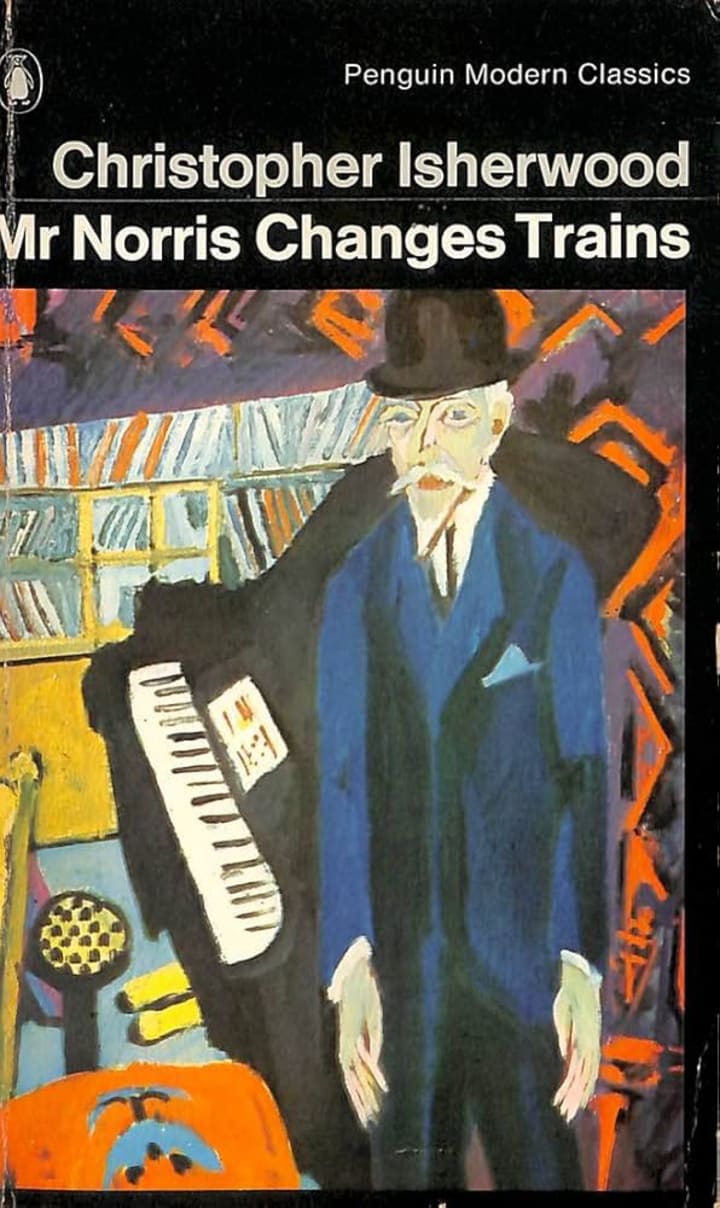
Mr Norris Changes Trains is celebrated as a masterpiece for its brilliant capsule of the Weimar era’s political and social volatility through the lens of deeply human characters. Isherwood’s portrayal of Berlin captures the city’s chaotic beauty, as well as its decline, with a delicate balance of wit and melancholy. The novel’s themes of identity, duplicity, and political instability resonate universally, portraying individuals trying to navigate a society increasingly defined by extremism.
Isherwood’s characterisation of Arthur Norris, in particular, demonstrates his gift for creating complex figures who embody the contradictions of their environment. Norris is simultaneously charming and pitiable, evasive yet transparent, a figure who represents both the allure and the dangers of a morally ambiguous world. The novel’s restrained, observational prose allows readers to immerse themselves in Bradshaw’s perspective, lending an immediacy to the historical backdrop while also offering timeless insights into human nature.
Conclusion

I hope you have enjoyed learning about such a great writer and one of his greatest books. If you manage to read it, I would also recommend reading The Memorial, another great novel by Isherwood. He is one of my all-time favourite writers. And now, on to next week!
Next Week: Lotte in Weimar by Thomas Mann
About the Creator
Annie Kapur
I am:
🙋🏽♀️ Annie
📚 Avid Reader
📝 Reviewer and Commentator
🎓 Post-Grad Millennial (M.A)
***
I have:
📖 280K+ reads on Vocal
🫶🏼 Love for reading & research
🦋/X @AnnieWithBooks
***
🏡 UK
Keep reading
More stories from Annie Kapur and writers in Geeks and other communities.
Book Review: "Monumenta" by Lara Haworth
I'm still using the library in Nottingham and as of now it is March 2025 (as of writing). This means that my mental health is a bit here and there. I don't want to sound sorry for myself but I do find I have started to enjoy the library here more than usual. Since I've been visiting: I have been to some exhibitions, spent time reading in the coffee shop there and even looked into reserving books using the online catalogue which helped me find things I like a bit faster. So I guess, when life isn't going your way there is always something to enjoy - even if it's only a little thing like a trip to the library. Let's have a look at one of the books I reserved called "Monumenta" by Lara Haworth.
By Annie Kapur9 months ago in Geeks
Silver Screen Magic with Mae West
American actress and singer Mae West became a popular film actress during the Great Depression. She started entertaining in vaudeville, then performed on Broadway, and finally went to Hollywood. She signed up with Paramount Pictures and made her debut in the 1932 film “Night After Night.” She also starred in musicals, comedies, and crime dramas. The American Film Institute named her one of the best classic Hollywood actresses.
By Rasma Raisters7 days ago in Geeks
5 Years Of 'WandaVision': Revisiting The Series Most Memorable Moments
It's hard to believe that it's already been five years since WandaVision, Marvel Studios' very first TV series, premiered on Disney Plus. A hit with both fans and critics, WandaVision was praised during it's run for expertly juggling so many elements, being both a love letter to classic sitcoms and a bittersweet exploration of grief before exploding into the usual MCU spectacle. The series is still widely considered among the best content Marvel Studios has produced, not just for television, but overall.
By Kristy Andersona day ago in Geeks




Comments (1)
Fabulous story 🍀🍀🏆