
Movie Review: 'The Lost Daughter' is a Tough Movie
The secondhand embarrassment and angry ambivalence of The Lost Daughter is visceral and immediate.


Few movies have triggered my secondhand embarrassment senses like The Lost Daughter. Maggie Gyllenhaal’s directorial debut stars Oscar winner Olivia Coleman as a college professor on holiday in Rome. Coleman’s Leda is desperately awkward and incapable of relating to other, lesser human beings. We get a sense of Leda in her first interaction with Lyle (Ed Harris), the caretaker of the apartment she has rented for her vacation. Lyle, in his 70s, is struggling while carrying her remarkably heavy bag to her room and yet he still tries to flirt with the near 50 year old Leda, much to her confusion and dismissiveness.
It’s deeply weird and awkward and a credit to Maggie Gyllenhaal for capturing the feeling of two people deeply NOT connecting in the same way. This pattern will repeat throughout The Lost Daughter as the character of Leda appears incapable of relating to people on a base level. That fact has little to do with the story at play in The Lost Daughter, rather it is just the default mode of the character who seems to carry some sort of childhood trauma through her life that only allows her to interact with a select group of people in any kind of comfortable fashion and only on her terms.

The story of The Lost Daughter centers on the ambivalent relationship a mother develops with being a mother. This goes for both Coleman’s Leda and Dakota Johnson as Nina, a young mother who Leda becomes fascinated with at a distance. We don’t really meet Nina until the second act of The Lost Daughter but she is a figure of fascination for Leda who can’t stop watching how Nina interacts with her very young daughter, her handsome but oblivious husband, and her loud and animated family.
When the two finally meet it is because Nina’s daughter has disappeared and Leda has had a fearful flashback to a time when her daughter, Bianca disappeared in a similarly scary fashion from a beach on vacation. It’s Leda who finds and returns Nina’s daughter but the daughter has also lost her favorite doll and returns deeply traumatized by the loss. It turns out that the doll isn’t lost, Leda has taken the doll, almost without realizing it, and sees it as a replacement for a doll that she’d had as a child and gave to her daughter who destroyed it.

Leda sets about cleaning up the doll and buys clothes for it and holds it while she naps. Meanwhile, Nina and her large and brash family are searching everywhere for it. This leads to several more deeply uncomfortable encounters, each more cringe inducing than the next as we wait for the search to lead back to Leda. The doll plot runs parallel to flashbacks to Leda as a young mother herself, portrayed in flashbacks by the brilliant Jesse Buckley. These scenes are also awkward and uncomfortable as they center on Leda desperately not wanting to be a mother.
The push and pull of loving your children and desiring the freedom to pursue accomplishments or sex or other such pleasures becomes a driving force of the plot as Leda reflects on being a mother and assumes that Nina is feeling the same longings that she felt all those years ago, the desire to not be a mother. Perhaps Nina is feeling those same feelings but the ways in which Leda projects her feelings onto Nina only serves to further reveal Leda’s selfish, self-involved nature to us, if not to herself.

How can I explain to you just how uncomfortable I was while watching The Lost Daughter? Have you ever been somewhere of general seating and had someone walk up and ask if you would move to another seat and you immediately said no? That scene happens in this movie but this movie is also the embodiment of that scenario, the awkward tension between your desire to sit where you please and a stranger rudely imposing themselves on you. In The Lost Daughter Leda is asked to change places on a series of beach chairs to accommodate a loud and obnoxious birthday celebration and she says no and it gets weird and painfully awkward.
Have you ever been at a movie and a loud group of young men are making a loud ruckus and ruining the movie while mocking anyone who asks them to quiet down? That scene is in this movie but this movie is also the embodiment of how painfully irritating and awkward that scenario is. It truly is as if Maggie Gyllenhaal thought of every painfully awkward and universal experience and included it in this movie.

Another for instance has Leda and Lyle incapable of saying anything to each other without it being misunderstood or unwelcome. Lyle approaches Leda during her dinner at a bar to flirt with her and the interaction ends with her saying ‘Can I finish my dinner now Lyle’ and him walking away unable to think of something to say and her completely aware of how rude this was but having said it without thinking about it first. It’s every Larry David interaction in Curb Your Enthusiasm but with characters capable of shame and embarrassment.
I could cite several more scenes but you get the gist here, The Last Daughter captures painfully awkward moments in ways that will provoke a visceral secondary embarrassment that is almost too painful to bear. I know it sounds bad but I am honestly, legitimately, impressed that Maggie Gyllenhaal has captured these moments in such intense detail. Few movies have ever put me in the shoes of a character so intensely as The Lost Daughter. It’s hard and I wanted to turn the movie off and walk away but I cannot deny how remarkably, organically effective the movie is.

And that is also just one aspect of The Lost Daughter. The other seemingly more important aspect of The Lost Daughter is how Gyllenhaal gives voice to a mother who doesn’t feel at home as a mother. The struggle is real, I know mother’s who are downright ambivalent about becoming a mother and they struggle with that. Society makes women feel horrific shame when they even think about what it would be like not to have children.
For women, the thought of abandoning their parental duties is met with a vicious reaction and even hinting that you don’t think you have the same parental instincts as others is often met with angry rebukes. Credit to Maggie Gyllenhaal for allowing her characters the chance to feel their feelings and admit that sometimes, even a good mom may want to run away from their responsibilities and never come back. In our society, few things are as subversive as a mother who admits not liking being a mother.

The Lost Daughter is an exceptional and challenging movie. It’s not for the faint of heart and not a movie you can watch passively. The Lost Daughter is immediate, confrontational, awkward and brilliant all at the same time. Kind of like a mom if you think about it. The Lost Daughter will debut on Netflix on December 17th, 2021.
About the Creator
Sean Patrick
Hello, my name is Sean Patrick He/Him, and I am a film critic and podcast host for the I Hate Critics Movie Review Podcast I am a voting member of the Critics Choice Association, the group behind the annual Critics Choice Awards.
Keep reading
More stories from Sean Patrick and writers in Geeks and other communities.
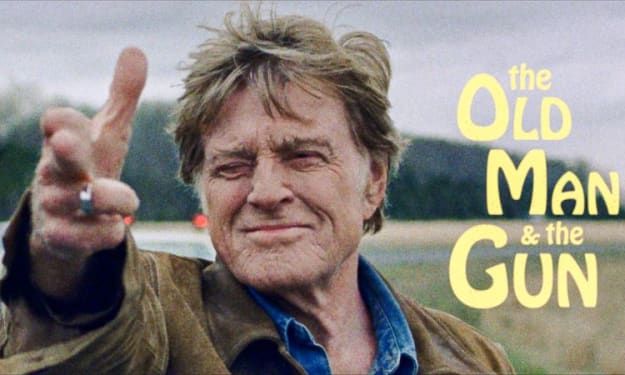
Movie Review: 'Old Man and the Gun' Starring Robert Redford
Robert Redford announced his retirement from acting in 2019. That means that his final performance is his role in the David Lowery helmed Old Man & the Gun. If that is indeed the case, that Mr. Redford is truly retired, he goes out on a pretty great note, playing a character that suits him. The consummate charmer, Redford plays bank robber Forrest Tucker with the kind of half-smile and glint in his eye which marked his all time greatest performances.
By Sean PatrickExclusive • 4 years ago
Silver Screen Magic with Mae West
American actress and singer Mae West became a popular film actress during the Great Depression. She started entertaining in vaudeville, then performed on Broadway, and finally went to Hollywood. She signed up with Paramount Pictures and made her debut in the 1932 film “Night After Night.” She also starred in musicals, comedies, and crime dramas. The American Film Institute named her one of the best classic Hollywood actresses.
By Rasma Raisters8 days ago in Geeks
Kim Kardashian Wears Sheer Leggings as Pants With a $22,000 Jacket and a Polarizing Shoe
The Gist Kim Kardashian stepped out in Los Angeles last week wearing new NikeSkims footwear. The split-toe shoe is based on Nike's Air Rift, which came out in 1996. The NikeSkims Rift Mesh drops on January 26, 2026.
By Dena Falken Esq2 days ago in Geeks
So You Decided To Become a Nurse Practitioner:
So you decided to become an "Advanced Practice" nurse. Congratulations!... is what I would say if this was a good idea. Grad school? In this economy? What were you thinking? Likely it was something along the lines of either 1) “I've seen these other chucklefucks do it— Why can't I?” or even 2) “I've got a nice career, I should shake it up. I miss feeling like I have no clue what I'm doing.”
By Sandor Szabo5 days ago in Fiction


Comments
There are no comments for this story
Be the first to respond and start the conversation.