
Literature Review: "Unbind the Tongue" (TLS)
Issue Date: 4 Feb, 2022

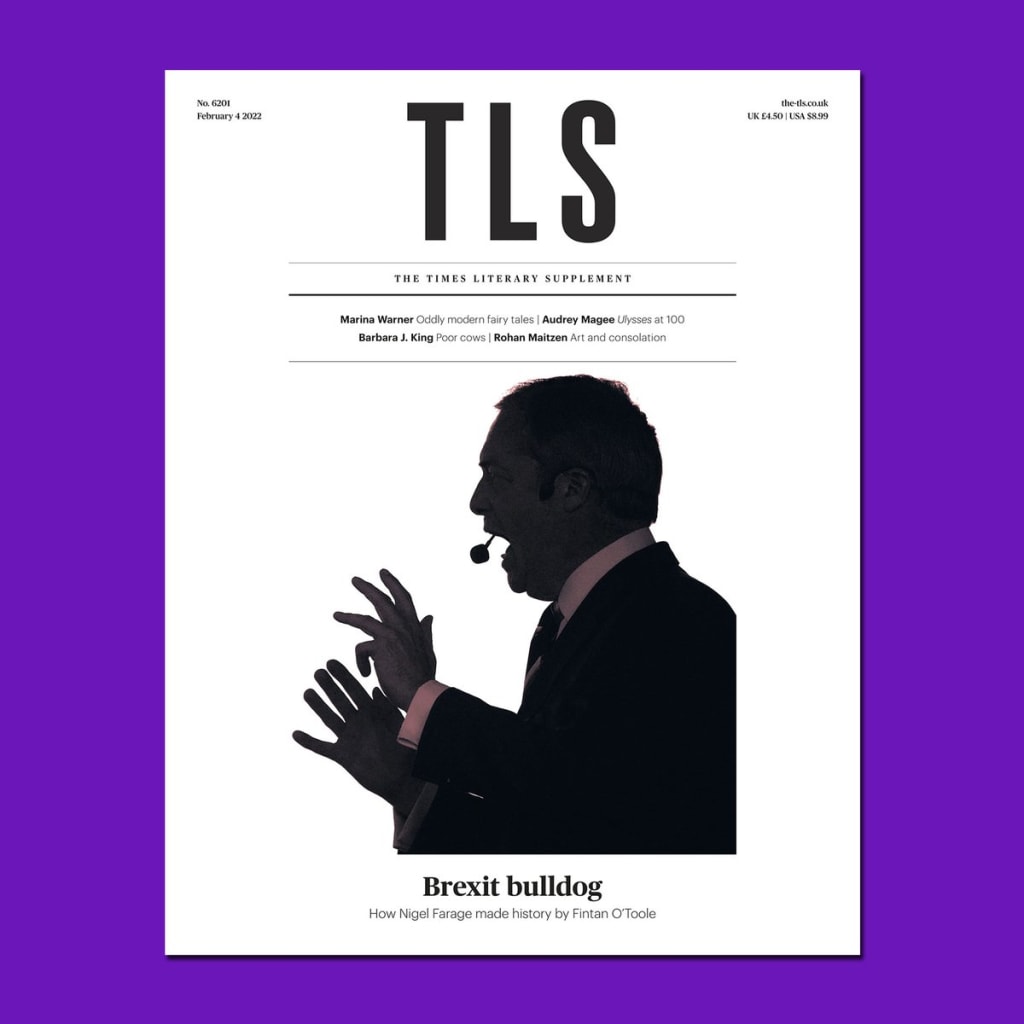
I'm going to try this a few times to see how we start off. I regularly read the 'TLS' (Times Literary Supplement) and I am a long-time subscriber and so, I thought it would be a good idea that every once in a while, I reviewed an interesting article that caught my eye from this weekly literature newspaper. Before you ask, yes I get it in paper form - because of my eyesight being a bit on the faulty side, staring at screens does not help. I am aware of the irony of writing this on a screen but now what do I do?
"Unbind the Tongue - Joyce and the Irish Language in the Centenary Year of Ulysses" by Audrey Magee
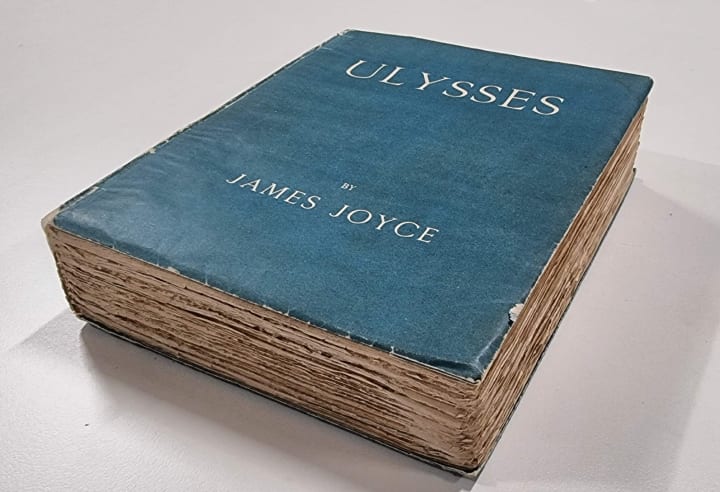
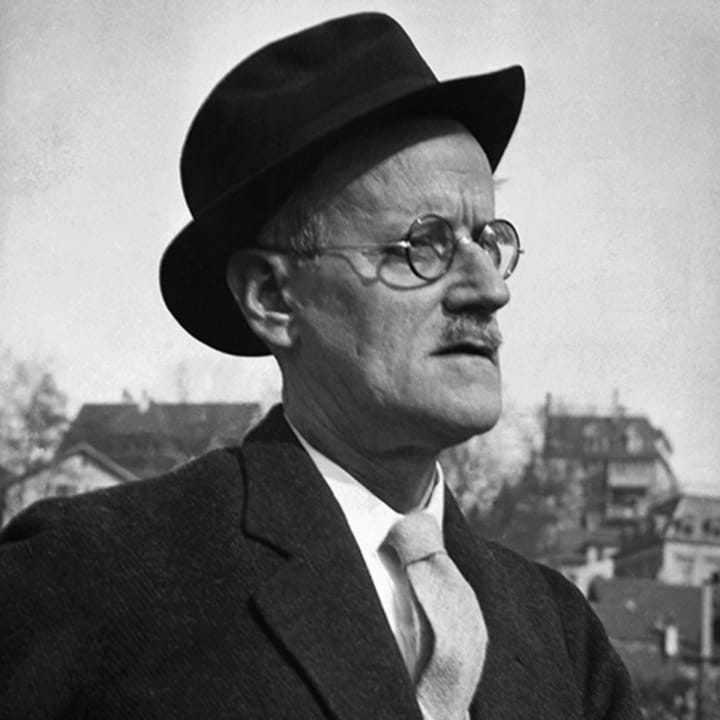
One thing I liked about this article is the way it is structured. It begins with the reader having to imagine a situation in which James Joyce's father, John, is filling out a census form in 1901. It goes through how James is listed as a student who speaks both Irish and English. This is very important to the on-coming article because it deals with possibly the most famous thing about James Joyce - his use of language.
The idea that Joyce had been raised bilingual is of great importance in this article as it focuses on his life as an academic and forming later into a writer. His education seems to be something incredibly important when it comes to looking not only at his linguistic style but also the way he perceived himself to be. He wasn't actually fluent in Irish and was, as the article states, taking lessons in Irish whilst at university. James Joyce, seminal Irishman, wanted to further improve his Irish because of the Irish Literary Revival (which we all know was awesome) - but then ended up dropping the course. I have my doubts about how much he was actually into it to begin with, but then again it could've just been a phase that we as human beings all go through.
The article is a well written chronology of James Joyce not wanting to side with nationalists and not wanting to side with everyone else. He's kind of stuck in the middle and the article makes that very clear. The culture that most people actually chose to speak English meant that the beauty of the Irish language was dying out even in Joyce's time (I mean, it's supposed to be a very difficult language to learn at the moment, I could imagine it would have been even harder without all the technology we have today. Here's looking at you, Cillian Murphy).
The article seems to like analysing why Joyce uses certain rhythmics of language and this, I have seen before. I have seen people analyse and over-analyse Joyce's rhythms and yet, come to no conclusion whatsoever. The good thing about this article is that it does come to some kind of conclusion - the conclusion is that this is simply the way James Joyce is in his writing. It is never really just about what the words mean, but also about how they sound. It has nothing, and I mean nothing to do with meaning in a lot of cases and when the writer refers to the book Languages of the Night: Minor Languages and the Literary Imagination in Twentieth-Century Ireland and Europe by Barry McCrea. The idea presented as 'radical language loss' was a paragraph that intrigued me so much that I had to read it again. Check this out, it's the quotation from McCrea's book that is referenced by the article to do with Joyce's writing on language and how identity and language are directly linked to the context of his own time:
They are a fragment of a lost language and lost world, unmotivated signs that cannot signify in the world they find themselves in. Whatever reality in which they might have had meaning - a vanished historical past when the forgotten language was a vernacular, or the distorted reality equally unreachable mental landscape of a senile mind - is gone. They are the form of Irish stripped of its content, representing a pure, radical language loss.
It is here where we get to see specific sections of Joyce's The Dubliners that deal with language and how it has been lost. This idea is tracked towards our visit to Joyce's Ulysses in the next part of the article in which the author of the article states that Joyce is mainly dealing with nationalism and language now, rather than the more primitive types of national identity as a result of colonising and context, the choices of the people to abandon their own language and therefore, their meanings.
As we get on to the part of the article about Ulysses we see that there is far more of an analysis about James Joyce's dealings with the Irish identity plus, his writing style - specifically a use of strange lower case which, as someone who read that book and was whole-heartedly confused at the time, makes more sense now than it did when I was a late teen. I'm not going to lie to you, though I like hearing how people have analysed it, I absolutely despise the novel Finnegans Wake (1929). I actually cannot stand it. I've heard people say that Ulysses is day and Finnegans Wake is night and this only confirms that with its analysis of the idea of night in the novel. Again, love the analysis, but I hate the book. I just had such a hard time getting through it, I don't think I could ever pick it up again.

'In this centenary of Ulysses Ireland remains bound to Britain..." is how the conclusion begins, but still faces the idea that linguistics are the basis on where we draw conflict from in Joyce's novels. Conflict being with the ideas of identity and nationalism, how they come out and what the rhythms of these languages are - not just what they mean in terms of words. I lost my mind reading this article - I must have read it three or four times.
One quotation I loved is the stand-out quotation of the text:
In self-imposed exile, Joyce fluctuated between shedding and saving the language, a dilemma woven through all of his work.
And that is basically what the entire article is about. And it is wonderful to have read it.
About the Creator
Annie Kapur
I am:
🙋🏽♀️ Annie
📚 Avid Reader
📝 Reviewer and Commentator
🎓 Post-Grad Millennial (M.A)
***
I have:
📖 280K+ reads on Vocal
🫶🏼 Love for reading & research
🦋/X @AnnieWithBooks
***
🏡 UK
Keep reading
More stories from Annie Kapur and writers in Geeks and other communities.
Book Review: "John: An Evil King?" by Nicholas Vincent
I have been reading one book about every single king and queen of England and finally, I have made it on to the infamous King John. I have read a book about Edward the Confessor, one about Harold Godwinson, one on William the Conqueror, another on William Rufus (William II), one on Henry I, one on King Stephen, one on Empress Matilda - then one on Henry II, one on Richard I and now, finally - we are on King John. King John is often known as the worst king in English history, and if you're not familiar with the Shakespeare play or with the history, you may not know why. Mostly, I think it is fair to say he was the worst in terms of the way he ruled, but 'evil'? Is he really 'evil'? or was history just written by the winners again? Let's investigate using Nicholas Vincent's book, John: An Evil King?
By Annie Kapur4 years ago in Geeks
Silver Screen Magic with Mae West
American actress and singer Mae West became a popular film actress during the Great Depression. She started entertaining in vaudeville, then performed on Broadway, and finally went to Hollywood. She signed up with Paramount Pictures and made her debut in the 1932 film “Night After Night.” She also starred in musicals, comedies, and crime dramas. The American Film Institute named her one of the best classic Hollywood actresses.
By Rasma Raisters7 days ago in Geeks
Shakira looks refreshed while sharing exciting news: Is she working on the 2026 World Cup anthem?
Shakira knows how to make a comeback feel exciting. After a quiet holiday season spent with her sons Milan and Sasha, the global superstar has returned to Instagram with a post that feels both intimate and loaded with meaning. The Colombian singer shared a relaxed carousel of photos and a short video alongside her longtime collaborator Alex Castillo, better known as AC, the producer behind her hit song Soltera. One simple caption said it all: “Back to it!”
By Dena Falken Esq5 days ago in Geeks




Comments
There are no comments for this story
Be the first to respond and start the conversation.