
Book Review: "John: An Evil King?" by Nicholas Vincent
5/5 - a compelling account of historical turbulence...

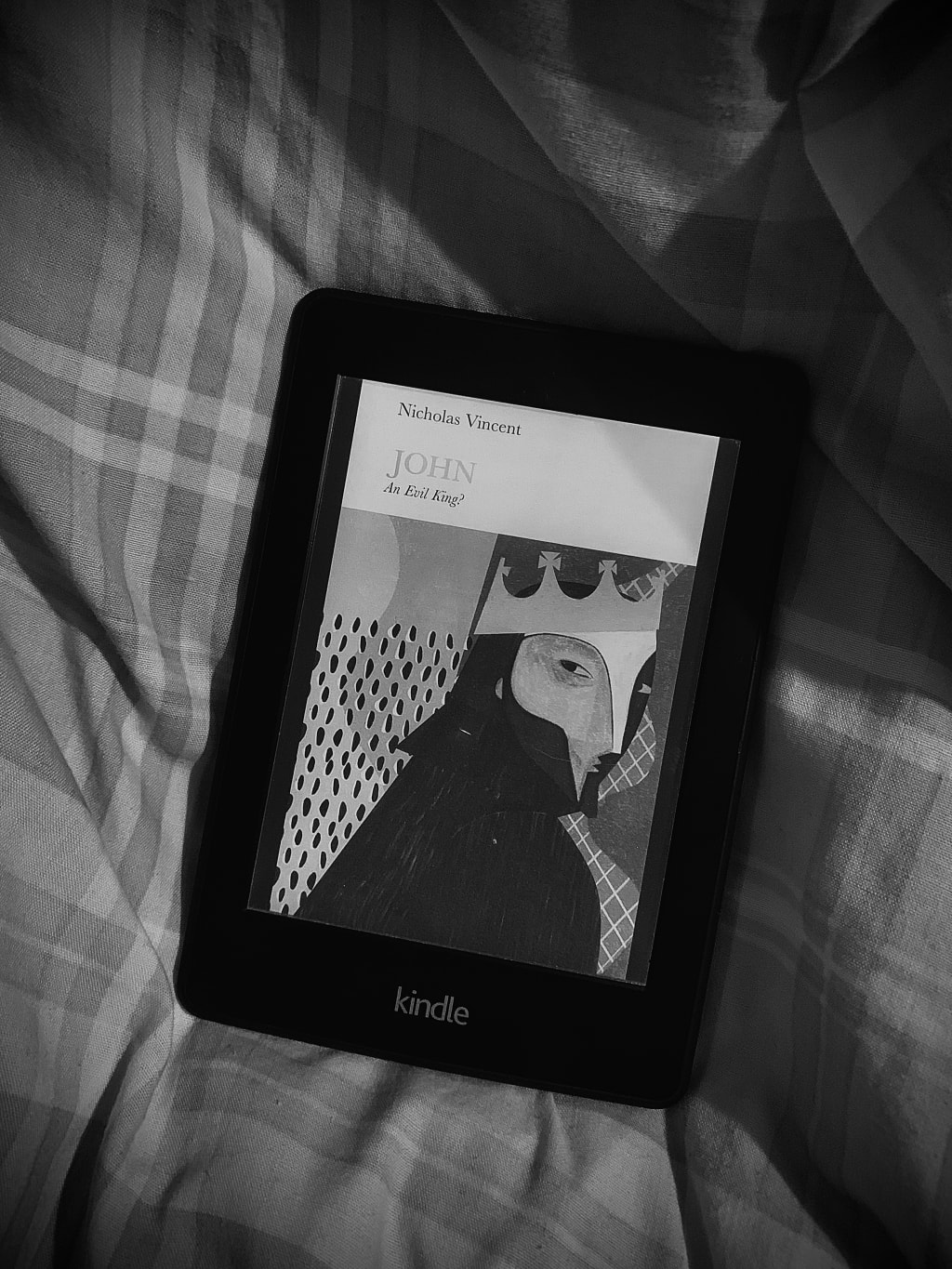
I have been reading one book about every single king and queen of England and finally, I have made it on to the infamous King John. I have read a book about Edward the Confessor, one about Harold Godwinson, one on William the Conqueror, another on William Rufus (William II), one on Henry I, one on King Stephen, one on Empress Matilda - then one on Henry II, one on Richard I and now, finally - we are on King John. King John is often known as the worst king in English history, and if you're not familiar with the Shakespeare play or with the history, you may not know why. Mostly, I think it is fair to say he was the worst in terms of the way he ruled, but 'evil'? Is he really 'evil'? or was history just written by the winners again? Let's investigate using Nicholas Vincent's book, John: An Evil King?
The book begins with the reign of Henry II and the way in which John was never really meant to be a king and so, he wasn't trained to be one. He was simply living in the court as a son of the court of his father and his older brother, Henry II and Henry the Young King. However, when Richard I becomes king, John edges slightly closer to the throne and yet, still not meant to be king - his brother suddenly dies on crusade thousands of miles from home and in his mother's arms. Originally called John Lackland, King John became king in a very strange way through a weird course of events and as the book opens his reign, we realise that he may not have been the most evil king in English history, but he was definitely the worst in terms of kingship.
At the newly built tomb of his brother, Richard I - the book states that there was another man who asked King John to remember his duties as the new king to which John stated that he could never lose the estates of his family. I mean, it was true then as he was the son of Eleanor of Acquitane - unfortunately, when Eleanor dies in 1204 - there was a lot to still go wrong. John begins from thereforth, to lose everything.
The book covers the most obvious time in King John's reign which is his wars with France and his attempt to keep the lands - which fail almost spectacularly. King John is then told not to associate with the rest of Europe and there are a lot of politics around King John's grasp on power and though he wasn't evil in that sense, he was definitely not that intelligent when it came to making friends abroad. Ultimately, he loses a lot of land and thus, he is one of the many people (including his mother) who is blamed for the later Hundred Years' War.
Nicholas Vincent tells a concise but brilliant account of the reign of King John in which everything is covered to the point of brilliance. When we come to Magna Carta, there is a lot of understanding there for those who do not know about what it is or why it was written. Magna Carta may be one of the most important documents in western history, but the reasons to which it was written are covered in context that remains unbiased - this is something great about the book.
In conclusion, does this book really answer whether King John was evil? No. It allows us, the readers, to make up our own minds whilst providing us with cases on both sides.
About the Creator
Annie Kapur
I am:
🙋🏽♀️ Annie
📚 Avid Reader
📝 Reviewer and Commentator
🎓 Post-Grad Millennial (M.A)
***
I have:
📖 280K+ reads on Vocal
🫶🏼 Love for reading & research
🦋/X @AnnieWithBooks
***
🏡 UK
Keep reading
More stories from Annie Kapur and writers in Geeks and other communities.
Book Review: "The World in the Evening" by Christopher Isherwood
I read quite a bit of Christopher Isherwood last year and noticed that I had really taken a liking to his work. I'll be trying my best to finish off his novels this year and hopefully, we can have a bit of a ranking article on all of them together. One thing I like about Christopher Isherwood's novels is that they never feel afraid, or like they are withholding information for the sake of being polite. Isherwood tries to say everything he needs to within this atmosphere of dark glamour and this is definitely true for his books Goodbye to Berlin, Mr Norris Changes Trains and The Memorial. When it comes to this book entitled The World in the Evening, we can definitely see that aspect of his writing being reborn.
By Annie Kapur4 years ago in Geeks
The Rachels - 2025
Much to my surprise, I have kept a list of the films I‘ve seen this year. I daresay it isn’t complete. There will be films that snuck in on a late night in front of the TV that I would’ve forgotten to note. Or others, that I went to watch at the cinema, but then had a red wine and promptly forgotten about. But it’s not a bad approximation of the films I’ve seen this year. In total, there are 53 films listed, so an average of one a week and one for good luck.
By Rachel Robbins26 days ago in Geeks



Comments
There are no comments for this story
Be the first to respond and start the conversation.