
Literature Review: "In the Weird World Web" (TLS)
Issue Date: 11th February, 2022

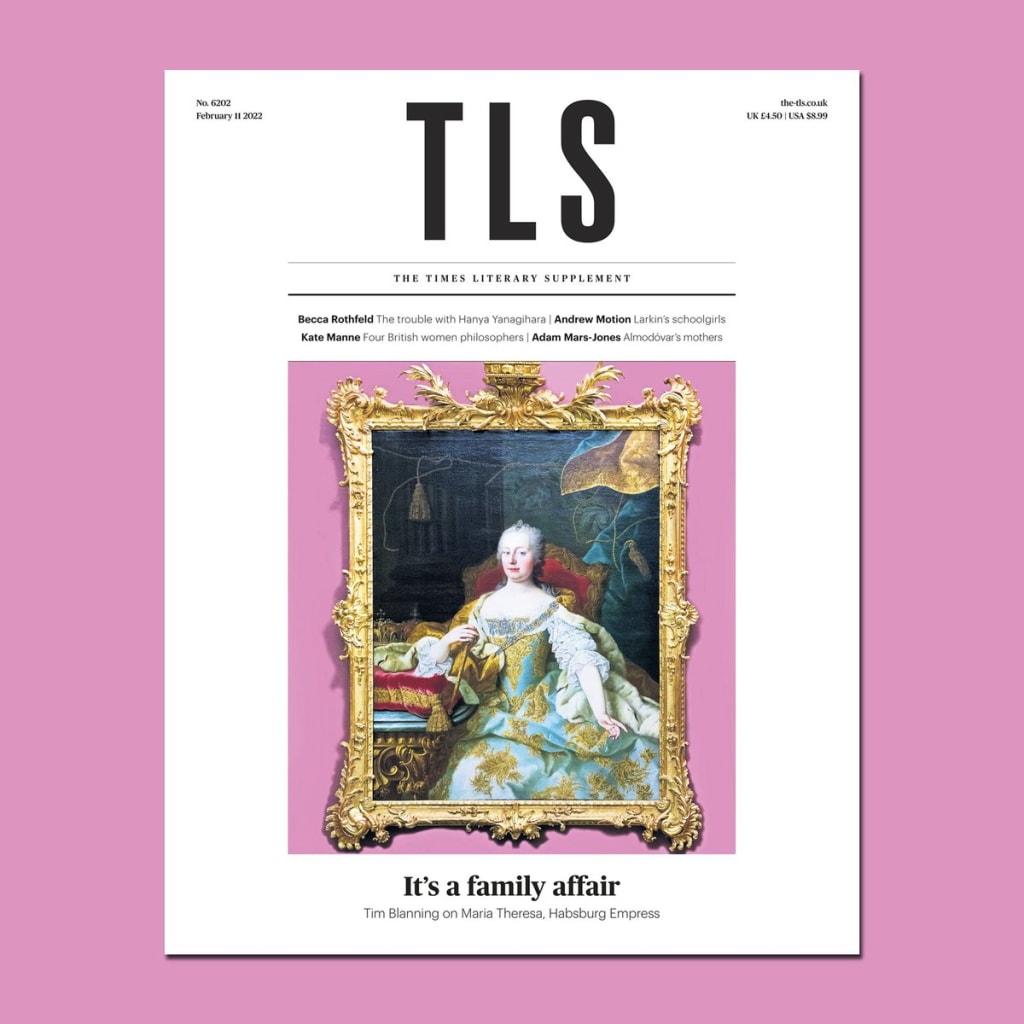
As I have said before, in my article entitled 'Unbind the Tongue' (TLS), I will be trying these out and, since there was a fairly good response to the first one, I think it's safe to say I would like to continue, though I don't know how long for yet.
Let me tell you a bit about my experience with the TLS. I love reading it. There are so many interesting articles on history, literature and culture and there's all this recommended reading, it's just brilliant. Every now and again there is something that really stands out in an issue and this time the article is entitled: "In the Weird World Web".
"In the Weird World Web: A Turn Towards Horror and its Strange Appeal" by Nick Groom

Starting off your article to do with horror and the weird with a quotation by Angela Carter is a very clever way to hook in any horror fan. But then to expand on what she has already said is something that is very brave. I'm not sure how I feel with the cult of Lovecraft being used as the seminal example of what it means for the gothic not to stand still, but then again the way he's gone from being literary pulp to philosophy and mythos has been stated very clearly. Personally, I would've used someone who was more culturally active like Daphne Du Maurier or Stephen King, but HP Lovecraft is good too.
But behold, the article mentions Lovecraft once again as being a grand cultural influence on to the new age of horror and the gothic that we find ourselves in today. To state that the gothic is part of an anthopocene culture as well, is something that I not only agree with - but I fully endorse. For as long as I've studied the gothic (which is a fairly long time), I have stated that gothic horror comes out of human suffering and times of darkness and uncertainty. Here, the examples are political turmoil, climate change and of course, the pandemic.

The review of the book Gothic: An Illustrated History by Roger Luckhurst is a supporter of this introduction instead of it being the other way around. The ideas expressed in the book are shown to be directly linked to the day in which the book is written in comparison to the traditions of the past. The comparison leaves the reader with almost a requirement to read the book, which is a brilliant selling technique but I think something has been missed for the sake of quirky little soundbites from the author of the article that are attempting to sound almost light-hearted.
I understand that there is a word count and though I do like what it actually says, I do think that the next part of the article covers the book in almost too quick of a succession. Many ideas expressed all at once could confuse a normal reader, but then again I have to argue that a regular person who was not wholly invested in literature would not be reading the TLS. Personally, I would've liked to see the book review expanded, or possibly given its own individual book review aside from the rest of the article - and written by the same guy please.
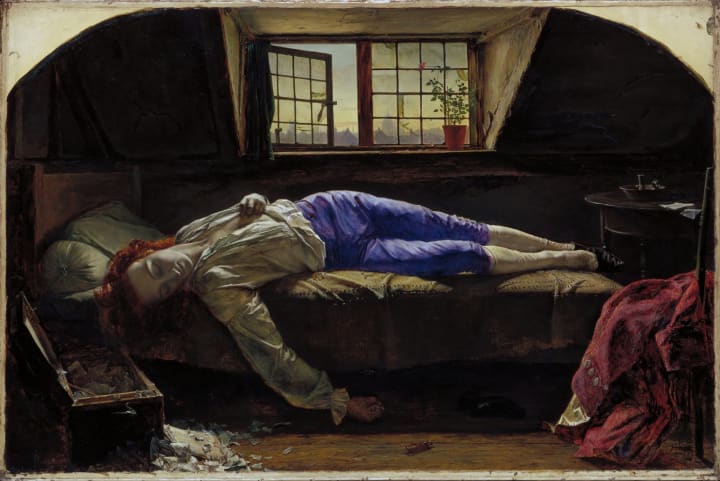
Going into the mythology surrounding the suicide of Thomas Chatterton was not expected from this article. To mention Kubla Khan just before it as well is brave. Yet again, Nick Groom is proving himself to be a great analyst and his ability to link together the mythos of life and death, existence and darkness and his ability to show us that not everything we believe about these things is true is something quite extraordinary. I was especially impressed when reading the section on Frankenstein and the 'psychotic rage'. Everything is linked up perfectly, even though the subject matters may seem a bit far apart.
The next paragraph deals with why Lovecraft has basically been converted into a philosophy, something that is stated in the first part of the article:
"Lovecraft casts a titanic shadow; the Lovecraft of object-oriented ontology; the Lovecraft of eerie thresholds, crawling dead, interstitial spaces and non-Euclidean geometry; the Lovecraft of the anthropocene, conceding that human existence is simply incidental to reality and the world is blind or indifferent to our predicament."
When we eventually get on to the other book review which is included in this literary analysis entitled Eaters of the Dead, we get something far more graphic than the previous analysis. Some weird practices to fend off vampires are mentioned as being around in the 1700s and the more theological side is explored in some great depth. Cannibalism is read about in some more philosophical aspects than I actually first thought when I came about this article for the first time. I was sort of hoping that this wouldn't be the run-of-the-mill response of morbis curiosity towards cannibalism in literature and philosophy - and it wasn't. This actually tries to reason as to what really happened and how this anxiety brings us right back around again to how the gothic is born out of human suffering. Analysis of the Wendigo Psychosis is always welcome, and thankfully there wasn't too much depth done in order to gross me out entirely. I thank you Nick Groom.
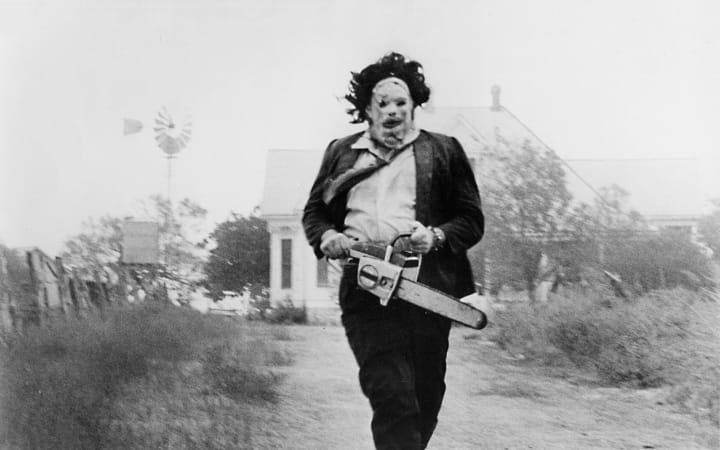
From flesh-eating demons to the CIA all the way to Game of Thrones, we get a grand analysis of cultural impacts of cannibalistic psychology from every angle. Looking even further, the author states that the Jeffrey Dahmer story has gone stale - I agree, we can stop talking about that now. I think that the story of Keith Richards snorting his father's ashes is a myth though, there is no detail on the event, just a mention. And finally, we get some of the most incredible cannibalistic films of all time such as: The Texas Chainsaw Massacre being acknowledged within the cusp of the article.
But honestly, what the hell was that conclusion on the Yorkshire anthem thing about a guy being eaten by worms? I'm not sure I want to know.
Conclusion
Interesting. Disgusting. A little unnerving. There are several ways to describe this article and frankly, I absolutely loved it. Nick Groom did an awesome job here and the TLS strikes the hearts of literature lovers again with a brilliant piece of criticism.
About the Creator
Annie Kapur
I am:
🙋🏽♀️ Annie
📚 Avid Reader
📝 Reviewer and Commentator
🎓 Post-Grad Millennial (M.A)
***
I have:
📖 280K+ reads on Vocal
🫶🏼 Love for reading & research
🦋/X @AnnieWithBooks
***
🏡 UK
Keep reading
More stories from Annie Kapur and writers in Geeks and other communities.
Book Review: "No One is Talking About This" by Patricia Lockwood
I had been waiting to read this book for ages because I needed it to come down in price. I wasn't about to pay full price for a book so short and so, I waited and waited and it's been almost a year. The book has finally shot down in price. No One is Talking About This is a book by the poet and 'modernist' writer Patricia Lockwood - littered with viral references that you will only understand if you spend every waking moment on the internet or watching streaming service television - I initially read this because I heard it was supposed to evoke Joan Didion. Instead, it fell completely flat and I don't think I have rolled my eyes quite as much at a book in a very long time. It really isn't like Joan Didion at all. Instead, it is just some middle class woman complaining about middle class problem - the main one being sitting on social media for a long time. So this is where I give a bad review of a book made for the TikTok generation: no depth, no meaning, simply nothing but references and jumps between topics. This might be the only book that is doomed to make you stupider and stupider as you read it.
By Annie Kapur4 years ago in Geeks
Silver Screen Magic with Mae West
American actress and singer Mae West became a popular film actress during the Great Depression. She started entertaining in vaudeville, then performed on Broadway, and finally went to Hollywood. She signed up with Paramount Pictures and made her debut in the 1932 film “Night After Night.” She also starred in musicals, comedies, and crime dramas. The American Film Institute named her one of the best classic Hollywood actresses.
By Rasma Raisters11 days ago in Geeks
Kim Kardashian Wears Sheer Leggings as Pants With a $22,000 Jacket and a Polarizing Shoe
The Gist Kim Kardashian stepped out in Los Angeles last week wearing new NikeSkims footwear. The split-toe shoe is based on Nike's Air Rift, which came out in 1996. The NikeSkims Rift Mesh drops on January 26, 2026.
By Dena Falken Esq4 days ago in Geeks



Comments
There are no comments for this story
Be the first to respond and start the conversation.