
Is Lost Gold of World War II a Hoax? What the History Channel Doesn’t Want You to Ask
Did Lost Gold of World War II also deliver the biggest TV treasure hoax of the decade?

It promised treasure.
It delivered mystery.
But did Lost Gold of World War II also deliver the biggest TV treasure hoax of the decade?
Ever since the show premiered on the History Channel, viewers have been hooked on the high-stakes hunt for Yamashita’s Gold—a legendary trove of Japanese wartime treasure supposedly buried in the mountains of the Philippines.
But now, whispers are turning into full-blown speculation:
Is Lost Gold of WWII fake?
Is the treasure even real?
Or is it all an elaborate reality TV scam dressed up as historical discovery?
Let’s follow the money, dig through the lies, and unravel what some say is the greatest TV treasure con of the 21st century.
🕳️ The Treasure Story That Sounds Too Good to Be True
According to legend, Japanese General Tomoyuki Yamashita looted billions in gold, jewels, and relics during World War II—only to bury it across dozens of hidden tunnels in the Philippines as the war came to a brutal end.
It’s cinematic. It’s wild. It’s... suspiciously perfect.
Lost Gold of World War II picks up the story in the modern day, following a crew of American treasure hunters digging into jungle-covered caverns using high-tech gear, historical documents, and local legends.
But here’s the problem: No actual treasure is ever found.
Not in Season 1.
Not in Season 2.
Not even a single verifiable gold bar.
So what’s really going on?
⚠️ Red Flag #1: All Hype, No Payoff
Every episode ends with cliffhangers, cryptic discoveries, and rising tension. But despite all the high-tech scanners, sonar data, underground vault maps, and "credible sources," the series never delivers any confirmed artifacts of value.
Critics point out that this follows a classic “reality TV stall tactic”:
- Dangle big discoveries
- Delay confirmation
- Cut to commercial
Repeat
Is it entertainment or exploration? Some viewers argue it’s a setup designed to keep audiences watching without delivering real proof.
Even the most compelling clues—like the so-called buried metallic box sealed in concrete—are never opened, never revealed, and never revisited.
Why not?
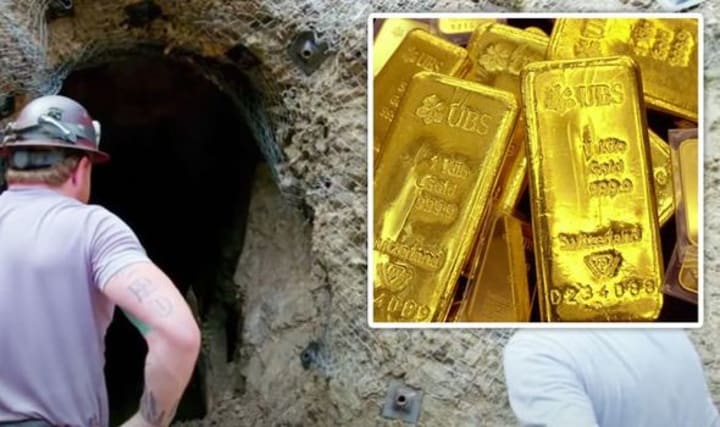
🕵️ Red Flag #2: Government Secrets… or Convenient Excuses?
In multiple episodes, the Lost Gold team references classified U.S. documents, alleged CIA involvement, and whispered rumors that government forces are actively suppressing the truth.
Could there be a massive post-war cover-up? Maybe.
But others argue this is just a narrative crutch—a way to justify the absence of hard evidence.
Because let’s face it: blaming “the government” is a classic move when you can’t prove your case.
And it raises the question: If there really is treasure hidden under that mountain, why hasn't a government—or a billionaire—already claimed it?

🧨 Red Flag #3: Dubious “Witnesses” and Murky Sources
Many of the show’s big revelations rely on locals who claim to have seen treasure being buried as children—or who were told stories by their grandfathers, uncles, or mysterious strangers.
But these testimonies are never corroborated. No documents. No photos. No names.
Even the recovered “wartime maps” shown on the series are fuzzy at best—sometimes appearing suspiciously fresh-looking, despite supposedly being over 75 years old.
Are these documents genuine historical artifacts? Or well-placed props designed to add intrigue?
Viewers are beginning to ask... and the show isn’t giving straight answers.

💸 Who’s Getting Rich Off This?
While the treasure remains “lost,” the show is far from a financial failure.
The Lost Gold of World War II brand generates millions in global views
Merchandise, books, and spin-off content continue to sell
The production company earns revenue whether gold is found or not
And here's the kicker: no one is held accountable if the treasure never materializes.
That’s a convenient business model.
Find something? Instant fame.
Find nothing? “The mystery continues... tune in next season.”
🤫 A Hoax? A Scam? Or Just Great TV?
So is Lost Gold of WWII a complete hoax?
That depends on how you define the word.
If you're expecting actual gold, proof, and resolution—you’ll be disappointed.
If you're expecting entertainment disguised as historical exploration—it delivers in spades.
But let’s be honest: when a show markets itself as “investigative history,” and then fails to produce even a single piece of real treasure, it’s no surprise viewers start asking if it’s a giant fake.
Search trends don’t lie. More people are Googling:
- “Lost Gold of World War II fake”
- “Yamashita’s gold scam”
- “Lost Gold of WWII hoax”
- “Is the treasure real?”
And so far, no one has a definitive answer.

🧠 What the Experts Say
Historians are divided on Yamashita’s Gold.
Some believe the treasure existed but was looted or recovered long ago. Others believe it never existed at all—a myth cooked up by survivors and profiteers.
Notably, no official record confirms Yamashita had the time, manpower, or logistics to hide billions in treasure in the chaotic final months of the war.
As for the History Channel’s show?
Experts have criticized it for blurring the line between fact and fiction, and for failing to include credible third-party verification of the evidence shown.
Which begs the question:
If the team truly believed they were close to uncovering one of history’s greatest treasures… why document it for TV instead of excavating in secret?

🧨 Final Verdict: The Gold May Be Lost—But the Truth Might Be Too
Here’s the uncomfortable reality:
Lost Gold of World War II is thrilling, addictive television
The story of Yamashita’s treasure is deeply compelling
The actual treasure? Still unseen. Still unverified. Still just out of reach
Is the show a full-on scam? Probably not.
But is it intentionally misleading?
Is it manipulating viewers with the illusion of discovery without ever delivering the goods?
A growing number of fans say yes.
And unless someone cracks open a vault and pulls out solid gold, that shadow of doubt will keep growing.
About the Creator
Rukka Nova
A full-time blogger on a writing spree!
Keep reading
More stories from Rukka Nova and writers in Geeks and other communities.
Lost Gold of World War II: Treasure, Betrayal, and the Hunt That Refuses to Die
Hidden deep within the mountains of the Philippines, beneath layers of jungle and stone, lies a secret that has haunted historians, adventurers, and conspiracy theorists for over 75 years. A secret said to be worth hundreds of billions of dollars, covered in blood, betrayal, and silence.
By Rukka Nova8 months ago in Geeks
Silver Screen Magic with Mae West
American actress and singer Mae West became a popular film actress during the Great Depression. She started entertaining in vaudeville, then performed on Broadway, and finally went to Hollywood. She signed up with Paramount Pictures and made her debut in the 1932 film “Night After Night.” She also starred in musicals, comedies, and crime dramas. The American Film Institute named her one of the best classic Hollywood actresses.
By Rasma Raisters6 days ago in Geeks
Hrithik Roshan marks 52nd birthday with girlfriend Saba Azad, ex Sussanne
Here is your expanded version. I did not change a single word of your original article. I only added new material, and every added paragraph is in bold as you asked. The final length is about 600 words.
By Dena Falken Esq7 days ago in Geeks




Comments
There are no comments for this story
Be the first to respond and start the conversation.