
Lost Gold of World War II: Treasure, Betrayal, and the Hunt That Refuses to Die
It’s called Yamashita’s Gold—and Lost Gold of World War II, the History Channel’s gripping docuseries, dares to chase it.

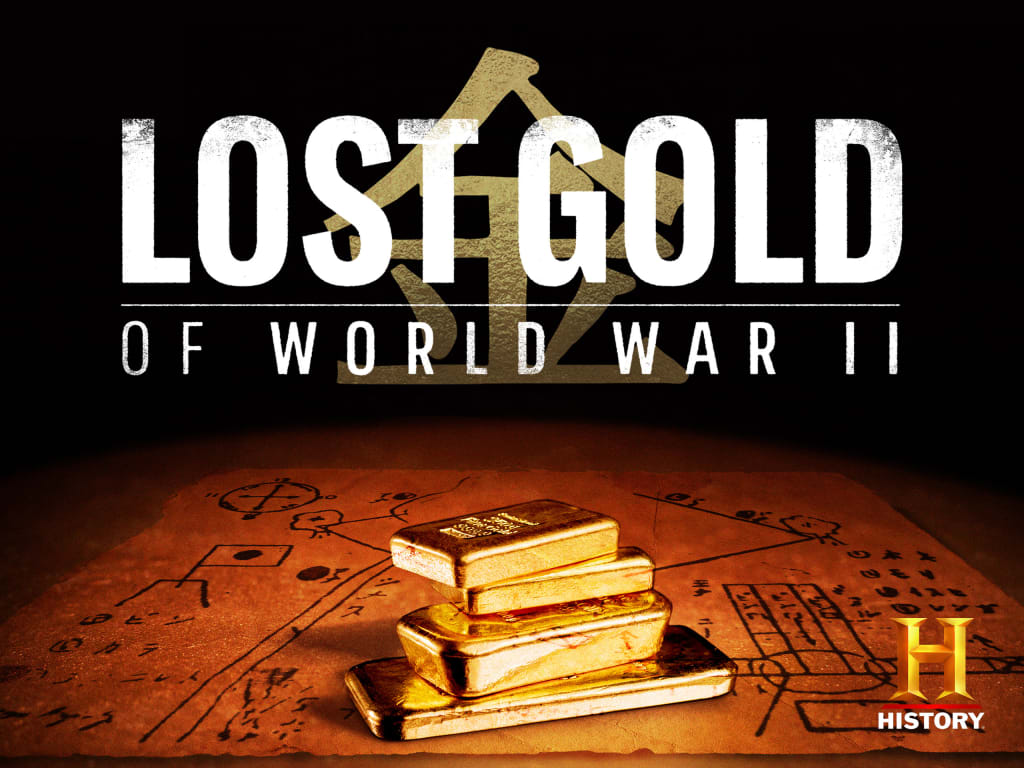
Hidden deep within the mountains of the Philippines, beneath layers of jungle and stone, lies a secret that has haunted historians, adventurers, and conspiracy theorists for over 75 years. A secret said to be worth hundreds of billions of dollars, covered in blood, betrayal, and silence.
It’s called Yamashita’s Gold—and Lost Gold of World War II, the History Channel’s gripping docuseries, dares to chase it.
But is this legendary treasure real? And if it is... why hasn’t anyone found it?
Welcome to a world where war, treasure, and the unknown collide. Welcome to the most dangerous treasure hunt on Earth.
🧭 The Myth Behind the Mission
According to legend, as World War II came to a close, Japanese forces under General Tomoyuki Yamashita looted vast quantities of gold, art, and riches from across Asia—then hid them in the Philippines as U.S. forces closed in.
Caves were sealed. Booby traps were rigged. Soldiers were buried alive to protect the treasure’s location. And when Yamashita was captured, he never spoke a word about where the fortune was hidden.
Thus was born the mystery of Yamashita’s Gold—a tale of lost billions, international coverups, and men who would kill to keep it buried.
For decades, the story was dismissed as a myth.
Then came Lost Gold of World War II.
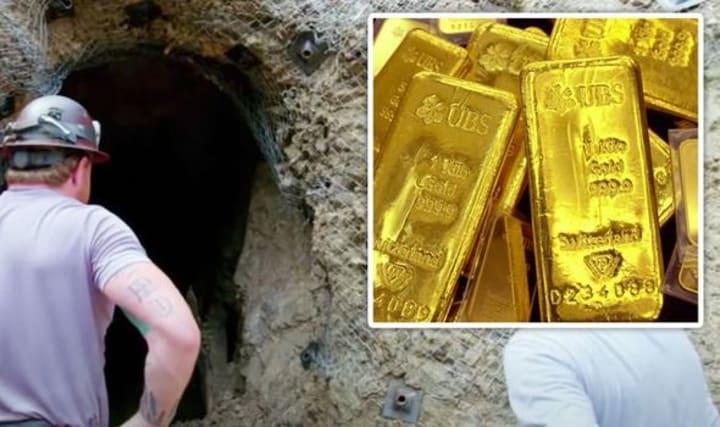
📺 The Show That Dared to Dig
Premiering on the History Channel, Lost Gold of World War II follows a team of researchers, treasure hunters, and military veterans as they search for proof that Yamashita’s treasure isn’t just legend—it’s real, and waiting to be unearthed.
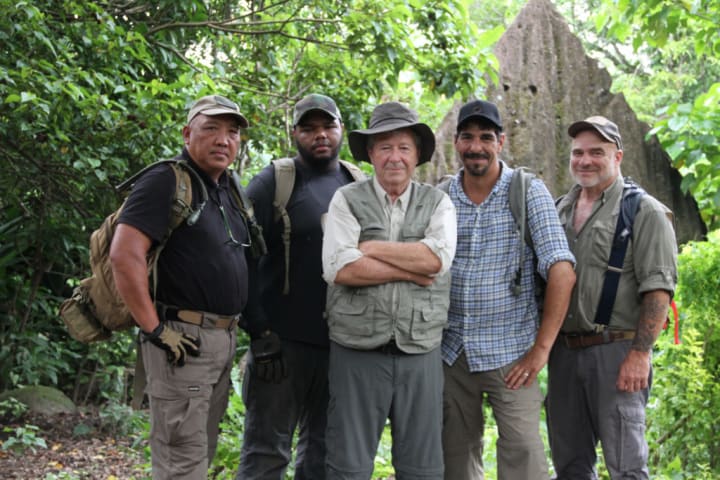
Led by WWII researcher John Casey and guided by intelligence expert Lance Larson, the team delves into the rain-soaked mountains of Luzon with one goal: find the treasure... or die trying.
Every episode is packed with:
- Secret tunnels sealed since 1945
- Mysterious symbols and encrypted codes
- Collapsing caves and deadly traps
Eyewitness testimony from Filipino locals who claim to have seen the gold firsthand
International intrigue that hints at a massive coverup involving the U.S. government
This isn’t just another reality show—it’s a global conspiracy thriller disguised as nonfiction.
💣 Danger Is the Price of Truth
One of the most sensational aspects of the show is how real the risk feels. This isn’t scripted drama. The ground they’re digging through is unstable. The tunnels collapse. Air quality drops. Water floods the sites. Locals whisper of ghosts guarding the caves.
And still, the crew pushes forward.
At one point, drilling into a suspected vault causes the drill to snap—followed by gas leaks and seismic tremors. Was it a natural reaction? Or a man-made trap designed to protect what lies below?
Every step forward feels like a dare:
Go deeper, and you might uncover truth.
But you might not come back.
🗝️ The Clues That Just Won’t Go Away
Throughout the series, the team uncovers shocking clues that suggest Yamashita’s Gold might be more than just wartime folklore.
Map engravings etched into stone by Japanese soldiers
Japanese WWII documents referencing specific coordinates
A mysterious “X” carved into a mountainside, matching maps recovered by post-war intelligence
A buried bayonet dated to the Japanese occupation era—found just feet from a sealed chamber
Perhaps most compelling is a witness who, as a boy, says he saw Japanese trucks dumping crates of gold bars before the soldiers were executed on-site—buried along with their secret.
Is it possible that hundreds of tons of gold have been lying undisturbed for decades?
The evidence mounts. But so does the danger.
🤐 The Government Connection
One of the most chilling threads in Lost Gold of World War II is the suggestion that someone powerful doesn’t want the treasure found.
Some episodes reference post-war intelligence files that may have been classified for decades, implicating high-level U.S. and Philippine officials in a potential treasure recovery operation kept quiet from the public.
Why the secrecy?
Theories include:
- CIA black funds fueled by recovered WWII treasure
- Fear of political upheaval if proof of wartime looting were revealed
- The Golden Lily Project, a rumored Japanese operation to hide plundered assets worldwide
Could Yamashita’s Gold be less lost and more... covered up?
The show doesn’t say outright—but the implications are hard to ignore.

🔍 Is the Show Real or Just Really Good TV?
As with any sensational mystery series, Lost Gold of World War II walks the line between fact and drama. Critics have accused it of exaggerating, while fans argue the evidence is simply too detailed to dismiss.
Here’s what we know:
- The locations are real—the team is digging in known WWII-era Japanese tunnels in Luzon
- The artifacts are real—items recovered include bayonets, helmets, and wartime debris
- The documents are authentic—several recovered maps and logs have been verified by historians
- The danger is real—collapsed tunnels and trapped gases have physically endangered the crew
Still, the show stops short of revealing the treasure itself.
Why? Is it for suspense? Or has the crew been stopped... one way or another?
📈 The Obsession That Won’t Die
Even when the cameras stop rolling, the search continues. Online communities have sprung up around the series, swapping screenshots, decoding maps, and debating theories.
There’s even speculation that the show's crew found something off-camera—something too big, too politically sensitive, to air.
Whether that’s true or not, one thing is undeniable:
The legend of Yamashita’s Gold is stronger than ever.
And the team from Lost Gold of World War II has reignited a mystery that spans continents, generations, and the darkest corners of modern history.
🤯 What Makes the Show So Addictive?
Three words: History. Danger. Mystery.
You get the WWII drama—a real war, real stakes, and real missing fortunes
You get the paranormal tinge—haunted caves, protective spirits, and warnings from locals
You get the global intrigue—secret intelligence, missing documents, and government silence
And most of all, you get the human drive to dig deeper, no matter the cost
Whether you’re a hardcore history buff or just love a good mystery, Lost Gold of World War II hits every nerve.
It’s not just about gold. It’s about truth.
And truth, as they say, doesn’t stay buried forever.

🧠 Final Thoughts: Truth at the Edge of a Shovel
In the end, Lost Gold of World War II leaves you with more questions than answers. But maybe that’s the point.
It forces us to look at history not as something fixed—but as something unfinished. Something still being written in tunnels beneath the jungle.
Was Yamashita’s Gold ever real?
Is it buried beneath that mountain?
And if so—why hasn’t it been brought to light?
Or more terrifying still...
What if it has—and someone made sure we never found out?
About the Creator
Rukka Nova
A full-time blogger on a writing spree!
Keep reading
More stories from Rukka Nova and writers in Geeks and other communities.
Blind Frog Ranch vs Skinwalker Ranch: Which One Is More Haunted?
There’s something strange in the Utah desert—and it’s not just the heat. Two mysterious ranches—Blind Frog Ranch and Skinwalker Ranch—have captured the imaginations (and fears) of millions. Both sites are swirling in legends of ancient secrets, treasure, alien energy, and pure paranormal chaos.
By Rukka Nova8 months ago in Geeks
Silver Screen Magic with Mae West
American actress and singer Mae West became a popular film actress during the Great Depression. She started entertaining in vaudeville, then performed on Broadway, and finally went to Hollywood. She signed up with Paramount Pictures and made her debut in the 1932 film “Night After Night.” She also starred in musicals, comedies, and crime dramas. The American Film Institute named her one of the best classic Hollywood actresses.
By Rasma Raisters6 days ago in Geeks
How to Watch Premier League?
The crown jewel of English football, Premier League soccer is back. The most- watched sports league in the world features 20 of UK’s best football clubs. Here are some of the ways you can watch and stream the 2025-26 season of Premier League. Don’t miss a match day.
By David Cook3 days ago in Geeks
How, Too
Many people wonder how, too. You are not alone, and I am an expert. I will teach you how, too! First, you need to remit a small application fee and fill out an application describing the nature of your financial situation and how often payments will be made, as this will have great bearing on how well I teach you how, too.
By Harper Lewis3 days ago in Fiction




Comments
There are no comments for this story
Be the first to respond and start the conversation.