
From Conspiracy Thriller to Comedy Misfire: How Dirty Tricks Butchered The Glendower Legacy
Here’s how a sharp political mystery became a slapstick farce—and what went wrong behind the scenes in 1981's Dirty Tricks

The Book: A Patriot’s Secret, a Nation’s Betrayal
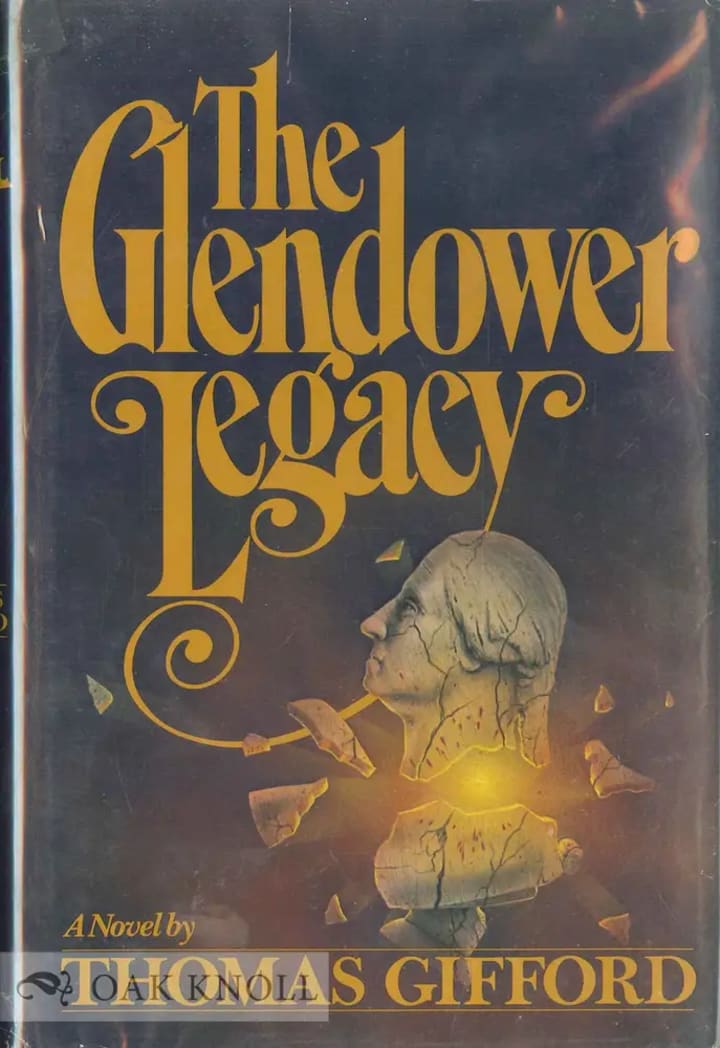
When Thomas Gifford published The Glendower Legacy in 1978, he imagined a cerebral, page-turning thriller built on an irresistible “what if?” premise: what if George Washington—the most sacred figure in American history—had been a traitor? The novel follows a Harvard professor who uncovers documents suggesting just that, plunging him into a deadly web of espionage, political cover-ups, and Cold War paranoia.
It’s a story steeped in archival mystery and moral dread. Gifford’s hero wrestles with the weight of truth and the manipulation of history—territory that put him in the company of writers like Robert Ludlum and Frederick Forsyth. The Glendower Legacy isn’t just a conspiracy yarn; it’s a meditation on how nations build their myths on selective memories and dangerous secrets.
For producers, the hook was irresistible: a high-stakes academic thriller with historical gravitas, perfect for the late ’70s boom of smart, paranoid films like All the President’s Men and Three Days of the Condor.
The Film: History Lessons Turned Hijinks
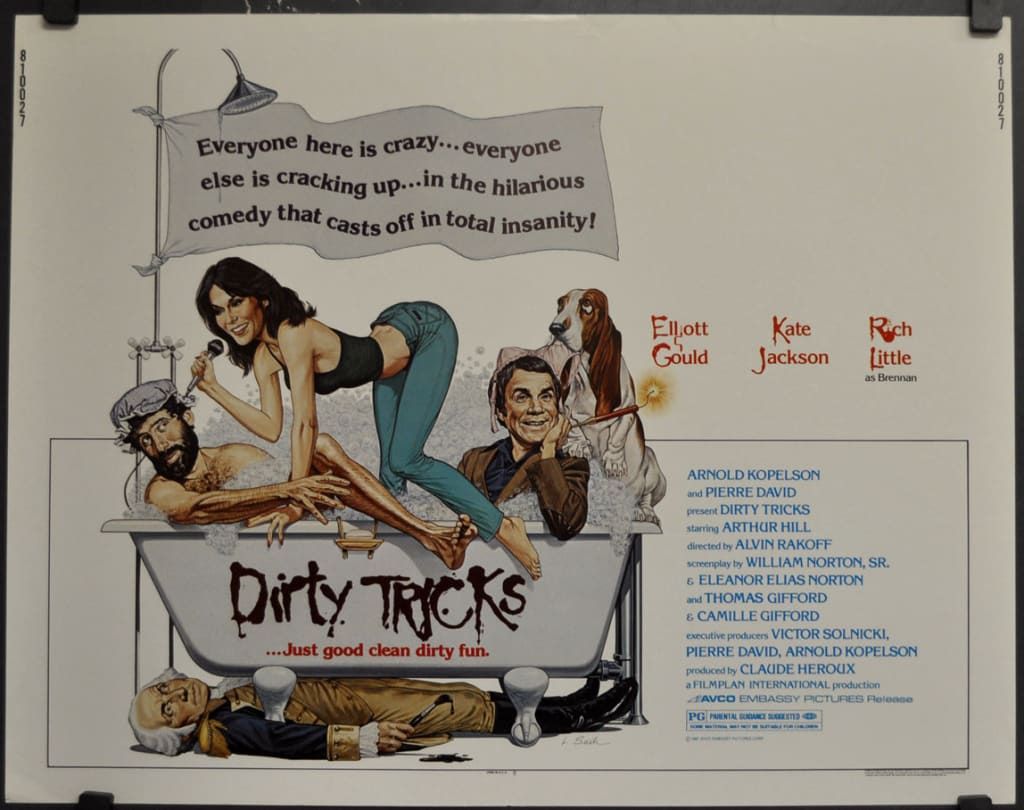
The resulting film, Dirty Tricks (1981), bears almost no resemblance to the book that inspired it. Directed by Alvin Rakoff, with a screenplay credited to William and Eleanor Norton and the Giffords themselves, the movie stars Elliott Gould as Professor Jeffrey Chandler and Kate Jackson as Polly Bishop, a plucky TV reporter.
The film begins promisingly enough: Chandler stumbles upon a mysterious letter that could shake the foundations of the American Revolution. But from there, things go wildly off course. Instead of a slow-burn thriller about historical deception, Dirty Tricks devolves into a loose, broad chase comedy complete with mobsters, slapstick, and romantic banter.
Gould plays the bewildered academic with his usual sardonic charm, but the script pushes him into absurd set pieces—car chases, mistaken identities, and scenes that could have been lifted from a mid-tier Pink Panther sequel. Kate Jackson gamely keeps up as the spunky reporter, though her role is reduced to the love interest and comic foil. Comedian Rich Little and a supporting cast of Canadian character actors round out the ensemble, giving the movie the feel of a tax-shelter co-production—which, in truth, it was.
Tone Trouble: When Hollywood Lost the Plot
The fatal mistake of Dirty Tricks lies in its tone. Gifford’s novel is fueled by unease and intellectual tension—a story about the fragility of truth. The movie instead aims for farce. The grave implications of rewriting American history become background noise for car gags and double entendres.
Director Alvin Rakoff later admitted he hated the final cut. He said the film was “re-edited by Hollywood” and that the released version was “never as good as it could have been.” In his view, crucial plot twists were spoiled too early, and the film’s suspense evaporated in the editing room.
Thomas Gifford was even more scathing. Despite having a screenplay credit, he publicly denounced the adaptation, calling Dirty Tricks “certainly one of the worst movies I’ve ever seen.” His frustration stemmed not only from the tonal shift but also from how his themes were hollowed out. What began as an intellectual thriller about history’s moral cost became a string of punchlines.
Performances and the Small Silver Linings
Elliott Gould remains the lone bright spot. Coming off the 1970s high of MASH, The Long Goodbye, and California Split, Gould brings his trademark mixture of cynicism and vulnerability to the role. You can almost sense the better film he thought he was making—a dry, ironic conspiracy caper in the Condor mold.
Kate Jackson, fresh off Charlie’s Angels, has screen presence and quick timing, though her character is underwritten. Their chemistry is light but pleasant, even if the material doesn’t give them much to work with.
Still, the supporting players—particularly comedian Rich Little—highlight just how confused the film’s identity had become. Was it a mystery? A screwball comedy? A satire of American institutions? Dirty Tricks tries to be all three and ends up being none.
The Legacy of a Misfire
When Dirty Tricks opened in 1981, critics were merciless. Reviewers called it sloppy, tone-deaf, and painfully uneven. Variety said it felt like a “movie that doesn’t know what it wants to be.” Audiences ignored it, and the film disappeared quickly from theaters.
Meanwhile, The Glendower Legacy retained its reputation as a smart, readable thriller—so much so that Gifford’s later novel The Assassini (1990) became a bestseller and cemented his skill for weaving history and suspense. Dirty Tricks, by contrast, has largely vanished except as a curiosity: a reminder of how Hollywood can take a gripping premise and sand off every sharp edge in the name of commercial appeal.
Today, Dirty Tricks serves as a fascinating artifact of early 1980s cinema, especially within the wave of tax-shelter productions that promised prestige and delivered confusion. Its failures tell us something about the perils of adaptation—the moment when literary intelligence meets studio compromise, and both sides leave unsatisfied.
Final Thoughts: When Everyone Hates the Movie
Few films can claim to have both their director and original author renounce them, but Dirty Tricks earned that dubious honor. It’s a case study in how a compelling novel can lose its soul in translation, smothered by misplaced tone and studio meddling.
If The Glendower Legacy asked us to question the stories we tell about history, Dirty Tricks stands as its own lesson—about how the stories we tell in Hollywood can bury the truth just as effectively.
Subscribe to Movies of the 80s here on Vocal and on our YouTube channel for more 80s Movie Nostalgia.
About the Creator
Movies of the 80s
We love the 1980s. Everything on this page is all about movies of the 1980s. Starting in 1980 and working our way the decade, we are preserving the stories and movies of the greatest decade, the 80s. https://www.youtube.com/@Moviesofthe80s
Keep reading
More stories from Movies of the 80s and writers in Geeks and other communities.
When the Postman Rang Twice: How Two Hollywood Eras Told the Same Story Differently
Two Versions, One Dangerous Obsession When a story is strong enough, Hollywood will find a way to tell it again. Few tales prove that better than The Postman Always Rings Twice, James M. Cain’s 1934 novel of lust, greed, and guilt.
By Movies of the 80s3 months ago in Geeks
Silver Screen Magic with Mae West
American actress and singer Mae West became a popular film actress during the Great Depression. She started entertaining in vaudeville, then performed on Broadway, and finally went to Hollywood. She signed up with Paramount Pictures and made her debut in the 1932 film “Night After Night.” She also starred in musicals, comedies, and crime dramas. The American Film Institute named her one of the best classic Hollywood actresses.
By Rasma Raisters6 days ago in Geeks
How Lakshya hit the bullseye with The Ba***ds of Bollywood
Lakshya has no qualms admitting that he is a boring guy off set with not much happening around him. “The only fun that I have is when I prepare for characters and shoot,” says the actor, who goes only by his first name. “In the last few days, I have been trying to discover the psyche of the character I am playing. That is the exciting part for me… when I have to play a different person and live a character,” he tells Forbes India in the middle of a hectic 12-hour film shoot.
By Dena Falken Esq7 days ago in Geeks


Comments
There are no comments for this story
Be the first to respond and start the conversation.